
BC Stories
BC Conservatives Narrow Leadership Field to Nine — The Real Contest: Discipline
By Current News Desk
Opinion News Room Chad Dashly
BC Conservatives narrow the leadership field to nine — and the real contest is about discipline
Opinion
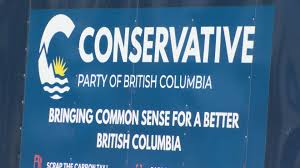
VANCOUVER — The Conservative Party of B.C.’s Leadership Election Organizing Committee (LEOC) has closed its application window and approved nine contestants to move to the next phase of the leadership race: Bruce Banman, Harman Bhangu, Iain Black, Caroline Elliott, Kerry-Lynne Findlay, Yuri Fulmer, Warren Hamm, Darrell Jones, and Peter Milobar.
On paper, it’s just a list. In practice, it’s a stress test for a party that grew quickly, became the Official Opposition, then watched its leader resign after internal turmoil — and now has to prove it can behave like a government-in-waiting, not a protest movement with a bigger microphone.
A nine-person field usually signals energy. Here, it also signals a problem to solve.
Leadership races are supposed to be about ideas and direction. This one is also about whether the B.C. Conservatives can enforce basic internal standards without triggering another civil war.
The application requirements reported publicly — including a $5,000 entry fee and at least 250 member signatures from across the province — were designed to separate serious contenders from momentary internet fame. That’s not glamorous. It is, however, what grown-up parties do when they’ve learned that “anyone can run” eventually turns into “everyone can embarrass us.”
Two previously declared MLA candidates — Sheldon Clare and Steve Kooner — withdrew in the days leading up to the LEOC announcement, underscoring how much procedural gatekeeping and campaign organization now matter in a party that is trying to professionalize at speed.
Three lanes are emerging — and each comes with a risk
The approved slate naturally breaks into three broad lanes.
- The caucus lane: Banman, Bhangu, and Milobar bring elected credibility and day-to-day experience as the Official Opposition. The upside is obvious: they can plausibly argue they know what it takes to hold government to account and present as a premier-in-waiting. The downside is equally obvious: caucus politics can look like inside baseball to members who joined because they wanted something that didn’t feel like Victoria-as-usual.
- The established political lane: Iain Black and Kerry-Lynne Findlay bring recognizable résumés from past political eras. That can reassure donors and institutional conservatives who want competence over chaos. But it also invites the party’s internal critique that it could become “a rebrand” of an older coalition — the very charge some activists have levelled at conservative projects in B.C. for decades.
- The outsider lane: Elliott, Fulmer, Hamm, and Jones (from the public descriptions available so far) will likely frame themselves as builders, not lifers — and as the antidote to a political class that many voters distrust. Outsiders can win leadership races. They can also struggle to pivot from slogans to systems when they inherit a caucus, a budget, and a news cycle that punishes improvisation.
None of these lanes is “wrong.” The larger question is whether the party’s membership wants movement energy or governing readiness — and whether it can find a leader who credibly offers both.
The John Rustad hangover is real — and it will shape every ballot
It’s impossible to read this candidate list without the recent history hovering over it. Former leader John Rustad resigned on Dec. 4, 2025, after divisions over policy and personnel roiled the party, according to reporting at the time.
That matters because leadership elections aren’t held in a vacuum. They are a referendum on what members think went wrong — and a pre-emptive argument about what must never happen again.
If the membership believes Rustad’s departure was driven by a lack of internal discipline and process, they will lean toward candidates promising tighter message control, better candidate vetting, and fewer self-inflicted crises. If they believe the party’s internal fights were about “true conservatism” versus “electability,” the race becomes an ideological sorting exercise — one that could reward sharper rhetoric over steadier management.
May 30 is not the finish line — it’s the credibility deadline
The party says it will announce its new leader on May 30, 2026, at a leadership convention. Between now and then, the campaign will revolve around membership rules, voter eligibility, and organizational capacity — the unsexy mechanics that decide races long before convention day.
There’s also a strategic reality: as the Official Opposition, the B.C. Conservatives don’t have the luxury of treating this like an internal club election. The leader-in-waiting has to perform in public, under daily scrutiny, with a caucus that needs coherence and a province that expects seriousness.
Voters who don’t follow party mechanics will judge the outcome in simpler terms: does the new leader look like someone who could run a cabinet, manage a crisis, and keep a team together?
What should British Columbians watch for next?
Here are three tells that will matter more than bumper-sticker ideology:
- Who can unify without erasing differences: A leader who “wins” by humiliating other factions may inherit a party that never stops relitigating the race.
- Who can talk about B.C. problems with B.C. answers: Housing, cost of living, health care access, and public safety are where elections are won or lost — not on imported culture-war scripts.
- Who can pass the competence test: Policy depth, staffing judgment, and a willingness to say “no” to bad ideas are not optional for an opposition trying to look ready to govern.
The LEOC has done its part: close the application process, publish a clear slate, move the party forward. Now comes the harder work — proving that a fast-growing political operation can mature quickly enough to hold together, and credible enough to convince British Columbians it deserves the keys to government.
To send a tip or ask about advertising, write to [email protected] or call 250-317-5888.