
Opinions
How Minor Parties and Strategic Balloting Could Shift the Upcoming B.C. Election
By Chad Dashley
Narrow Polling Margin Points to Tight Provincial Contest
The Conservatives currently maintain a slight advantage over the governing NDP in B.C. polling averages compiled by 338Canada, holding 45 per cent support against the NDP’s 42 per cent. The B.C. Green Party registers at nine per cent, while support for two new right-leaning parties, CentreBC and OneBC, totals between two and seven per cent combined. A four per cent margin of error applies to the top two contenders in the aggregated data.
David Black, a political communications professor at Royal Roads University, explained that overall popular vote figures offer a limited picture of the final outcome. “We have 93 mini-elections that generate this complex outcome we call government,” he said. He added that the Conservatives maintain an edge, but noted the party’s recent internal instability under former leader Kerry-Lynne Findlay makes its long-term brand loyalty uncertain. “If this was a reliable, known, long-standing vehicle for the centre-right that was ideologically coherent and organizationally recognizable, then I would worry less about a vote-splitting,” Black observed.
Riding Dynamics and Strategic Voting Concerns
Small parties are not fielding slates in all 93 ridings across B.C., which impacts the precision of province-wide polling, noted Mario Canseco of Research Co. However, in ridings where candidates from CentreBC—headed by former Conservative Elenore Sturko—or OneBC—led by former Conservative Dallas Brodie—are present, vote-splitting could alter the results. Canseco noted that such dynamics could allow the NDP to secure seats with as little as 37 or 38 per cent of the vote, particularly across key toss-up ridings in Surrey.
Individual candidate races may also reshape local outcomes. In Vancouver-Quilchena, OneBC Leader Brodie is competing against Conservative Carson Binda of the Canadian Taxpayers Federation and NDP candidate Callista Ryan. Canseco calculated that if Brodie captures 10 to 12 per cent of the vote and Ryan replicates her 2024 performance of 38.91 per cent, the NDP could potentially win the traditional right-wing seat.
Party Leaders Respond as Election Nears
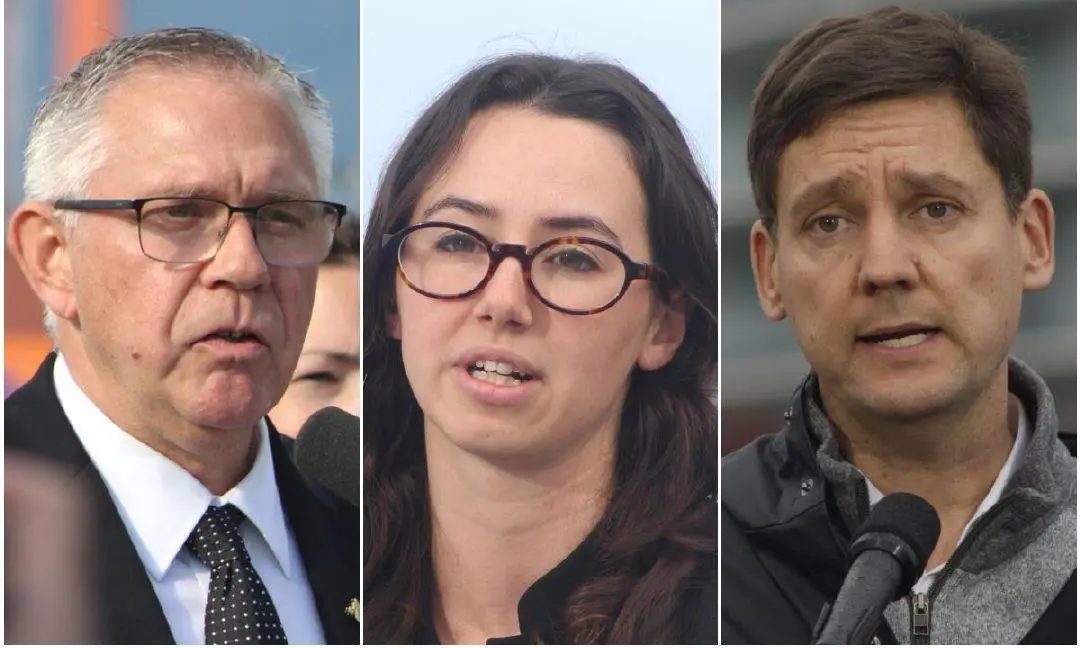
With five parties running incumbent candidates, NDP Leader David Eby warned that vote-splitting among left-leaning voters could inadvertently assist the Conservatives. He urged Green supporters to coordinate with his party to prevent a Conservative government. In response, B.C. Green Party Leader Emily Lowan rejected the call. “We look at the numbers; we know that the BC Greens grow the vote; we don’t split the vote,” she said.
Black emphasized that the NDP’s clearest route to victory relies on Green supporters, and to a lesser extent CentreBC voters, casting strategic ballots. Polling data from Research Co. shows that Green supporters express lower commitment to their choice compared to voters backing other parties. Eby acknowledged the likelihood of a tight finish, stating, “I think that what the polls do illustrate for me, and what I hope they illustrate for British Columbia, is that this election is going to be very close.”
To send a tip or ask about advertising, write to [email protected] or call 250-317-5888.