
Alberta
Pacific Link Pipeline Receives National Interest Designation
By Current Editor
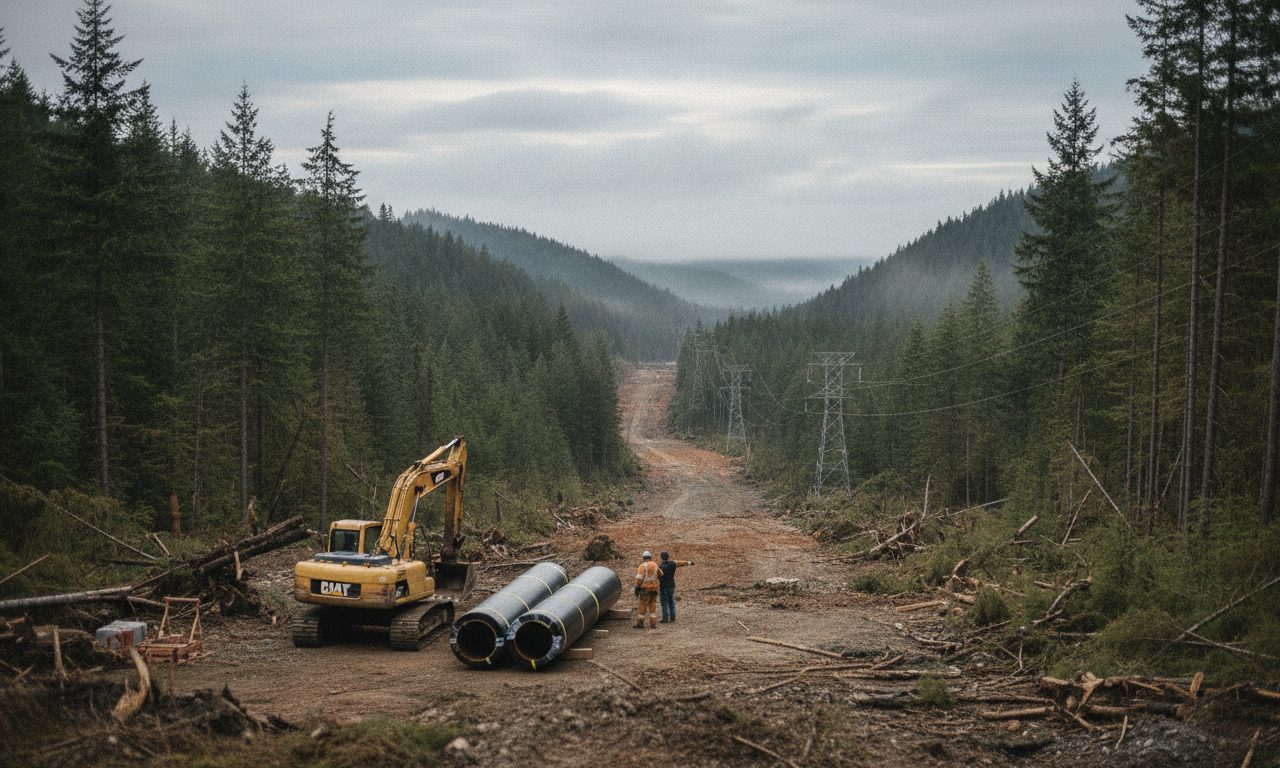
Ottawa moves proposed West Coast oil pipeline into accelerated federal review
By The Current News Desk | October 1, 2026
OTTAWA — A proposed pipeline carrying Alberta oil to Canada’s West Coast has taken a significant step forward after the federal government designated the project as being in the national interest.
Prime Minister Mark Carney, joined by Alberta Premier Danielle Smith in Fort McMurray on Thursday, announced that the proposed Pacific Link pipeline will receive national interest designation under the federal Building Canada Act.
The designation does not constitute final approval for construction, but it gives the project access to an accelerated and coordinated federal regulatory process intended to reduce delays and provide greater certainty around approvals.
The proposed pipeline would transport approximately one million barrels of crude oil per day from Alberta to a new marine terminal on British Columbia’s West Coast, opening additional capacity for Canadian oil producers to reach Asian and other international markets.
The proposed route would largely follow the existing Trans Mountain corridor, beginning near Bruderheim, Alberta, before crossing British Columbia and terminating at a proposed marine export terminal in southern B.C.
What does “national interest” mean?
The designation is important because it changes how Ottawa handles the project.
Under the Building Canada Act, projects deemed to be in the national interest can receive a more centralized and streamlined federal approval process. The legislation is intended to provide greater certainty around timelines and coordinate the federal permits and regulatory decisions required for major infrastructure projects.
It does not eliminate environmental reviews, Indigenous consultation or other regulatory requirements.
Ottawa says projects considered for national interest status are evaluated on factors including economic benefits, national security and resilience, likelihood of successful completion, Indigenous interests and Canada’s climate objectives.
For Pacific Link, the federal government is targeting September 1, 2027, for completion of the accelerated approval process.
Major economic implications for B.C.
The project could have significant implications for British Columbia.
Federal estimates suggest employment associated with construction could peak at approximately 140,000 direct and indirect jobs, including roughly 70,000 in British Columbia and 45,000 in Alberta.
The ownership structure outlined earlier this year includes Trans Mountain Corporation, the Alberta Petroleum Marketing Commission and Pembina Pipeline Corporation. The governments have also committed to providing Indigenous communities with opportunities for equity participation in the project.
Ottawa and Alberta argue that additional pipeline capacity is necessary to reduce Canada’s heavy dependence on the United States as an export market and give Canadian producers greater access to growing Asian markets.
More than 90 per cent of Canadian crude oil exports currently go to the United States, according to Reuters.
Significant hurdles remain
Despite Thursday’s announcement, Pacific Link is far from construction.
The project must still navigate environmental assessments, regulatory requirements, Indigenous consultation, financing arrangements and detailed engineering and routing decisions.
Pipeline development in British Columbia has historically generated significant debate involving environmental organizations, Indigenous communities, industry and different levels of government.
The federal government says consultation with Indigenous Peoples will continue throughout the process and that Canada’s constitutional obligations will remain in place.
For British Columbia, Thursday’s decision nevertheless represents a major change in the project’s status.
The question is no longer simply whether Ottawa considers another West Coast oil pipeline strategically important.
The federal government has now formally declared that it does.
What happens between now and September 2027 will determine whether that designation ultimately translates into another major piece of Canadian energy infrastructure — or another proposal that struggles to make the transition from political announcement to construction.
To send a tip or ask about advertising, write to [email protected] or call 250-317-5888.