
Opinions
Seven MLAs Gone: The BC Conservatives Chose Division Over Discipline
By Current Editor
By Chad Dashly | The Current
The BC Conservatives are no longer experiencing growing pains.
They are experiencing a full-blown political collapse.
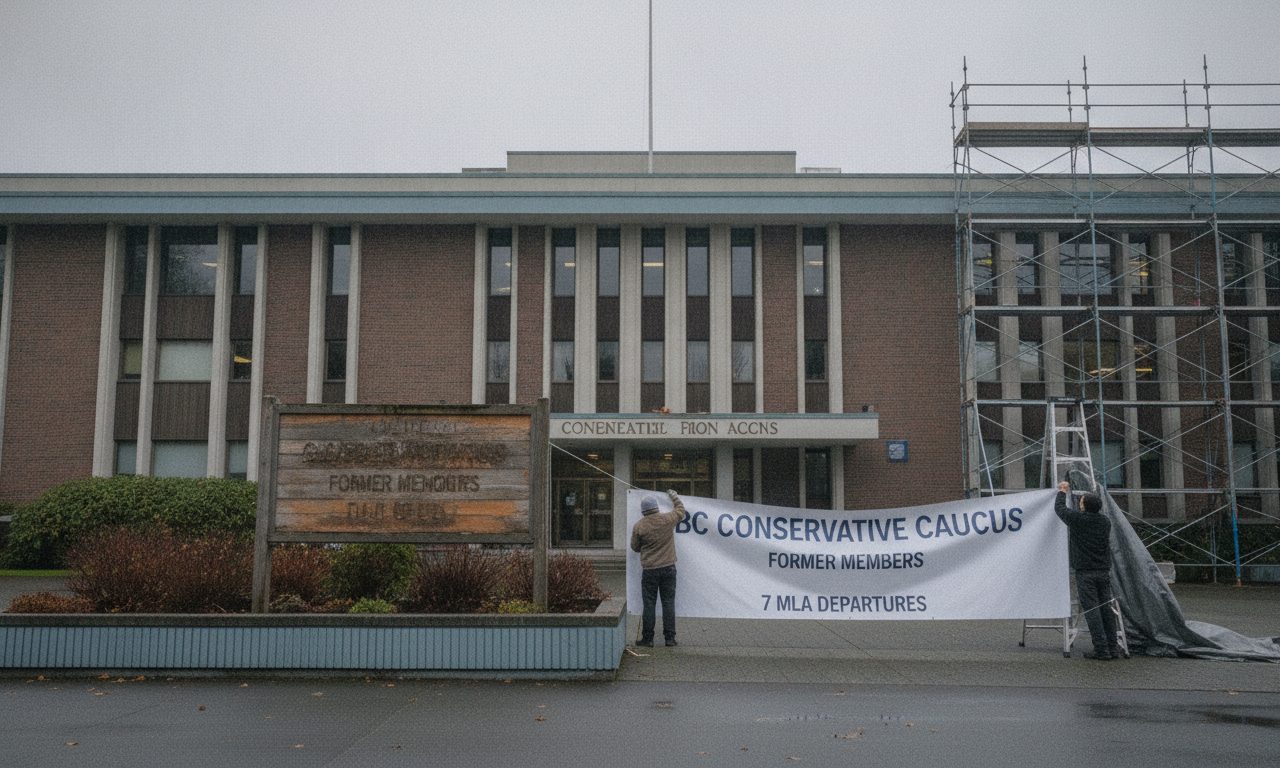
Áʼa:líya Warbus has become the seventh MLA to leave the Conservative caucus since Kerry-Lynne Findlay narrowly won the party leadership three months ago. She joins Bruce Banman, Teresa Wat, Brennan Day, Peter Milobar, Ian Paton and Rosalyn Bird.
Seven MLAs in three months.
That is not renewal. It is not ideological housekeeping. It is not a leader courageously enforcing discipline.
It is a failure of leadership.
Findlay defeated Caroline Elliott by the narrowest of margins—51 per cent to 49 per cent—on the final ballot. The contest presented members with two distinctly different paths.
Findlay offered confrontation, ideological purity and a campaign built around determining who was—or was not—a “real conservative.”
Elliott offered something less theatrical but far more valuable: the ability to build a coalition capable of defeating David Eby.
The party chose confrontation.
It is now paying the price.
Nobody can know with certainty what would have happened under Caroline Elliott. Leadership always looks easier from the sidelines. She would have inherited the same competing personalities, regional tensions and ideological divisions.
But it is difficult to imagine Elliott losing seven MLAs in her first three months.
Elliott understood something the current leadership appears to have forgotten: winning a Conservative leadership contest and winning British Columbia are two entirely different challenges.
A leadership candidate can win by appealing to the most motivated members. A premier must build support among suburban families, small-business owners, resource workers, new Canadians, rural voters and politically homeless former BC Liberal supporters.
That requires conservative principles, certainly.
It also requires judgment, discipline and emotional intelligence.
Elliott’s experience inside the old BC Liberal and BC United coalition was portrayed as a liability during the leadership campaign. In hindsight, it may have been precisely what the Conservatives needed.
She understood how fragile British Columbia’s centre-right coalition really is. It includes social conservatives and fiscal conservatives, populists and pragmatists, rural resource communities and culturally diverse suburban ridings.
You do not hold that coalition together by constantly questioning whether half of it belongs.
You hold it together by giving people a reason to stay.
Findlay’s defenders will say the departing MLAs are disloyal. Some will argue that the caucus is being purified of members who were never genuine conservatives.
That might satisfy the party’s loudest online voices. It will not defeat the NDP.
When seven elected representatives independently conclude they cannot continue under the same leader, blaming all seven becomes increasingly difficult.
Warbus said British Columbia needs steady leadership and someone capable of bringing people together. Teresa Wat said the party had become exclusive rather than inclusive. Peter Milobar said his values no longer aligned with its direction. Bruce Banman said constituents increasingly viewed the party as unelectable under Findlay.
These are not anonymous critics or Liberal operatives. They are people elected under the Conservative banner.
The operational record is equally troubling.
MLAs reportedly complained they were unclear about the leader’s strategy. Senior party officials were replaced. Staff came and went. Caucus operations director Apollo Chung was fired. Meanwhile, controversial language directives, provocative social-media content and internal accusations repeatedly displaced the issues British Columbians actually care about.
Affordability. Crime. Healthcare. Housing. Jobs. Resource development. Government spending.
David Eby should be facing the fight of his political life.
Instead, the BC Conservatives are fighting one another.
So who is behind this mess?
Findlay is the leader. She hired the team, approved the direction and owns the results. Political leaders do not get to take credit for victories while outsourcing responsibility for disasters.
Her chief of staff, Chris Delaney, and the senior people directing caucus operations, communications and political strategy also deserve scrutiny. The personnel choices and combative messaging suggest the current crisis is not a series of unrelated accidents. It reflects a deliberate political culture.
Then there is the question many Conservatives are asking privately: what influence, if any, has Jenni Byrne had?
Byrne is one of the most powerful Conservative strategists in Canada and was a senior adviser to Pierre Poilievre. Findlay served as Poilievre’s chief opposition whip and comes from that federal Conservative political network.
The resemblance in political style is hard to miss: tightly controlled communications, suspicion of traditional media, sharp wedge issues, an emphasis on identifying enemies and a belief that confrontation can substitute for coalition building.
But resemblance is not proof.
I have found no reliable public evidence establishing that Jenni Byrne formally advised Findlay’s provincial leadership campaign or is directing the BC Conservative Party today. Unless Findlay, Byrne or someone with direct knowledge confirms such a role, it would be irresponsible to state it as fact.
That does not make the question illegitimate.
If an outside strategist helped shape Findlay’s campaign, staffing decisions or governing strategy, Conservative members deserve to know. Findlay could end the speculation immediately by disclosing who advised her campaign and who is currently shaping the party’s direction.
Transparency would be preferable to rumor’s.
However, even if Byrne never participated in a single meeting, the ultimate responsibility remains with Findlay. Leaders choose whose advice to follow. They decide whether to broaden the party or narrow it. They decide whether criticism should be heard or punished.
Caroline Elliott’s leadership would not have guaranteed victory in the next election.
But she likely would have started by stabilizing the caucus, incorporating former rivals, reassuring members from different conservative traditions and turning the party’s attention toward David Eby.
Most importantly, Elliott seemed to understand that a party does not become stronger every time someone leaves it.
The BC Conservatives came within a few seats of forming government in 2024. They had an opportunity to professionalize, broaden their appeal and present themselves as a credible government-in-waiting.
Instead, they chose a leader who defined herself by deciding who did not belong.
Three months later, seven MLAs have answered that question for themselves.
The BC Conservatives do not need another purge, another inflammatory video or another loyalty test.
They need humility, competent management and an honest reckoning over how a party standing on the doorstep of government managed to begin dismantling itself.
Caroline Elliott might have provided that kind of leadership.
The members chose another path.
Now the entire centre-right movement may pay for it.
To send a tip or ask about advertising, write to [email protected] or call 250-317-5888.