
BC Stories
The BC Conservatives Are Coming Apart, Again
By Current News Room
The BC Conservatives Are Coming Apart, Again
By Chad Dashly | The Current
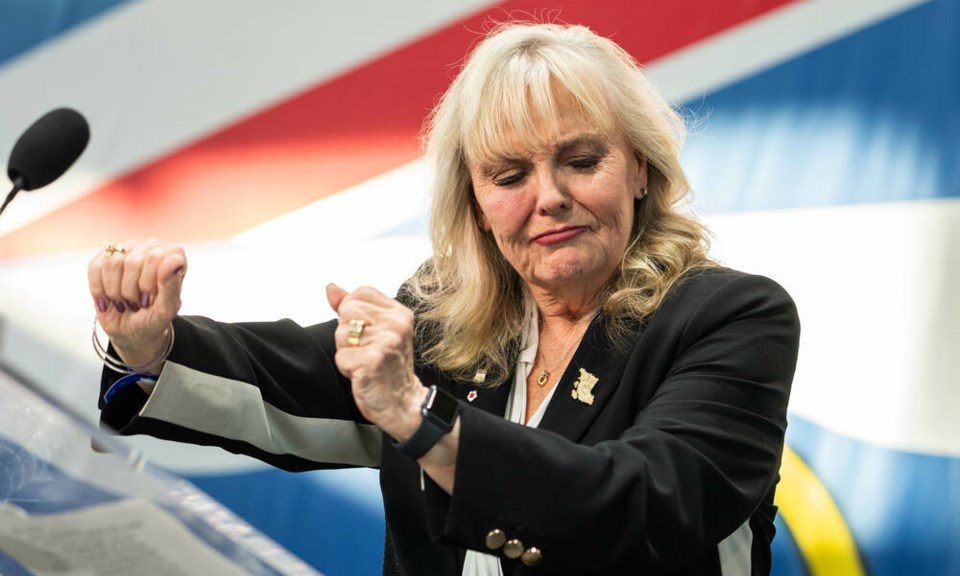
Kerry-Lynne Findlay was elected leader of the Conservative Party of British Columbia in May with a fairly straightforward assignment: unite the party, professionalize the operation and turn the momentum of 2024 into government in the next election.
Less than three months later, the question is no longer whether the Conservatives are united.
The question is how many pieces they could break into.
The latest departures of Prince George MLA Rosalyn Bird and Delta MLA Ian Paton, following Peter Milobar’s exit, have transformed what might once have been dismissed as internal disagreements into something much more serious.
This is beginning to look like an exodus.
And for a party that came within a whisker of forming government in 2024, it is an extraordinary reversal of fortune.
Findlay Inherited a Mess
To be fair, Findlay didn’t create all of this.
John Rustad’s leadership had already produced a remarkable collection of expulsions, resignations and defections.
Dallas Brodie was expelled. Jordan Kealy and Tara Armstrong followed her out. Brodie and Armstrong created OneBC before Armstrong eventually left that arrangement and became an independent.
Elenore Sturko was removed from caucus.
Amelia Boultbee left the Conservatives, became an independent and later joined the NDP.
Hon Chan was expelled while facing criminal charges.
That was the political inheritance Findlay received.
Her leadership victory was supposed to close that chapter.
Instead, somebody appears to have started writing the sequel.
The Liberal Question
At the centre of the latest turmoil is an uncomfortable question the Conservatives have never fully resolved.
What exactly is this party?
Is it a broad centre-right coalition capable of bringing together former BC Liberals, fiscal conservatives, social conservatives, populists and disaffected voters?
Or is it supposed to be a more ideologically pure conservative party?
Those are two very different political projects.
Findlay’s early approach appeared to send a message that some MLAs with previous connections to the BC Liberals or BC United should not necessarily assume they had a permanent home in the new Conservative Party.
Paton has said he felt singled out because of his Liberal history.
“There were eyes on me,” he said.
That is a remarkable statement from an elected MLA about his own caucus.
Findlay has since handed prominent critic responsibilities to Gavin Dew and Kiel Giddens, both of whom have connections to the former BC Liberal/BC United world.
Perhaps that settles some nerves.
Perhaps it doesn’t.
The bigger problem is that the uncertainty is now public.
A New Conservative Party?
Milobar and Paton are exploring the creation of another political vehicle for small-c conservative voters.
Meanwhile, former BC Liberal and BC United MLA Mike Bernier is working on CentreBC, an organization attempting to occupy the political centre.
Milobar and Paton reportedly held extensive discussions with Bernier before deciding his project wasn’t quite conservative enough for them.
But the conversations continue.
More importantly, so do their conversations with MLAs still sitting in the Conservative caucus.
That is where Findlay’s real problem begins.
One or two unhappy former MLAs can be dismissed as disgruntled personalities.
A coordinated group is something else entirely.
If several sitting Conservatives decide before the legislature returns in October that their political futures are safer outside Findlay’s party than inside it, British Columbia could suddenly have several competing parties fighting over essentially the same pool of voters.
For David Eby’s NDP, it would be difficult to imagine a better scenario.
From One Seat Away to Political Fragmentation
This is what makes the entire situation so remarkable.
The Conservatives weren’t rebuilding from a five-seat rump after the 2024 election.
They nearly won.
British Columbia came extraordinarily close to electing a Conservative government.
Yet instead of spending the following two years building the organization, candidate infrastructure, fundraising operation and policy credibility required to finish the job, the party has spent an astonishing amount of energy fighting itself.
MLAs have been expelled.
MLAs have resigned.
New parties have been created.
Other new parties are being contemplated.
Former Conservatives are talking to current Conservatives about leaving.
And somewhere in Victoria, somebody presumably has the unenviable job of continually updating the legislature’s seating chart.
You could almost track Conservative MLAs the way birdwatchers track migration patterns.
The Real Winner Is David Eby
That is the political reality Findlay needs to confront.
Every Conservative faction can explain why the other faction is responsible.
The populists can blame the establishment.
The former BC Liberals can blame ideological purists.
The leadership can blame undisciplined MLAs.
Departing MLAs can blame leadership.
Everyone can make their case.
But voters watching from outside the political bubble see something much simpler.
Chaos.
And chaos rarely wins elections.
David Eby doesn’t need the Conservatives to disappear. He simply needs the centre-right vote divided enough that the NDP can win three-way and four-way races with pluralities.
British Columbia has seen this movie before.
The old Social Credit coalition collapsed.
The BC Liberals eventually replaced it.
BC United collapsed.
The Conservatives surged into the vacuum.
Now, remarkably, the Conservatives risk creating another vacuum themselves.
Findlay’s Defining Test
Kerry-Lynne Findlay still has time to stop the bleeding.
Leadership contests inevitably leave bruised egos, competing camps and disappointed candidates. Successful leaders eventually bring those factions back together around a larger objective.
For the Conservatives, that objective should be obvious.
Government.
That requires building a coalition large enough to win 47 seats, not constructing an ideological clubhouse where everyone agrees with everyone else.
There is also a lesson here for the MLAs contemplating departure.
Starting political parties is easy.
Building them isn’t.
You need money, candidates, riding associations, organizers, volunteers, databases, communications infrastructure and, most importantly, voters willing to follow you.
British Columbia already has enough political brands competing for attention.
Adding another one doesn’t automatically create a movement.
Still, Findlay cannot simply dismiss the departures as irrelevant.
When people keep leaving the room, eventually the leader has to ask why.
The BC Conservatives came within one seat of government in 2024.
That should have been the foundation for something formidable.
Instead, two years later, the party’s greatest opponent may not be David Eby.
It may be itself.
And unless Kerry-Lynne Findlay can convince Conservatives that there is room inside the tent for the different factions of the centre-right, British Columbia’s next election may not be a contest between the NDP and Conservatives at all.
It could become a fight between several conservative parties over who gets to lose to the NDP.
Chad Dashly is a political columnist with The Current.
To send a tip or ask about advertising, write to [email protected] or call 250-317-5888.