
BC Stories
Uncovering Nanaimo’s Hidden Cold War Bunker and its Surprising Capital History
By Current Editor
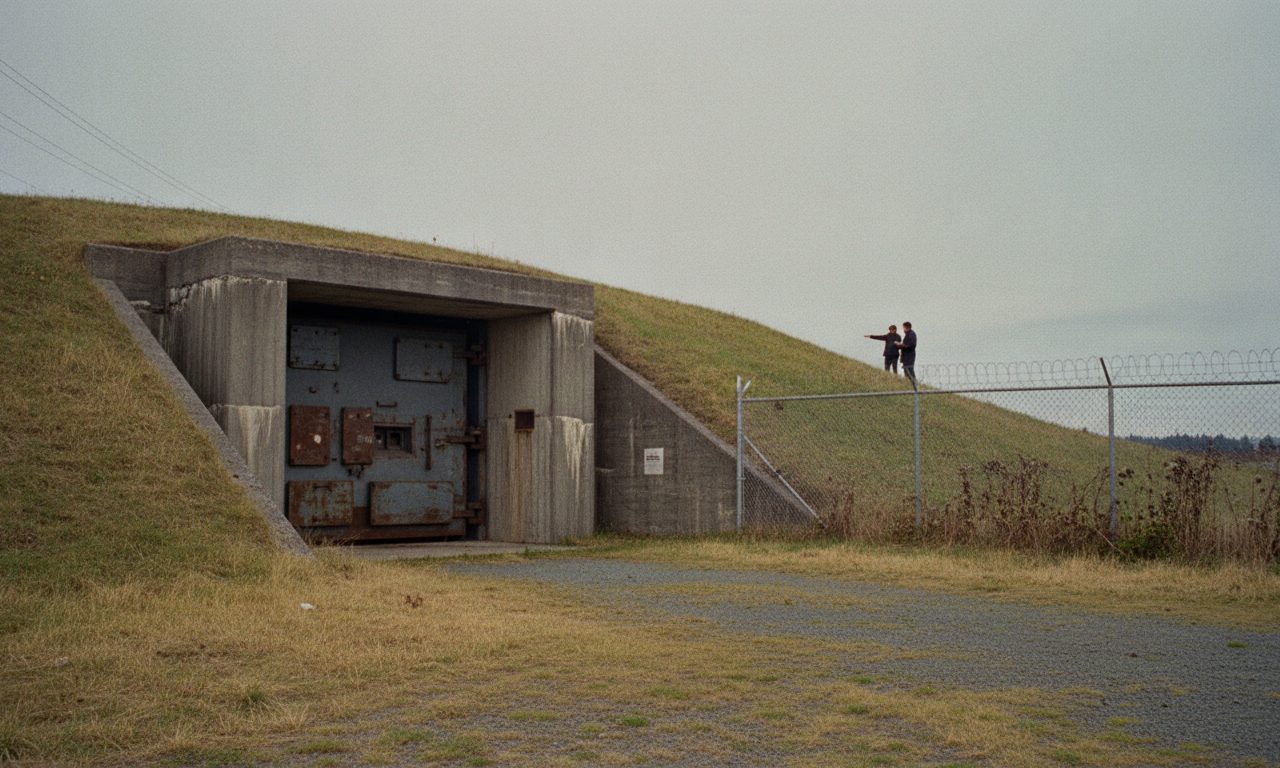
Cold War Exercise Temporarily Shifted Government to Nanaimo
On May 3, 1960, a simulated nuclear strike on Esquimalt Harbour triggered a 17-car convoy carrying Premier W.A.C. Bennett, provincial secretary Wesley Black, and roughly 100 public servants away from Victoria. Their destination was an underground shelter in Nanaimo designed to temporarily serve as the province’s government and communications center during an emergency.
An Underground Hub Built for Survival
Constructed starting in 1961, the 61,000-square-foot Nanaimo Diefenbunker was built into a grassy hill near present-day Vancouver Island University and the Nanaimo Parkway. Designed to house around 400 key military and government personnel for up to six weeks, the two-story structure featured a 1.3-metre solid concrete roof. Inside, it contained private offices, a war room, medical facilities, a radiation decontamination zone, a food supply, and a CBC studio. Former Royal Canadian Air Force Captain Roger Bird noted that the location was chosen for its distance from major urban centers and favorable wind patterns that carried potential nuclear fallout away from Nanaimo.
Decommissioning and Public Memory Efforts
With the conclusion of the Cold War, maintenance costs forced the facility’s shutdown in the mid-1990s. Before its doors were welded shut, items such as furniture, radio equipment, and generators were stripped; in 2001, 75 remaining cots were donated to the Cowichan Valley Emergency Program. Today, local historians are working to inform the public about the site’s past. Carina Nilsson, general manager of the Vancouver Island Military Museum, will lead a free lecture titled “Decoding the Nanaimo Diefenbunker” at 7 p.m. Thursday at the Bowen Park Complex, covering the structure’s construction, Cold War nuclear anxiety, and local anti-nuclear protests. The museum has also launched a dedicated exhibit featuring archival CBC footage, photos, and historical artifacts.
To send a tip or ask about advertising, write to [email protected] or call 250-317-5888.