
BC Stories
Vancouver’s Last Bike Couriers Race to Survive the Digital Age
By Current Editor
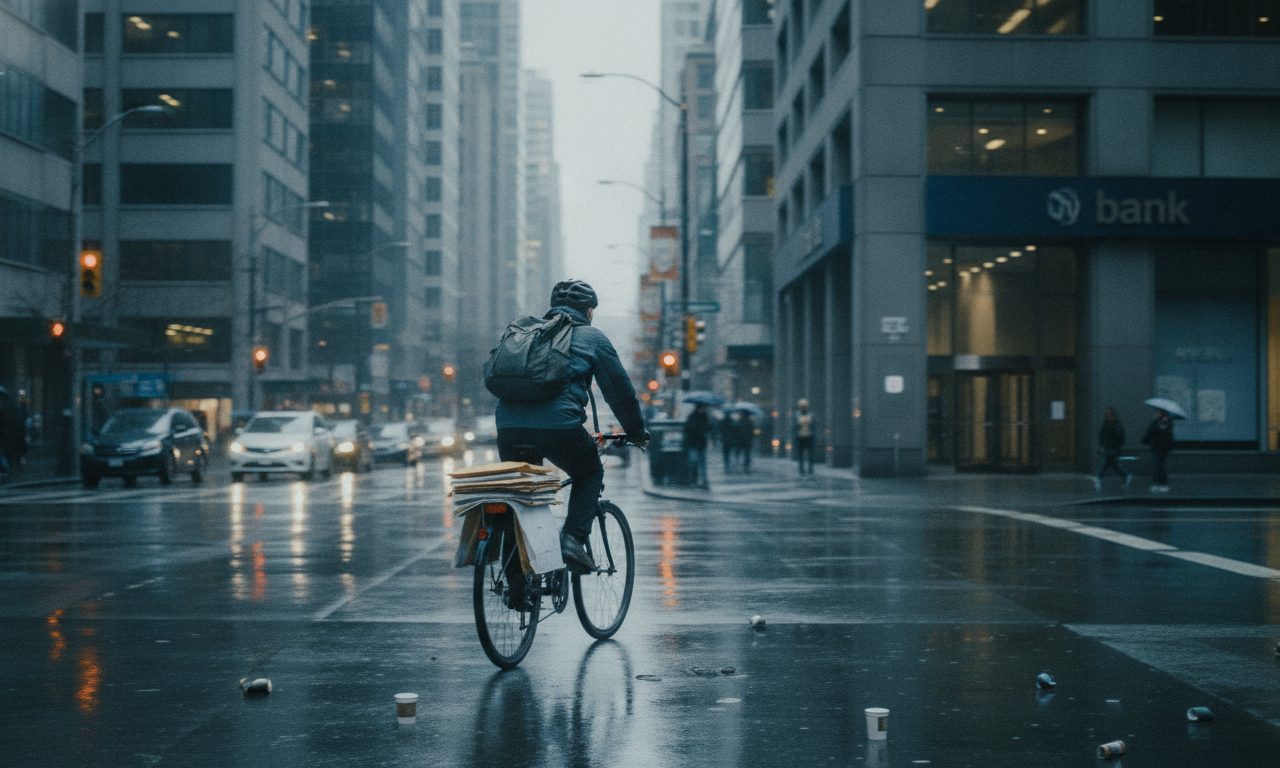
By David Chan | The Current
Once a familiar sight in downtown Vancouver, bicycle couriers are now an increasingly rare part of the city’s working life. In 1998, more than 400 licensed messengers crisscrossed Vancouver carrying cheques, legal filings and urgent business documents. Today, city records show that only 10 licensed bike couriers remain.
The dramatic decline reflects how completely technology has changed office work. Fax machines first reduced the need for hand-delivered documents. Email, electronic transfers, digital signatures and app-based delivery services accelerated the shift. An industry built around moving paper quickly through crowded streets suddenly found that much of the paper no longer needed to move at all.
Yet the bicycle courier has not disappeared.
Phantom Couriers is among a small group of Vancouver businesses keeping the profession alive. they started promoting their services by slipping homemade flyers under downtown office doors. At its peak, Phantom employed more than 30 couriers. Today, it has just one full-time bicycle messenger. What remains valuable is not nostalgia. It is speed, reliability and trust.
Law firms, banks and other professional offices still rely on physical cheques, certified documents and court filings that must arrive before firm deadlines. In Vancouver’s dense downtown core, a skilled cyclist can often move more quickly than a car. Couriers also become familiar faces to receptionists, tellers and mailroom staff, building relationships that delivery platforms cannot easily reproduce.
An average workday demonstrates how demanding that service can be. Couriers can travel 28 kilometres and spent hours waiting in banks. A busy day can involve as many as 75 stops and roughly 50 kilometres of riding. Deliveries may carry 60-minute or 30-minute deadlines, forcing couriers to understand traffic patterns, office towers, elevators and alleyways with remarkable precision.
The job also carries real risk. Couriers navigate buses, taxis, distracted drivers, poor weather and occasional road rage. Veteran messengers describe years of physical wear, including knee and ligament injuries. The work may look liberating from an office window, but it demands endurance, concentration and constant judgment.
WorkBC says couriers earn an average of $43,990 annually in British Columbia, while hourly wages range from minimum wage to $32.
Technology, once responsible for shrinking the industry, has also become part of its rescue. Phantom uses artificial intelligence to help sort email, create marketing materials and maintain business software. Its dispatch system uses an algorithm to prioritize deliveries, while human dispatchers continue matching urgent jobs with available couriers.
That combination reveals a larger lesson for small businesses. Survival rarely comes from defending the old way of doing things. It comes from understanding what customers still value and using new tools to deliver it better.
Vancouver’s bicycle couriers may never again number in the hundreds. Their future will depend on a narrow but important need for urgency, accountability and human trust. As long as documents still have to cross downtown before a bank or courthouse closes, a messenger on two wheels may remain the fastest answer in the city.
To send a tip or ask about advertising, write to [email protected] or call 250-317-5888.