
National
Why Cannonball-Shaped Volcanic Rocks Cover the Cliffs of Summerland
By Current Editor
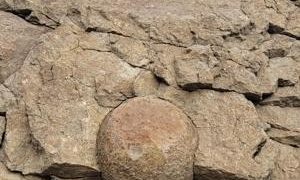
Unusual Spherical Stones embedded in Okanagan Cliffs
Distinctive cannonball-shaped stones remain buried in volcanic ash cliffs north of Summerland, drawing ongoing curiosity from residents and geologists. While many of the most accessible specimens have been gathered over the years, additional formations remain embedded in local cliff faces, particularly where excavators or landscape crews have exposed the rock.
Local Theories on Volcanic Formation
Former Summerland mayor David Gregory has spent decades researching the formations. He theorizes that the stones originated as molten lava ejected from Rattlesnake Mountain roughly 55 to 60 million years ago. According to Gregory, airborne lava cooled as it fell into a primeval lake that once reached the current elevation of Highway 97. He suggests that rapid cooling in water allowed lower-altitude stones to retain round shapes with crusty surfaces, whereas stones hitting dry land at higher elevations flattened into squashed, irregular shapes with visible crystallization.
Gregory points to nearby pillow lava discoveries along the highway as further evidence of an ancient shoreline. He believes a precise combination of chemical composition, lava viscosity, and protective mud and ash preserved the stones where they landed. His theory also attributes the fragility and fracturing of many cannonballs to rapid cooling rates. Gregory noted that a visiting Italian volcanologist had not seen similar formations elsewhere, though the cannonballs can occasionally be found in Kelowna and Penticton.
Alternative Hypotheses and Community History
Scientific consensus on the exact origin of the stones remains open. An alternative hypothesis published by the Lake Country Museum and Archives in 2014 suggests the rocks gained their spherical shapes by tumbling down volcanic slopes following impact.
Beyond geological debate, the cannonballs hold a place in local culture. roadside fruit stands sold them as souvenirs during the 1950s, and long-term residents have integrated them into private collections, water fountains, and garden bridges. Preservation attempts have faced challenges; during a 2007 widening project on Highway 97, exposed cannonballs were removed after transportation officials determined the surrounding cliff face was unstable.
To send a tip or ask about advertising, write to [email protected] or call 250-317-5888.