
National
Why the Shift Beyond Manual Coding Is Redefining Software Engineering at Microsoft
By Current Editor
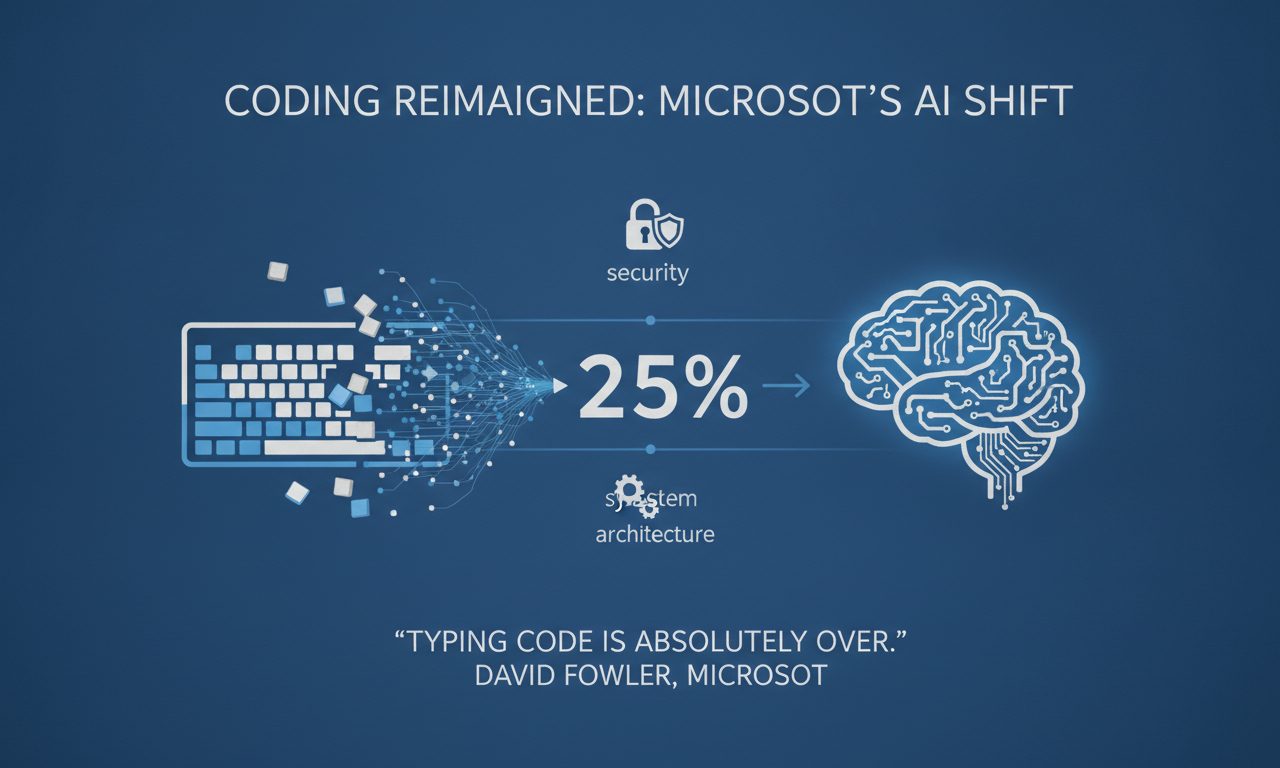
Internal Adoption Drives New Engineering Focus
Between 20% and 30% of Microsoft’s internal codebase is now created by artificial intelligence models, according to confirmation from corporate executive leadership. Inside the company, automated agents handle specific technical workflows, including analyzing vulnerabilities, drafting security patches, and building software fixes for Windows 11 updates.
This reliance on automated tools is altering the role of human developers. Software professionals are increasingly directing their efforts toward high-level system architecture, hardware orchestration, native API integration, performance tuning, and security verification.
veteran Engineer Highlights Paradigm Shift
Addressing the evolving landscape on X on September 3, 2026, Microsoft Distinguished Engineer David Fowler remarked, “Typing code is absolutely over.” Fowler, an 18-year veteran at the company, co-created SignalR, founded .NET components such as Kudu and NuGet, and currently heads development on .NET Aspire.
Hardware Requirements and Oversight Challenges
To support local execution of AI workloads, Microsoft is designing Windows 11 configurations that require hardware baselines of at least 64 GB of RAM.
As AI-generated output expands, engineers treat the automated code as an untrusted black box. Consequently, development teams are placing heightened priority on unit testing and careful supervision of agent-generated results.
To send a tip or ask about advertising, write to [email protected] or call 250-317-5888.