
Health
Why You Might Want to Think Twice Before Wearing Shorts on a Plane
By Current Editor
Why You Might Want to Think Twice Before Wearing Shorts on a Plane
By The Current
If you’re heading somewhere warm, shorts might seem like the obvious choice for the flight.
According to some flight attendants, you may want to reconsider.
Veteran flight attendant Charity Nelms recently offered travellers a rather unpleasant piece of advice: wear pants on the plane.
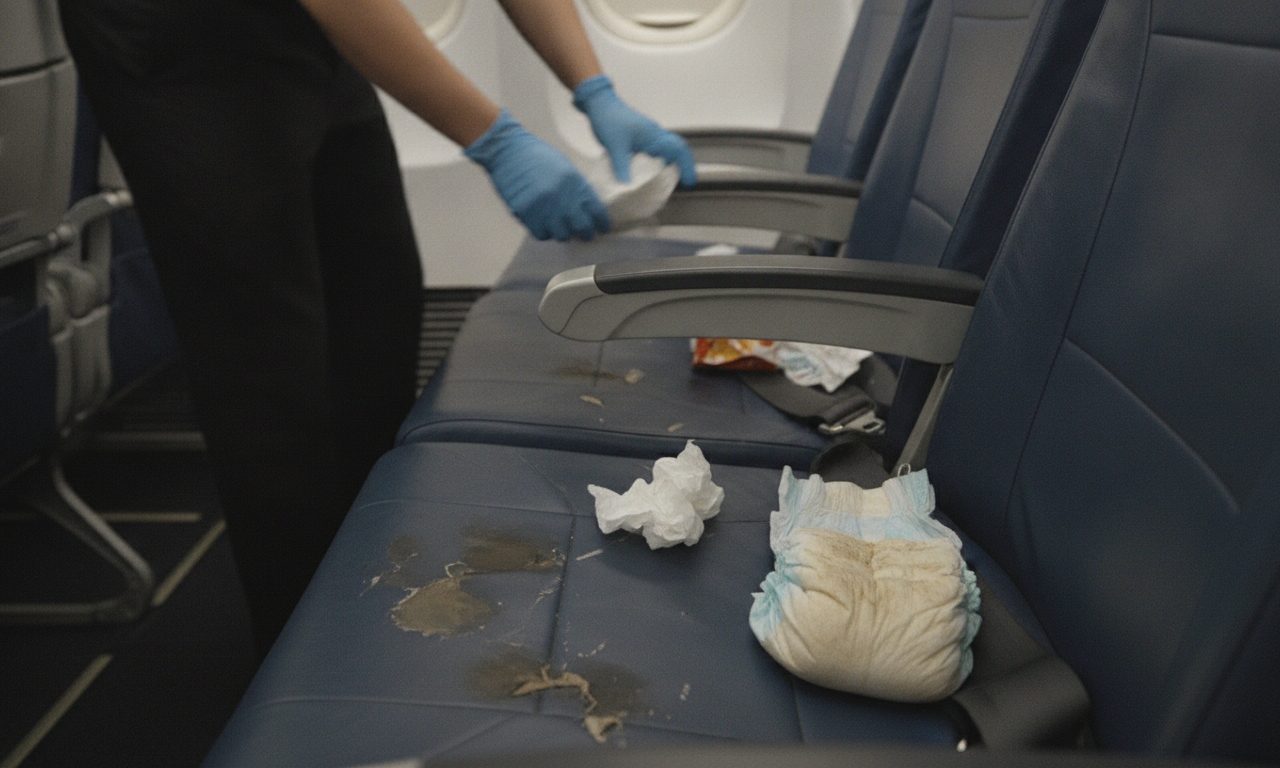
Nelms, who has worked as a flight attendant for more than a decade, says passengers would probably be surprised by what airline seats encounter between cleanings.
“I am letting you know, from a flight attendant, the amount of things I have seen on the seat,” Nelms said in a TikTok video.
Her recommendation was straightforward: avoid shorts, skirts and dresses if they leave your legs directly touching the seat.
“Wear full pants,” she urged.
And she isn’t the only flight attendant making the case.
Dallas-based flight attendant Cher Killough shared an even more graphic example, saying she witnessed four diapers being changed directly on passenger seats during a single flight.
All four, she said, contained more than just a wet diaper.
It’s the kind of information that can make you look at your economy-class seat a little differently.
How Clean Is Your Airplane Seat?
Airplanes are cleaned regularly, but the level of cleaning depends heavily on the aircraft’s schedule.
Between flights, crews generally conduct relatively quick turnaround cleanings. The priority is typically removing garbage and cleaning high-use areas such as lavatories and galleys so the aircraft can get back into service.
Aircraft parked overnight may receive a more substantial cleaning, including greater attention to passenger seating areas.
Then there are deep cleans.
Those can involve much more extensive work around seats, storage compartments and other parts of the cabin that passengers regularly touch.
The catch is that deep cleaning doesn’t necessarily happen after every flight—or even every few flights.
Schedules vary considerably between airlines.
That means hundreds of passengers may occupy a seat between more intensive cleanings.
Don’t Forget the Seatbelt
Nelms says the seat itself isn’t the only thing travellers should think about.
One of the most frequently handled items on an aircraft is sitting directly across your lap: the seatbelt.
Passengers grab the buckle, adjust the strap and pull on the belt throughout every flight.
Nelms recommends wiping down both the metal buckle and the fabric portion of the belt when you sit down.
Why?
Because everything from spilled drinks to food, baby vomit and other bodily fluids can potentially end up on them.
It isn’t exactly something airlines highlight in their safety demonstration.
And Please Wear Shoes to the Bathroom
There is another piece of flight-attendant advice worth remembering.
Don’t walk into an airplane lavatory wearing only socks.
Anyone who has flown regularly has probably encountered a mysterious wet floor inside an aircraft bathroom.
Nelms’ warning is simple: don’t automatically assume that liquid is water.
Socks also absorb whatever happens to be on the floor, meaning you’re potentially carrying it back to your seat.
Wear your shoes.
The Current Takeaway
There’s no reason to become paranoid every time you board an airplane.
But a little common sense probably doesn’t hurt.
Airliners carry hundreds—or sometimes thousands—of passengers over a relatively short period of time. Turnaround schedules can be tight, and cleaning crews don’t necessarily have the opportunity to scrub every surface between flights.
So the next time you’re getting dressed for the airport, you might want to consider three simple things:
Wear pants. Wipe down the surfaces around your seat. And keep your shoes on when visiting the bathroom.
It may not be the glamorous side of air travel.
But sometimes the things flight attendants know are exactly the things passengers would rather not think about.
To send a tip or ask about advertising, write to [email protected] or call 250-317-5888.