BC STORIES
OneBC’s Early Implosion Shows the Cost of Power Without Structure


The Current, Chad Dashly
New political parties rarely fail because of ideology alone. More often, they collapse under the weight of ego, unclear authority, and internal power struggles or inability to raise donations. The brief and chaotic rise of OneBC is a textbook example of how not to launch a political movement and how quickly a lack of discipline can undo even the most ambitious project.
OneBC emerged amid deep fractures on the political right in British Columbia. With voters frustrated by establishment parties and conservative forces splintering, the space for a new alternative appeared ripe. At the centre of that effort was Dallas Brodie, who stepped into the role of leader and became the public face of a party still finding its footing.
But almost from the outset, OneBC suffered from a problem that has plagued countless insurgent movements: power existed without structure.
Behind the scenes Othman Mekhloufi, a political activist and organizer within conservative grassroots circles, became a growing presence. Mekhloufi was not an elected official, not a candidate, and not a formally accountable party executive. Yet he was widely perceived, internally and externally, as exercising influence over communications, strategy, and internal direction.
That influence quickly became a flashpoint.
According to multiple accounts from within OneBC’s orbit, Mekhloufi’s role was never clearly defined. What began as activist energy and organizational support blurred into something far more consequential. Decisions appeared to be shaped by informal authority rather than transparent process. Messaging grew erratic. Internal disputes spilled into public view. For a party desperately trying to establish legitimacy, this was a serious liability.
Brodie’s decision to remove Mekhloufi from any role associated with OneBC was less about a single incident and more about an attempt to reassert leadership control. The concern was not merely tone or temperament, but the existence of what some insiders described as a parallel centre of power, influence without responsibility.
From a leadership perspective, the move made sense. New parties survive only if they project discipline, coherence, and credibility. Allowing unelected activists to appear as de facto decision-makers is an invitation to chaos. Brodie’s action was intended to draw a firm line: authority flows from leadership, not from loudness or proximity.
But the damage had already been done.
The firing did not stabilize OneBC. Instead, it exposed just how fragile the party’s internal foundation really was. Trust had eroded. Factions had hardened. What should have been a private organizational correction became a public rupture. The party’s internal conflicts intensified rather than subsided.
Not long after, Brodie herself was removed as leader by OneBC’s board — a stunning reversal that underscored the central irony of the situation. In attempting to impose order, she revealed how little structural authority actually existed to begin with.
This is where OneBC’s story shifts from internal squabble to political cautionary tale.
Parties do not fail simply because of controversial personalities. They fail when roles are undefined, governance is weak, and leadership authority is ambiguous. In OneBC’s case, the party never clearly established who had decision-making power, how strategy was set, or how internal disagreements would be resolved. That vacuum was inevitably filled by personality, influence, and conflict.
Figures like Othman Mekhloufi become symbols in such environments, not because they are uniquely powerful, but because weak institutions allow informal power to flourish. When accountability mechanisms are absent, perception becomes reality, and internal resentment grows.
This is why commentators like Jas Johal have seized on Mekhloufi’s name. Not because he is a major political figure, but because his involvement represents something larger: a party overtaken by internal dysfunction before it could even define its purpose.
The OneBC saga should serve as a warning to any movement attempting to capitalize on voter frustration. Passion and disruption are not substitutes for governance. Activism does not replace structure. And leadership without clear authority is leadership in name only.
British Columbia’s political landscape may still be hungry for alternatives, but OneBC’s implosion shows that credibility is built long before the first press release. Without disciplined organization, even the most opportune political moment can be squandered.
In the end, OneBC didn’t fall because of its ideas. It fell because it never decided clearly and collectively, who was actually in charge and what they stop for.
Editor Notes: Who Dallas Brodie and Jas Johal:
- Dallas Brodie: Member of the Legislative Assembly (MLA) in British Columbia, representing Vancouver-Quilchena.
- Brodie was originally elected as a BC Conservative MLA in the 2024 provincial election.
- In 2025, she and another MLA Tara Armstrong left the Conservatives to form a new political party called OneBC (which is a far right-wing/populist party).
- She had been serving as interim leader of OneBC, but on or around Dec. 13-14, 2025, she was removed as leader by the party’s board amid internal conflict.
Why Jas Johal might be mentioning her: Johal tweets a lot about British Columbia provincial politics, especially controversies involving small or new parties like OneBC and its leaders, including Brodie’s leadership struggles and the party’s policies.






BC STORIES
BC Voters Prepare to Cast Ballots as Tight Provincial Election Campaign Reaches Its Final Day
B.C. political leaders make their final campaign pitches as Leger polling shows Conservative momentum and Green party gains ahead of Saturday’s election.

Polling Trends Show Shifts Ahead of Vote
With only 24 hours remaining before citizens cast their ballots on Saturday, political parties across British Columbia are delivering their final messages to the electorate. Recent polling figures from Leger Marketing indicate that the Conservative Party of BC has built momentum, climbing to 44 per cent support. Executive vice-president Steve Mossop noted that the BC NDP has held at 39 per cent, mirroring its standing at the start of the race.
Potential Impacts for Vancouver Island
The latest polling also points to gains by the BC Green Party, which has grown its support from eight to 13 per cent under leader Emily Lowan. According to David Black, an associate professor at Royal Roads University, this surge in Green support combined with Conservative strength could put several Vancouver Island NDP ridings at risk. Black highlighted Cowichan Valley, Juan de Fuca-Malahat, Nanaimo-Lantzville, Mid Island-Pacific Rim, and Ladysmith-Oceanside as areas facing potential shifts.
Party Leaders Rally Supporters
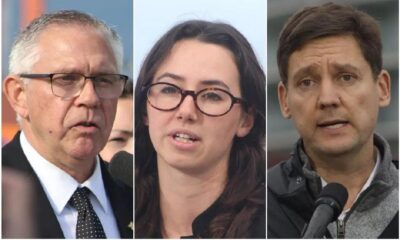
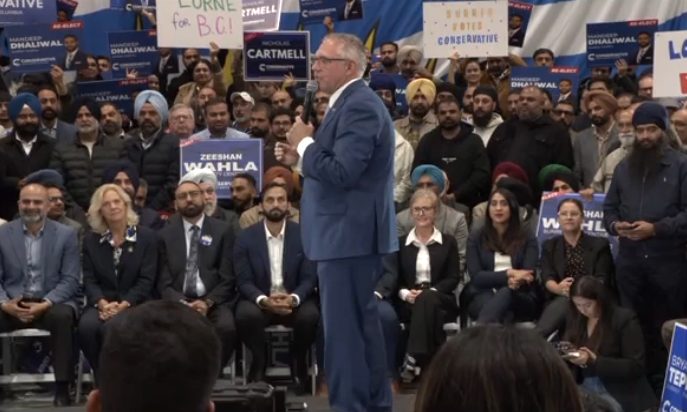
In Surrey, Conservative Leader Lorne Doerkson addressed a packed auditorium alongside former premier Christy Clark, telling attendees, “There has never been a more important election than right now you guys.” Meanwhile, BC NDP Leader David Eby initiated his final day of campaigning in Surrey, addressing potential vote splitting by making a direct request to the electorate. “For those folks who are undecided or thinking about voting Green, that every vote is going to matter,” Eby stated, as voters prepare to make the final determination on Saturday.
BC STORIES
What the Latest Polling Numbers Mean for B.C. Voters Ahead of Election Day
B.C. Conservatives maintain a slight lead over the NDP three days before election day, with battlegrounds like Surrey set to decide the outcome.

Conservatives Hold Edge in Recent Surveys
Surveys conducted by the Angus Reid Institute and Mainstreet Research show the B.C. Conservatives holding a lead of three to six percentage points over the B.C. NDP. With a three-point margin of error in the Angus Reid survey, Conservative support is estimated between 43 and 49 per cent, while the NDP stands between 40 and 46 per cent.
Crucial Regional Battlegrounds
According to 338Canada founder Philippe Fournier, key battlegrounds will dictate the final outcome. Areas such as Surrey and the outer margins of Metro Vancouver are essential territories for the NDP if they hope to secure another term. Party leaders have focused their efforts heavily on Surrey in recent days to rally support.
Snap Election Strategy and Leadership Shift
The NDP called a snap election a month ago with two years remaining on their mandate. Fournier suggested the decision may have been influenced by earlier polling against former Conservative leader Kerry-Lynne Findlay, who resigned Sept. 20 before being succeeded by interim leader Lorne Doerkson. Meanwhile, support for the B.C. Greens has ranged between eight and 15 per cent in recent surveys, slightly under expectations as disgruntled voters have yet to shift significantly to the party.
BC STORIES
BC Conservatives Promise Forestry Overhaul to Revive Jobs as NDP Points to Millions in Existing Investment
BC Conservative Leader Lorne Doerkson pledged faster permits and higher harvest goals during a Maple Ridge stop, drawing criticism from the BC NDP.
BC Conservative Leader Pledges Major Permit Streamlining and Harvest Expansion
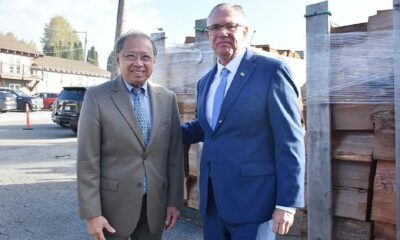
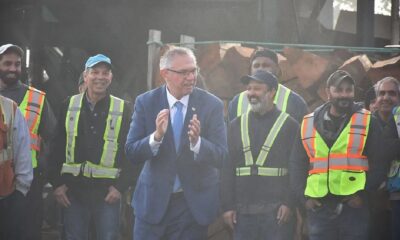
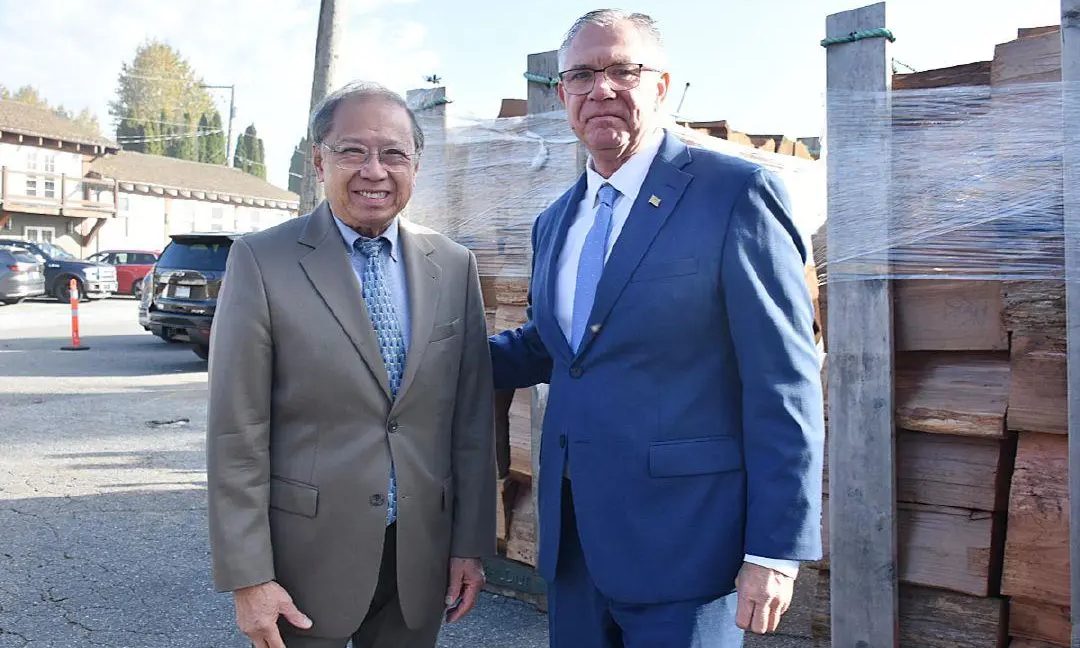
During an Oct. 19 campaign visit to Waldun Forest Products in Maple Ridge, BC Conservative Party Leader Lorne Doerkson outlined his party’s vision to revitalize the provincial forest industry. Joined by incumbent candidate Lawrence Mok in Maple Ridge East, Doerkson pledged to speed up approvals, lower operational expenses, and provide timber processors with more predictable access to raw materials.
Doerkson proposed a centralized, major-project-style framework for forestry approvals designed to reduce wait times from years to months. Criticizing the current administration, he stated that the provincial harvest has consistently missed the allowable annual target of 44,372,144 cubic metres. If elected, he aims to establish a minimum annual cut of 45 million cubic metres while keeping environmental safeguards in place.
Debate over Industry Shutdowns and Funding Platform
Addressing mill closures across British Columbia, Doerkson alleged that red tape and added regulatory expenses under the NDP administration led to the permanent or temporary shutdown of at least 21 lumber facilities since 2023, along with the loss of approximately 15,000 sector jobs over four years. To counter these losses, he promised competitive tax adjustments, increased support for value-added wood processors, and investments in Indigenous skills training to ensure First Nations benefit from federal sector funding.
In response, Hudson Campbell, the BC NDP candidate for Maple Ridge East, countered that the Conservative forestry commitment offers only $17 million in funding over two years and lacks a designated budget for its Indigenous training promises. Campbell pointed to the NDP platform, which earmarks $270 million for the sector, including $120 million for a Forestry Jobs Protection Fund and a doubling of the BC Manufacturing Jobs Fund to support workers, mill operations, and local economies.

Why Canada’s Bid for a Turkish Nuclear Deal Is Gaining Ground

BC Voters Prepare to Cast Ballots as Tight Provincial Election Campaign Reaches Its Final Day

What the Latest Polling Numbers Mean for B.C. Voters Ahead of Election Day
Your Current 3 Day Forecast — October 23, 2026

Vancouver Canucks Honour Beloved Broadcaster John ‘Cheech’ Garrett During Home Game

Why B.C. Lions Starters Are Resting as the Regular Season Concludes Against Winnipeg

Opinion: John Rustad Has to Go

B.C. Supreme Court Grants Cowichan Tribes Title to Historic Richmond Lands and Fishing Rights

Vancouver Canucks Gear Up for a Make-or-Break 2025–26 Season

Province to Appeal Cowichan Tribes Land Decision

Kamloops Prepares Four Reverse Referendums on $188M in Major Projects

Kamloops Blazers Announce Off-Season Changes Ahead of 2025–26 Season
-
NATIONAL STORIES5 days ago
Tragedy at CFB Wainwright frames last-minute calls for unity as Albertans prepare for referendum vote
-
LOCAL4 days ago
Your Current 3 Day Forecast — October 20, 2026
-
BC STORIES5 days ago
What the B.C. Conservatives’ New Platform Means for Your Taxes and Provincial Services
-
 BC STORIES5 days ago
Grassroots Effort and Digital Content Help Deliver Strong Election Finish for Young Candidates
-

 COMMUNITY7 days ago
Recovery of missing paddleboarder on Okanagan Lake brings closure to family and community
-

 SPORTS7 days ago
Should the Canadiens Build Long-Term or Trade for Dylan Larkin?
-

 BC STORIES5 days ago
Why B.C. NDP Leader David Eby Is Urging Green Voters to Help Stop a Conservative Win
-
 SPORTS7 days ago
Edmonton Fans to Experience First Home Playoff Game and West Final Since 2015