HEALTH
Canadian Premiers Demand Return to 50/50 Federal Health-Care Funding Split
Canadian premiers in Charlottetown demand Ottawa return to a 50/50 health-care funding split, citing aging populations and economic competitiveness.


Provincial Leaders Push for Historic Funding Model
At a high-stakes summit in Charlottetown, Canada’s provincial leaders have reignited a long-standing battle with the federal government, demanding a return to a 50/50 cost-sharing model for health care. The premiers of Prince Edward Island, New Brunswick, and Manitoba are leading the charge, arguing that the current federal contribution is insufficient to sustain a modernizing and aging health-care system.
Historically, the federal government split health expenses equally with provinces until the 1970s, when the formula was adjusted in favor of tax points and block funding. Today, the Canada Health Transfer (CHT) accounts for roughly 22 per cent of provincial health expenditures. This disparity has become a critical point of friction, as health care now consumes between 30 and 40 per cent of total provincial budgets.
Economic Competitiveness and a National Vision
Manitoba Premier Wab Kinew framed the debate as a matter of national identity and economic strategy. Comparing the Canadian system to that of the United States, Kinew noted that public health care makes Canada a more attractive destination for business investment. “This is one of the reasons why businesses should realize that their investment in Canada is more competitive than putting those dollars to work in the States,” Kinew stated, emphasizing that employers in Canada face lower health-care overheads for their workforce.
P.E.I. Premier Rob Lantz echoed these sentiments, describing the health-care system as a “nation-building project.” For smaller provinces like P.E.I., the focus remains on workforce retention, recruitment, and improving access to primary care, all of which require a more robust and predictable influx of federal cash.
Addressing Chronic Needs and Aging Populations
New Brunswick Premier Susan Holt highlighted the demographic challenges facing her province, which deals with an older population and higher rates of chronic disease than the national average. Holt argued that the CHT must be adapted to recognize these specific needs. “We cannot grow our economy and invest in our defence sector… without that healthy workforce,” Holt said, calling for federal contributions to match those of the provinces.
While Ottawa has signed various 10-year bilateral health-care deals with provinces recently—such as Ontario’s $3.1-billion agreement—the premiers maintain that these localized fixes are no substitute for a fundamental restructuring of the core funding partnership.





HEALTH
Why Merritt Will Continue Billing B.C. for Emergency Room Closures
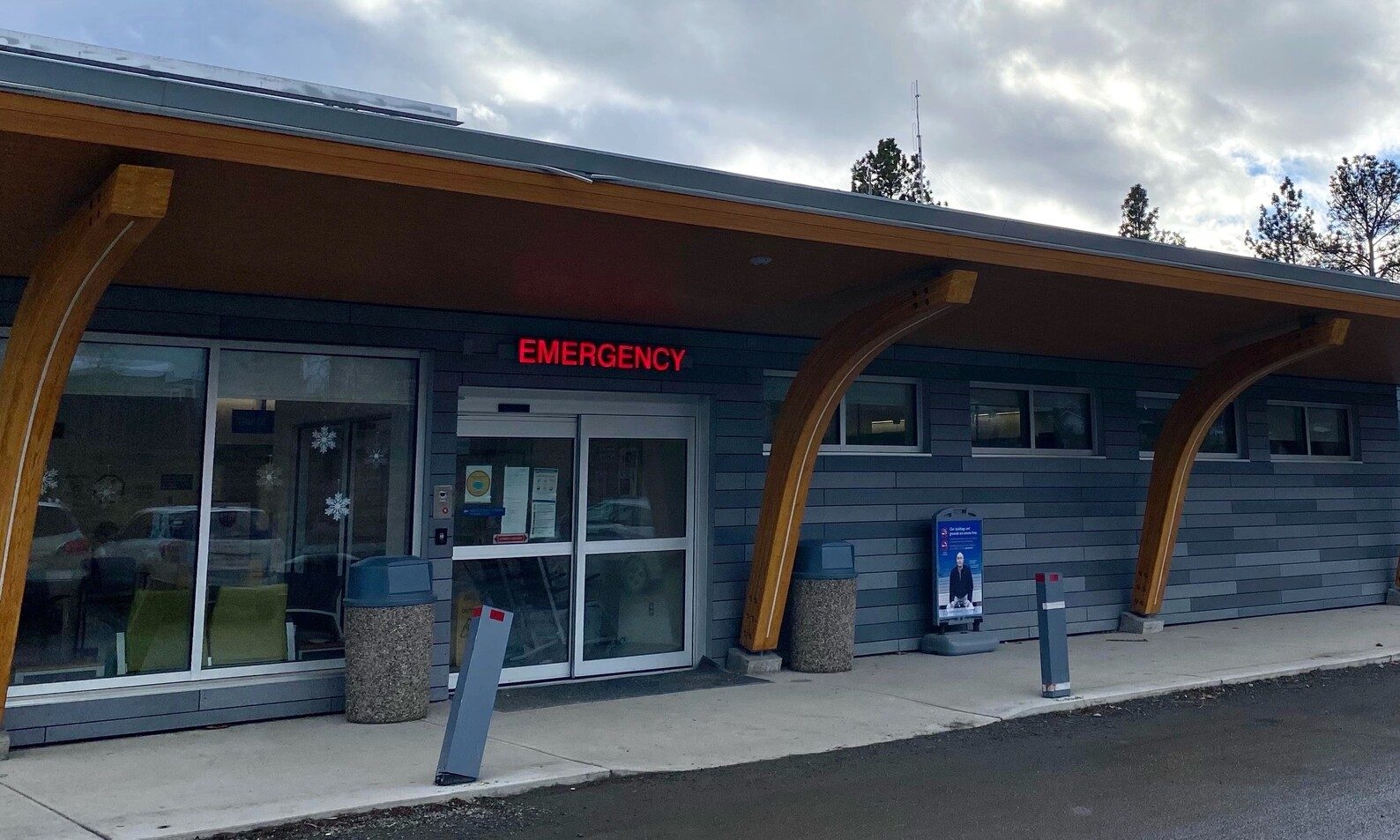
Merritt Mayor Mike Goetz will keep billing the B.C. government for Nicola Valley Hospital emergency room closures as unpaid costs approach $500,000.

Unpaid Emergency Room Invoices Near $500,000
Unpaid invoices sent to the provincial government over emergency room closures at Nicola Valley Hospital are approaching half a million dollars and could hit that mark by year’s end. Mayor Mike Goetz confirmed the city will not abandon its practice of billing Victoria for operational disruptions caused by staffing shortages.
The financial ledger shows charges of roughly $207,000 across 2023 and 2024, representing 39 days when the emergency department ceased operations. Disruptions continued with approximately 13 closures in 2025 and 15 so far in 2026, including one on election night. Daily charges are calculated at just under $2,000, based on the emergency room occupying about five per cent of the building’s floor space. The invoices also incorporate municipal costs incurred when Merritt Fire Rescue attends medical calls to assist during paramedic shortages while the emergency room is shut down.
New Administration Prompting Fresh Approach
Past health ministers have declined to remit payment for the local invoices. However, with the B.C. Conservatives scheduled to assume office—swearing in the government on Nov. 19 followed by cabinet ministers on Nov. 20—Goetz plans to re-engage provincial officials once leadership roles are finalized.
“I got a feeling with a different view on things, we might be able to come to some sort of consensus on all of this,” Goetz said. He noted that municipal council will request a formal meeting with the incoming health minister before submitting additional bills.
“We’re not going to let it drop,” Goetz said. “It’s just it’s a new person, and hopefully we can have an agreement on what we’re looking for and come to some sort of an agreement.”
Provincial Healthcare Commitments
Following an Oct. 24 election victory that secured a supermajority, the B.C. Conservatives pledged to balance fiscal discipline with sustained health-care spending. Premier-elect Lorne Doerkson stated the administration will preserve funding at levels set out in the 2026 budget, making healthcare funding the primary item in yearly budget deliberations. The incoming government has also committed a $50-million fund aimed at supporting at-risk rural medical practices.
BC STORIES
Why Okanagan Residents Leave Google Reviews for Courthouses, Bridges, and Hospitals
Google reviews in Kamloops and the Okanagan cover hospitals, courthouses, and bridges, featuring a wide mix of public feedback and rating trends.

Public Infrastructure Draws Ratings and Reviews
Online feedback platforms host ratings for a wide range of public facilities across the Okanagan and Kamloops, extending far beyond typical commercial establishments like shops and eateries. While Google reviews generally skew higher, lean toward five stars, and frequently feature anonymous authors or unverified profiles, users regularly post opinions on infrastructure, government facilities, and medical centers.
For instance, the Halston Bridge located in Kamloops holds a four-star score from 20 reviews. Reviewer Kip Clere left a five-star rating stating, “Great bridge. Much appreciated!” Conversely, Phil Caldwell offered a two-star assessment, writing, “Lots of garbage and graffitti.” Elsewhere in Kamloops, a local dam received two five-star submissions, including one from Patrick O’Donovan who posted, “Holds the water back real good!” and another from user “Ficus” noting it as a “Pretty cool spot if you appreciate dams.”
Hospitals and Community Services Experience Mixed Feedback
Ratings across regional medical facilities vary. Vernon Jubilee Hospital leads regional scores with a 3.7-star rating across 339 entries. Kelowna General Hospital stands at 3.4 stars from 579 reviews, Penticton Regional Hospital records 3.22 stars over 268 reviews, and Kamloops’ Royal Inland Hospital has three stars based on 462 reviews.
Patient feedback ranges from general complaints regarding door-front smokers and parking issues to specific remarks about wait times and care quality. In a one-star submission for Kelowna General Hospital, Corey Cudmore wrote, “This place is incredibly disappointing. I understand the amount of compassion fatigue, under-staffing, etc, but it should not come at a cost to the patients. Please for the love of everything get more staff into this place, and get more empathy training or something because being here is a living nightmare.” Regarding Penticton Regional Hospital, Jonathan St. Denis stated in a one-star post, “If I could give 0 stars for the emergency department I would. If you have an emergency you would be better off driving to the hospital in Oliver, an hour away.”
Social services also gather user input. The ASK Wellness Society, which aids individuals facing homelessness in Kamloops, holds a four-star rating across 117 entries. Reviewer Linda Milroy shared a three-star experience: “I have dealt with Ask Wellness on several occasions and I must say the first couple of times were absolutely great! My last experience with them has not been so good and I am out on a limb at this point.”
Courthouses and Municipal Spaces Rated by Visitors
Government offices and civic areas also accumulate public feedback. The Kelowna Law Courts maintain a 3.6-star rating from 27 reviews, while Vernon’s courthouse has 3.3 stars based on 81 reviews. Johnny Lowe posted a one-star comment for the Vernon court, writing, “The staff at the desk are rude and unhelpful. It’s honestly shocking how miserable some of them seem while interacting with customers. A simple smile or basic courtesy would go a long way.”
Kelowna City Hall holds a 3.4-star rating across 72 entries, where Annie Bailey submitted a four-star review noting, “Went to check on my taxes. The young man at the desk was very helpful and very polite.” Meanwhile, Kelowna City Park stands among the highest-rated government-managed locations, accumulating 4,800 reviews and a 4.6-star score. Reviewer Christian J awarded four stars, writing, “Lovely park. Great beach. Lots of space that is well maintained. But just like the city, this park gives a new money/preppy vibe that is not our thing.”
COMMUNITY
Cold-Weather Shelter Expansion Prepares Kamloops for Upcoming Winter
Kamloops outlines winter shelter plans, adding 30 seasonal beds and 30 emergency spaces to reach a capacity of up to 367 beds during extreme cold.

City Report Details Cold-Weather Shelter Capacity
A new municipal report set for presentation at Tuesday’s council meeting reveals that Kamloops is expanding its winter shelter system to 337 beds, up from the current year-round capacity of 307 spaces. Capacity can be further boosted to 367 spaces whenever severe weather events strike the area.
The expansion includes 20 temporary winter beds located at the Kamloops Yacht Club, which will remain available until March 31, 2027. Additionally, the Mustard Seed Kamloops will maintain 24-hour staffing at the 1140 River St. site, while Out of the Cold will continue to run its 10-bed Olive Branch program at Stuart Wood to support vulnerable seniors.
Thresholds for Extreme Weather Activation
An extra 30 emergency spaces will be made available through Canadian Mental Health Association (CMHA) Kamloops at its existing supportive housing and shelter locations. According to the city report, these spaces operate differently than standard temporary winter beds because they are activated only when established cold-weather criteria are met.
Emergency alerts and activations occur when Environment Canada forecasts reach -5 C or lower, accounting for wind chill, within a 24-hour window, or when temperatures drop to 0 C during an official weather warning. When activated, the CMHA Kamloops Envision Shuttle, which normally drives 16 hours daily to transport individuals to available beds, can extend its hours and capacity using funding provided by the Ministry of Emergency Management and Climate Readiness.
Local Homelessness Count and Winter Response
The city’s point-in-time homelessness count from October 2025 identified at least 419 individuals experiencing homelessness over 24 hours, including 274 residing in shelters and 136 living in unsheltered spaces. The existing year-round network includes 40 spaces at the newly opened Solace Shelter on Glenfair Dr.
To assist unsheltered residents during cold periods, local emergency personnel—including police, firefighters, community services officers, and outreach workers—will distribute clothing, blankets, and essential cold-weather items during regular wellness checks and patrols.
Your Current 3 Day Forecast — November 22, 2026
Your Current 3 Day Forecast — November 21, 2026

B.C. Lawmaker Urges New Premier to Retain AI Lawsuit After Latest ChatGPT Revelations

BC Conservatives Assign Key Legislative Roles Following Cabinet Selection

What B.C.’s New Conservative Government and Cabinet Mean for You
Your Current 3 Day Forecast — November 20, 2026

Opinion: John Rustad Has to Go

B.C. Supreme Court Grants Cowichan Tribes Title to Historic Richmond Lands and Fishing Rights

Vancouver Canucks Gear Up for a Make-or-Break 2025–26 Season

Province to Appeal Cowichan Tribes Land Decision

Kamloops Blazers Announce Off-Season Changes Ahead of 2025–26 Season

Kamloops Prepares Four Reverse Referendums on $188M in Major Projects
-

 COMMUNITY6 days ago
Why Cannonball-Shaped Volcanic Rocks Cover the Cliffs of Summerland
-

 NATIONAL STORIES5 days ago
House Unanimously Approves Bill Giving Young Offenders Access to Addiction Treatment
-
NATIONAL STORIES6 days ago
How October Inflation Rates Shifted Across Canadian Provinces
-
 NATIONAL STORIES6 days ago
How a Fake Invoice Cost a Shuswap Business Over $24,000
-
SPORTS5 days ago
Inside Toronto’s Royal Rodeo, Young Riders Show Grit in Rough-Stock Events
-

 LOCAL6 days ago
Clearance Underway After Sunday Afternoon Crash Near University Way Stalls Highway 97 Traffic
-

 COMMUNITY6 days ago
Inside the Busy Life of a 25-Year-Old Strategist Shaping North Okanagan Politics
-

 BC STORIES5 days ago
Why Telus Is Walking Away From High-Profile Vancouver AI Projects