HEALTH
Why You Might Want to Think Twice Before Wearing Shorts on a Plane


Why You Might Want to Think Twice Before Wearing Shorts on a Plane
By The Current
If you’re heading somewhere warm, shorts might seem like the obvious choice for the flight.
According to some flight attendants, you may want to reconsider.
Veteran flight attendant Charity Nelms recently offered travellers a rather unpleasant piece of advice: wear pants on the plane.
Nelms, who has worked as a flight attendant for more than a decade, says passengers would probably be surprised by what airline seats encounter between cleanings.
“I am letting you know, from a flight attendant, the amount of things I have seen on the seat,” Nelms said in a TikTok video.
Her recommendation was straightforward: avoid shorts, skirts and dresses if they leave your legs directly touching the seat.
“Wear full pants,” she urged.
And she isn’t the only flight attendant making the case.
Dallas-based flight attendant Cher Killough shared an even more graphic example, saying she witnessed four diapers being changed directly on passenger seats during a single flight.
All four, she said, contained more than just a wet diaper.
It’s the kind of information that can make you look at your economy-class seat a little differently.
How Clean Is Your Airplane Seat?
Airplanes are cleaned regularly, but the level of cleaning depends heavily on the aircraft’s schedule.
Between flights, crews generally conduct relatively quick turnaround cleanings. The priority is typically removing garbage and cleaning high-use areas such as lavatories and galleys so the aircraft can get back into service.
Aircraft parked overnight may receive a more substantial cleaning, including greater attention to passenger seating areas.
Then there are deep cleans.
Those can involve much more extensive work around seats, storage compartments and other parts of the cabin that passengers regularly touch.
The catch is that deep cleaning doesn’t necessarily happen after every flight—or even every few flights.
Schedules vary considerably between airlines.
That means hundreds of passengers may occupy a seat between more intensive cleanings.
Don’t Forget the Seatbelt
Nelms says the seat itself isn’t the only thing travellers should think about.
One of the most frequently handled items on an aircraft is sitting directly across your lap: the seatbelt.
Passengers grab the buckle, adjust the strap and pull on the belt throughout every flight.
Nelms recommends wiping down both the metal buckle and the fabric portion of the belt when you sit down.
Why?
Because everything from spilled drinks to food, baby vomit and other bodily fluids can potentially end up on them.
It isn’t exactly something airlines highlight in their safety demonstration.
And Please Wear Shoes to the Bathroom
There is another piece of flight-attendant advice worth remembering.
Don’t walk into an airplane lavatory wearing only socks.
Anyone who has flown regularly has probably encountered a mysterious wet floor inside an aircraft bathroom.
Nelms’ warning is simple: don’t automatically assume that liquid is water.
Socks also absorb whatever happens to be on the floor, meaning you’re potentially carrying it back to your seat.
Wear your shoes.
The Current Takeaway
There’s no reason to become paranoid every time you board an airplane.
But a little common sense probably doesn’t hurt.
Airliners carry hundreds—or sometimes thousands—of passengers over a relatively short period of time. Turnaround schedules can be tight, and cleaning crews don’t necessarily have the opportunity to scrub every surface between flights.
So the next time you’re getting dressed for the airport, you might want to consider three simple things:
Wear pants. Wipe down the surfaces around your seat. And keep your shoes on when visiting the bathroom.
It may not be the glamorous side of air travel.
But sometimes the things flight attendants know are exactly the things passengers would rather not think about.

HEALTH
Why Merritt Will Continue Billing B.C. for Emergency Room Closures
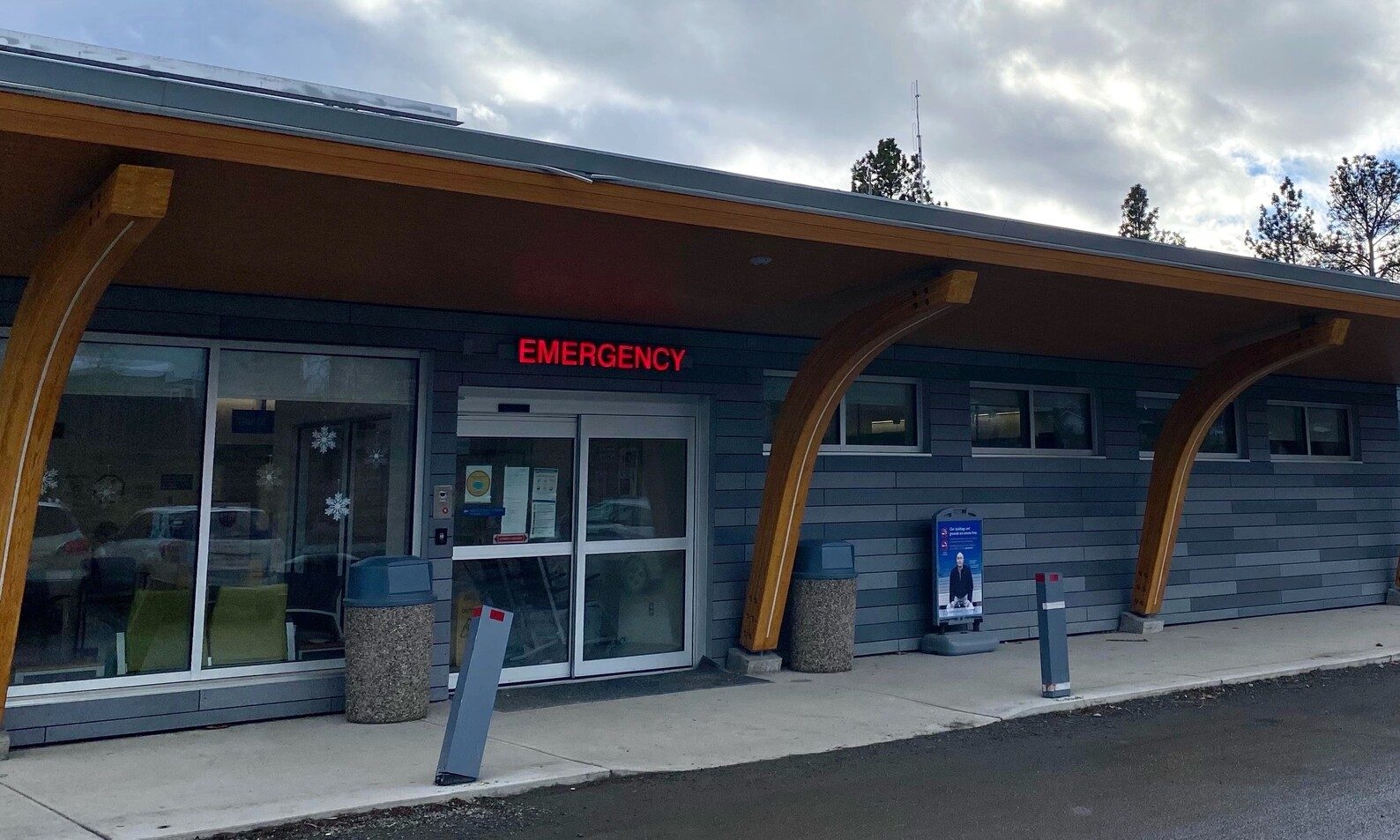
Merritt Mayor Mike Goetz will keep billing the B.C. government for Nicola Valley Hospital emergency room closures as unpaid costs approach $500,000.
Unpaid Emergency Room Invoices Near $500,000
Unpaid invoices sent to the provincial government over emergency room closures at Nicola Valley Hospital are approaching half a million dollars and could hit that mark by year’s end. Mayor Mike Goetz confirmed the city will not abandon its practice of billing Victoria for operational disruptions caused by staffing shortages.
The financial ledger shows charges of roughly $207,000 across 2023 and 2024, representing 39 days when the emergency department ceased operations. Disruptions continued with approximately 13 closures in 2025 and 15 so far in 2026, including one on election night. Daily charges are calculated at just under $2,000, based on the emergency room occupying about five per cent of the building’s floor space. The invoices also incorporate municipal costs incurred when Merritt Fire Rescue attends medical calls to assist during paramedic shortages while the emergency room is shut down.
New Administration Prompting Fresh Approach
Past health ministers have declined to remit payment for the local invoices. However, with the B.C. Conservatives scheduled to assume office—swearing in the government on Nov. 19 followed by cabinet ministers on Nov. 20—Goetz plans to re-engage provincial officials once leadership roles are finalized.
“I got a feeling with a different view on things, we might be able to come to some sort of consensus on all of this,” Goetz said. He noted that municipal council will request a formal meeting with the incoming health minister before submitting additional bills.
“We’re not going to let it drop,” Goetz said. “It’s just it’s a new person, and hopefully we can have an agreement on what we’re looking for and come to some sort of an agreement.”
Provincial Healthcare Commitments
Following an Oct. 24 election victory that secured a supermajority, the B.C. Conservatives pledged to balance fiscal discipline with sustained health-care spending. Premier-elect Lorne Doerkson stated the administration will preserve funding at levels set out in the 2026 budget, making healthcare funding the primary item in yearly budget deliberations. The incoming government has also committed a $50-million fund aimed at supporting at-risk rural medical practices.
BC STORIES
Why Okanagan Residents Leave Google Reviews for Courthouses, Bridges, and Hospitals
Google reviews in Kamloops and the Okanagan cover hospitals, courthouses, and bridges, featuring a wide mix of public feedback and rating trends.
Public Infrastructure Draws Ratings and Reviews
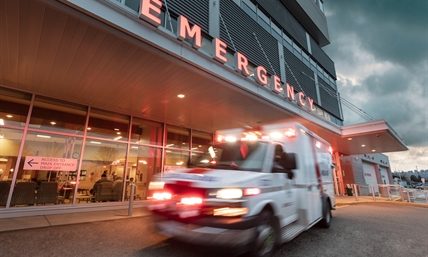
Online feedback platforms host ratings for a wide range of public facilities across the Okanagan and Kamloops, extending far beyond typical commercial establishments like shops and eateries. While Google reviews generally skew higher, lean toward five stars, and frequently feature anonymous authors or unverified profiles, users regularly post opinions on infrastructure, government facilities, and medical centers.
For instance, the Halston Bridge located in Kamloops holds a four-star score from 20 reviews. Reviewer Kip Clere left a five-star rating stating, “Great bridge. Much appreciated!” Conversely, Phil Caldwell offered a two-star assessment, writing, “Lots of garbage and graffitti.” Elsewhere in Kamloops, a local dam received two five-star submissions, including one from Patrick O’Donovan who posted, “Holds the water back real good!” and another from user “Ficus” noting it as a “Pretty cool spot if you appreciate dams.”
Hospitals and Community Services Experience Mixed Feedback
Ratings across regional medical facilities vary. Vernon Jubilee Hospital leads regional scores with a 3.7-star rating across 339 entries. Kelowna General Hospital stands at 3.4 stars from 579 reviews, Penticton Regional Hospital records 3.22 stars over 268 reviews, and Kamloops’ Royal Inland Hospital has three stars based on 462 reviews.
Patient feedback ranges from general complaints regarding door-front smokers and parking issues to specific remarks about wait times and care quality. In a one-star submission for Kelowna General Hospital, Corey Cudmore wrote, “This place is incredibly disappointing. I understand the amount of compassion fatigue, under-staffing, etc, but it should not come at a cost to the patients. Please for the love of everything get more staff into this place, and get more empathy training or something because being here is a living nightmare.” Regarding Penticton Regional Hospital, Jonathan St. Denis stated in a one-star post, “If I could give 0 stars for the emergency department I would. If you have an emergency you would be better off driving to the hospital in Oliver, an hour away.”
Social services also gather user input. The ASK Wellness Society, which aids individuals facing homelessness in Kamloops, holds a four-star rating across 117 entries. Reviewer Linda Milroy shared a three-star experience: “I have dealt with Ask Wellness on several occasions and I must say the first couple of times were absolutely great! My last experience with them has not been so good and I am out on a limb at this point.”
Courthouses and Municipal Spaces Rated by Visitors
Government offices and civic areas also accumulate public feedback. The Kelowna Law Courts maintain a 3.6-star rating from 27 reviews, while Vernon’s courthouse has 3.3 stars based on 81 reviews. Johnny Lowe posted a one-star comment for the Vernon court, writing, “The staff at the desk are rude and unhelpful. It’s honestly shocking how miserable some of them seem while interacting with customers. A simple smile or basic courtesy would go a long way.”
Kelowna City Hall holds a 3.4-star rating across 72 entries, where Annie Bailey submitted a four-star review noting, “Went to check on my taxes. The young man at the desk was very helpful and very polite.” Meanwhile, Kelowna City Park stands among the highest-rated government-managed locations, accumulating 4,800 reviews and a 4.6-star score. Reviewer Christian J awarded four stars, writing, “Lovely park. Great beach. Lots of space that is well maintained. But just like the city, this park gives a new money/preppy vibe that is not our thing.”
COMMUNITY
Cold-Weather Shelter Expansion Prepares Kamloops for Upcoming Winter
Kamloops outlines winter shelter plans, adding 30 seasonal beds and 30 emergency spaces to reach a capacity of up to 367 beds during extreme cold.

City Report Details Cold-Weather Shelter Capacity
A new municipal report set for presentation at Tuesday’s council meeting reveals that Kamloops is expanding its winter shelter system to 337 beds, up from the current year-round capacity of 307 spaces. Capacity can be further boosted to 367 spaces whenever severe weather events strike the area.
The expansion includes 20 temporary winter beds located at the Kamloops Yacht Club, which will remain available until March 31, 2027. Additionally, the Mustard Seed Kamloops will maintain 24-hour staffing at the 1140 River St. site, while Out of the Cold will continue to run its 10-bed Olive Branch program at Stuart Wood to support vulnerable seniors.
Thresholds for Extreme Weather Activation
An extra 30 emergency spaces will be made available through Canadian Mental Health Association (CMHA) Kamloops at its existing supportive housing and shelter locations. According to the city report, these spaces operate differently than standard temporary winter beds because they are activated only when established cold-weather criteria are met.
Emergency alerts and activations occur when Environment Canada forecasts reach -5 C or lower, accounting for wind chill, within a 24-hour window, or when temperatures drop to 0 C during an official weather warning. When activated, the CMHA Kamloops Envision Shuttle, which normally drives 16 hours daily to transport individuals to available beds, can extend its hours and capacity using funding provided by the Ministry of Emergency Management and Climate Readiness.
Local Homelessness Count and Winter Response
The city’s point-in-time homelessness count from October 2025 identified at least 419 individuals experiencing homelessness over 24 hours, including 274 residing in shelters and 136 living in unsheltered spaces. The existing year-round network includes 40 spaces at the newly opened Solace Shelter on Glenfair Dr.
To assist unsheltered residents during cold periods, local emergency personnel—including police, firefighters, community services officers, and outreach workers—will distribute clothing, blankets, and essential cold-weather items during regular wellness checks and patrols.
Your Current 3 Day Forecast — November 22, 2026
Your Current 3 Day Forecast — November 21, 2026

B.C. Lawmaker Urges New Premier to Retain AI Lawsuit After Latest ChatGPT Revelations

BC Conservatives Assign Key Legislative Roles Following Cabinet Selection

What B.C.’s New Conservative Government and Cabinet Mean for You
Your Current 3 Day Forecast — November 20, 2026

Opinion: John Rustad Has to Go

B.C. Supreme Court Grants Cowichan Tribes Title to Historic Richmond Lands and Fishing Rights

Vancouver Canucks Gear Up for a Make-or-Break 2025–26 Season

Province to Appeal Cowichan Tribes Land Decision

Kamloops Blazers Announce Off-Season Changes Ahead of 2025–26 Season

Kamloops Prepares Four Reverse Referendums on $188M in Major Projects
-

 COMMUNITY6 days ago
Why Cannonball-Shaped Volcanic Rocks Cover the Cliffs of Summerland
-

 NATIONAL STORIES5 days ago
House Unanimously Approves Bill Giving Young Offenders Access to Addiction Treatment
-
NATIONAL STORIES6 days ago
How October Inflation Rates Shifted Across Canadian Provinces
-
 NATIONAL STORIES6 days ago
How a Fake Invoice Cost a Shuswap Business Over $24,000
-
SPORTS6 days ago
Inside Toronto’s Royal Rodeo, Young Riders Show Grit in Rough-Stock Events
-

 LOCAL6 days ago
Clearance Underway After Sunday Afternoon Crash Near University Way Stalls Highway 97 Traffic
-

 COMMUNITY6 days ago
Inside the Busy Life of a 25-Year-Old Strategist Shaping North Okanagan Politics
-

 BC STORIES5 days ago
Why Telus Is Walking Away From High-Profile Vancouver AI Projects