COMMUNITY
A Massive Floating Island Appeared on Williston Reservoir — Then Mysteriously Vanished
A massive floating island estimated at 9,800 square metres was spotted in B.C.’s Williston Reservoir before vanishing from recent satellite imagery.


Unusual Discovery in Northern B.C. Reservoir
A massive, tree-covered land mass recently startled local residents and officials after it was spotted floating in the Williston Reservoir north of Mackenzie. Local resident Rocky Avery obtained video and photographic footage of the island captured by a boater, which quickly gained wide attention after he posted the material online.
“It was a pretty amazing sight to see, never seen anything like that in my 40 years in this country,” said Avery, who shared the footage ahead of a local fishing derby to alert both boaters and utility officials.
Satellite Imagery Confirms Floating Mass
The report initially drew skepticism from B.C. Hydro, given the prevalence of AI-generated content online. “It’s certainly something we’ve not heard of before,” said spokesperson Bob Gammer. “And with not very many people reporting it, it was difficult to locate.”
However, satellite photos taken July 21 verified the object’s existence in the main body of the reservoir, roughly 100 kilometres west of the W.A.C. Bennett Dam and west of Finlay Bay. Measurements indicated the island spanned approximately 70 metres by 140 metres, covering roughly 9,800 square metres—an area comparable to two NFL football fields.
Vanishing Act and Possible Cause
By Aug. 5, updated satellite images revealed that the land mass had disappeared from view. “We’ve been taking more updated snapshots and we can’t see the object anymore. So it’s disappeared now,” Gammer stated. “It doesn’t mean it’s gone to the bottom of the reservoir. It may have returned to a more sheltered area along the shoreline.”
High snowpacks during the winter alongside steady summer rainfall filled the man-made lake—the seventh-largest reservoir globally—to capacity, prompting B.C. Hydro to open spillways at the dam in June and July. Gammer explained that accumulated driftwood over many years likely allowed trees and plants to root along the shore, and high water levels finally detached the mass. “We haven’t had a full reservoir in 14 years,” Gammer noted. “We can’t pinpoint the origin of this floating island [but that’s] one explanation that seems reasonable.”
Local Impacts and Safety Concerns
The record water levels have significantly altered the local environment, washing away sand dunes often used for quad-biking and sweeping extra debris into the lake. “There’s areas we would never even drive a boat on before, and now we’re going up over top of it,” Avery said, warning that choppy water makes floating logs difficult to spot. “Some are full-size trees and it’ll do a lot of damage to your boat. So you got to be super careful.”
While rare for Williston Lake, floating islands occur regularly in dam construction worldwide, such as Wisconsin’s Lake Chippewa and Lake Victoria in Africa. B.C. Hydro does not anticipate operational disruptions but will continue monitoring satellite data for any reappearance of the island, relying in part on public reports to track conditions on the vast reservoir.







BC STORIES
What It Now Costs to Live on Vancouver Island as Living Wages Rise for 2026
Updated 2026 living wage rates show increases across Vancouver Island, reaching $28.20 in Greater Victoria as housing and food expenses continue to climb.
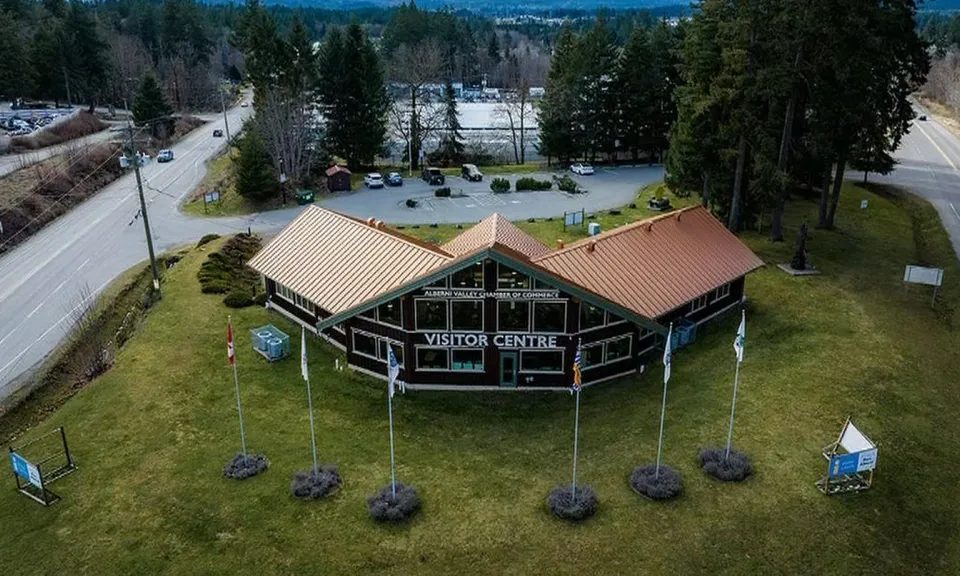
Living Wages Increase Across Vancouver Island
Working families across Vancouver Island are facing higher expenses, with new 2026 calculations showing significant hourly wage increases required to meet basic living costs. In Greater Victoria, each working parent in a family of four now needs to earn $28.20 an hour, reflecting a 2.9 per cent increase. Salt Spring Island recorded the highest regional requirement at $28.50 per hour after a 0.2 per cent rise.
Substantial jumps were also recorded in other island communities. The Comox Valley experienced a 5.3 per cent surge, raising its living wage to $26.70 per hour. The living wage in the Cowichan Valley rose 4.1 per cent to $26.80, while Port Alberni saw a 5.1 per cent increase to $23.75. In Nanaimo, the hourly rate grew 2.7 per cent to reach $25.05.
Provincial Benchmarks and Growing Wage Gaps
The updated 2026 figures encompass 22 communities across British Columbia, establishing the hourly pay required for two working parents supporting two children to cover essential needs like food, housing, child care, and transportation. Rates across B.C. range from $22.15 in Grand Forks to $30.50 in Whistler. Metro Vancouver’s required rate rose 2.5 per cent to $28.55, creating a $10.30 difference above the provincial minimum wage of $18.25. In Metro Vancouver alone, 35 per cent of paid workers—totaling more than 500,000 people—earn less than the living wage threshold.
Housing, Food, and Child Care Drive Rising Costs
Housing remains the single largest expense for families, followed closely by food expenses, which increased by 4.1 per cent over the past year. Additional budget burdens stem from rising child care costs, with out-of-pocket expenses climbing by nearly $160 monthly for a four-person family in Metro Vancouver.
“Although the rental market has softened and market rents have stabilized, the Canada Mortgage and Housing Corporation reports that rent reductions and vacancies are concentrated among new, high-end buildings,” said Iglika Ivanova, report lead author and co-executive director of BC Policy Solutions. “The rental market remains tight for lower-income households, particularly families needing two or more bedrooms.”
Broader Economic Pressures
The report highlights that essential items such as fuel, food, and clothing continue to see price increases, aggravated by international trade friction and the conflict in Iran. While government programs have provided some relief, the report notes that the cancellation of B.C.’s Climate Action Tax Credit has increased the financial difficulty for modest-income households.
COMMUNITY
Why Cannonball-Shaped Volcanic Rocks Cover the Cliffs of Summerland
Explore the mystery of Summerland’s cannonball-shaped volcanic rocks, their local history, and competing geological theories about their origins.
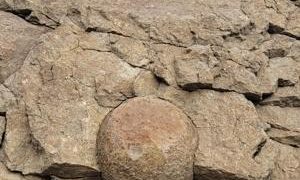
Unusual Spherical Stones embedded in Okanagan Cliffs
Distinctive cannonball-shaped stones remain buried in volcanic ash cliffs north of Summerland, drawing ongoing curiosity from residents and geologists. While many of the most accessible specimens have been gathered over the years, additional formations remain embedded in local cliff faces, particularly where excavators or landscape crews have exposed the rock.
Local Theories on Volcanic Formation
Former Summerland mayor David Gregory has spent decades researching the formations. He theorizes that the stones originated as molten lava ejected from Rattlesnake Mountain roughly 55 to 60 million years ago. According to Gregory, airborne lava cooled as it fell into a primeval lake that once reached the current elevation of Highway 97. He suggests that rapid cooling in water allowed lower-altitude stones to retain round shapes with crusty surfaces, whereas stones hitting dry land at higher elevations flattened into squashed, irregular shapes with visible crystallization.
Gregory points to nearby pillow lava discoveries along the highway as further evidence of an ancient shoreline. He believes a precise combination of chemical composition, lava viscosity, and protective mud and ash preserved the stones where they landed. His theory also attributes the fragility and fracturing of many cannonballs to rapid cooling rates. Gregory noted that a visiting Italian volcanologist had not seen similar formations elsewhere, though the cannonballs can occasionally be found in Kelowna and Penticton.
Alternative Hypotheses and Community History
Scientific consensus on the exact origin of the stones remains open. An alternative hypothesis published by the Lake Country Museum and Archives in 2014 suggests the rocks gained their spherical shapes by tumbling down volcanic slopes following impact.
Beyond geological debate, the cannonballs hold a place in local culture. roadside fruit stands sold them as souvenirs during the 1950s, and long-term residents have integrated them into private collections, water fountains, and garden bridges. Preservation attempts have faced challenges; during a 2007 widening project on Highway 97, exposed cannonballs were removed after transportation officials determined the surrounding cliff face was unstable.
COMMUNITY
Inside the Busy Life of a 25-Year-Old Strategist Shaping North Okanagan Politics
At 25, Red Seal Chef and campaign manager Simon Dufresne is shaping North Okanagan politics following a key B.C. Conservative victory in Vernon-Lumby.
Behind the Scenes of a Historic Electoral Win
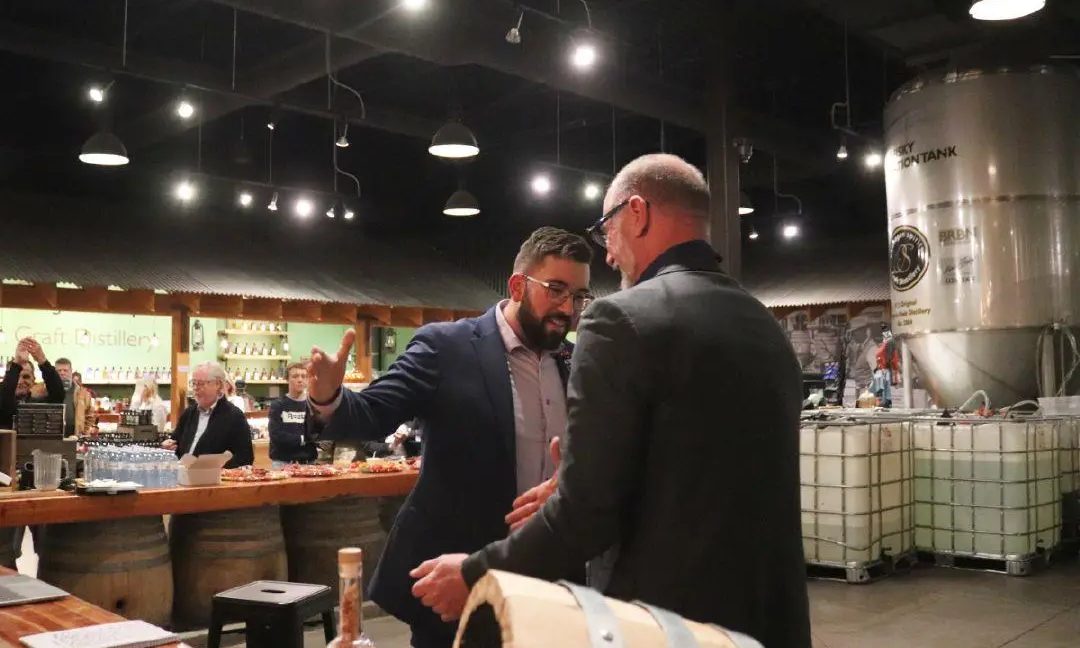
When election results rolled in on Oct. 24, campaign manager Simon Dufresne announced live vote counts to a crowded room at Vernon’s Okanagan Spirits Craft Distillery. His work culminated in a provincial victory for B.C. Conservative candidate Kevin Acton over NDP incumbent Harwinder Sandhu in the Vernon-Lumby riding. Following Sandhu’s concession around 9 p.m., Dufresne took the microphone to open Acton’s victory speech.
“Before anything else, I’d like to thank the volunteers. This campaign would have been nothing without each and every one of you,” Dufresne told the crowd. The result marked the largest electoral triumph to date for the 25-year-old operative, who has quietly spent nearly a decade assisting Conservative campaigns across municipal, provincial, and federal lines.
A Decade of Political and Community Involvement
Dufresne first entered political organizing at age 16 during former BC Liberal MLA Eric Foster’s 2017 re-election effort. Foster quickly recognized the teenager’s instincts, noting that basic office chores did not match his potential.
“He’s got political savvy,” Foster said. “I don’t know if you can teach that. He reads the room. He reads the vibe in the community.” Foster added that while selling such a young candidate can be challenging, Dufresne was likely already prepared for a campaign of his own, saying, “I think he would have been ready to run.”
Over the years, Dufresne expanded his portfolio by supporting Darrin Taylor’s 2018 Vernon mayoral bid, Mike De Jong’s 2018 BC Liberal leadership run, Scott Anderson’s federal efforts, and Wayne Lippert’s recent mayoral run. His work with Acton began in 2022 through the BC United nomination and continued through Acton’s subsequent Independent and B.C. Conservative campaigns.
Managing High-Volume Workloads Beyond Politics
Dufresne credits his family for instilling a strong work ethic, which often translates into 16-hour workdays. Outside of campaign management, he is a certified Red Seal Chef running a private home dining service, and he re-launched his father’s business, Simon’s Coins, in January 2025. The coin business recently supported community efforts by contributing a $5,000 donation to the inaugural Ringing in Hope Christmas Kettle Campaign Kickoff Breakfast.
His civic involvement extends into local service programs as well. Dufresne serves as president of the Vernon Lions Club and works as a master training officer with the Royal Canadian Sea Cadet program, where he earned the Gold Duke of Edinburgh’s International Award this past summer.
Core Beliefs and Long-Term Aspirations
When running campaigns, Dufresne stresses team building, establishing departmental leads, and maintaining clear communication. On policy, he cites concerns over issues like open drug use and the province’s pilot decriminalization initiative as primary motivations for his involvement.
“I just wanted to do everything in my power to maybe pump the brakes and turn the car around a little bit, just try to help people, help the community really, and that’s kind of how I look at it,” Dufresne explained. “I’ve always stood for conservative values, and sometimes when people hear conservative values they get scared, right? But it’s really not scary. It’s more like lower taxes, stronger policing, more freedoms.”
Describing himself as a probable lifelong conservative, Dufresne remains open about his future path in regional leadership. “I think there will definitely be a run at some point,” he said. “We’re just not sure when or for what yet.”
Your Current 3 Day Forecast — November 22, 2026
Your Current 3 Day Forecast — November 21, 2026

B.C. Lawmaker Urges New Premier to Retain AI Lawsuit After Latest ChatGPT Revelations

BC Conservatives Assign Key Legislative Roles Following Cabinet Selection

What B.C.’s New Conservative Government and Cabinet Mean for You
Your Current 3 Day Forecast — November 20, 2026

Opinion: John Rustad Has to Go

B.C. Supreme Court Grants Cowichan Tribes Title to Historic Richmond Lands and Fishing Rights

Vancouver Canucks Gear Up for a Make-or-Break 2025–26 Season

Province to Appeal Cowichan Tribes Land Decision

Kamloops Blazers Announce Off-Season Changes Ahead of 2025–26 Season

Kamloops Prepares Four Reverse Referendums on $188M in Major Projects
-
 COMMUNITY6 days ago
Why Cannonball-Shaped Volcanic Rocks Cover the Cliffs of Summerland
-

 NATIONAL STORIES5 days ago
House Unanimously Approves Bill Giving Young Offenders Access to Addiction Treatment
-
NATIONAL STORIES6 days ago
How October Inflation Rates Shifted Across Canadian Provinces
-
 NATIONAL STORIES6 days ago
How a Fake Invoice Cost a Shuswap Business Over $24,000
-
SPORTS5 days ago
Inside Toronto’s Royal Rodeo, Young Riders Show Grit in Rough-Stock Events
-
 LOCAL6 days ago
Clearance Underway After Sunday Afternoon Crash Near University Way Stalls Highway 97 Traffic
-

 COMMUNITY6 days ago
Inside the Busy Life of a 25-Year-Old Strategist Shaping North Okanagan Politics
-
 BC STORIES5 days ago
Why Telus Is Walking Away From High-Profile Vancouver AI Projects