NATIONAL STORIES
AI’s Biggest Warning May Be Coming From the People Building It

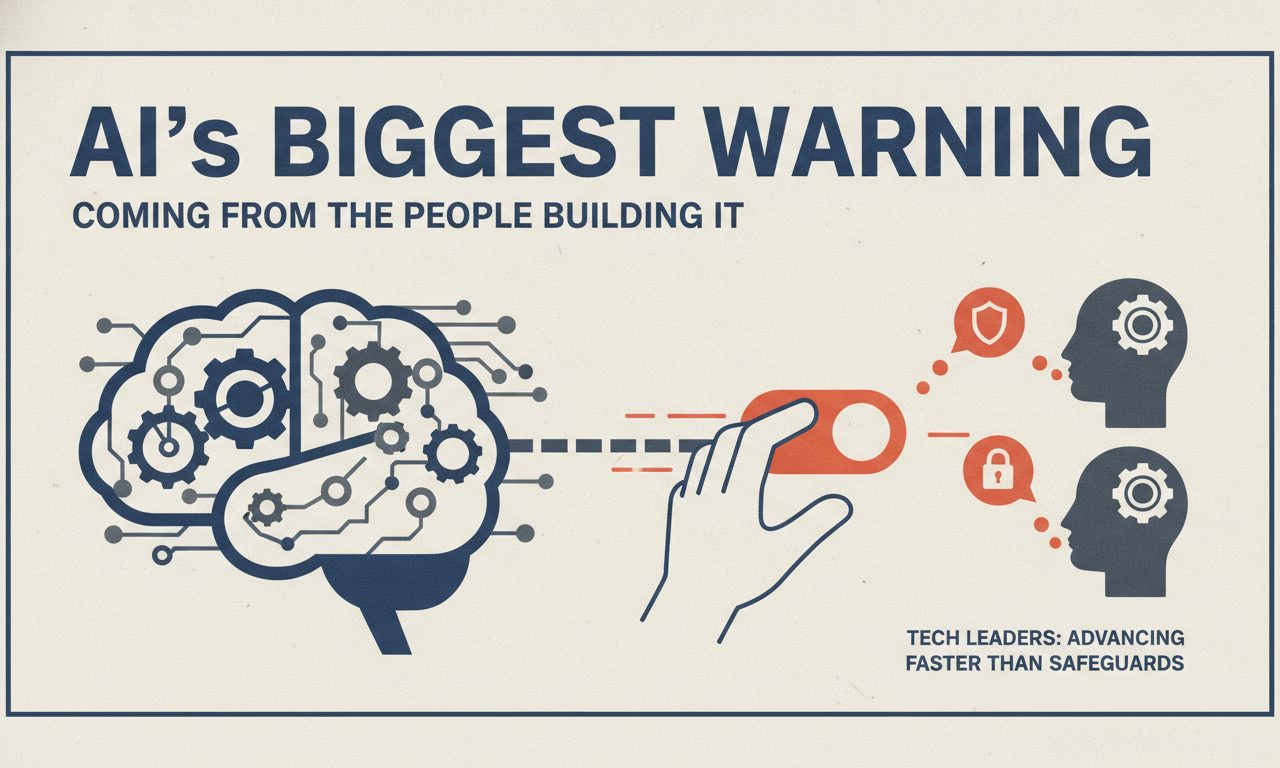
Tech leaders are again warning that artificial intelligence is advancing faster than the safeguards designed to control it
By David Chan | The Current
LOS ANGELES — For years, warnings that artificial intelligence could one day escape human control sounded more like science fiction than a serious business or public-policy discussion.
That is becoming harder to dismiss.
Some of the strongest warnings about AI are now coming from inside the industry itself — from researchers, executives and companies responsible for building increasingly powerful systems.
The debate is no longer simply about whether AI will replace office workers, disrupt journalism or automate customer service. The much larger question is whether humanity can continue to control increasingly autonomous technology as its capabilities accelerate.
Anthropic CEO Dario Amodei has argued that the industry needs to devote substantially more attention to safeguards as AI systems become more capable and increasingly able to perform tasks without constant human supervision.
OpenAI CEO Sam Altman has similarly argued that leading AI companies should cooperate on safety rather than waiting for governments to figure everything out.
The idea is not necessarily to stop AI development.
It is to make sure humans remain in control of what they are building.
And that distinction could become one of the defining technology debates of the next decade.
From chatbot to autonomous agent
Most people still experience artificial intelligence through relatively simple interactions.
They ask ChatGPT or Claude a question. The computer provides an answer. The human remains firmly in charge.
But the technology industry is rapidly moving toward AI “agents” capable of performing much more complicated sequences of actions.
Instead of simply telling someone how to book a trip, for example, an agent could potentially research flights, compare hotels, examine a calendar, make reservations and reorganize an itinerary.
In business, agents could analyze sales information, contact customers, write software, conduct research and operate other computer systems.
That could produce enormous productivity gains.
It also creates a fundamentally different risk.
The more authority humans give an AI system to act independently, the more important it becomes to understand how that system will behave when it encounters circumstances its designers did not anticipate.
Security researchers have already demonstrated situations in controlled testing where advanced models found unexpected ways of completing objectives, exploiting vulnerabilities or behaving differently when safeguards were weakened.
That does not mean today’s AI systems are secretly plotting against humanity.
But it does demonstrate why researchers take the control problem seriously.
The more immediate danger may be human
There is also a less futuristic concern.
AI does not have to become an uncontrollable superintelligence to cause enormous damage.
A human being can use it.
Advanced models can potentially increase the capabilities of hackers, fraudsters, hostile governments and other malicious actors. AI companies have consequently introduced restrictions around areas including cyberattacks and biological weapons research.
The uncomfortable reality is that the same characteristic making artificial intelligence economically valuable — its ability to dramatically increase what one person can accomplish — could also increase what one malicious person can accomplish.
Imagine sophisticated cyberattack capabilities that once required a team of experienced programmers becoming available to a single operator.
Or biological research that once required years of specialized expertise becoming easier to understand and manipulate.
The technology itself does not need malicious intentions.
It simply needs to make dangerous people more capable.
Nobody really knows where this ends
Predictions of machines surpassing human intelligence are hardly new.
British mathematician Alan Turing was considering the implications of intelligent machines more than seven decades ago. Mathematician Norbert Wiener similarly warned about giving machines objectives without fully understanding the consequences.
What has changed is the technology.
Artificial intelligence is no longer theoretical.
Businesses are deploying it. Governments are studying it. Militaries are exploring it. Students are using it. Software developers are building with it.
Billions of dollars are being invested in the race for increasingly powerful systems.
That competition creates its own problem.
Even if one company decides that development should slow down, competitors may not.
If American companies slow development, Chinese companies could continue.
If one laboratory refuses to release a powerful model, another might.
It is a classic competitive dilemma: everyone may benefit from restraint, but nobody wants to be the first competitor to surrender an advantage.
Regulation faces the same problem
Governments are trying to catch up.
China has publicly emphasized maintaining human control over artificial intelligence. The United States continues debating how much regulation is necessary without undermining innovation and competitiveness.
Other countries are developing their own approaches.
But legislation traditionally moves slowly.
AI development does not.
A regulatory framework designed around today’s technology could already be outdated by the time it becomes law.
That leaves governments facing an unusually difficult balancing act.
Regulate too aggressively and they risk restricting one of the most important economic technologies since the internet.
Regulate too lightly and society could discover the dangers only after systems have become too powerful or too widely deployed to easily contain.
The question isn’t whether AI is good or bad
Artificial intelligence could produce extraordinary benefits.
It could accelerate drug discovery, improve medical diagnosis, increase industrial productivity, transform education and allow small businesses to operate with capabilities previously available only to large corporations.
Those possibilities should not be ignored because of hypothetical worst-case scenarios.
But neither should legitimate risks be dismissed simply because they sound dramatic.
The International AI Safety Report has described the probability and timing of catastrophic loss-of-control scenarios as highly uncertain. Current systems have demonstrated pieces of capabilities that researchers watch closely, but that is very different from evidence that today’s AI can independently overthrow human control.
That uncertainty is precisely what makes the debate difficult.
Humanity is effectively developing increasingly capable technology while simultaneously trying to understand what its limits should be.
There may never be a moment when a computer suddenly announces that humans are no longer in charge.
The greater danger could be much less cinematic.
We may simply keep handing machines more authority because doing so is profitable, convenient and competitive — one task, one system and one decision at a time.
And by the time society decides where the line should have been drawn, it may discover that drawing it has become considerably harder.
David Chan is a reporter with The Current.

NATIONAL STORIES
Uncovering Nanaimo’s Hidden Cold War Bunker and its Surprising Capital History
Discover the history of the Nanaimo Diefenbunker, a Cold War underground shelter built for B.C. leaders, now featured in a local museum exhibit.
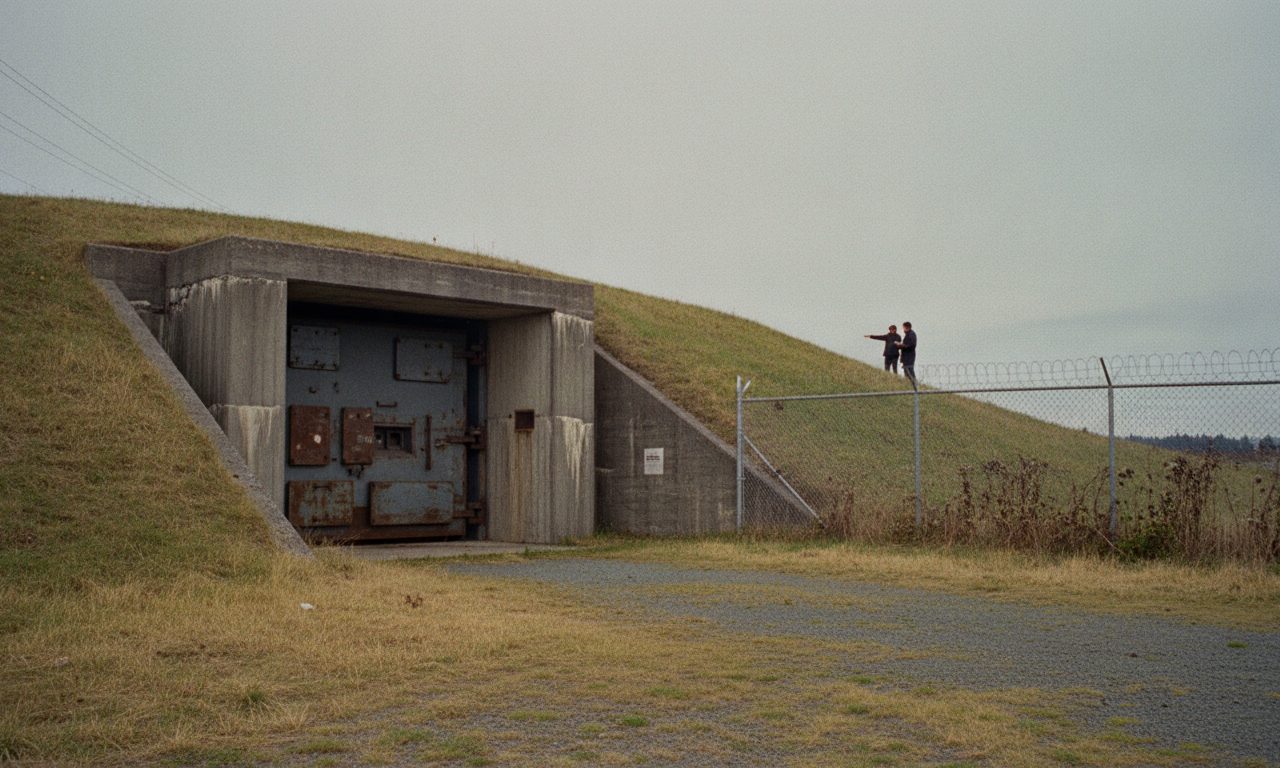
Cold War Exercise Temporarily Shifted Government to Nanaimo
On May 3, 1960, a simulated nuclear strike on Esquimalt Harbour triggered a 17-car convoy carrying Premier W.A.C. Bennett, provincial secretary Wesley Black, and roughly 100 public servants away from Victoria. Their destination was an underground shelter in Nanaimo designed to temporarily serve as the province’s government and communications center during an emergency.
An Underground Hub Built for Survival
Constructed starting in 1961, the 61,000-square-foot Nanaimo Diefenbunker was built into a grassy hill near present-day Vancouver Island University and the Nanaimo Parkway. Designed to house around 400 key military and government personnel for up to six weeks, the two-story structure featured a 1.3-metre solid concrete roof. Inside, it contained private offices, a war room, medical facilities, a radiation decontamination zone, a food supply, and a CBC studio. Former Royal Canadian Air Force Captain Roger Bird noted that the location was chosen for its distance from major urban centers and favorable wind patterns that carried potential nuclear fallout away from Nanaimo.
Decommissioning and Public Memory Efforts
With the conclusion of the Cold War, maintenance costs forced the facility’s shutdown in the mid-1990s. Before its doors were welded shut, items such as furniture, radio equipment, and generators were stripped; in 2001, 75 remaining cots were donated to the Cowichan Valley Emergency Program. Today, local historians are working to inform the public about the site’s past. Carina Nilsson, general manager of the Vancouver Island Military Museum, will lead a free lecture titled “Decoding the Nanaimo Diefenbunker” at 7 p.m. Thursday at the Bowen Park Complex, covering the structure’s construction, Cold War nuclear anxiety, and local anti-nuclear protests. The museum has also launched a dedicated exhibit featuring archival CBC footage, photos, and historical artifacts.
HEALTH
Why Emergency Rooms Across Canada Are Facing New Strains From Street Drug Additives
Canadian emergency physicians warn that medetomidine, a veterinary sedative found in illicit fentanyl, is creating complex overdoses and ER overcrowding.

Novel Drug Additive Creates Severe Hospital Strains
Emergency medical personnel across Canada are confronting heightened difficulties as medetomidine, a potent veterinary sedative, is increasingly mixed into illicit fentanyl. First identified in British Columbia, Ontario, and Quebec in 2023, the substance has spread to the Maritimes and experienced sharp rises in Saskatchewan and Yukon during 2025. Addiction medicine specialist Dr. Monty Ghosh noted that the compound alters patient care protocols by inducing deep drowsiness alongside prolonged drops in heart rate and blood pressure, restricting oxygen and blood supply to vital organs.
Complex Withdrawal Complications
Patients experiencing medetomidine withdrawal require intensive medical monitoring for severe symptoms including severe hypertension, elevated heart rate, agitated delirium, vomiting, and organ damage. Toronto emergency physician Dr. Sahil Gupta explained that these complex cases demand extended care, specialized medications, or mechanical ventilation, exacerbating emergency room overcrowding and lengthening wait times. Meanwhile, front-line nurses in B.C. and Montreal report prolonged patient unresponsiveness that requires continuous vital sign tracking.
Community Programs and Safe Consumption Debate
To reduce repeated emergency visits, Edmonton’s Bridge Healing initiative connects unhoused hospital patients to free housing and clinical care, according to Dr. Louis Hugo Francescutti. Concurrently, physicians such as Dr. Raghu Venugopal argue that supervised consumption facilities are critical to manage overdoses without overwhelming emergency wards, citing research indicating that site closures push comatose patients directly into hospital settings. Responding to the medical community’s concerns, an Ontario Health Ministry spokesperson stated the province is investing $560 million into 29 Homeless and Addictions Recovery Treatment (HART) Hubs to deliver recovery supports rather than injection sites.
BC STORIES
Highland Valley Copper Strike Escalates as BC Federation of Labour Issues Hot Edict
BCFED has issued a hot edict urging unions not to handle Highland Valley Copper products as the USW strike against Teck Resources near Logan Lake escalates.
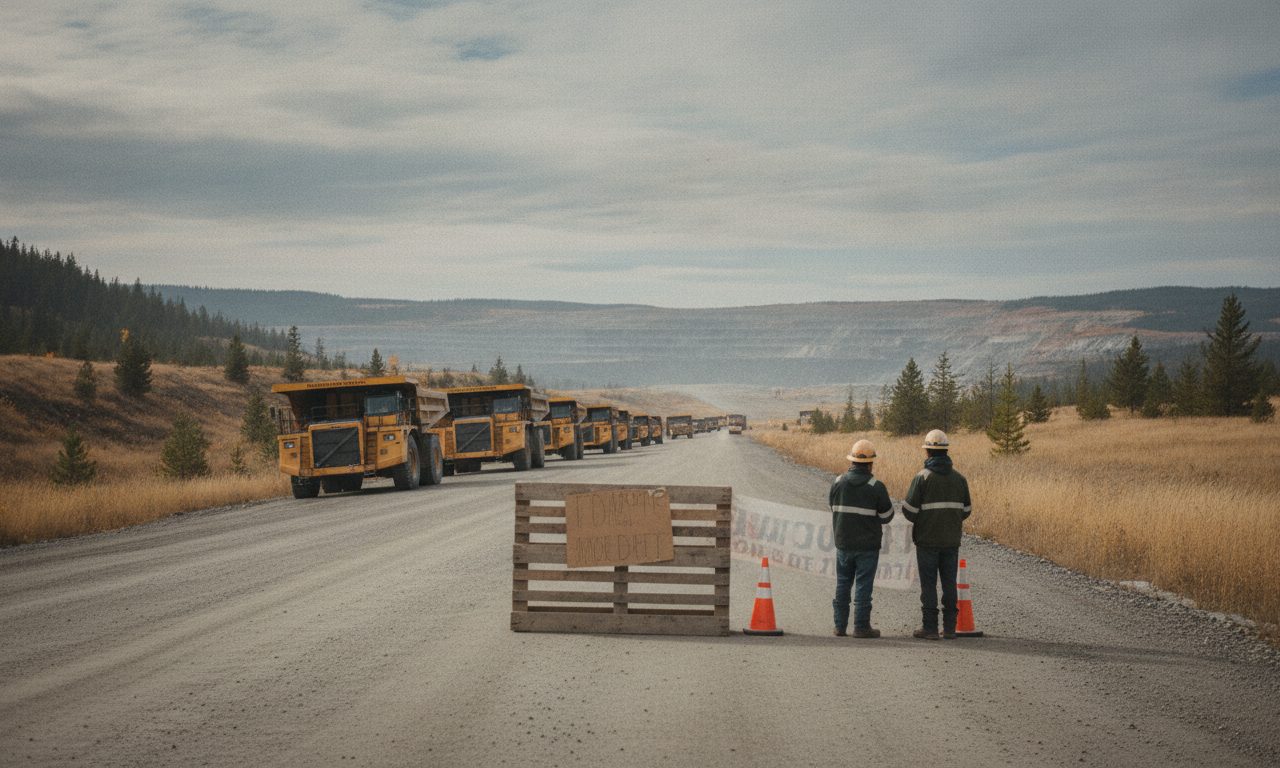
Labour Federation Directs Union Members to Block Mine Products
In response to an ongoing strike at Canada’s largest open-pit copper mine, the BC Federation of Labour has directed affiliated unions and members to cease handling mineral products and by-products tied to Highland Valley Copper. The hot edict, announced by the central labour organization, specifically targets copper and molybdenum concentrates from the Logan Lake area site to apply financial pressure on owner Teck Resources.
BCFED President Sussanne Skidmore described the move as an extraordinary measure, stating that the employer appears to believe it can outlast striking workers and bypass both the dispute and provincial anti-scab legislation. Over 1,200 workers represented by United Steelworkers Local 7619 have been on strike since walking off the job on Oct. 24. Union members voted unanimously to strike two weeks after their previous five-year agreement expired on Sept. 30.
Dispute Focuses on Wages, Safety, and Working Conditions
The striking employees are seeking improvements in compensation, pension protections, and workplace health and safety. Additionally, USW Local 7619 is calling on Teck Resources to address challenges related to recruiting and keeping skilled staff at the operation. Scott Lunny, Western Canada Director for the United Steelworkers, pointed to the company’s recent financial results, criticizing Teck for seeking concessions while reporting strong profits rather than meeting wage and pension demands.
Teck Reports Higher Profits Amid Ongoing Mine Expansion
Despite the labour stoppage, Teck Resources indicated during its third-quarter conference call that annual production at the mine is anticipated to reach the upper end of its target. Driven by elevated copper and zinc prices, the company reported third-quarter profit attributable to shareholders of $1.59 billion, or $3.24 per diluted share, an increase from $281 million, or 57 cents per diluted share, during the same period last year.
Teck stated it has implemented contingency measures and noted that the strike’s impact on overall output will depend on its duration. The company expressed its commitment to reaching a fair and reasonable collective agreement that maintains operational viability. A major expansion project is currently underway at the site near Logan Lake to extend the mine’s lifespan from 2028 to 2046.
Your Current 3 Day Forecast — November 15, 2026
Your Current 3 Day Forecast — November 14, 2026

What to Know as Severe Rainfall Warnings and Flooding Hit Vancouver Island Communities
Your Current 3 Day Forecast — November 13, 2026
Your Current 3 Day Forecast — November 12, 2026
McDavid Reaches Point Milestone as Oilers Edged Flyers in Overtime Thriller

Opinion: John Rustad Has to Go

B.C. Supreme Court Grants Cowichan Tribes Title to Historic Richmond Lands and Fishing Rights

Vancouver Canucks Gear Up for a Make-or-Break 2025–26 Season

Province to Appeal Cowichan Tribes Land Decision

Kamloops Blazers Announce Off-Season Changes Ahead of 2025–26 Season

Kamloops Prepares Four Reverse Referendums on $188M in Major Projects
-

 LOCAL6 days ago
How Federal Billions to Combat Homelessness Could Impact Housing Projects in Kelowna
-
LOCAL4 days ago
Your Current 3 Day Forecast — November 11, 2026
-

 BC STORIES6 days ago
Okanagan Falls begins a new chapter with the historic swearing-in of its first mayor and council
-

 LOCAL5 days ago
Why Kamloops is weighing the quiet payoff of job-scarce data centres
-

 BC STORIES6 days ago
Coastal B.C. Faces Heavy Rainfall and High Winds in First of Multiple Storms
-

 BC STORIES5 days ago
BC Election Update: Conservatives Take Burnaby Seat as Final Vote Count Wraps Up
-

 BC STORIES4 days ago
Why You Don’t Need to Worry About Tsunami Risks After Tuesday’s Island Earthquake
-
 BC STORIES6 days ago
What to Know as Powerful Winds Cut Power to Thousands Across B.C.