NATIONAL STORIES
Canadians Will See King Charles III on the New $20 Bill Starting Next February
The Bank of Canada unveils a new vertical $20 bill featuring King Charles III and the Vimy Memorial. The updated banknote begins circulating next February.


A New Look for Canadian Currency
Canadians will begin seeing a redesigned $20 banknote in circulation starting next February. Unveiled by the Bank of Canada during an Ottawa ceremony on Thursday, the vertical note features King Charles III, marking the first time in roughly 70 years that a new monarch has been added to the nation’s currency.
Design and Security Features
The front of the banknote displays a line-work image of the King derived from a photo taken specifically for the currency. On the back, the design features the Canadian National Vimy Memorial located in France, honoring the place where about 3,600 Canadians died during the Battle of Vimy Ridge in 1917. Monarchy imagery has been a staple of the denomination since 1937, when King George VI was placed on the note prior to Queen Elizabeth II, whose 2022 death led to Charles becoming King.
Bank of Canada Governor Tiff Macklem highlighted the advanced security elements built into the note, including a purple security stripe that spins and transforms as the bill moves. “Banknote security is critical for Canadian consumers and businesses and for the integrity of our currency system,” Macklem stated, describing the note as “both visually stunning and more secure than ever.”
National Trust and Craftsmanship
Speaking at the unveiling, Governor-General Louise Arbour noted that Canadian currency embodies the strength of the economy and the collective trust of citizens. “Our currency affirms our sovereignty and our determination to define ourselves in the eyes of the world on our terms,” Arbour said, calling the note a “testament to the exceptional craftsmanship of the Bank of Canada and its partners.”




NATIONAL STORIES
Why Residents and Leaders in Grand Falls Are Demanding Provincial Rules for Data Centres
Grand Falls calls on New Brunswick for a moratorium and rules on data centres as noise and energy demands draw scrutiny from local leaders and residents.
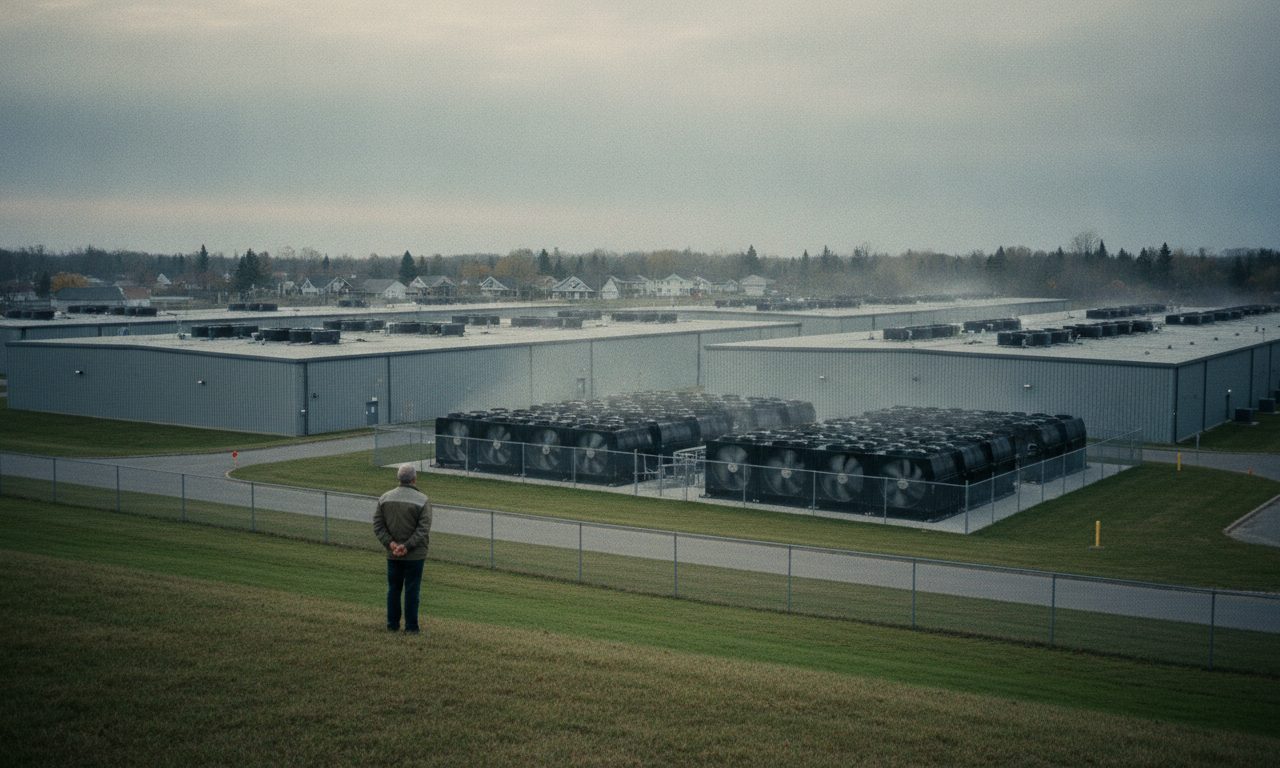
Grand Falls Urges Province to Establish Standards Before Further Industrial Expansion
As New Brunswick prepares a regulatory framework for the growing data centre industry, the town of Grand Falls is pressing the provincial government to put new projects and expansions on hold until firm guidelines are established. Municipal leaders recently approved a submission requesting a moratorium, citing persistent local concerns regarding continuous noise and potential economic over-reliance on a single industrial site.
Local Residents Raise Noise Concerns as Sites Expand
Noise complaints in the area began years ago near an industrial park situated in Saint-André, which was integrated into Grand Falls in 2023. Resident Gus Rioux gathered signatures on a petition after experiencing ongoing disruption from the facilities, comparing the persistent sound to a lawn mower running constantly half a kilometre from his home. Mayor Bertrand Beaulieu noted that the noise prevents nearby residents from sitting outside or sleeping, leading the municipality to arrange weekly noise monitoring reports with the facility operators.
Crypto Mining Roots and AI Conversions
The industrial footprint began between 2019 and 2020 when GPU One constructed two buildings for cryptocurrency mining, an operation later acquired by Vancouver-based Hive Digital in 2021. Hive Digital added two facilities and subsequently purchased 13 additional hectares of land. Its subsidiary, Buzz HPC, plans to transition the operation into an artificial intelligence data centre. A separate crypto facility in the same park, originally established by Chief Fuels, was acquired by Taal Distributed Information Technologies Inc. and later merged with a federally registered numbered entity.
Resource Usage and Grid Pressure
Addressing common criticisms of the industry, Buzz HPC president Craig Tavares stated that concerns regarding heavy municipal water draw do not apply to their Grand Falls operation, which uses an isolated closed-loop cooling system. Mayor Beaulieu verified that water consumption has not been a problem for the municipality. However, electrical demands remain high. The combined usage of 96 megawatts by the Grand Falls developments in 2022 prompted the provincial government at the time to relieve N.B. Power from mandatory service obligations for future crypto operations. While operators note their facilities utilize available hydroelectric power and participate in grid balancing, N.B. Power faces potential energy deficits by 2028 and is planning a 500-megawatt natural gas plant in Tantramar to meet rising demand.
Provincial Policy Framework Pending
The Liberal government launched consultations for a provincial data centre policy framework in September. While Premier Susan Holt featured proposed developments at an investment summit, the province’s throne speech indicated that projects failing to satisfy coming standards will not proceed. A provincial representative confirmed that public feedback is undergoing final review, with the completed policy expected in the coming weeks. Grand Falls council is advocating for independent environmental and economic assessments, strict monitoring, and priority zoning for future sites.
NATIONAL STORIES
How October Unemployment Rates Shifted Across Canadian Cities
Statistics Canada reports the national unemployment rate was 6.7 per cent in October. Breakdown of municipal jobless figures across major Canadian cities.
National Jobless Rate Stands at 6.7 Per Cent
Canada recorded a national unemployment rate of 6.7 per cent during the month of October. Fresh figures from Statistics Canada outline the latest labor market figures across major urban centers nationwide.
Statistics Canada noted that local figures are reported as seasonally adjusted, three-month moving averages. The agency issued a note of caution regarding city-level numbers, explaining that small statistical sample sizes can cause these local rates to fluctuate significantly from month to month.
Metropolitan Rates Across British Columbia and the West
In British Columbia, Kelowna registered an unemployment rate of 9.6 per cent in October, up from 9.3 per cent the preceding month. Vancouver’s rate rose to 6.7 per cent from 6.5 per cent, while Abbotsford-Mission stood at 6.7 per cent compared to 6.8 per cent previously. In Kamloops, the jobless rate held steady at 4.4 per cent. Victoria’s rate dropped to 4.8 per cent from 5.3 per cent, and Nanaimo dropped to 4.9 per cent from 5.3 per cent. Chilliwack recorded 5.4 per cent, up slightly from 5.2 per cent.
In Alberta, Calgary’s rate moved up to 6.6 per cent from 6.3 per cent, while Edmonton reached 7.1 per cent from 6.9 per cent. Lethbridge decreased to 5.2 per cent from 5.5 per cent, and Red Deer experienced a drop to 5.3 per cent from 6.3 per cent. In Saskatchewan, Regina lowered to 5.9 per cent from 6.4 per cent, while Saskatoon remained unchanged at 5.9 per cent. Winnipeg also stayed flat at 5.0 per cent.
Ontario, Quebec, and Atlantic Canada Figures
Across Ontario, Oshawa reported the highest rate among listed cities at 8.9 per cent, matching its previous month’s figure. London followed at 8.1 per cent, down from 8.4 per cent. Toronto’s rate increased to 7.1 per cent from 6.9 per cent, while Hamilton grew to 7.6 per cent from 6.9 per cent. Ottawa reached 7.3 per cent from 7.2 per cent, and Windsor rose to 7.5 per cent from 7.3 per cent. Kitchener-Cambridge-Waterloo fell to 7.1 per cent from 7.7 per cent, and Greater Sudbury saw a decline to 5.6 per cent from 6.0 per cent. Thunder Bay recorded the lowest rate in Ontario at 3.6 per cent, down from 4.3 per cent.
In Quebec, Montreal’s rate edged up to 6.9 per cent from 6.8 per cent, while Quebec City recorded 4.5 per cent, up from 4.3 per cent. Saguenay posted a rate of 3.8 per cent compared to 3.6 per cent in the prior period. In Atlantic Canada, St. John’s, N.L. was recorded at 6.5 per cent, down from 6.6 per cent, Halifax fell to 5.4 per cent from 5.8 per cent, and Moncton dropped to 7.2 per cent from 7.6 per cent.
NATIONAL STORIES
A 10-Year Plan to End Homelessness: What Canada’s New Budget Allocates for Housing and Services
Canada’s 2026 federal budget commits billions over 10 years to end homelessness through housing investments, mental health supports, and local partnerships.
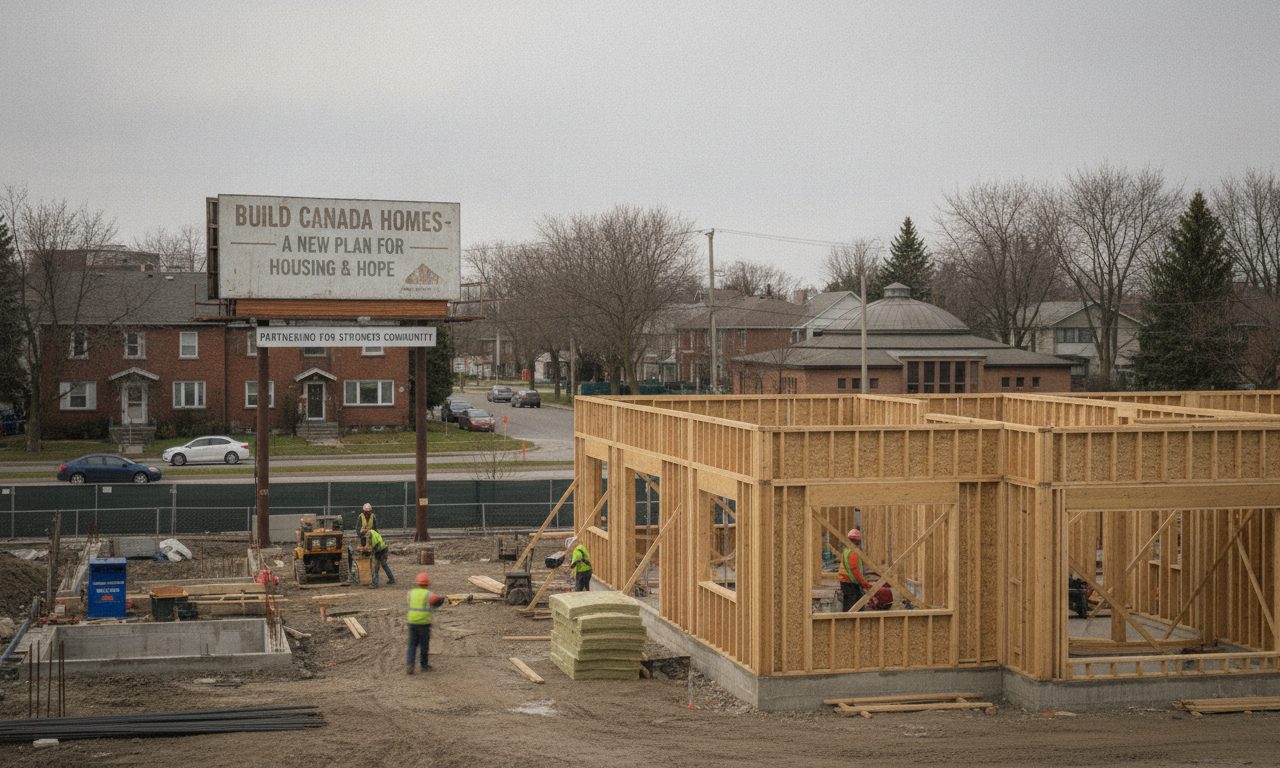
Federal Government Outlines $11.2 Billion Strategy
The Canadian government plans to eliminate homelessness within a decade, according to details unveiled in the 2026 federal budget by Finance Minister François-Philippe Champagne on Thursday. The multi-year strategy commits $11.2 billion over four years alongside $17.8 billion in subsequent years. The funds will target stable housing, mental health infrastructure, addiction centers, and prevention initiatives across the country.
Data from Housing, Infrastructure and Communities Canada reveals that homelessness rose by 59 per cent from 2020 to 2025. This surge followed a 2017 national commitment to reduce chronic homelessness by half by the 2027-28 fiscal year. An Abacus survey conducted in October indicated that ten per cent of Canadians have experienced homelessness themselves, while one-third know someone who has been affected. In pre-budget remarks, Champagne noted that 65,000 Canadians currently suffer from homelessness, stating that taking action is the right step.
Targeted Funding, Partnerships, and Local Initiatives
To execute the plan, federal officials intend to partner with provincial governments, municipalities, and charitable organizations to connect individuals with employment, skill training, and income assistance. Through Build Canada Homes, the government is introducing an integrated supports fund designed to combine residential space with healthcare, social, and addiction support services. Under this model, the federal government will cover capital construction costs for supportive and transitional units, while provinces and territories will handle operational funding.
A specific $1 billion partnership with Manitoba through Build Canada Homes will fund 2,000 new permanent supportive and transitional housing units alongside personalized wraparound supports in Winnipeg. Manitoba must maintain its current funding levels for the initiative to succeed, taking inspiration from Toronto’s Dunn House project. Nationally, the budget also designates $2 billion over two years toward the Health Infrastructure Fund, guarantees $6.5 billion over ten years for existing Reaching Home and Veterans Homelessness initiatives, and extends the Canada Housing Benefit for another decade.
Political Reactions and Municipal Support
political leaders and stakeholders offered varied responses to the measure. Tim Tierney, president of the Federation of Canadian Municipalities, praised the federal initiative, noting that municipal leaders have long requested decisive action, while emphasizing that turning commitments into lasting support remains the primary test. Meanwhile, NDP Leader Avi Lewis expressed support for the funding aimed at ending homelessness, but stated his party will closely monitor the funds to ensure they remain within the public sector for non-market housing and public services. Bloc Québécois finance critic Jean-Denis Garon argued that Quebec demonstrates strong leadership on the issue and suggested the majority of federal funds allocated for the province should be funneled directly through Quebec’s administration.

Why Residents and Leaders in Grand Falls Are Demanding Provincial Rules for Data Centres

How October Unemployment Rates Shifted Across Canadian Cities

Community Impact Highlighted as B.C. Sex Trafficker Receives 13-Year Sentence

What to Expect as Heavy Winds and Rain Sweep Across B.C.
Your Current 3 Day Forecast — November 6, 2026

The Money Spoke Before the Voters Did: How B.C.’s Conservatives Turned Chaos Into Victory

Opinion: John Rustad Has to Go

B.C. Supreme Court Grants Cowichan Tribes Title to Historic Richmond Lands and Fishing Rights

Vancouver Canucks Gear Up for a Make-or-Break 2025–26 Season

Province to Appeal Cowichan Tribes Land Decision

Kamloops Prepares Four Reverse Referendums on $188M in Major Projects

Kamloops Blazers Announce Off-Season Changes Ahead of 2025–26 Season
-
LOCAL7 days ago
Your Current 3 Day Forecast — October 31, 2026
-
LOCAL5 days ago
Your Current 3 Day Forecast — November 2, 2026
-

 BC STORIES4 days ago
Highland Valley Copper Workers Stand Firm as Strike Crosses One-Week Mark
-
LOCAL6 days ago
Your Current 3 Day Forecast — November 1, 2026
-

 LOCAL5 days ago
Why two Kamloops MLAs see value in a brief sitting before spring
-

 LOCAL6 days ago
West Kelowna Residents Asked to Assist Police in Search for Missing 30-Year-Old
-

 BC STORIES3 days ago
What to Expect as B.C. Prepares for Its First New Government in Nine Years
-

 BC STORIES6 days ago
How Oyster Jim Martin’s Vision Transformed Ucluelet’s Waterfront into a Top Island Destination