NATIONAL STORIES
Don’t Mistake BC Conservatives Self-Destruction for an NDP Revival in BC


The BC Conservatives have a serious problem. But the Oremire of BC, David Eby shouldn’t start measuring the curtains for another majority just yet.
By David Chan | The Current
There is a basic lesson taught in business school that political parties occasionally forget: rapid growth can kill you almost as effectively as failure.
Growth creates complexity.
Complexity exposes weak management.
Weak management turns what looked like momentum into chaos.
Welcome to the Conservative Party of British Columbia in 2026.
When we last checked in, there were warning signs scattered around the organization. A few loose tires in the field, perhaps, but nothing you would necessarily describe as a full-blown fire.
That distinction is getting considerably harder to make.
Kerry-Lynne Findlay narrowly won the Conservative leadership on May 30 after a bruising contest against Caroline Elliott. What followed was supposed to be the relatively routine work of rebuilding a caucus, sharpening the party’s message and preparing an Official Opposition that came remarkably close to forming government in 2024.
Instead, British Columbians have been treated to one departure, controversy and internal dispute after another.
Nine MLAs have left the Conservative caucus in the recent exodus alone. The party elected 44 MLAs in 2024. It now has 28. Five former Conservatives have announced plans to operate together under a new provincial party, pitching themselves as a “stable, serious alternative” to both the NDP and the current Conservative leadership. (CityNews Vancouver)
Think about those numbers for a moment.
This wasn’t a fringe party winning a couple of accidental seats.
The BC Conservatives came within striking distance of government less than two years ago.
Today, the conversation is increasingly about whether the party can keep itself together.
That’s quite a turnaround.
And it would be a mistake to interpret all of it simply as another fight between moderates and conservatives.
Something bigger is happening.
This Looks More Like a Management Problem
Political observers naturally want to interpret everything through ideology.
Moderates versus populists.
Establishment conservatives versus grassroots conservatives.
Federal-style Conservatives versus the old BC Liberal coalition.
There is certainly some of that happening.
But ideology doesn’t adequately explain the scale of the dysfunction.
The more immediate problem facing Findlay is one familiar to anyone who has worked inside a fast-growing company: the organization expanded far faster than its internal systems.
The Conservatives scaled before they institutionalized.
In 2023, the party was effectively an insurgency.
By October 2024, it had become the Official Opposition and nearly formed government.
That’s extraordinary growth.
But gaining customers — or voters — is not the same thing as building an organization capable of serving them.
BC United’s collapse handed the Conservatives an enormous political opportunity. Voters who wanted the NDP gone consolidated behind John Rustad’s party because it suddenly became the only realistic vehicle available.
But those voters didn’t necessarily become ideological Conservatives overnight.
Neither did every candidate.
What the party assembled was an anti-NDP coalition.
That’s different from building a Conservative institution.
And now the difference matters.
A mature political organization needs candidate vetting, caucus discipline, leadership structures, professional communications, policy development, dispute-resolution mechanisms and experienced people capable of telling the leader something he or she does not want to hear.
Most importantly, it needs a culture capable of disagreement.
Because any organization large enough to govern British Columbia will contain people who disagree with each other.
That’s not a design flaw.
That’s democracy.
Nine Departures Aren’t Ideological Discipline
Findlay has a legitimate argument available to her.
Political parties should stand for something.
A caucus assembled at extraordinary speed was inevitably going to contain people with very different political backgrounds.
Some came from the BC Liberals.
Others were populists.
Some were traditional conservatives.
Others primarily wanted David Eby’s NDP defeated.
A leader is entitled to establish direction.
But there is a difference between creating ideological coherence and triggering organizational collapse.
Nine departures in a matter of weeks is a lot of coherence.
At some point, management has to enter the conversation.
The MLAs who left have offered different explanations. They have raised concerns about staffing decisions, caucus relations, ideological tests, leadership style and Findlay’s judgment.
Scott McInnis described the party as becoming an “exclusive private club” more concerned with ideological credentials than building the broad coalition required to govern.
Other departing MLAs raised concerns about reported connections involving senior appointees and Alberta separatist politics. Findlay herself has not advocated Alberta separatism, and it would be unfair to label her a separatist because of people around her.
But political leadership includes judgment about personnel.
Who gets hired matters.
Who gets fired matters.
Who gets invited into the room matters.
Who leaves the room matters even more.
When one employee quits, perhaps the employee is the problem.
When nine do, shareholders generally start asking questions about management.
Then Came the Abbotsford-Mission Mess
Findlay still doesn’t hold a seat in the legislature.
That problem appeared to be solved when Abbotsford-Mission MLA Reann Gasper resigned, clearing the way for Findlay to run in the September 26 by-election.
Gasper subsequently became Findlay’s deputy chief of staff. (Elections BC)
Legally, those facts alone establish nothing improper.
Politically, however, they are awkward.
The situation became considerably more serious when former Conservative MLA Ian Paton alleged he had been offered a paid adviser position if he resigned his Delta South seat so Findlay could run there.
Paton said the RCMP subsequently contacted him for an interview. The RCMP said it was aware of the allegations but, according to reporting, would not confirm or deny an investigation unless charges were laid.
Findlay has denied offering jobs in exchange for resignations and called the allegations baseless. No finding of wrongdoing has been made. (Conservative Party of British Columbia)
Those qualifications matter.
But politics isn’t a courtroom.
There is a difference between proving criminal wrongdoing and creating an impression of disorder.
Findlay desperately needs to move the conversation back to affordability, health care, housing, crime, taxes and the economy.
Instead, reporters keep asking about her caucus.
That’s a strategic disaster.
The Product Still Has a Market
Here is where the NDP should resist becoming too pleased with itself.
The collapse occurring across the aisle does not mean British Columbians have suddenly rediscovered their love for David Eby’s government.
Those are two entirely separate conclusions.
Recent polling has demonstrated just how volatile the province remains.
A Research Co. survey in June had the Conservatives and NDP tied at 42 per cent among decided voters. That same poll found 47 per cent of British Columbians believed the province needed a centre-right alternative to the two dominant parties. (Research Co.)
That should tell us something important.
There remains a very large market for change.
British Columbians still live with extraordinary housing costs.
Patients still struggle to access timely health care.
Families still worry about affordability.
Communities remain concerned about public safety, addiction and street disorder.
Businesses continue to complain about taxes, regulation and an economy that feels increasingly difficult to navigate.
Resource development, Indigenous reconciliation, land-use uncertainty and investment remain enormous questions.
None of that disappeared because Conservative MLAs began resigning.
David Eby’s fundamental political vulnerabilities haven’t vanished.
His opposition has simply become significantly less competent at exploiting them.
That’s not an NDP revival.
It’s an opposition failure.
There is a difference.
The New Party Could Lose Everywhere and Still Win
The creation of another centre-right party makes the mathematics even more dangerous for Findlay.
It doesn’t necessarily have to replace the Conservatives.
In fact, it could fail spectacularly by conventional measures and still transform British Columbia politics.
Under first-past-the-post, a new centre-right party polling seven or eight per cent province-wide could win very few seats.
But if those votes are concentrated among people who otherwise would have voted Conservative, it could change dozens of riding outcomes.
Imagine a riding where the NDP receives 40 per cent.
The Conservatives receive 38.
A new centre-right party takes 12.
Everyone else splits the remainder.
The new party loses badly.
The Conservatives lose narrowly.
The NDP wins comfortably.
Repeat that across enough suburban Lower Mainland, Fraser Valley, Interior and Island seats and David Eby could emerge with a significantly larger majority despite receiving little more support than before.
That is Findlay’s nightmare.
The biggest threat isn’t necessarily being replaced.
It’s being divided.
British Columbia’s political history is full of examples of what happens when the non-NDP coalition fractures.
Social Credit filled that role.
Then the BC Liberals did.
BC United attempted to continue it and collapsed.
The Conservatives inherited the market almost overnight.
Now they appear determined to reopen it.
It would be an extremely British Columbian outcome if the Conservative Party eventually succeeded in recreating the BC Liberals by driving enough former BC Liberals out of the Conservative Party.
Governing Requires People You Disagree With
This gets to the central question confronting the Conservatives.
Do they want to be a movement or a government?
Movements prize ideological consistency.
Governments build coalitions.
A movement asks: Are you one of us?
A successful political party asks: Can we work together?
Those sound similar until an organization becomes large.
Then they become dramatically different.
British Columbia isn’t Alabama.
It isn’t Alberta either.
It is a complicated province containing resource towns, union households, suburban commuters, affluent urban professionals, farmers, newcomers, First Nations communities, small-business owners and environmentally minded voters.
No centre-right party wins here by appealing exclusively to one faction.
The old BC Liberals understood that, sometimes awkwardly.
Their coalition contained federal Liberals, federal Conservatives, business conservatives, social moderates and people who simply wanted to keep the NDP out.
It wasn’t particularly elegant.
But it won elections.
Politics is ultimately a market-share business.
You can have the most loyal 28 per cent of customers imaginable and still lose to someone with 42.
Purity is considerably easier in opposition.
Government requires addition.
Abbotsford-Mission Is Now More Than a By-Election
Findlay’s September 26 contest in Abbotsford-Mission is therefore becoming a referendum on more than the local candidates.
It is the first significant market test of her leadership.
Elections BC has confirmed five candidates, including Findlay for the Conservatives and former agriculture minister Pam Alexis for the NDP. (Elections BC)
A strong Findlay victory changes the conversation.
She could reasonably argue that disgruntled MLAs and political insiders are mistaking their own unhappiness for public sentiment.
Winning decisively would put her inside the legislature, give the party a badly needed positive story and potentially stop the bleeding.
But if Abbotsford-Mission becomes unexpectedly close, things get uncomfortable.
If she loses, they become existential.
This is territory where a Conservative leader should be competitive.
The question is whether voters see the recent chaos as Victoria inside baseball or as evidence of something larger.
We’ll find out soon.
David Eby Shouldn’t Celebrate Yet
If I were advising the NDP, I wouldn’t campaign on the assumption that British Columbians have returned home.
They haven’t.
At least there is little evidence they have.
The Conservatives’ implosion provides Eby with something more valuable than renewed affection: time.
Time to repair weaknesses.
Time to improve delivery.
Time to remind British Columbians that whatever frustrations they have with his government, the alternative has to look capable of governing.
That final point may be the most important.
Opposition parties sometimes believe elections are referendums exclusively on governments.
They’re not.
Eventually voters walk into the booth and compare alternatives.
In 2024, enough British Columbians looked at the Conservatives and decided they were prepared to take the risk.
By 2026, some may be asking a different question:
Can these people manage themselves?
Because if you can’t manage 40 MLAs, voters are entitled to wonder how you’ll manage a $90-billion provincial government.
That’s the problem Findlay has to solve.
Not whether she is conservative enough.
Not whether the people leaving are moderates.
Not whether the media is being unfair.
Competence.
Stability.
Judgment.
Execution.
The boring things.
In business, those are often the things that determine whether a promising company becomes an institution or a cautionary tale.
Politics isn’t that different.
The 2024 election appeared to settle the biggest strategic question on British Columbia’s centre-right.
BC United was finished.
The Conservatives had inherited the coalition.
The NDP finally had one clear opponent.
Less than two years later, we’re back where we started.
The anti-NDP vote is still there.
The dissatisfaction is still there.
The opportunity is still there.
What isn’t clear anymore is who owns it.
And that may be the most remarkable part of the Conservative collapse.
They aren’t losing the market because British Columbians stopped wanting an alternative to the NDP.
They’re risking losing it because they have once again given those voters a reason to go shopping.
David Chan is our newest younger analytical reporter/commentator who looks at politics through management, economics, demographics and electoral strategy.

NATIONAL STORIES
Search Continues After Ontario-Based Medical Flight Vanishes Near Massachusetts Coast
U.S. Coast Guard crews are searching near Nantucket for a missing Latitude Air Ambulance jet carrying four Canadians and two passengers from Bermuda.
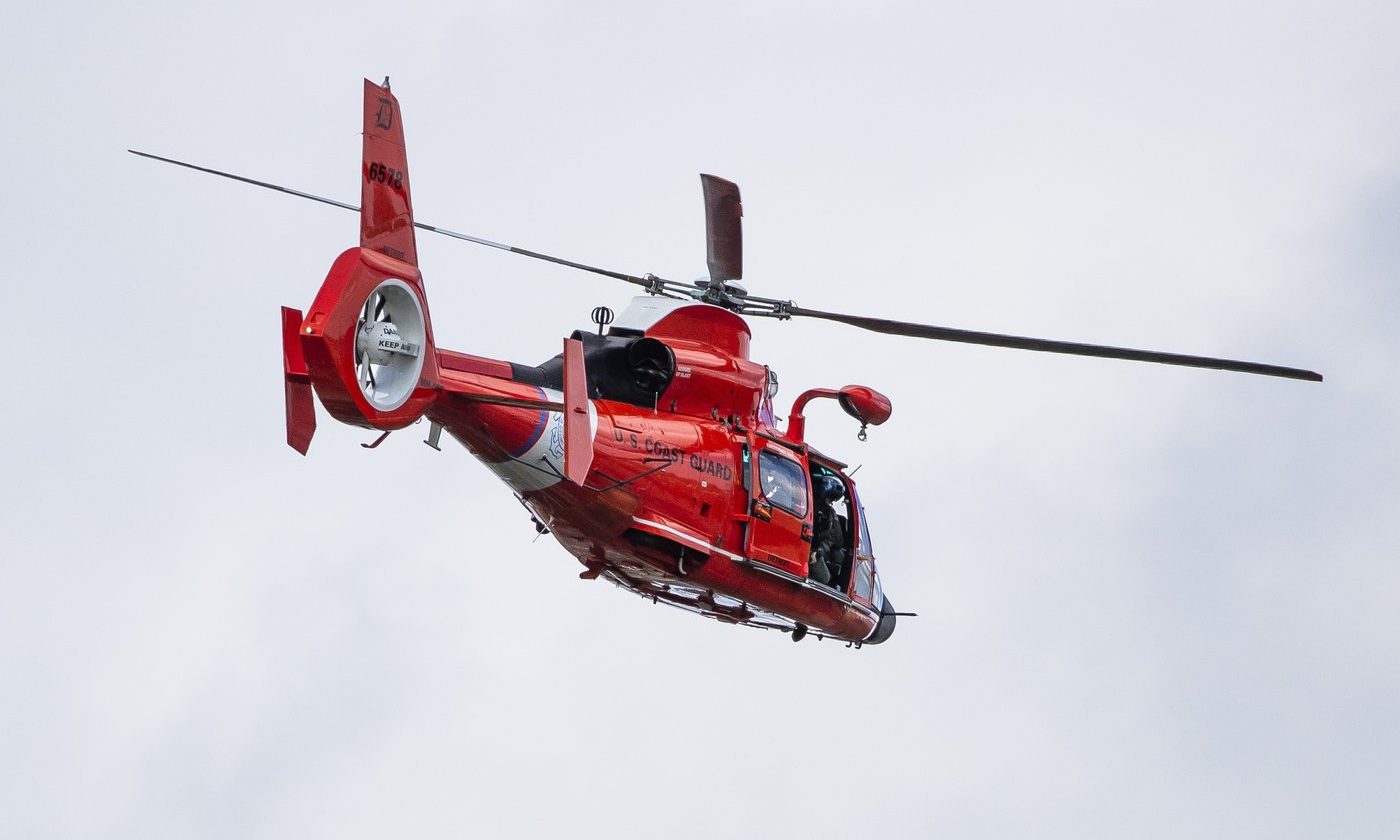
Emergency Search Underway Off Nantucket
Air and ground search teams are scanning waters approximately 150 kilometres southeast of Boston after a medical transport aircraft vanished early Saturday morning. Contact with the Gulfstream G100 jet was lost around 1:30 a.m. as it made its approach toward Boston from Bermuda, prompting a response from the U.S. Coast Guard following notification by the Federal Aviation Administration.
Flight Carrying Crew and Patients
The aircraft is operated by Hamilton-based Latitude Air Ambulance. According to Clarence Togeretz, operations manager for the company, six individuals were aboard the flight. The crew consists of two Canadian pilots and two Canadian medical staff members. They were transporting two Bermuda nationals, identified as a patient and a family member.
Response and Ongoing Inquiries
Togeretz confirmed that the company contacted American authorities after the plane failed to land on the tarmac as scheduled. He noted that this marks the first instance where the operator has lost contact with one of its aircraft, adding that the team is holding onto optimism while praying for a safe resolution. Latitude Air Ambulance has reached out to Transport Canada regarding the incident. Meanwhile, provincial air ambulance provider Ornge expressed support via social media, stating it hopes the aircraft and everyone on board are located safely and quickly.
NATIONAL STORIES
Why Conservative Leader Pierre Poilievre Questions Mark Carney’s New Pipeline Stance
Conservative Leader Pierre Poilievre criticizes Mark Carney’s pipeline proposal, calling him an illusion and questioning his shift on oil and gas.
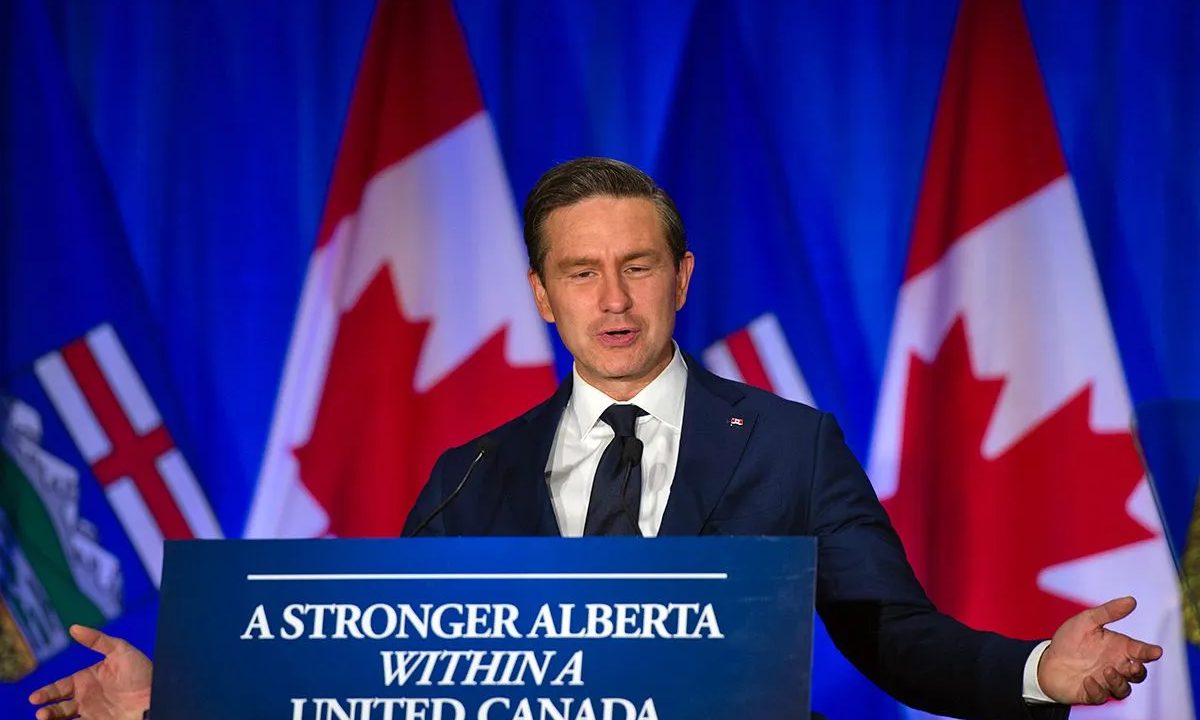
Poilievre Dismisses Carney’s Fast-Track Pipeline Proposal
Conservative Leader Pierre Poilievre has expressed strong skepticism regarding Mark Carney, describing him as an “illusion” ahead of an upcoming major announcement. Poilievre questioned Carney’s recent backing of a proposal to fast-track and construct a West Coast pipeline project.
Contrasting Past Record with Recent Statements
Poilievre highlighted Carney’s history over the past decade, pointing out that the former banker worked to defund oil and gas, established an alliance aimed at shutting down the sector, opposed a Pacific pipeline, and advocated for higher carbon taxes.
“I don’t know how you can go in three years from believing oil and gas is going to end the world to believing you support oil and gas,” Poilievre stated. “I guess miracles are possible. He claims to have changed his mind but he hasn’t really changed the results. There’s been a lot of talk.”
Comparisons to Foreign Project Delivery
In assessing the situation, the Conservative leader observed that large-scale infrastructure projects are completed rapidly in nations like Germany and the United States.
NATIONAL STORIES
Michael J. Fox Earns Canada’s Highest Civilian Distinction for Parkinson’s Work
Michael J. Fox was elevated to companion of the Order of Canada alongside 50 other honourees, including UBC engineering professor Yusuf Altintas.
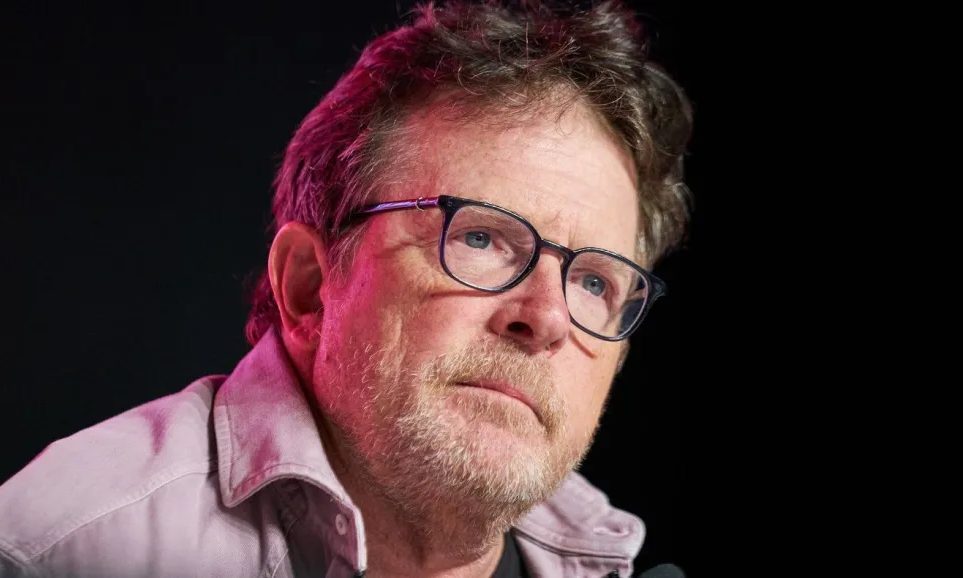
National Honours Presented at Rideau Hall
During an investiture ceremony on Friday morning at Rideau Hall, Gov. Gen. Louise Arbour formally elevated celebrated actor and advocate Michael J. Fox to the companion level of the Order of Canada, drawing a standing ovation from attendees. Rideau Hall cited his unflinching honesty and powerful global advocacy concerning Parkinson’s disease for the elevation. Fox, who publicly disclosed his diagnosis in 1998, has helped generate $2.5 billion for research into the progressive nervous system disorder, which causes tremors, slowness, stiffness, memory difficulties, and depression.
Distinguished Inductees Recognized Across Fields
A total of 51 individuals joined or advanced within the Order of Canada during the Friday event. Arbour praised the group in French for directing their skills, influence, and effort toward the public good rather than personal gain alone, noting that Fox serves as a shining example of using courage, imagination, and determination to foster lasting progress.
The newly honoured members and officers include noteworthy figures across various disciplines. University of British Columbia mechanical engineering professor Yusuf Altintas was inducted as an officer alongside McGill University professor Nada Jabado, who was recognized for her contributions to pediatric neuro-oncology. Former Bank of Canada governor Stephen Poloz became an officer for his efforts supporting international trade and economic stability. Sculptor Ruth Elsie Abernethy entered as a member for her worldwide bronze statues exploring heritage, gender, and nation-building, while Pulitzer Prize-winning investigative journalist Susanne Craig was named a member for her impactful reporting across major American and Canadian news outlets.

Why West Coast NHL Fans and Players Will Face Unusual Game Times This Season

Voters face choice on family support as NDP campaign shifts focus away from U.S. tariff threats
Your Current 3 Day Forecast — October 7, 2026

B.C. Election Poll Puts Conservatives Ahead Five Points as Cost of Living Tops Voters’ Concerns

Newcomer Paul Cotter Delivers Overtime Thriller in Canucks’ Season Opener

BC Conservatives Promise $50M Rural Healthcare Fund Amid ER Closures

Opinion: John Rustad Has to Go

B.C. Supreme Court Grants Cowichan Tribes Title to Historic Richmond Lands and Fishing Rights

Vancouver Canucks Gear Up for a Make-or-Break 2025–26 Season

Province to Appeal Cowichan Tribes Land Decision

Kamloops Prepares Four Reverse Referendums on $188M in Major Projects

Kamloops Blazers Announce Off-Season Changes Ahead of 2025–26 Season
-
 BC STORIES5 days ago
Why OneBC’s Interim Leader Is Proposing an Election Pact With Conservatives
-
 BC STORIES7 days ago
BC Greens Pledge Free Childcare by 2031 and Introduce Victoria-Swan Lake Candidate
-

 LOCAL4 days ago
Have You Seen Him? Public Help Sought in Locating Missing Traveller Last Seen in Kamloops
-
 BC STORIES4 days ago
Why a Familiar Political Name is Joining the Kamloops-North Thompson Race
-
LOCAL3 days ago
Your Current 3 Day Forecast — October 4, 2026
-

 HEALTH7 days ago
A Potential New Path to Relief for Behavioral Symptoms of Autism
-

 OPINIONS7 days ago
B.C.’s 93-Riding Scramble: Can the Parties Even Find Enough Candidates?
-
LOCAL6 days ago
Your Current 3 Day Forecast — October 1, 2026