POLITICS
Moscow’s Shrunken Spectacle: Victory Day Parade Hits Record Low Duration Without Live Tanks
Moscow’s 2026 Victory Day parade was the shortest in modern history, lasting only 45 minutes with no live tanks or military vehicles on Red Square.


A Historical Departure from Tradition
Russia’s 2026 Victory Day parade on Moscow’s Red Square marked a significant shift in the nation’s traditional display of military might. Lasting only 45 minutes, the event was the shortest military parade held in modern Russian history. For comparison, the ceremony was nearly half the length of the 90-minute anniversary parade held in 2025, and well below the hour-long duration maintained by most Victory Day celebrations since 2010.
The Absence of Military Hardware
In a move that surprised international observers, the 2026 event was the first in 19 years to take place without any military vehicles moving through Red Square. The rumble of tanks, missile launchers, and armored vehicles—long a staple of Russian military aesthetics—was conspicuously missing. Instead, the live ceremony focused exclusively on marching formations. To compensate for the lack of hardware on the ground, state media broadcasts utilized pre-recorded footage of drones, nuclear weapons systems, and the latest naval assets, including the nuclear-powered submarines Arkhangelsk and Knyaz Vladimir.
Shifting Political and Military Ties
The composition of the viewing stands also signaled a change in the internal political climate. Members of the Russian State Duma and various government officials were absent from the main stage. President Vladimir Putin was instead accompanied primarily by members of the Security Council and parliamentary leaders. On the ground, the parade featured a notable international element as North Korean soldiers appeared in a separate formation for the first time. Additionally, over 1,000 servicemen who had recently fought in the war against Ukraine participated in the march.
A Ceasefire Under the Shadow of Conflict
During his brief address, President Putin linked the current conflict in Ukraine to the Soviet struggle of World War II, stating that modern forces are “inspired by Soviet soldiers.” This rhetoric occurred against the backdrop of a high-stakes diplomatic maneuver. Just a day prior, U.S. President Donald Trump announced a three-day ceasefire between Russia and Ukraine to facilitate a “1000-for-1000” prisoner exchange. While Ukrainian President Volodymyr Zelenskyy confirmed preparations for the swap, he warned that any violation of the truce would be met with a symmetrical response.

General
Alberta Cabinet Shaken: Key Ministers Resign as Referendum Tensions Boil Over
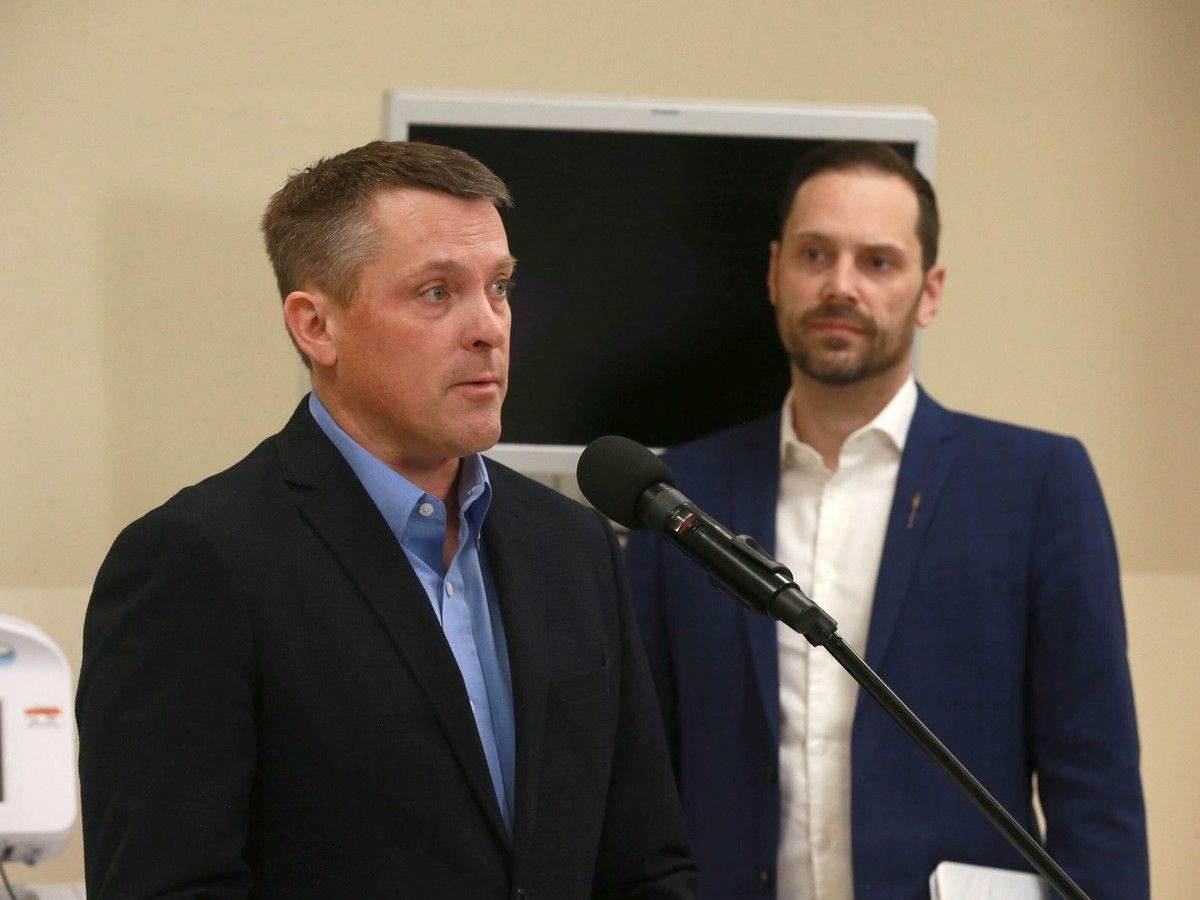
Alberta cabinet in flux as Finance Minister Nate Horner and Health Minister Matt Jones resign ahead of a major referendum address by Premier Danielle Smith.
A Pre-Summer Political Firestorm
The Alberta political landscape shifted dramatically on Wednesday as a series of events transformed a routine legislative day into a pre-summer firestorm. The sudden resignation of two senior cabinet members, combined with a chaotic confrontation in a legislature committee and an upcoming televised address by Premier Danielle Smith, has signaled a significant turning point for the UCP government.
Departure of the Heavyweights
The most impactful news came with the resignations of Finance Minister Nate Horner and Minister of Hospital and Surgical Health Services Matt Jones. Horner, who served as the President of the Treasury Board, announced his departure from the post because he does not intend to run in the 2027 provincial election. He emphasized that the transition should happen now so his successor can craft the crucial election-year budget. While some speculate that this timing hints at an early election call, Horner maintains that the move was planned months in advance to ensure an orderly transition of the province’s finances.
Similarly, Matt Jones is stepping down from his difficult role overseeing surgical health services. Known for his direct approach and dedication to solving the ongoing crisis in emergency wards, Jones also confirmed he will not seek re-election. The loss of Horner and Jones is a substantial blow to the Smith administration, as both were considered stable, high-performing ministers who avoided the fray of partisan distractions.
Referendum Conflict and Legislative Eruption
The political drama extended into the legislature committee tasked with reviewing Thomas Lukaszuk’s pro-Canada question for an upcoming referendum on independence. What was expected to be a procedural referral turned into a bitter shouting match between NDP and UCP members. The committee’s failure to find common ground highlights the deep ideological divides currently gripping the province.
Premier Smith to Address the Province
In the wake of the cabinet shakeup and committee turmoil, Premier Danielle Smith is scheduled to address the province on Thursday. The Premier is expected to discuss the specifics of the independence question set for the October 19 referendum and announce her new cabinet appointments. With the UCP currently enjoying strong polling numbers, all eyes are on whether these moves are merely administrative housekeeping or the precursor to a strategic early election call.
Economy
Nation-Building or Overreach? Carney Defends Pipeline Vision Amid B.C. Backlash
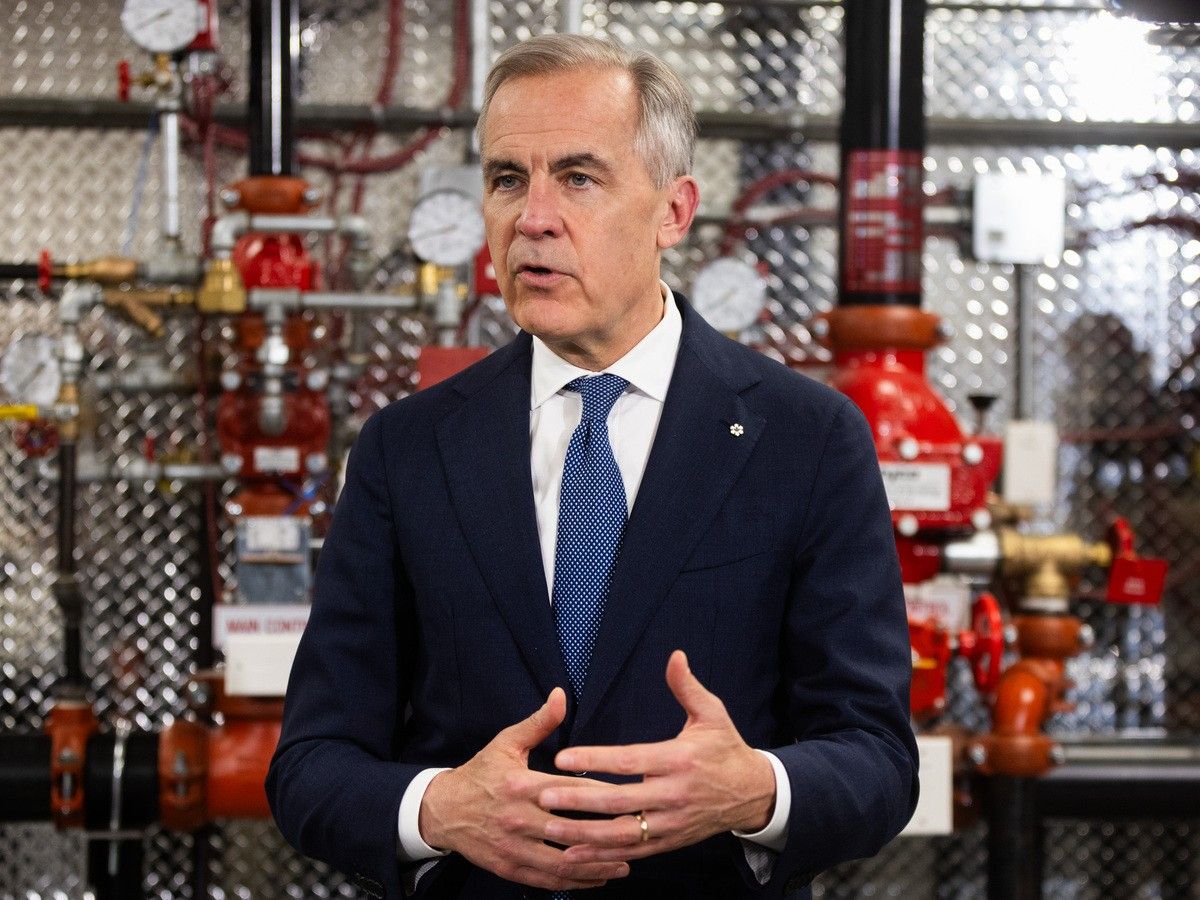
PM Mark Carney defends his pipeline and nation-building agenda in B.C. despite criticism from Premier David Eby over the Alberta implementation agreement.
The Quest for Momentum
Prime Minister Mark Carney is doubling down on his ambitious nation-building agenda, urging provincial leaders to pivot away from opposition and toward collaborative progress. Speaking before the Greater Vancouver Board of Trade on Wednesday, Carney addressed the growing friction between the federal government and British Columbia, emphasizing a desire to move beyond political roadblocks. ‘What we’re trying to accomplish… is we don’t want to hear what people are against, we want to hear what they’re for,’ Carney told the business audience.
The Alberta Agreement and B.C. Opposition
The tension centers on a recently signed ‘implementation agreement’ between Carney and Alberta Premier Danielle Smith. The deal outlines federal support for a pipeline capable of transporting one million barrels of oil per day to the B.C. coast. While the agreement includes environmental caveats—such as Alberta raising its industrial carbon tax to $140 a tonne by 2040 and committing to carbon capture projects—it has drawn sharp criticism from B.C. Premier David Eby.
Eby has condemned the deal, citing a lack of meaningful consultation with his province. He further suggested that Alberta is receiving ‘special treatment’ as a federal tactic to quell rising separatist sentiment in the Prairies. Despite these concerns, Carney maintains that any project will respect Section 35 constitutional duties to consult and must provide substantial economic benefits to British Columbia.
A Strategic Pivot to Energy and Industry
Defending his economic strategy, Carney highlighted that B.C. remains a central pillar of the federal plan, noting that one-third of the 22 major ‘nation-building’ projects currently under review are located within the province. These include developments in critical minerals, artificial intelligence, and liquefied natural gas (LNG). ‘When we master energy, we master our destiny,’ Carney remarked, signaling that the federal government is prepared to fast-track regulatory approvals by 2027 to ensure Canada remains competitive.
Navigating Provincial Sovereignty
The burgeoning conflict underscores the perennial challenge of Canadian federalism: balancing national economic interests with provincial autonomy. While Carney acknowledged the importance of early conversations with Coastal First Nations and Premier Eby, his tone remained firm. As the federal government pushes for a unified energy corridor, the success of his agenda will depend on whether he can translate ‘momentum’ into genuine interprovincial cooperation.
Alberta Government
Alberta Referendum Turmoil: UCP Bid for Independence Vote Hits Procedural Wall
Alberta’s UCP faces a procedural setback in its attempt to add a secession question to the fall referendum amid NDP protests and a major cabinet shuffle.

Procedural Disarray Stalls Secession Vote Push
The United Conservative Party’s (UCP) attempt to place a question regarding Alberta’s potential secession from Canada on this fall’s referendum ballot collapsed into procedural chaos on Wednesday. The Select Special Citizen Initiative Proposal Review Committee met to discuss a path forward after legal setbacks, but the effort was derailed by a premature press release and a resulting point of privilege raised by the New Democratic Party (NDP).
The debate centered on a petition from the pro-Canada group ‘Forever Canadian,’ which collected over 400,000 signatures last year. While the group originally sought a vote to reaffirm Alberta’s place in Confederation, UCP lawmakers attempted to use the momentum of that petition to justify a broader question on independence. This maneuver followed a recent court ruling that disqualified a separate, explicitly separatist petition for failing to consult with First Nations.
The Democratic Dispute and Cabinet Reshuffle
Tensions reached a boiling point when the UCP caucus released a statement claiming the committee had already recommended an independence referendum before the vote had actually taken place. NDP House Leader Christina Gray condemned the move as ‘spitting in the face of democracy,’ accusing the governing party of presupposing the outcome of a legislative process. The ensuing debate and refusal to extend the meeting time effectively killed the motion for the day.
The procedural failure comes at a critical juncture for Premier Danielle Smith. Facing immense pressure from the separatist wing of her party, Smith is also managing a significant cabinet shuffle. As the October 19 referendum date approaches—already set to include questions on immigration—the government remains caught between populist demands for a sovereignty vote and the legal and political risks of such a move. Former MLA Thomas Lukaszuk, who organized the Forever Canadian campaign, warned that the UCP would bear the full weight of the consequences should they proceed with a referendum on breaking up the country.
National Unity at a Crossroads
The escalating rhetoric in Alberta mirror tensions in Quebec, contributing to a volatile national unity landscape. With separatist leaders urging supporters to flood the UCP with memberships to force a vote, the province’s future relationship with the federal government remains the defining issue of Smith’s current mandate. The committee is scheduled to reconvene Thursday afternoon, immediately following the swearing-in of a new cabinet, to attempt to resolve the impasse.
Arctic ‘Rust’ Crisis: Thawing Permafrost Turns Pristine Canadian Rivers into Toxic Orange Acid
Montreal Hits Record High for Lyme Disease as Island Becomes Official Risk Zone
NASCAR Legend Kyle Busch Dies at 41, Leaving ‘Rowdy Nation’ in Mourning
A Perfect Storm: Canadian Aid Teams Face Unprecedented Risks in New Congo Ebola Outbreak
Alberta Cabinet Shaken: Key Ministers Resign as Referendum Tensions Boil Over
Nation-Building or Overreach? Carney Defends Pipeline Vision Amid B.C. Backlash

Opinion: John Rustad Has to Go

B.C. Supreme Court Grants Cowichan Tribes Title to Historic Richmond Lands and Fishing Rights

Vancouver Canucks Gear Up for a Make-or-Break 2025–26 Season

Kamloops Prepares Four Reverse Referendums on $188M in Major Projects

Province to Appeal Cowichan Tribes Land Decision

Kamloops Blazers Announce Off-Season Changes Ahead of 2025–26 Season
-
LOCAL2 weeks ago
Quantum Translation: Physicists Unveil New Mathematical Bridge to Solve Black Hole Paradox
-
General1 week ago
NHL Unveils 2026 Conference Final Schedule Scenarios as Playoff Intensity Mounts
-
Canadian News1 week ago
Privacy Breach Scandal: Alberta Separatist Leader Defies Provincial Election Investigators
-
Hockey2 weeks ago
Canadiens Overpower Sabres in Dominant Game 3 Victory to Claim Series Lead
-
Asia-Pacific2 weeks ago
Tragedy on Mount Dukono: One Hiker Dead and Two Missing After Defying Exclusion Zone
-
business1 week ago
Canada Asserts Digital Sovereignty with Major AI Infrastructure Launch in British Columbia
-
energy2 weeks ago
Danielle Smith Eyes West Coast Pipeline as Key to ‘Cooperative Federalism’ and National Unity
-
energy1 week ago
Global Energy Markets Braced for Impact as Trump Declares Iran Ceasefire on ‘Life Support’