HEALTH
Strong Men Don’t Have to Struggle Alone


Too many men have learned to hide exhaustion, loneliness and emotional pain behind the words “I’m fine.” Real strength begins when we are willing to tell the truth.
By Richard Oostra | The Current
Ask a man how he is doing and there is a good chance you will receive one of three answers:
“Good.”
“Busy.”
“Can’t complain.”
Sometimes those answers are true. Sometimes they are simply the quickest way to end the conversation.
Many men have spent their entire lives learning how to provide, protect, compete and persevere. We are taught to solve problems, carry responsibility and keep moving forward. Those can be admirable qualities. Families, workplaces and communities depend on men who are dependable and resilient.
But resilience is not the same as silence.
A man can appear successful while privately feeling exhausted, disconnected or overwhelmed. He may continue going to work, paying the bills and fulfilling his responsibilities while gradually losing his motivation, relationships and sense of purpose.
The warning signs are not always obvious. Struggle does not necessarily look like sadness. In men, it can appear as anger, irritability, overworking, increased drinking, reckless behaviour, poor sleep or withdrawing from the people who care about them.
The Canadian Mental Health Association advises families and friends to pay attention when a man becomes unusually distant, tired, angry or uninterested in activities he normally enjoys. These changes can be signs that something deeper is happening.
This is not a small issue. According to the Public Health Agency of Canada, men account for nearly three-quarters of suicide deaths in this country, and the suicide rate among men is almost three times the rate among women.
Those numbers should force us to reconsider what we call strength.
The Pressure to Appear Fine
Many men were raised to believe that admitting pain creates a burden for others. They tell themselves that someone else has it worse, that they should be grateful or that they simply need to toughen up.
As a result, they wait.
They wait until stress becomes burnout. They wait until loneliness becomes isolation. They wait until frustration damages a marriage, a friendship or a relationship with their children. They wait until a manageable health concern becomes a crisis.
We would never tell a man with chest pain to hide it because other people have heart problems. We would tell him to get help. Mental and emotional pain deserve the same seriousness.
Asking for help is not surrender. It is taking responsibility before the damage spreads.
Busyness Can Hide Loneliness
Men can be surrounded by people and still feel profoundly alone.
Work meetings, social media contacts and casual conversations are not always genuine connections. A man may speak with dozens of people during the day without having one conversation in which he feels safe enough to be honest.
Statistics Canada has found that frequent loneliness is associated with poorer mental health and lower overall life satisfaction. Recent Canadian mental-health reporting also suggests that many men lack strong social-support networks and have never sought professional mental-health assistance.
Loneliness is not a personal failure. But ignoring it will not make it disappear.
Friendship requires effort, especially as we get older. Careers become demanding. Families require attention. People move away. Old friendships fade because neither person wants to be the first to admit that the relationship matters.
The solution does not have to begin with a dramatic emotional conversation. It can begin with a phone call, a coffee, a walk or an invitation to do something together.
Connection is built through repetition. We have to show up.
Start With What You Can Control
Mental health is complex, and practical habits are not replacements for professional care. However, our daily choices can strengthen the foundation on which better health is built.
Start with the basics.
Move your body every day. You do not need an expensive gym membership or a complicated program. Walk, lift weights, cycle, swim, work in the yard or play a sport. Exercise can provide structure, improve physical health and create opportunities for connection.
Protect your sleep. Constant exhaustion affects patience, judgment and emotional control. Staying up late scrolling through a phone is not recovery.
Pay attention to alcohol. A drink may temporarily dull stress, but it does not resolve what is causing it. If drinking is becoming the main way you relax, sleep, socialize or avoid difficult feelings, it is time for an honest assessment.
Create some quiet. Many of us fill every spare moment with news, entertainment, work or social media because silence gives uncomfortable thoughts room to surface. Those thoughts may be telling us something we need to address.
Most importantly, speak to someone. That person might be a spouse, trusted friend, doctor, counsellor, coach, faith leader or family member. You do not need a perfect explanation. You can simply say, “I haven’t been myself lately, and I think I need to talk.”
That sentence can change the direction of a life.
Check on the Men Around You
We also have a responsibility to notice one another.
If a friend has disappeared from the usual gatherings, call him. If a co-worker seems unusually angry or withdrawn, ask him privately if something is going on. If your father, brother, son or neighbour keeps insisting that everything is fine while his behaviour says otherwise, ask again.
Do not settle for “How are you?”
Try something more specific:
“You haven’t seemed like yourself lately. What’s happening?”
“I’ve noticed you’ve been pulling away. Are you doing okay?”
“You don’t have to handle this by yourself. How can I help?”
Then listen. Do not immediately lecture, diagnose or attempt to fix everything. Give the person room to speak without making him regret being honest.
A Better Definition of Strength
Real strength is not pretending that nothing hurts.
Strength is recognizing when something is wrong and taking action. It is having the courage to make the appointment, answer the phone, repair the relationship or admit that the weight has become too heavy to carry alone.
We need men who are strong enough to provide and protect. But we also need men who are emotionally present, connected to their families, involved in their communities and willing to care for their own health.
No man becomes weaker by asking for help.
He becomes more capable of showing up for the people and responsibilities that matter most.
If you are struggling, say something today. If you are worried about someone, reach out today. Do not wait for the perfect moment or the perfect words.
Start the conversation.
It may be the strongest thing either of you does.
Richard Oostra is a high-performance coach who writes about physical and mental health, discipline, resilience, relationships, purpose and building stronger communities. https://richardoostra.com/
If you or someone you know is thinking about suicide, call or text 9-8-8 anywhere in Canada. If there is immediate danger, call 9-1-1.
Richard Oostra examines men’s mental health, loneliness and the pressure to appear strong—and offers practical ways to reconnect and seek help.
Supporting health information: Public Health Agency of Canada suicide statistics, Health Canada on men’s health, and Canadian Mental Health Association guidance.

COMMUNITY
BC Conservatives Promise $50M Rural Healthcare Fund Amid ER Closures
BC Conservatives propose a $50-million emergency fund to target rural hospital ER closures and staffing shortages across British Columbia.
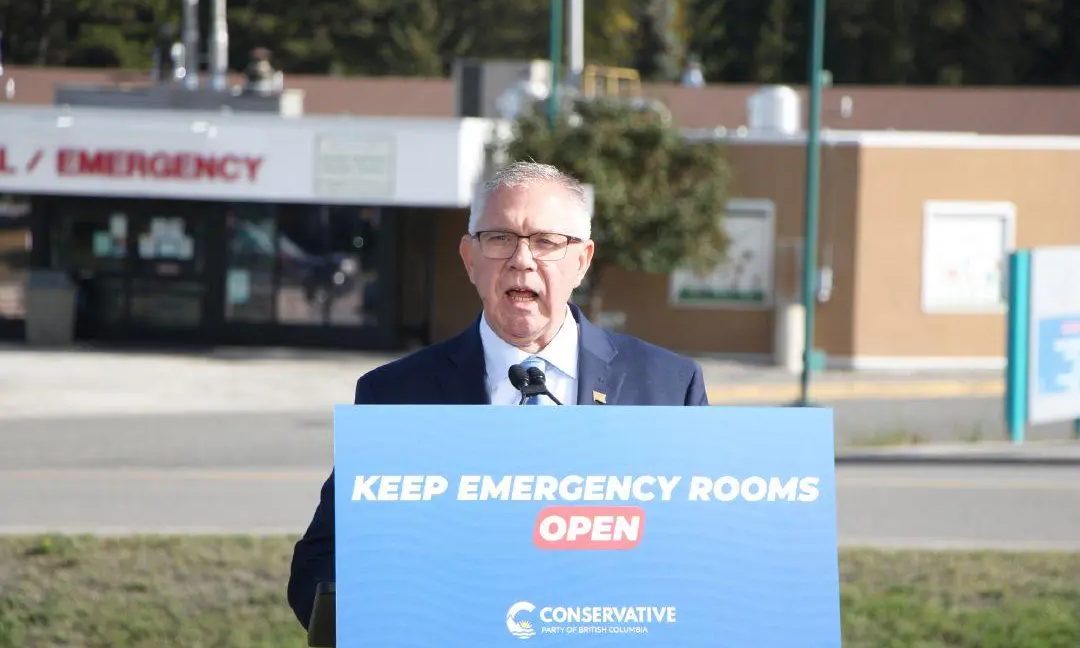
Conservative Plan Focuses on Rural ER Closures
Speaking outside 100 Mile District General Hospital on Monday, Oct. 5, Lorne Doerkson announced that a B.C. Conservative government would establish a $50-million emergency fund to support rural medical practices. Doerkson, the party’s interim leader and incumbent MLA for Cariboo-Chilcotin, said the funding aims to prevent closures and assist with recruitment.
During the campaign stop, Doerkson noted that the local emergency department had experienced 39 announced shutdowns throughout 2026, though last-minute locum coverage allowed Interior Health to reopen the facility on several of those occasions. Overall, the ER remained closed well over 30 times. Doerkson pledged to maintain approved 2026 healthcare funding levels, fast-track credentials for foreign-trained Canadian physicians, and recognize provincial medical qualifications automatically to aid frontline staffing.
Community Impact and NDP Response
Former Cariboo-Chilcotin MLA Donna Barnett joined Doerkson, emphasizing that local residents and seniors rely on the emergency room, with some traveling up to an hour and a half for care. Local resident Amber Vigh, whose nine-year-old son Carter died at the hospital from an asthma attack in 2023, also voiced support for keeping the facility open continuously.
In response, B.C. NDP leader David Eby and party representatives criticized the Conservative proposal, questioning how the party would fund its healthcare promises without making service cuts. The NDP pointed to their own strategy of funding system investments through a proposed tax on high earners and millionaires. Doerkson countered that the proposed tax could deter new physicians from moving to British Columbia or prompt current doctors to leave.
HEALTH
Vernon Voters Weigh Options as Political Leaders Target Okanagan Riding
B.C. NDP Leader David Eby and Conservative Leader Lorne Doerkson brought their campaigns to Vernon over the weekend, pitching platform promises to voters.
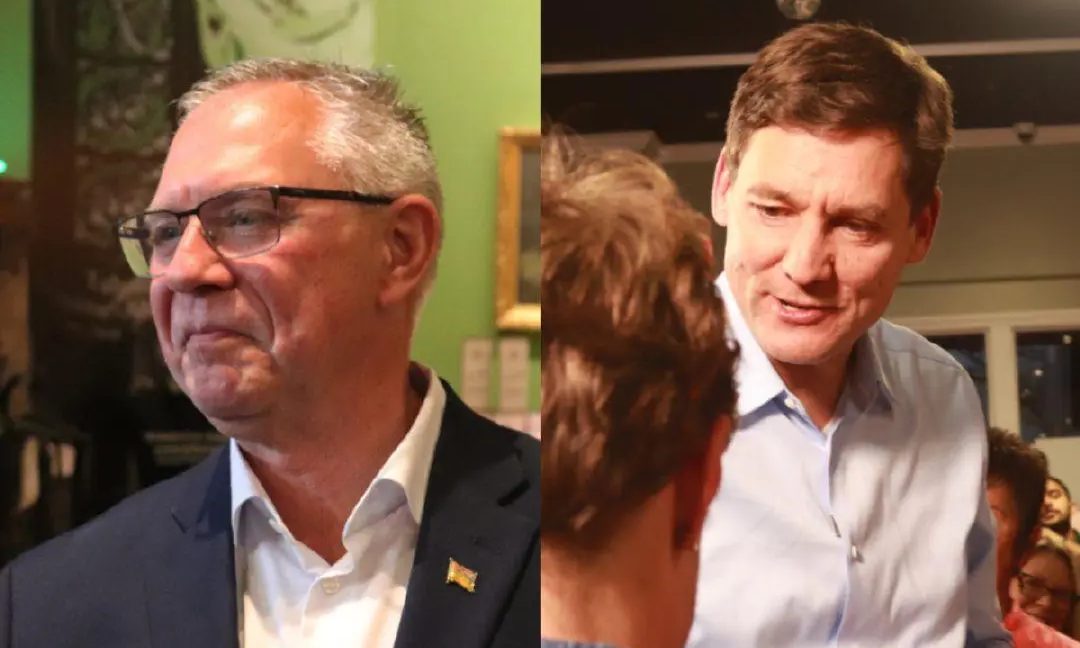
Okanagan Stops Highlight Key Platforms
With campaign momentum building ahead of the Oct. 24 provincial election, B.C. NDP Leader David Eby and B.C. Conservative Leader Lorne Doerkson made separate campaign stops in Vernon over the weekend to connect with voters in a highly competitive riding.
Eby arrived on 30th Avenue on Saturday with a campaign bus to support local NDP candidate Harwinder Sandhu and several other area candidates, including Loyal Woolridge, Kory Clark, Gloria Morgan, and Binny Boparai. Speaking to roughly 80 attendees, Eby emphasized his party’s commitments to manage living costs, highlighting plans to temporarily suspend the 10-cent provincial motor fuel tax and place controls on gas prices. He also detailed a grocery proposal aimed at permitting new competing stores near established ones, which he stated can reduce annual household bills by an average of $700. In his remarks, Eby pointed to international factors as well, attributing current economic strains partly to impacts from U.S. President Donald Trump’s trade policies.
Conservatives Outline Policies and Address Election Timing
Doerkson hosted a meet-and-greet on Friday, Oct. 2, drawing over 100 people to Okanagan Spirits Craft Distillery alongside local Conservative candidate Kevin Acton. Earlier that morning in Summerland, Doerkson announced a half-billion-dollar wildfire initiative that includes purchasing a fleet of water bombers. Discussing economic measures, Doerkson highlighted a proposal to eliminate the 10 per cent PST on Canadian alcohol and focus on reducing interprovincial trade barriers as strategies to counter U.S. tariffs. He noted that health care, employment, and the economy remain the primary concerns raised by residents. Expressing frustration over the timing of the election call, Doerkson affirmed that his party remains focused on the upcoming vote.
Focus on the Local Contest
Both leaders used their appearances to rally support for their local representatives in the Vernon-Lumby contest. Eby praised Sandhu’s record of community-focused advocacy, noting her past electoral success in the area. Meanwhile, Doerkson commended Acton—who is also seeking re-election as mayor of Lumby—for his ongoing local leadership. Acton has committed to vacating his municipal seat and funding a municipal by-election should he be elected to provincial office.
BC STORIES
B.C. Patients Could Soon Select Surgical Lists Based on Wait Times Under NDP Plan
B.C. NDP Leader David Eby promises eight new MRI machines, 10 CT scanners, and regional surgical waitlists to reduce health-care delays across B.C.
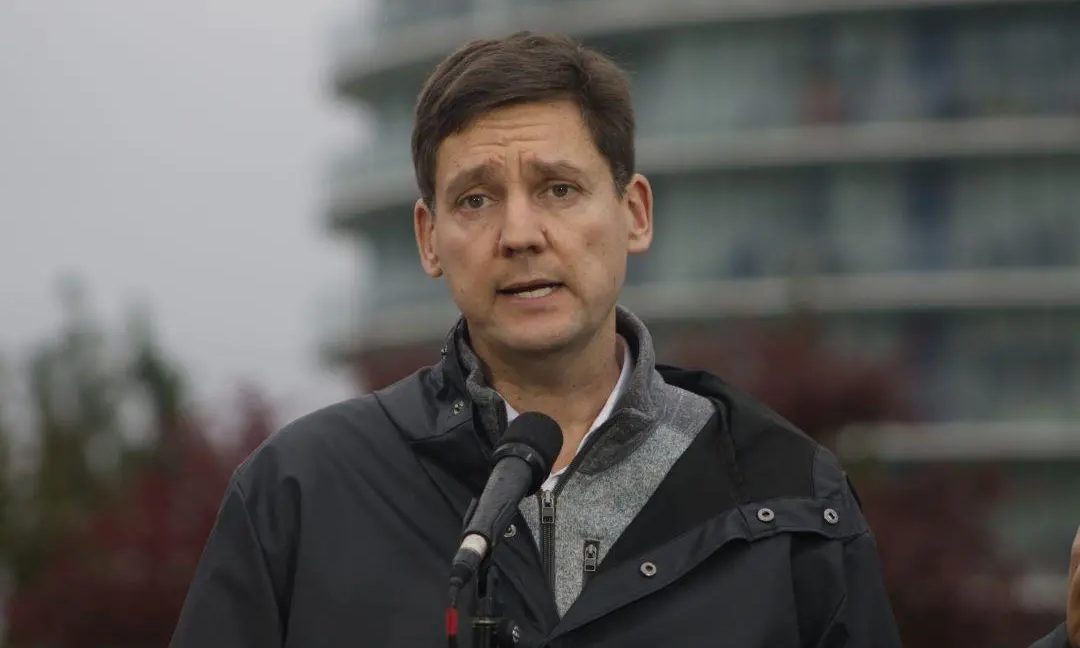
Centralized Waitlists Proposed to Shorten Surgical Delays
British Columbians undergoing surgery could soon choose their treatment location based on wait times under a new proposal from B.C. NDP Leader David Eby. Speaking in Coquitlam on Tuesday, Oct. 6, Eby outlined a campaign promise to establish co-ordinated regional surgical waitlists if his government wins re-election on Oct. 24. The initiative aims to match patients with available regional capacity, addressing wait times that currently vary between 10 and more than 50 weeks depending on the assigned surgeon.
Eby noted that the centralized system would allow patients to decide whether to undergo procedures at a local hospital, wait for a specific preferred surgeon, or opt for the fastest available opening anywhere in their region.
New Scanners and Targeted Recruitment Planned
Alongside procedural changes, the election pledge includes adding eight MRI machines—including one designated for Eagle Ridge Hospital in Coquitlam—and 10 CT scanners across the province. To operate the expanded diagnostic equipment, Eby announced plans to broaden B.C.’s U.S.-focused health-care recruitment campaign. The hiring effort will target areas facing active staffing shortages, specifically recruiting surgeons, medical lab technicians, and medical imaging technologists.
According to NDP figures, the provincial government has added over 1,800 specialists, 21 MRI units, and 15 CT scanners since taking office in 2017. These additions have contributed to a 108 per cent increase in completed MRI exams and a 61 per cent rise in CT exams.
Specialists Raise Concerns Over Access Times
Despite these additions, specialist wait times remain a critical issue across the province. A June survey conducted with involvement from the Consultant Specialists of BC revealed that nearly one-quarter of British Columbians are currently waiting to see a medical specialist, with that figure expanding by 10 per cent annually.
Dr. Robert Carruthers, president of the Consultant Specialists of BC, stated that the Ministry of Health relies on selective statistics that obscure the full scope of the problem. Carruthers pointed out that official metrics focus primarily on the duration between a specialist consultation and the actual surgery, while ignoring the initial wait required just to secure a first appointment with a specialist.
While the provincial government maintains a public website displaying surgical wait time data, the platform only reflects a snapshot of completed scheduled procedures over a rolling three-month window and is updated bimonthly.
Political Debate Over Health Care Solutions
Eby framed the upcoming provincial vote around healthcare access, contrasting his platform’s focus on diagnostic expansion against opposition proposals. The announcement arrived one day after B.C. Conservative Leader Lorne Doerkson pledged a $50-million dedicated fund aimed at preventing rural emergency room closures.

Why four years of municipal tension could bring more Kamloops voters to the polls
Why Residents and Tourists on Mexico’s Pacific Coast Face Severe Threats From Hurricane Simon
Why Calgary Flames Fans Are Searching for Hope Despite a Historic 0-5 Start

Community Support Surges for Family After Fatal Highway Crash Near Chase Claims Two Lives

What a Proposed ICBC Hybrid System Could Mean for B.C. Drivers

Why B.C.’s Conservative Campaign Face is Drawing Scrutiny Over Past Social Media Comments

Opinion: John Rustad Has to Go

B.C. Supreme Court Grants Cowichan Tribes Title to Historic Richmond Lands and Fishing Rights

Vancouver Canucks Gear Up for a Make-or-Break 2025–26 Season

Province to Appeal Cowichan Tribes Land Decision

Kamloops Prepares Four Reverse Referendums on $188M in Major Projects

Kamloops Blazers Announce Off-Season Changes Ahead of 2025–26 Season
-
 COMMUNITY6 days ago
Why Okanagan Pet Owners Turned to Free BC SPCA Clinics After Wildfire Season
-

 OPINIONS6 days ago
B.C. Election Poll Puts Conservatives Ahead Five Points as Cost of Living Tops Voters’ Concerns
-
 BC STORIES6 days ago
B.C. Patients Could Soon Select Surgical Lists Based on Wait Times Under NDP Plan
-
LOCAL5 days ago
Your Current 3 Day Forecast — October 7, 2026
-

 SPORTS7 days ago
BC Lions Hold Off Toronto Argonauts Behind Sean Whyte’s Record Eight Field Goals
-

 BC STORIES5 days ago
Voters face choice on family support as NDP campaign shifts focus away from U.S. tariff threats
-
 COMMUNITY6 days ago
BC Conservatives Promise $50M Rural Healthcare Fund Amid ER Closures
-

 BC STORIES6 days ago
Police Request Public Help After Fatal Highway 93 Crash Kills Local Resident