NATIONAL STORIES
What Trade Dispute Escalations and Counter Tariffs Mean for Canadian Consumers
Pierre Poilievre calls on Mark Carney to reveal the cost of upcoming U.S. counter tariffs on goods like dairy and plywood, demanding full trade deal transparency.


Poilievre Demands Financial Transparency on Counter Tariffs
As Canada prepares to implement counter tariffs against American goods this Tuesday, Opposition Leader Pierre Poilievre is pressing the federal government for greater openness. Following the collapse of bilateral trade discussions last month, U.S. President Donald Trump introduced levies on a range of Canadian items, including honey, cement, and hockey sticks. Ottawa’s impending retaliatory duties are expected to hit American imports such as sunscreen, plywood, and dairy products.
Calls for Full Disclosure on Failed Trade Deal
Poilievre emphasized that the public deserves clear figures regarding the financial impact these counter tariffs will impose on domestic shoppers and businesses. He also pressed Prime Minister Mark Carney to reveal how the government intends to cushion those expenses. Furthermore, the Conservative leader reiterated demands for Ottawa to publish the complete document of the collapsed trade agreement, arguing that Canadians should see the precise terms Carney rejected.
Government Strategy and Focus on Cooperation
Responding to ongoing trade tensions in a Labour Day address, Prime Minister Carney stated that Canada remains focused on expanding its international commercial partnerships. He added that the nation performs at its best when citizens look out for one another during challenging times.






LOCAL
Where Provincial Jobless Rates Stood in September
Canada’s national unemployment rate reached 6.5 per cent in September. Explore the full provincial breakdown and regional employment figures from Statistics Canada.
National and Provincial Jobless Figures
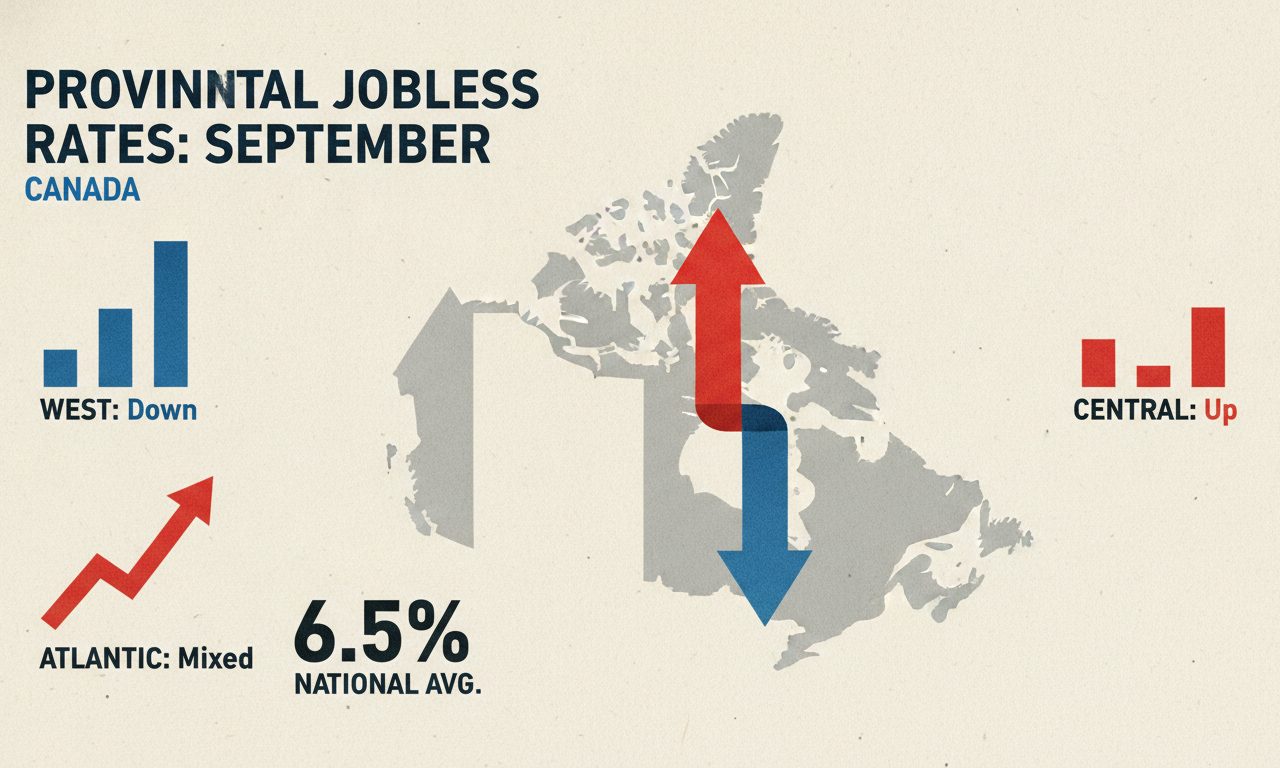
Canada recorded a national unemployment rate of 6.5 per cent in September, according to data released by Statistics Canada on Oct. 9, 2026.
Across Western Canada, British Columbia’s jobless rate shifted to 6.4 per cent from 6.5 per cent in August. Alberta recorded a rate of 6.4 per cent, down from 6.8 per cent the previous month, while Saskatchewan dropped to 5.4 per cent from 6.0 per cent. Manitoba’s unemployment rate remained unchanged at 5.0 per cent.
In Central Canada, Ontario’s unemployment rate rose slightly to 7.0 per cent from 6.9 per cent in August, while Quebec’s rate reached 6.0 per cent, up from 5.6 per cent.
Atlantic Canada and Regional City Data
In Atlantic Canada, Newfoundland and Labrador reported the highest provincial figure at 9.1 per cent, up from 8.6 per cent in August. New Brunswick saw a minor increase to 7.4 per cent from 7.3 per cent, and Nova Scotia rose to 6.3 per cent from 6.1 per cent. Prince Edward Island experienced a decline, moving to 7.3 per cent from 7.9 per cent.
Statistics Canada also tracked seasonally adjusted, three-month moving average rates for major urban areas. However, the agency cautioned that these municipal figures are subject to wide fluctuations due to smaller statistical sample sizes.
NATIONAL STORIES
What New Brunswick’s Latest Unemployment Figures Mean for Your Community
Statistics Canada reports New Brunswick’s unemployment rate reached 7.4% in September, as Canada lost 68,000 jobs nationally, raising the national rate to 6.5%.
Provincial Labor Market Holds Steady Overall
New Brunswick’s unemployment rate stood at 7.4 per cent in September, up slightly from 7.3 per cent in August, according to the latest figures from Statistics Canada. The provincial labor pool decreased by 200 people during the month, while overall employment dropped by 700 positions, including a loss of 400 full-time jobs. These monthly shifts remain within the agency’s margin of error.
On a year-over-year basis, the province’s economy continues to tread water. Although the current unemployment rate is lower than the 7.9 per cent reported last September, the total labor force remains virtually unchanged. Year-over-year employment shows a modest gain of 2,100 jobs, driven by an addition of 3,900 positions that was partially offset by a decline of 1,800 part-time roles.
National Employment Drops for Second Straight Month
Across Canada, the national economy shed 68,000 jobs in September, pushing the countrywide unemployment rate up to 6.5 per cent from 6.4 per cent in August. The contraction included declines of 35,000 full-time positions and 33,000 part-time jobs. September marked the second consecutive month of national employment losses, following a decrease of 42,000 jobs in August. These downturns come after a stretch of net growth from April to July, which had added 181,000 positions. Over the past year, national employment remains up by 95,000 jobs.
Regional Trends and Sector Shifts
Job losses across the country were led by Quebec, which lost 49,000 jobs, alongside British Columbia, down 20,000, and Manitoba, down 4,400. Conversely, gains were recorded in Alberta, up 23,000, Newfoundland and Labrador, up 1,800, and Prince Edward Island, up 1,000 positions.
Nationally, job declines were concentrated in educational services, manufacturing, as well as health care and social assistance. Growth was observed in repair and maintenance alongside personal or household services. Across the provinces, September unemployment rates ranged from a low of 5.0 per cent in Manitoba to a high of 9.1 per cent in Newfoundland and Labrador.
NATIONAL STORIES
Search Continues After Ontario-Based Medical Flight Vanishes Near Massachusetts Coast
U.S. Coast Guard crews are searching near Nantucket for a missing Latitude Air Ambulance jet carrying four Canadians and two passengers from Bermuda.

Emergency Search Underway Off Nantucket
Air and ground search teams are scanning waters approximately 150 kilometres southeast of Boston after a medical transport aircraft vanished early Saturday morning. Contact with the Gulfstream G100 jet was lost around 1:30 a.m. as it made its approach toward Boston from Bermuda, prompting a response from the U.S. Coast Guard following notification by the Federal Aviation Administration.
Flight Carrying Crew and Patients
The aircraft is operated by Hamilton-based Latitude Air Ambulance. According to Clarence Togeretz, operations manager for the company, six individuals were aboard the flight. The crew consists of two Canadian pilots and two Canadian medical staff members. They were transporting two Bermuda nationals, identified as a patient and a family member.
Response and Ongoing Inquiries
Togeretz confirmed that the company contacted American authorities after the plane failed to land on the tarmac as scheduled. He noted that this marks the first instance where the operator has lost contact with one of its aircraft, adding that the team is holding onto optimism while praying for a safe resolution. Latitude Air Ambulance has reached out to Transport Canada regarding the incident. Meanwhile, provincial air ambulance provider Ornge expressed support via social media, stating it hopes the aircraft and everyone on board are located safely and quickly.

What Vernon Motorists Need to Know About Upcoming 29th Street Delays

A Mother’s Call for Kindness and Plasma Donation as Guilty Plea Expected in Son’s Death

Victoria Goaltender Dylan Garand Secures Victory as Rangers Defeat Canucks 6-2

Why four years of municipal tension could bring more Kamloops voters to the polls
Why Residents and Tourists on Mexico’s Pacific Coast Face Severe Threats From Hurricane Simon
Why Calgary Flames Fans Are Searching for Hope Despite a Historic 0-5 Start

Opinion: John Rustad Has to Go

B.C. Supreme Court Grants Cowichan Tribes Title to Historic Richmond Lands and Fishing Rights

Vancouver Canucks Gear Up for a Make-or-Break 2025–26 Season

Province to Appeal Cowichan Tribes Land Decision

Kamloops Prepares Four Reverse Referendums on $188M in Major Projects

Kamloops Blazers Announce Off-Season Changes Ahead of 2025–26 Season
-

 COMMUNITY6 days ago
Why Okanagan Pet Owners Turned to Free BC SPCA Clinics After Wildfire Season
-

 OPINIONS6 days ago
B.C. Election Poll Puts Conservatives Ahead Five Points as Cost of Living Tops Voters’ Concerns
-

 BC STORIES6 days ago
B.C. Patients Could Soon Select Surgical Lists Based on Wait Times Under NDP Plan
-
LOCAL5 days ago
Your Current 3 Day Forecast — October 7, 2026
-

 BC STORIES5 days ago
Voters face choice on family support as NDP campaign shifts focus away from U.S. tariff threats
-
 COMMUNITY6 days ago
BC Conservatives Promise $50M Rural Healthcare Fund Amid ER Closures
-

 BC STORIES6 days ago
Police Request Public Help After Fatal Highway 93 Crash Kills Local Resident
-
LOCAL6 days ago
Your Current 3 Day Forecast — October 6, 2026