POLITICS
The Return of the Center-Right: Inside the Launch
The Progressive Tory Party of Alberta is officially registered by Elections Alberta. Learn how this new party aims to challenge the UCP and Danielle Smith.


A Strategic Pivot in Alberta’s Political Landscape
In a move that signals a growing fracture within Alberta’s right-wing political landscape, a former member of the United Conservative Party (UCP) caucus has successfully navigated a regulatory minefield to register a new political entity: the Progressive Tory Party of Alberta (PTP). The registration, confirmed this week by Elections Alberta, marks the culmination of a months-long battle over branding, ideological identity, and the right to claim the province’s conservative heritage. This development comes as a direct challenge to the current administration, suggesting that the ‘big tent’ approach of the UCP is beginning to show structural cracks.
The party’s formation comes at a time when Premier Danielle Smith’s government faces increasing scrutiny from both the left and the disaffected right. According to party organizers, the PTP aims to fill a pragmatic void left by the UCP’s shift toward more populist and socially conservative policies. The new party intends to appeal to Red Tories, voters who value fiscal responsibility and private enterprise but maintain more moderate views on social issues, environmental stewardship, and intergovernmental relations. By positioning themselves as a steady alternative, the PTP hopes to attract those who feel the current government has drifted too far from the center-right traditions of past decades.
The Battle Over the Conservative Moniker
Perhaps the most contentious aspect of the party’s inception was the name itself. The provincial government recently saw regulations implemented through Elections Alberta that restricted new political parties from using certain words in their names that might cause voter confusion. Chief among the restricted terms was ‘conservative,’ a move critics argue was a transparent attempt by the UCP to monopolize the brand and prevent any rival from claiming the legacy of the movement. This ban forced organizers to think creatively about their identity.
Organizers initially sought names that included ‘Conservative,’ but were rebuffed by provincial authorities citing the risk of misleading the public. The choice of ‘Progressive Tory’ is both a nod to the historical Progressive Conservative (PC) party that governed Alberta for forty-four consecutive years and a clever workaround to the government’s naming restrictions. By adopting the ‘Tory’ label, the new party seeks to invoke the legacy of former premiers like Peter Lougheed, positioning themselves as the true heirs to Alberta’s traditional center-right governance. They argue that while the word conservative is blocked, the spirit of Toryism remains a foundational pillar of the province’s political identity.
Ideological Foundations and Voter Outreach
The Progressive Tory Party isn’t just about a name; it’s about a perceived lack of representation for moderate Albertans. The founding members, several of whom have ties to the pre-merger PC party, argue that the UCP has moved too far from the principles of evidence-based policy and institutional stability. They point to recent controversies surrounding health care restructuring, the proposed Alberta Pension Plan, and the Sovereignty Act as evidence that the current government is more interested in ideological battles than administrative competence. The PTP platform centers on four main pillars: economic stability, investment in public services, environmental realism, and collaborative federalism.
Albertans are tired of the constant friction with the federal government and the focus on fringe issues, said a spokesperson for the nascent party. There is a silent majority of voters who want a government that balances the books and supports the energy sector but doesn’t feel the need to litigate every social issue or threaten our place within the Canadian federation. This demographic, often referred to as the ‘exhausted middle,’ is the primary target for the PTP as they begin their recruitment efforts in major urban centers like Calgary and Edmonton.
The Road to the 2027 General Election
While the PTP has cleared the significant hurdle of official registration, the path ahead is fraught with challenges. Establishing a grassroots infrastructure, raising funds, and recruiting credible candidates in all eighty-seven ridings is a Herculean task for any new party. Furthermore, the specter of ‘vote splitting’ looms large over the project. In Alberta’s first-past-the-post system, a divided right-wing vote has historically paved the way for the New Democratic Party (NDP), a scenario most conservative voters are desperate to avoid. The UCP has already begun messaging against the new party, labeling it a distraction that only serves the interests of the opposition.
Political analysts suggest that the PTP’s success will depend on its ability to attract high-profile defectors from the UCP and to convince centrist voters that they are a viable alternative to both the UCP and the NDP. With the NDP currently undergoing its own leadership transition, the political center is arguably more contested than ever before. If the PTP can secure even ten percent of the popular vote in key urban ridings, they could become the kingmakers of the 2027 election, forcing a coalition or minority government situation that Alberta has rarely seen in its history.
A Reaction to the UCP’s Populist Turn
The emergence of the PTP is a direct response to the leadership style of Danielle Smith. Since taking the helm of the UCP, Smith has pivoted the party toward a more assertive posture that resonates deeply with her rural base but alienates urban moderates. The PTP hopes to capture these urban voters who are concerned about the government’s stance on the Canada Pension Plan and the perceived instability in the healthcare system. By offering a ‘return to normalcy,’ the Progressive Tory Party is betting that Albertans are ready to trade populist fire for predictable, moderate governance.
As the Progressive Tory Party of Alberta begins its membership drive and prepares for its first policy convention, it remains to be seen if it can transform from a protest movement into a legitimate contender for power. However, its registration alone serves as a reminder that the political landscape in Alberta is shifting once again. The fight for the soul of the province’s right wing is far from over, and the PTP has just fired a significant opening salvo in what promises to be a transformative era for the Wild Rose province.


BC STORIES
Why B.C.’s Conservative Campaign Face is Drawing Scrutiny Over Past Social Media Comments
B.C. Conservative campaign director Katy Merrifield faces criticism from the NCCM and political leaders over past anti-Islam social media posts.


Controversy Surrounds Senior Campaign Official
B.C. Conservative campaign director Katy Merrifield is confronting widespread condemnation after an anti-Islam message she published on social media came to light. The June post on X, which stated “F–k Islam. Defend Western civilization,” was made in response to an inquiry into child sexual exploitation in the U.K. before being removed. Merrifield, previously the head of communications for federal Conservative Leader Pierre Poilievre, holds an administrative role with the provincial party rather than a candidate spot.
Reactions and Call for Accountability
The National Council of Canadian Muslims (NCCM) voiced deep hurt over the remark and pointed to additional posts reflecting a pattern of Islamophobic rhetoric. Calling for good-faith discussions to address Islamophobia, the group noted that Statistics Canada recorded a roughly 173 per cent surge in police-reported anti-Muslim hate crimes nationally between 2020 and 2024. B.C. NDP Leader David Eby stated Saturday that the remarks were deeply hateful toward a specific faith group and insisted there must be consequences, warning that no community is safe if political leadership permits such behavior. CentreBC Leader Elenore Sturko also criticized the party’s leadership, arguing that those who fail to stand up for all British Columbians should not seek the premier’s office.
Explanation and Party Response
Merrifield addressed the matter on Friday, explaining that her original post was fueled by her personal history as a rape survivor and her emotional reaction to accounts of sexual abuse against young girls in the U.K. She noted that she took the post down within hours because her anger was intended for the extremism used to justify those crimes rather than Muslims or their religion. While the NCCM highlighted that she offered no apology or acknowledgement of the pain caused, the B.C. Conservatives shared a statement from Surrey City Centre candidate Zeeshan Wahla. Wahla described her language as unacceptable but differentiated her situation from candidate Joachim Agou—who was recently dropped for posts targeting Palestinians and Pakistanis—by stating Agou incited violence while Merrifield was reacting to sexual trauma. CBC News reached out to B.C. Conservative Leader Lorne Doerkson but received no statement prior to publication.
LOCAL
Who Is Running in Your Riding for the 2026 BC Election?
Check the full list of official candidates who have filed nomination papers for Kamloops, Fraser-Nicola, Cariboo-Chilcotin, and Salmon Arm-Shuswap ridings.
Candidates Confirmed Across Five Regional Ridings
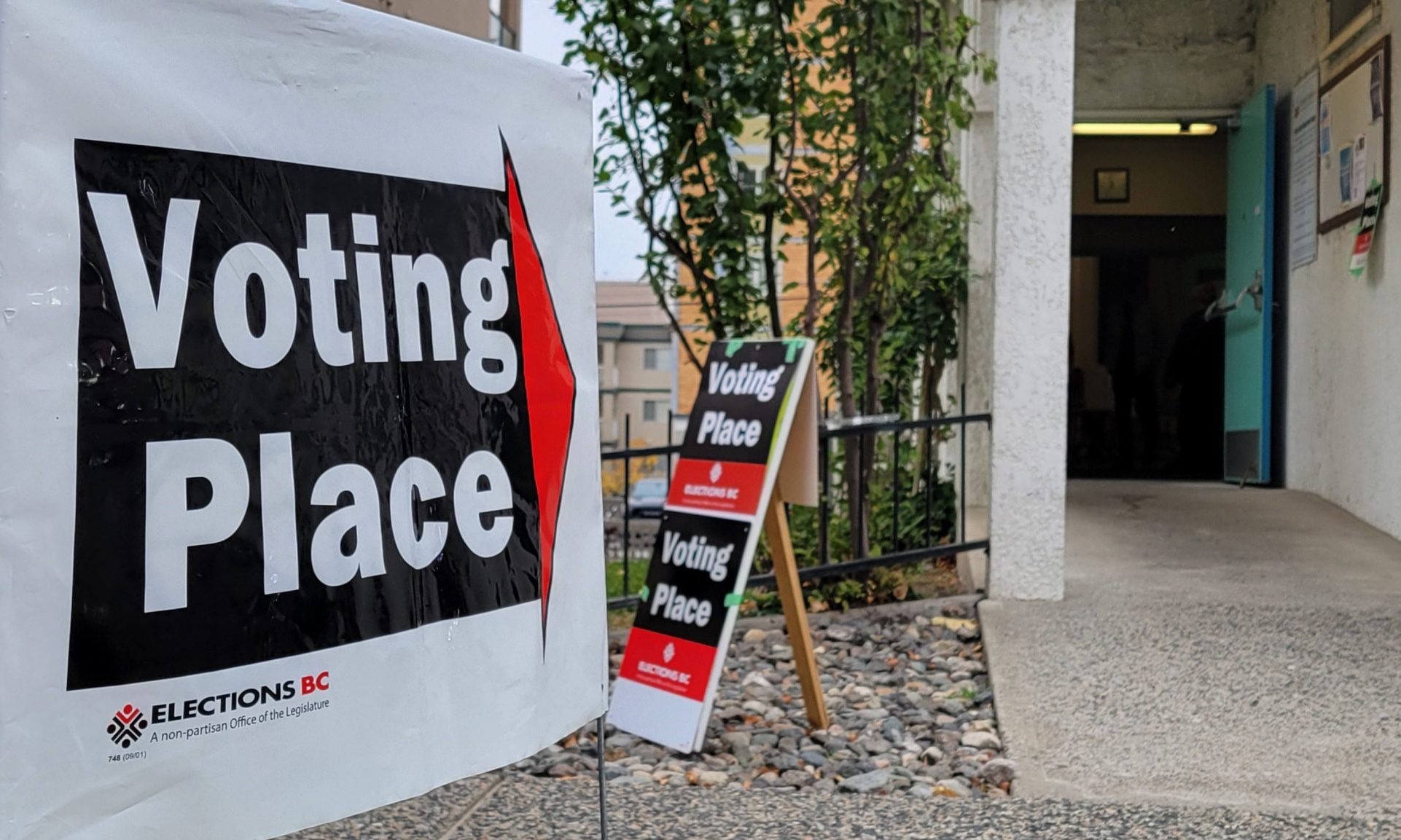
Nomination papers have been officially submitted by individuals seeking election as local Members of the Legislative Assembly in the upcoming 2026 BC election.
In Kamloops Centre, voters will see a five-candidate field consisting of incumbent Peter Milobar for the BC Conservatives, Annelise Beach representing the BC Greens, Rocky McAfee for OneBC, Thaelo Proctor running as an Independent, and Mike Wisla representing the BC NDP.
To the north, the Kamloops-North Thompson constituency features incumbent Ward Stamer of the BC Conservatives, alongside Kory Clark running for the BC NDP and Deborah Friesen for OneBC.
Contests Set for Fraser-Nicola, Cariboo-Chilcotin, and Salmon Arm-Shuswap
In the Fraser-Nicola riding, incumbent Conservative Tony Luck faces challenges from Jason Leboe of the BC NDP and Patrick Mitchell of the BC Greens.
The Cariboo-Chilcotin ballot includes incumbent Lorne Doerkson running for the BC Conservatives, Kathryn Askew representing the BC NDP, and Douglas Gook representing the BC Greens.
Meanwhile, five candidates are contesting the Salmon Arm-Shuswap riding. Incumbent David Williams represents the BC Conservatives, joined on the ballot by Gloria Morgan for the BC NDP, Barbara Presch for OneBC, Denise Reimer for CentreBC, and Jed Wiebe for the BC Greens.
BC STORIES
B.C. Voters Face October Election as Polls Show Shift in Party Support
Recent polls show the B.C. Conservatives leading the NDP ahead of the Oct. 24 election as voters focus on the cost of living and healthcare concerns.
Voters Prioritize Cost of Living Over Tariff Concerns
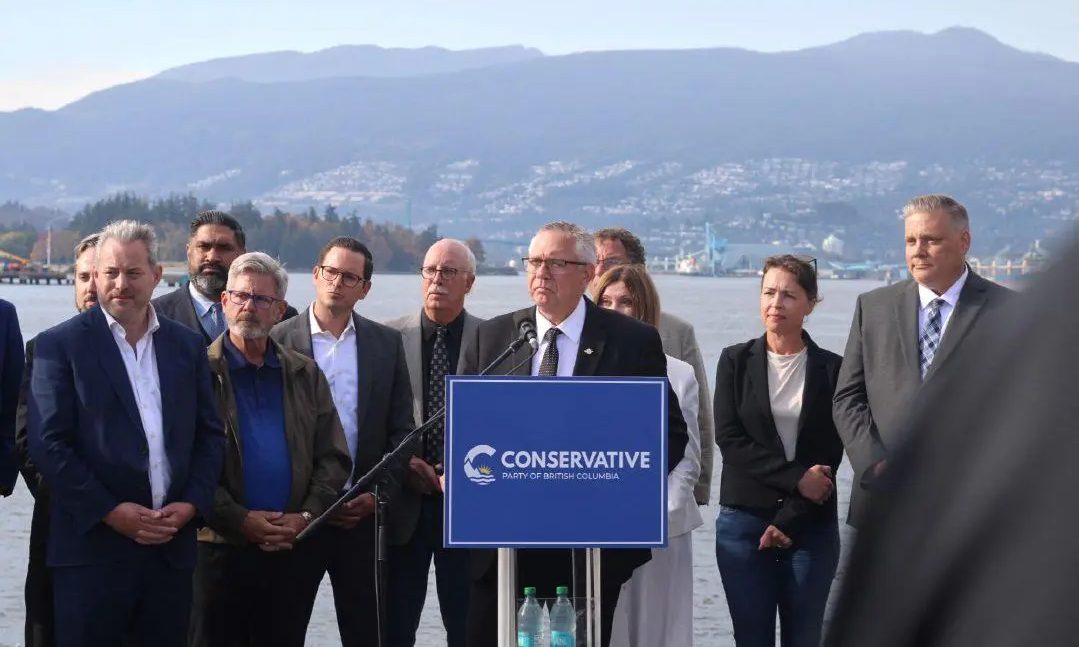
As British Columbians prepare to cast their ballots on Oct. 24, recent survey data reveals that economic pressures are dominating voter concerns. In an Angus Reid Institute poll, 57 per cent of respondents identified the cost of living as a primary issue, while 42 per cent cited healthcare. Other concerns including drug addiction and homelessness also recorded slight increases among survey participants. Conversely, concern over U.S. President Donald Trump’s tariffs has decreased, with 10 per cent of respondents naming it a top issue compared to 15 per cent previously.
Polling Numbers Show Shift in Provincial Race
The reduced focus on tariffs comes after NDP Leader David Eby initiated a snap election to secure a mandate to address U.S. trade policies, despite having two years remaining in his term. A Mainstreet Research telephone survey found that 46 per cent of residents strongly disapprove of the early election call. That survey, conducted Sept. 30 to Oct. 1 among 827 residents with a margin of error of 3.4 per cent, showed Conservative support at 45 per cent, giving them an eight-point margin over the NDP.
An online survey by Angus Reid conducted Oct. 1 to 3 with 1,000 participants indicates Conservative support at 48 per cent—an increase of five percentage points—and NDP support at 43 per cent, reflecting a margin of error of three percentage points. While the NDP gained seven points since the previous Angus Reid poll, smaller parties lost ground, with the B.C. Greens receiving seven per cent support and other parties combining for two per cent.
Regional Breakdown Highlights Divided Support
Polling data indicates significant regional differences across the province. According to Angus Reid, Conservative backing is highest in the Fraser Valley at 62 per cent compared to 28 per cent for the NDP, and reaches 57 per cent in the Interior, where they hold a 21-point advantage over the NDP. The pattern shifts along the Coast and Vancouver Island, where the NDP leads with 48 per cent support compared to 39 per cent for the Conservatives.

Why B.C.’s Conservative Campaign Face is Drawing Scrutiny Over Past Social Media Comments

Where Provincial Jobless Rates Stood in September
What New Brunswick’s Latest Unemployment Figures Mean for Your Community

Who Is Running in Your Riding for the 2026 BC Election?

How Central Okanagan Residents Can Avoid Costly Household Plumbing Damage This Thanksgiving

BC Supreme Court Judge Set to Rule on Sentence Length for Former Gang Member

Opinion: John Rustad Has to Go

B.C. Supreme Court Grants Cowichan Tribes Title to Historic Richmond Lands and Fishing Rights

Vancouver Canucks Gear Up for a Make-or-Break 2025–26 Season

Province to Appeal Cowichan Tribes Land Decision

Kamloops Prepares Four Reverse Referendums on $188M in Major Projects

Kamloops Blazers Announce Off-Season Changes Ahead of 2025–26 Season
-

 COMMUNITY5 days ago
Why Okanagan Pet Owners Turned to Free BC SPCA Clinics After Wildfire Season
-
 OPINIONS5 days ago
B.C. Election Poll Puts Conservatives Ahead Five Points as Cost of Living Tops Voters’ Concerns
-
 BC STORIES5 days ago
B.C. Patients Could Soon Select Surgical Lists Based on Wait Times Under NDP Plan
-
LOCAL4 days ago
Your Current 3 Day Forecast — October 7, 2026
-

 SPORTS6 days ago
BC Lions Hold Off Toronto Argonauts Behind Sean Whyte’s Record Eight Field Goals
-
LOCAL6 days ago
Your Current 3 Day Forecast — October 5, 2026
-

 BC STORIES4 days ago
Voters face choice on family support as NDP campaign shifts focus away from U.S. tariff threats
-

 BC STORIES5 days ago
Police Request Public Help After Fatal Highway 93 Crash Kills Local Resident