LOCAL
The Sovereign’s Shadow: Navigating the Winds of Change in the British Monarchy 2025
An in-depth analysis of the British monarchy’s challenges and shifts throughout 2025, exploring the transition of power, financial transparency, and public perception.


A Year of Unprecedented Trial
As the calendar turned to 2025, the House of Windsor found itself at a crossroads that few constitutional scholars could have predicted during the late Queen Elizabeth II’s long and stable reign. The transition from the Elizabethan era to the Caroline age has been marked by a series of systemic shocks that have tested the very foundations of the British monarchy. While the institution remains constitutionally secure, the social and political fabric surrounding it has begun to fray under the pressures of modern transparency and shifting global loyalties. King Charles III, entering his third year on the throne, has faced a dual challenge: maintaining the dignity of an ancient office while acknowledging the urgent need for structural evolution. The year has been defined by a public that is increasingly vocal about its expectations, demanding a monarchy that is not only ceremonial but also accountable and relevant to the economic realities of a post-pandemic, high-inflation world.
The Weight of the Crown
Health concerns have dominated the royal narrative throughout the first half of 2025. Following the medical disclosures of previous years, the palace has adopted a policy of controlled transparency, a delicate balancing act intended to quell public anxiety without compromising the sovereign’s privacy. This strategy has seen Prince William, the Prince of Wales, taking on an increasingly significant share of public duties. The shifting workload has not only accelerated the transition period but has also placed the future of the monarchy firmly in the hands of the younger generation. Observers note that the King’s focus on environmental stewardship and social cohesion remains steadfast, yet the logistical realities of his reign have forced a prioritization of duty over public visibility. The internal dynamics of the family have also been tested, as the ‘slimmed-down’ monarchy model means that fewer individuals are carrying a greater burden of the thousands of annual engagements traditionally expected of the royals.
The Prince of Wales and Modernization
Prince William’s emergence as the primary face of the monarchy in 2025 has brought with it a distinct shift in tone. His approach is characterized by a more informal, direct engagement with the public, focusing on tangible social issues such as homelessness and mental health. This ‘Williamite’ approach seeks to move the monarchy away from mere pageantry and toward a model of active social impact. However, this modernization has not been without its critics. Traditionalists argue that by stripping away the mystique of the crown, the institution risks becoming just another high-profile NGO, losing the symbolic power that differentiates it from political leadership. The balance between being relatable and remaining exceptional is the central struggle of William’s current tenure. Furthermore, the role of Catherine, Princess of Wales, has been pivotal; her focus on early childhood development has provided a soft-power anchor for the family’s public image, even as the institution navigates more turbulent political waters.
The Financial Lens and Public Scrutiny
Perhaps the most significant hurdle in 2025 has been the escalating demand for financial transparency. Amidst a fluctuating UK economy, the cost of the monarchy has come under intense scrutiny from both parliamentary committees and the public. The debate over the Sovereign Grant and the private revenues of the Duchies of Lancaster and Cornwall has reached a fever pitch. In response, the Palace has signaled a willingness to review certain financial structures, including a more comprehensive disclosure of the royal family’s private wealth. This move toward ‘financial perestroika’ is seen as a necessary survival mechanism in an era where public funding is under constant review. The narrative of a ‘slimmed-down’ monarchy is no longer just a logistical preference but an economic imperative. Questions regarding the maintenance of vast estates and the inheritance tax exemptions enjoyed by the crown have become central themes in the national conversation about fairness and institutional privilege.
The Commonwealth and Global Standing
Internationally, the year 2025 has seen a continued re-evaluation of the monarchy’s role within the Commonwealth. Several nations have intensified discussions regarding their transition to republics, viewing the coronation and subsequent years as a natural point of departure from the colonial past. King Charles III has addressed these movements with a stance of diplomatic neutrality, stating that the future of each nation lies within the hands of its people. Nevertheless, the loss of these constitutional ties represents a narrowing of the British monarchy’s global reach. To counter this, the royal family has intensified its ‘soft power’ diplomacy, focusing on international cooperation on climate change and humanitarian aid, attempting to redefine their relevance on the world stage beyond the borders of the Commonwealth realms. These state visits are now less about imperial legacy and more about strategic partnership and cultural exchange.
The Public Perception Gap
Polling data in 2025 reveals a generational divide that poses the greatest long-term threat to the institution. While older demographics remain steadfastly loyal to the crown, younger citizens express a mix of indifference and skepticism. The challenge for the Windsors is to demonstrate that a hereditary monarchy can coexist with the democratic values of the 21st century. The digital strategy of the palace has become more aggressive, utilizing social media platforms to narrate their work in real-time, yet the core question of relevance remains. Can an institution based on birthright truly represent a diverse and meritocratic society? This is the question that haunts the hallowed halls of Buckingham Palace as the year progresses. The ‘Spare’ narrative and the ongoing distance from the Duke and Duchess of Sussex also continue to provide a complicating counter-narrative that the palace has struggled to fully neutralize.
Conclusion: A Resilient Institution
Despite these myriad challenges, the British monarchy in 2025 continues to exhibit a remarkable capacity for adaptation. It has survived centuries of political upheaval, and its current state is less a decline and more a profound transformation. As King Charles III continues to navigate his reign and Prince William prepares for his inevitable succession, the House of Windsor is proving that it can bend without breaking. The turmoil of 2025 has not signaled the end of the monarchy, but rather the beginning of its most significant evolution since the early 20th century. Whether this evolution will be enough to secure its place for the next hundred years remains to be seen, but for now, the crown remains a central, if contested, pillar of British identity. The survival of the monarchy will ultimately depend on its ability to prove that it can serve as a unifying symbol in a world that feels increasingly divided.

LOCAL
Where Provincial Jobless Rates Stood in September
Canada’s national unemployment rate reached 6.5 per cent in September. Explore the full provincial breakdown and regional employment figures from Statistics Canada.

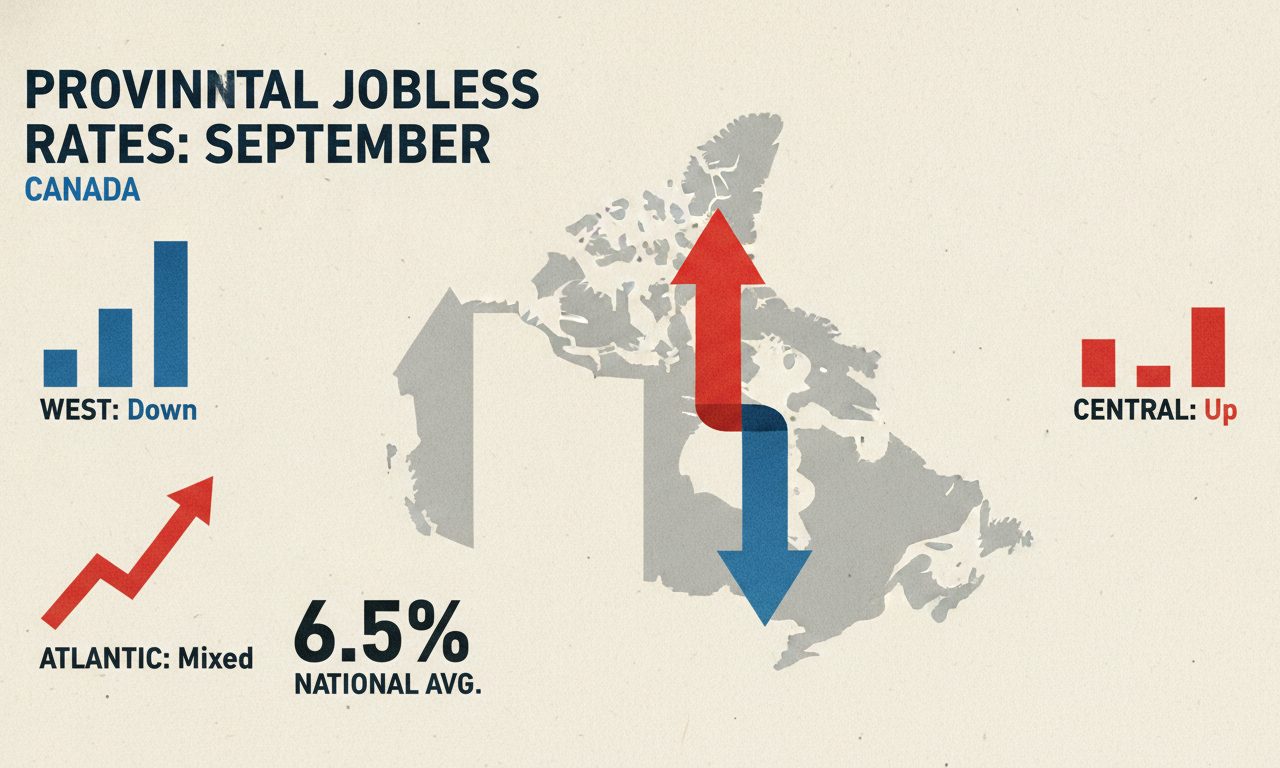
National and Provincial Jobless Figures
Canada recorded a national unemployment rate of 6.5 per cent in September, according to data released by Statistics Canada on Oct. 9, 2026.
Across Western Canada, British Columbia’s jobless rate shifted to 6.4 per cent from 6.5 per cent in August. Alberta recorded a rate of 6.4 per cent, down from 6.8 per cent the previous month, while Saskatchewan dropped to 5.4 per cent from 6.0 per cent. Manitoba’s unemployment rate remained unchanged at 5.0 per cent.
In Central Canada, Ontario’s unemployment rate rose slightly to 7.0 per cent from 6.9 per cent in August, while Quebec’s rate reached 6.0 per cent, up from 5.6 per cent.
Atlantic Canada and Regional City Data
In Atlantic Canada, Newfoundland and Labrador reported the highest provincial figure at 9.1 per cent, up from 8.6 per cent in August. New Brunswick saw a minor increase to 7.4 per cent from 7.3 per cent, and Nova Scotia rose to 6.3 per cent from 6.1 per cent. Prince Edward Island experienced a decline, moving to 7.3 per cent from 7.9 per cent.
Statistics Canada also tracked seasonally adjusted, three-month moving average rates for major urban areas. However, the agency cautioned that these municipal figures are subject to wide fluctuations due to smaller statistical sample sizes.
LOCAL
Who Is Running in Your Riding for the 2026 BC Election?
Check the full list of official candidates who have filed nomination papers for Kamloops, Fraser-Nicola, Cariboo-Chilcotin, and Salmon Arm-Shuswap ridings.

Candidates Confirmed Across Five Regional Ridings
Nomination papers have been officially submitted by individuals seeking election as local Members of the Legislative Assembly in the upcoming 2026 BC election.
In Kamloops Centre, voters will see a five-candidate field consisting of incumbent Peter Milobar for the BC Conservatives, Annelise Beach representing the BC Greens, Rocky McAfee for OneBC, Thaelo Proctor running as an Independent, and Mike Wisla representing the BC NDP.
To the north, the Kamloops-North Thompson constituency features incumbent Ward Stamer of the BC Conservatives, alongside Kory Clark running for the BC NDP and Deborah Friesen for OneBC.
Contests Set for Fraser-Nicola, Cariboo-Chilcotin, and Salmon Arm-Shuswap
In the Fraser-Nicola riding, incumbent Conservative Tony Luck faces challenges from Jason Leboe of the BC NDP and Patrick Mitchell of the BC Greens.
The Cariboo-Chilcotin ballot includes incumbent Lorne Doerkson running for the BC Conservatives, Kathryn Askew representing the BC NDP, and Douglas Gook representing the BC Greens.
Meanwhile, five candidates are contesting the Salmon Arm-Shuswap riding. Incumbent David Williams represents the BC Conservatives, joined on the ballot by Gloria Morgan for the BC NDP, Barbara Presch for OneBC, Denise Reimer for CentreBC, and Jed Wiebe for the BC Greens.
COMMUNITY
How Central Okanagan Residents Can Avoid Costly Household Plumbing Damage This Thanksgiving
RDCO warns Central Okanagan residents to dispose of Thanksgiving cooking fats in the garbage to avoid costly sewer blockages and plumbing damage.

Preventing Sewer Overflows During Holiday Gatherings
As Central Okanagan families come together for Thanksgiving between Oct. 10 and Oct. 12, regional officials are offering guidance to keep home plumbing systems safe. Disposing of fats, oils and cooking grease improperly remains the primary reason sewer lines block and overflow throughout the community.
Kit Caufield, Manager of Engineering Services for the Regional District of Central Okanagan (RDCO), explained that grease accumulation inside pipe infrastructure restricts wastewater flow over time. Caufield noted that “Over time, grease builds up inside pipes, restricting wastewater flow and creating problems not only for homeowners, but across the entire sewer system. These blockages can damage household plumbing, result in costly repairs and interfere with critical wastewater infrastructure, including sewer lift stations,”
Proper Waste Disposal Guidelines
To prevent damage to both private plumbing and public infrastructure like sewer lift stations, the RDCO recommends catching leftover food particles using a drain basket or strainer. Residents should pour warm cooking fats into a covered tin container, which can be lined with a cooking bag if intended for reuse. After the grease cools and hardens, the container should be sealed and discarded in the trash.
Additionally, fatty foods such as salad dressings, mayonnaise, and other sauces must be thrown into the garbage rather than rinsed down sinks. For larger quantities of used cooking oil, individuals can take up to two 20-litre pails to the Glenmore Landfill for recycling, though commercial amounts are prohibited. Further details can be found on the RDCO website.

Where Provincial Jobless Rates Stood in September
What New Brunswick’s Latest Unemployment Figures Mean for Your Community

Who Is Running in Your Riding for the 2026 BC Election?

How Central Okanagan Residents Can Avoid Costly Household Plumbing Damage This Thanksgiving

BC Supreme Court Judge Set to Rule on Sentence Length for Former Gang Member

Loss of Newborn Calf Puts Fresh Focus on Endangered Southern Resident Whales

Opinion: John Rustad Has to Go

B.C. Supreme Court Grants Cowichan Tribes Title to Historic Richmond Lands and Fishing Rights

Vancouver Canucks Gear Up for a Make-or-Break 2025–26 Season

Province to Appeal Cowichan Tribes Land Decision

Kamloops Blazers Announce Off-Season Changes Ahead of 2025–26 Season

Kamloops Prepares Four Reverse Referendums on $188M in Major Projects
-

 LOCAL7 days ago
Have You Seen Him? Public Help Sought in Locating Missing Traveller Last Seen in Kamloops
-

 BC STORIES7 days ago
Why a Familiar Political Name is Joining the Kamloops-North Thompson Race
-
LOCAL6 days ago
Your Current 3 Day Forecast — October 4, 2026
-

 LOCAL7 days ago
Two Displaced as Investigators Eye Suspicious Four-Plex Fire in Kelowna
-

 COMMUNITY4 days ago
Why Okanagan Pet Owners Turned to Free BC SPCA Clinics After Wildfire Season
-

 OPINIONS4 days ago
B.C. Election Poll Puts Conservatives Ahead Five Points as Cost of Living Tops Voters’ Concerns
-

 BC STORIES4 days ago
B.C. Patients Could Soon Select Surgical Lists Based on Wait Times Under NDP Plan
-
LOCAL3 days ago
Your Current 3 Day Forecast — October 7, 2026