General
B.C. Premier David Eby Faces Backlash Over Planned Suspension of Landmark Indigenous Rights Act
B.C. Premier David Eby faces criticism after announcing plans to suspend parts of the Declaration on the Rights of Indigenous Peoples Act (DRIPA) amid legal challenges.


The Shift in B.C. Legislation
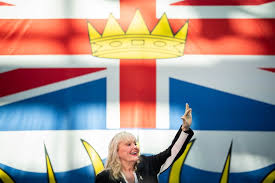
Premier David Eby is moving to temporarily suspend key sections of the Declaration on the Rights of Indigenous Peoples Act (DRIPA), a decision he claims is necessary to manage a growing wave of litigation. The move targets Section 3, which mandates that provincial laws remain consistent with the United Nations Declaration on the Rights of Indigenous Peoples (UNDRIP). Eby argues that a recent B.C. Court of Appeal ruling involving the Gitxaała Nation has opened the floodgates for legal challenges against existing provincial statutes, forcing the government’s hand.
A Mounting Legal Challenge
According to the Premier, over 20 lawsuits against the province have already been amended to leverage the Gitxaała ruling. The government intends to pause specific sections of DRIPA for up to three years, or until the Supreme Court of Canada provides a definitive ruling on the matter. Eby emphasized that the suspension is not a retreat from reconciliation but a practical necessity to prevent legal chaos. “It’s a very real and manifesting challenge that we face,” Eby stated during a press conference in Kelowna, noting that the legislative calendar requires immediate action to stabilize the province’s legal framework.
Criticism from Leaders and Experts
The announcement has sparked significant pushback from Indigenous leaders and legal analysts. Robert Phillips of the First Nations Leadership Council criticized the move, stating that Aboriginal rights and title cannot be placed on “pause.” Legal experts like Thomas Isaac have suggested the move creates unnecessary uncertainty for major resource projects and the broader economy, labeling the sudden policy shift as negligent. Furthermore, critics like former Green MLA Adam Olsen accuse the Premier of conflating separate court cases—the Gitxaała mining dispute and the Cowichan land title case—to justify the suspension.
Political Stakes and the Path Forward
The proposed changes come at a time of heightened political tension, with the B.C. Conservatives calling for the total repeal of DRIPA. Meanwhile, former Indigenous Relations Minister Scott Fraser warned that dismantling the act would return British Columbia to an era of endless litigation. Premier Eby has confirmed that the upcoming bill will be a confidence motion, meaning the survival of his NDP government hinges on its passage. Despite the controversy, Eby insists he has the votes necessary to move forward, with legislation expected to be introduced as early as next week.

General
Canada Reports Significant 23% Drop in Opioid Deaths for 2025 as Federal Policies Take Hold
Canada reports a 23% decline in opioid deaths for 2025, showing real progress through health measures, though officials warn that challenges remain.

A Turning Point in the Crisis
Canada is witnessing a significant shift in its ongoing battle against the opioid epidemic. According to newly released federal data, opioid overdose deaths plummeted by 23 per cent in 2025 compared to the previous year. With 5,630 recorded fatalities, the decline marks the second consecutive year of improvement, following a 17 per cent drop in 2024. Health Minister Marjorie Michel hailed the figures as evidence that the federal government’s evidence-based drug policies are yielding tangible results.
Cautious Optimism from Health Officials
Chief Public Health Officer Dr. Joss Reimer expressed what she called “cautious optimism” regarding the new data. Reimer attributed the decline to a cleaner illegal drug supply and the widespread distribution of naloxone, a life-saving medication used to reverse overdoses. However, she warned that the crisis is far from over. Despite the progress, death rates remain significantly higher than pre-2020 levels. Notably, while hospitalizations decreased by 12 per cent, emergency medical services saw a 9 per cent spike in calls, likely due to the rise of complex “poly-substance” overdoses involving benzodiazepines mixed with fentanyl.
Regional and Demographic Disparities
The progress remains unevenly distributed across the country. British Columbia, Alberta, and Ontario continue to bear the brunt of the crisis, accounting for 78 per cent of all deaths. Indigenous communities also remain disproportionately affected, representing 10 per cent of fatalities despite making up less than 3 per cent of the population. Indigenous Services Minister Mandy Gull-Masty described these figures as a “sobering reminder” of the systemic inequities that persist in the Canadian healthcare landscape.
Diplomatic Implications and Domestic Production
The data comes at a critical time for Canada’s relationship with the United States. Kevin Brosseau, Canada’s recently appointed “fentanyl czar,” noted that the drug trade is increasingly driven by domestic production rather than imports. Brosseau is scheduled to meet with U.S. officials in Washington to present these findings, addressing concerns from the Trump administration regarding cross-border drug trafficking. While the Canada Border Services Agency saw a drop in fentanyl seizures, Brosseau emphasized that the focus remains on disrupting the precursor chemicals used to manufacture synthetic opioids within Canadian borders.
General
Centrist Resurrection: The Battle to Reclaim the BC Liberal Brand
B.C. centrists and former BC United members are fighting to revive the BC Liberal brand to fill a growing gap between the NDP and Conservatives.

A Search for the Political Middle Ground
In the wake of a polarizing BC Conservative leadership race, a dedicated group of political centrists is mobilizing to resurrect the defunct BC Liberal Party brand. Disaffected moderates met recently to discuss reclaiming the name, arguing that the provincial political landscape has left a gaping void between an increasingly left-leaning NDP and a populist Conservative Party under new leader Kerry-Lynne Findlay.
The Weight of a Legacy Name
Political strategists involved in the movement, including Mark Marissen, emphasize that the Liberal name remains one of the most powerful political assets in British Columbia. Despite the party’s 2023 rebranding to BC United—a move widely criticized as a historic blunder—internal polling and strategist assessments suggest the ‘Liberal’ label still resonates with voters who desire fiscal responsibility paired with progressive social values. A recent Research Co. poll indicated that 41 percent of British Columbians believe it is time to bring back the BC Liberals, suggesting that the brand’s equity remains high despite its recent dormancy.
Legal and Structural Hurdles
Reclaiming the name is a complex legal challenge. Under the B.C. Elections Act, new parties cannot register names that might cause confusion with existing or recently active entities. Because BC United is still registered as ‘BC United (formerly known as the BC Liberal Party),’ any attempt to use the name ‘Liberal’ could be blocked by Elections BC. Proponents of the revival are considering two main paths: a legal challenge to the name restrictions or a ‘hostile’ takeover and subsequent rebranding of the remaining BC United infrastructure.
Shifting Political Alliances
The movement has attracted high-profile figures such as climate scientist and former BC Green leader Andrew Weaver, who argues that the current options leave moderates ‘politically homeless.’ Weaver criticized the governing NDP for fiscal irresponsibility and the Conservatives for divisive rhetoric. While political scientists warn that a third party might primarily act as a spoiler—splitting the vote and introducing further unpredictability into B.C. elections—the push for a centrist alternative reflects a growing frustration with the province’s ideological polarization.
Crime
Victim Identified in Fatal Surrey Shooting: IHIT Probes Potential Links to Organized Crime
IHIT identifies 18-year-old Gaurav Deol as the victim of a targeted shooting in Surrey. Investigators are probing potential links to organized crime.

Investigation Continues Into Fatal Surrey Shooting
Homicide investigators have officially identified the victim of a fatal shooting that occurred in Surrey, B.C., late last month. The Integrated Homicide Investigation Team (IHIT) confirmed that 18-year-old Gaurav Deol was the young man discovered dead inside a vehicle in the early hours of May 31. The incident took place near 138 Street and 62 Avenue, where police found a vehicle that had crashed into a power pole following the gunfire.
A Targeted Attack and a Grieving Family
Despite the violent nature of the crime, IHIT spokesperson Sgt. Freda Fong emphasized that Deol had no prior criminal record. Police believe the attack was targeted, though they are still working to determine the exact motive behind the killing. Sgt. Fong noted that while Deol himself was not a known criminal, investigators have uncovered evidence that he had recent contacts with individuals associated with organized crime. This connection is currently a primary focus of the ongoing investigation.
Evidence and Escalating Violence
A white Toyota SUV was found engulfed in flames shortly after the shooting in a nearby area. Investigators have successfully linked the burned-out vehicle to the homicide, a common tactic used in gang-related killings to destroy forensic evidence. This latest tragedy marks the 13th homicide in Surrey this year, highlighting a concerning trend of violence in the region. Police are currently working closely with the Deol family as they piece together the 18-year-old’s activities in the days leading up to his death.
Call for Public Assistance
As the probe continues, IHIT is urging anyone with dashcam footage or information about the white Toyota SUV or Gaurav Deol’s recent movements to come forward. The goal is to establish a clear timeline of his lifestyle and social circles to identify those responsible for the targeted hit. For now, a family is left mourning a life cut short, while the community grapples with the persistent threat of organized crime-related violence.
Maple Leafs Secure Top Pick as NHL Reveals Official 2026 Draft Order
Unfreezing the Market: Carney and Eby Unveil $3.2B Housing and Transit Package
Alberta Affordability Payments: $100 Relief Direct Deposits to Arrive Within Two Weeks
Ebola Crisis Escalates in Central Africa as Cases Surge 40% in One Week
History Made: Canada Records First-Ever World Cup Victory in Dominant 6-0 Rout of Qatar
The End of an Era: CBC to Stop Airing NHL Games as ‘Hockey Night in Canada’ Leaves Free TV

Opinion: John Rustad Has to Go

B.C. Supreme Court Grants Cowichan Tribes Title to Historic Richmond Lands and Fishing Rights

Vancouver Canucks Gear Up for a Make-or-Break 2025–26 Season

Province to Appeal Cowichan Tribes Land Decision

Kamloops Prepares Four Reverse Referendums on $188M in Major Projects

Kamloops Blazers Announce Off-Season Changes Ahead of 2025–26 Season
-
 OPINIONS2 weeks ago
Kerry-Lynne Findlay Won the Leadership. Now She Has to Win British Columbia.
-
National News2 weeks ago
Canada to Ban Social Media for Minors Under 16 as Carney Government Unveils Online Safety Bill
-
Energy & Resources1 week ago
Canada Shifts Energy Policy: Hodgson Declares End of Apologies for Oil Sands Success
-
LOCAL1 week ago
Where to Watch the 2026 FIFA World Cup in Vancouver: Top Bars, Patios, and Fan Zones
-
Canadian News1 week ago
Beyond the Brochures: The Reality of Life in Alberta’s Changing Landscapes
-
POLITICS1 week ago
B.C. Conservatives Overtake NDP in New Post-Leadership Poll
-
Hockey1 week ago
NHLPA Demands Investigation Resumes as Oilers Eye Mike Babcock for Potential Role
-
Middle East2 weeks ago
Fragile Calm Returns as Iran and Israel Halt Direct Strikes Following Trump Intervention