POLITICS

BCGEU Strike Escalates with New Sectors and Overtime Bans

Published

on

BCGEU Strike Escalates: Mining Joins, Overtime Bans

BCGEU Strike Escalates with New Sectors and Overtime Bans


The BC General Employees’ Union (BCGEU) has broadened its ongoing job action, bringing mining-sector employees onto picket lines and imposing overtime bans for correctional officers and sheriffs. Workers at the Mineral Development Office and Mineral Titles Office in Vancouver, along with staff at the Southeast Mines Office in Cranbrook, joined strike activity on Tuesday, increasing the total number of public service workers participating to roughly 8,500 across the province.

What triggered the escalation

The core issue remains the union’s demand for an 8.25% wage increase over two years. Union members say that level of pay growth is needed to keep pace with inflation and rising living costs. The provincial government has offered about 4.5% over the same period, plus cost-of-living adjustments, and negotiations have stalled as both sides remain far apart.

Which sectors are now affected

New areas of impact include:

  • Mining administration — Mineral Development Office and Mineral Titles Office (Vancouver); Southeast Mines Office (Cranbrook).
  • Corrections and sheriff services — overtime bans implemented, affecting staffing availability and scheduling.
  • Other public service roles already on strike or rotating job action, contributing to provincial service disruption.

Operational and community impacts

The escalation is producing immediate ripple effects: delays in mining permit processing and regulatory work have been reported, while the overtime bans in corrections and sheriff services are placing extra pressure on public safety staffing and rostering. Local communities, industry stakeholders and service users are monitoring developments closely as disruptions grow.

Short-term risks

  • Processing delays for mining permits and related regulatory files.
  • Increased strain on corrections and sheriff staffing due to reduced overtime capacity.
  • Potential for further escalation if talks remain deadlocked.

Union stance and next steps

BCGEU leaders, including BCGEU president Paul Finch, have warned that additional escalation is possible while negotiations remain stalled. The union underscores that its wage demand is intended to protect workers’ purchasing power. The government has framed its offer as fiscally responsible while including cost-of-living adjustments.

What to watch

Key developments to follow:

  • Any new sectors or worksites joining the strike.
  • Changes to the provincial offer or return-to-work proposals.
  • Community and industry responses, especially from the mining sector and public safety bodies.

As the job action enters its third week, the outcome of negotiations will determine whether services return to normal or if broader disruption continues. Communities across British Columbia remain attentive to any changes that might affect daily services and economic activity.

Middle East Conflict

Trump Declares Iran Peace Deal ‘Over’ as New Strikes Ignite Gulf Conflict

President Trump declares the Iran peace deal over after fresh military strikes in the Gulf, causing oil prices to surge and heightening regional tensions.

Published

on

Fragile Ceasefire Collapses Amid Renewed Military Hostilities

U.S. President Donald Trump has officially declared an interim peace agreement with Iran to be “over” following a series of retaliatory strikes and counter-strikes in the Persian Gulf. Speaking to reporters at the NATO summit in Turkey, Trump signaled a return to a maximum-pressure stance, labeling the Iranian leadership as “sick people” and a “waste of time.” The collapse of the memorandum of understanding, which was aimed at ending the war that began in late February, has sent shockwaves through global energy markets and raised the specter of a broader regional conflagration.

Military Escalation in Bahrain and Kuwait

The latest flare-up began after Iran’s Revolutionary Guard launched a joint missile and drone operation targeting U.S. military sites, specifically the Fifth Naval District in Bahrain and the Ali Al Salem Air Base in Kuwait. Iranian officials claimed the strikes were in response to U.S. interference in the Strait of Hormuz. In retaliation, U.S. Central Command (CENTCOM) conducted a massive wave of strikes against more than 60 Iranian small boats and military targets in Bandar Abbas and Sirik. President Trump warned that additional strikes were imminent, stating, “We’re going to hit them hard tonight.”

Global Energy Markets and Diplomatic Fallout

The impact of the renewed fighting was felt immediately in the global economy. Brent crude oil prices surged over five percent to reach $78.48 per barrel, the highest jump in months. Ship-tracking data showed multiple oil and gas tankers diverting from the Strait of Hormuz after several vessels were damaged. While NATO Secretary General Mark Rutte defended the U.S. response as “absolutely necessary,” Iranian officials, including parliament speaker Mohammad Baqer Qalibaf, accused Washington of bullying and violating the terms of the original ceasefire.

A Dangerous New Phase

The current situation marks a sharp reversal from last month’s cautious optimism regarding Iran’s new leadership under Mojtaba Khamenei. With the peace deal discarded, the focus shifts to the strategic Strait of Hormuz, where Iran has threatened a “crushing response” to any further U.S. naval interference. As air raid sirens continue to sound in Gulf states, the international community remains on high alert for a potential escalation into full-scale war.

Continue Reading

Economy

Ottawa Defends Deficit Spending as Bridge to Future Economic Growth

Finance Minister François-Philippe Champagne defends Canada’s deficit spending, citing G7 fiscal strength and future growth plans amid economist skepticism.

Published

on

Fiscal Strategy vs. Growing Debt Concerns

The federal government is doubling down on its high-spending agenda, signaling that it will rely on projected economic growth to offset significant new expenditures. Speaking in Ottawa ahead of pre-budget consultations, Finance Minister François-Philippe Champagne defended the government’s fiscal trajectory, arguing that strategic investments are necessary to stimulate the national economy despite the reality of rising deficits.

Champagne emphasized that Canada maintains the strongest fiscal position among G7 nations, a metric the government frequently cites to justify increased borrowing. According to the Minister, the current spending focuses on areas that will eventually yield higher productivity and innovation, which he believes will stabilize the country’s debt-to-GDP ratio in the long term.

Skepticism Among Economic Experts

Despite the government’s optimism, many economists remain wary of the reliance on future growth to pay for today’s debts. Don Drummond, a former high-ranking official at the Department of Finance and former TD Bank chief economist, warned that the government may be resting its projections on overly optimistic forecasts. Drummond noted that the assumption of imminent growth mirrors the fiscal mistakes made between the mid-1970s and 1990s, which led to a prolonged period of economic vulnerability.

Critics also point to external threats, such as potential shifts in American trade policy and rising tariffs, which could stifle the growth Ottawa is counting on. While the government has proposed removing interprovincial trade barriers and leveraging defense procurement to spark innovation, analysts argue these measures are unlikely to provide the immediate financial relief needed to cover high-cost projects.

The Road to the Next Federal Budget

The official pre-budget consultation period is now underway, with the government inviting business leaders, think tanks, and the general public to submit their priorities. While the online portal remains open until September 8, the debate over Canada’s fiscal health is intensifying. As the government prepares its next financial roadmap, the central challenge remains balancing the desire for transformative public investment with the necessity of fiscal sustainability in an increasingly volatile global market.

Continue Reading

POLITICS

Renata Ford, Widow of Former Toronto Mayor Rob Ford, Passes Away

Renata Ford, widow of former Toronto Mayor Rob Ford, has died. Premier Doug Ford confirmed the news, asking for privacy for her children Stephanie and Dougie.

Published

on

A Family Grieves as Renata Ford Dies

Renata Ford, the widow of the late Toronto Mayor Rob Ford and sister-in-law to Ontario Premier Doug Ford, has passed away. The news was confirmed by the Premier’s office in a statement released on Monday, marking a somber chapter for one of Canada’s most prominent political families.
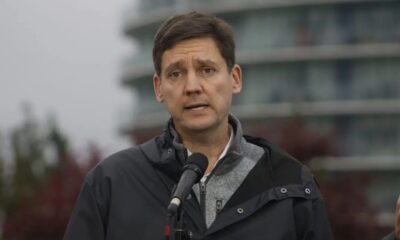
Premier Doug Ford expressed the family’s deep sorrow, focusing particularly on the well-being of Renata’s two children, Stephanie and Dougie. ‘My heart breaks for Stephanie and Dougie. They’ve been through so much at such young ages, and losing their mom is incredibly painful,’ the Premier stated. The family has requested privacy as they navigate this difficult period of mourning.

A Public and Private Life

Renata Ford remained a figure of public interest following the death of her husband, Rob Ford, in 2016. While often maintaining a private profile during her husband’s tumultuous mayoral term, she stepped into the political arena herself in 2019. Running as a candidate for the People’s Party of Canada in the Etobicoke North riding during the federal election, she ultimately finished in fourth place.

Her public life was also marked by legal complexities involving the Ford family. At the time of her political run, she was involved in a high-profile lawsuit against Premier Doug Ford. The litigation alleged that the Premier had mishandled the estate of his late brother, Rob, leading to financial harm for Renata and her children. The Premier consistently denied these allegations, and the legal dispute added a layer of public tension to the family’s internal dynamics.

A Legacy of Resilience

The passing of Renata Ford signals the end of a turbulent era for the immediate family of the former mayor. Known for her resilience in the face of intense media scrutiny and personal loss, her death has prompted an outpouring of condolences from across the political spectrum. As the family prepares for final arrangements, the focus remains on supporting the children who have now lost both parents within a decade.

Continue Reading

Trending