SPORTS
Game ON!


As the Milano Cortina 2026 Winter Olympics roll on, hockey is once again one of the Games’ signature events—this time with an added jolt of star power. NHL players are back in the men’s tournament for the first time since 2014, restoring the best-on-best feel that fans have missed and instantly raising expectations for every traditional contender. The result is a bracket where reputation matters less than execution: short tournaments punish slow starts, reward special teams, and can turn on one dominant goalie performance.
On the men’s side, the headline is depth—especially for Canada and the United States, which can ice lineups that look like All-Star rosters from the first shift to the fourth line. With elite forwards, mobile defence, and top-tier goaltending options, both teams have the tools to control games at five-on-five and tilt matchups on the power play. The U.S. enters with a clear leadership core, as Auston Matthews has been named captain, a signal that the Americans are not treating this as a development moment but as a gold-or-bust opportunity. Their challenge, as always, is turning talent into tournament rhythm quickly—especially against teams that thrive in tight, low-event games.
That’s where Europe’s top programs come in. Sweden and Finland are built for Olympic hockey: structured systems, deep blue lines, and the discipline to win when space disappears. These teams don’t need to dominate possession to be dangerous—they need to keep games close, stay out of the penalty box, and let their special teams and goaltending swing the outcome. Czechia also belongs in the conversation, capable of beating anyone if its top offensive players get rolling at the right moment. And while the gap narrows slightly with NHL talent back in the mix, a few “dark horse” paths remain plausible—particularly if a mid-tier team rides a hot goalie and steals a quarterfinal.
The women’s tournament remains anchored by the sport’s marquee rivalry: Canada vs. the United States. The talent level at the top is as high as it has ever been, and the margins between gold and silver are often a single power play, a single rebound, or one momentum swing in the third period. Early signs have been encouraging for Canada. Veteran forward Natalie Spooner, back after a major injury recovery, scored Canada’s opening goal of the tournament in a 4–0 win over Switzerland, providing both production and a confidence boost to a roster heavy with championship experience.
But the women’s field is no longer a two-team story. Sweden has looked sharp in group play and has already punched its ticket to the quarterfinals, showing the kind of defensive organization that can frustrate higher-seeded opponents. Teams like Germany and Japan can also pressure favourites if the game stays within one goal heading into the third. In a compact Olympic schedule, depth still matters—but so does freshness, discipline, and the ability to convert rare chances.
For both tournaments, the formula is familiar: special teams, goaltending, and emotional control. The teams that manage the moment—rather than chase it—will be the ones skating for medals when the final weekend arrives.

business
The End of an Era: CBC to Stop Airing NHL Games as ‘Hockey Night in Canada’ Leaves Free TV
CBC and Sportsnet end their 74-year partnership, moving Hockey Night in Canada exclusively to Sportsnet and marking the end of free NHL games on Canadian TV.


A Cultural Mainstay Fades from the Public Airwaves
For more than seven decades, Saturday nights in Canada were defined by the glowing blue light of the television and the iconic theme of Hockey Night in Canada. On Tuesday, that era officially came to a close as Sportsnet and CBC announced the termination of the sub-licensing agreement that kept NHL games on the public broadcaster. The move marks the end of a 74-year tradition of free hockey on Canadian television, shifting the national pastime exclusively behind a paywall.
The Economics of the Ice
The transition began in earnest in 2014 when Rogers Communications Inc. secured a massive $5.2-billion, 12-year national rights deal. While CBC continued to air the games through a partnership with Sportsnet, the landscape of media consumption has shifted dramatically. Rogers has now entered a new 12-year, $11-billion agreement with the NHL and is seeking to consolidate its viewership. According to Sportsnet spokesperson Jason Jackson, viewership for early Saturday night games on CBC had declined by 70 per cent since 2014, as fans increasingly migrated to digital platforms and specialty sports channels.
A Pivot Toward Amateur Sports
The loss of the NHL leaves a significant void in CBC’s prime-time programming, which previously relied on hockey to draw its largest weekly audiences. In response, the public broadcaster announced plans to launch a new Saturday night program focused on amateur, Olympic, and Paralympic athletes. While this aligns with CBC’s renewed focus on the amateur sector—a strategy adopted after being priced out of professional hockey rights—the move signals a fundamental change in how Canadians access their most popular sport.
The Normalized Pay-to-Play Model
Industry experts suggest that the public’s appetite for streaming services has made this transition possible. Michael Naraine, an associate professor at Brock University, noted that Rogers is no longer concerned about a public backlash over the removal of hockey from free TV. With the normalization of over-the-top streaming services and the rising cost of sports rights, Rogers is positioning its media division as a premium offering, particularly as it moves toward full ownership of Maple Leaf Sports and Entertainment.
business
Rory McIlroy Warns Against ‘Track 2’ Demotion for Historic Canadian Open
Rory McIlroy advocates for the RBC Canadian Open’s elite status as the PGA Tour prepares for a major ‘Track 1’ and ‘Track 2’ restructuring by 2028.
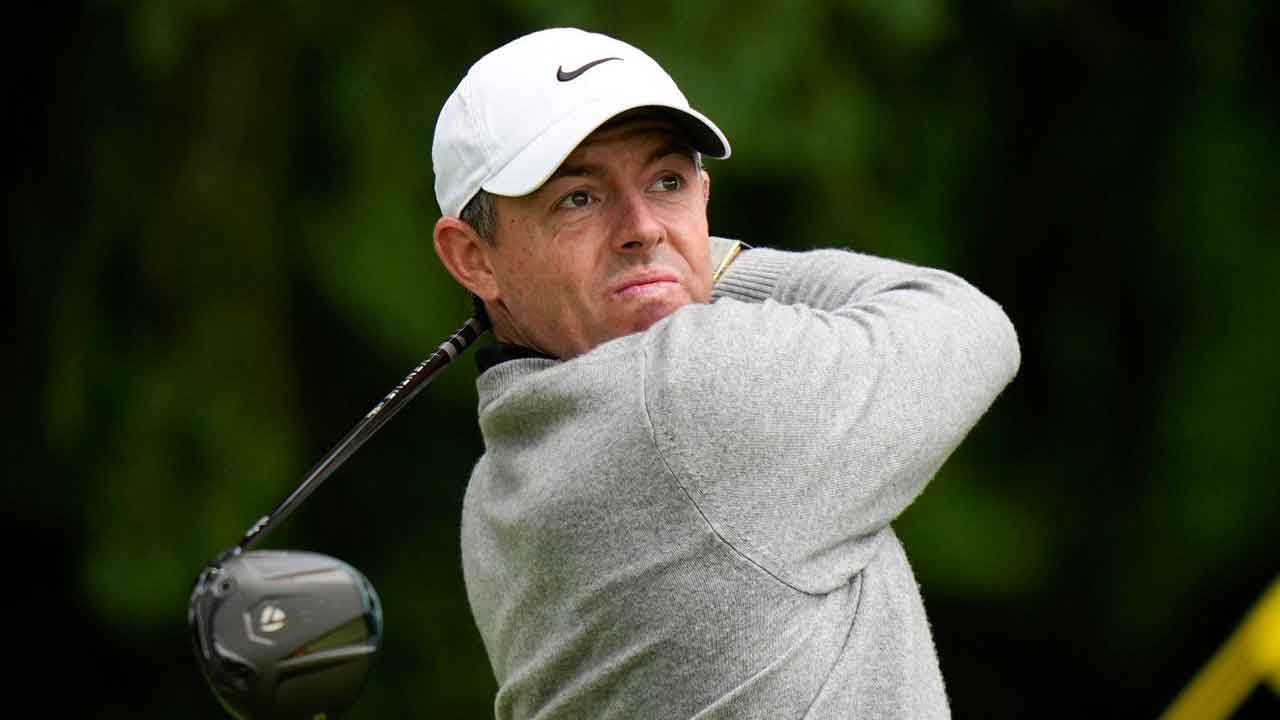
The Future of the Canadian Open Amidst PGA Tour Realignment
As the PGA Tour prepares for a massive structural overhaul scheduled for 2028, golf icon Rory McIlroy is sounding the alarm regarding the status of one of the sport’s most storied events. Despite skipping this year’s RBC Canadian Open to prepare for the U.S. Open at Shinnecock Hills, McIlroy remains a vocal advocate for the tournament, insisting it must maintain its elite status under the tour’s proposed ‘Track 1’ and ‘Track 2’ system.
The Two-Tiered Dilemma
The PGA Tour’s upcoming restructuring is expected to divide tournaments into two distinct tiers. Track 1 events will feature the top 120 players and prize funds exceeding $30 million, while Track 2 is being viewed by some as a secondary circuit. McIlroy was blunt in his assessment of the latter. "Track 2 is a glorified Korn Ferry event," McIlroy stated. "I don’t think the Canadian Open should be one of those." The Northern Irishman emphasized that the Canadian Open is the third-oldest event on the tour, trailing only the Open Championship and the U.S. Open in historical significance.
Financial Hurdles and Sponsorship Stability
The primary barrier to securing Track 1 status remains the significant financial commitment required from sponsors. RBC, which currently titles both the Canadian Open and the RBC Heritage, faces a steep price tag to keep both events in the top tier. Reports suggest that a move to Track 1 would require a $30 million investment per event. To mitigate these costs, the tour may look toward a multi-partner sponsorship model, similar to the strategy employed by The Players Championship.
The Cost of Elite Status
While moving to Track 1 would guarantee a field of global superstars, it poses a threat to the tournament’s national identity. A more exclusive field would likely eliminate many of the sponsor invites and qualifiers currently used by Canadian golfers. Nick Taylor, the 2023 champion, expressed concern over the potential 80 percent reduction in Canadian participants, noting that the goal is to balance the "best product" with the tournament’s heritage.
McIlroy’s Reflection on the LIV Era
Reflecting on the industry’s turbulence, McIlroy noted that the pre-LIV Golf structure of the tour was more robust than previously acknowledged. "The old ways of the PGA Tour weren’t actually that bad," he remarked, suggesting that the "false economy" created by competition with LIV has forced the tour into radical changes that may have unintended consequences for historic events like the Canadian Open.
Soccer
Goal Fest at the World Cup: Germany Dominates as Australia Shines in Vancouver
Day 4 of the World Cup saw Germany crush Cura”ao 7-1, while Australia took over Vancouver with a 2-0 win over Turkey. Read our full recap of the high-scoring action.

Explosive Scoring Across Five Matches
Day 4 of the World Cup delivered a masterclass in attacking football, as five matches produced a staggering 21 goals. While 19 different players found the scoresheet, the day was defined by Germany’s clinical efficiency and Australia’s triumphant debut in Vancouver. The tournament is beginning to take shape as traditional powerhouses reassert their dominance while smaller nations fight to leave their mark on the world stage.
Germany Stifles the Cura”ao Dream
In Houston, the narrative of a historic upset lasted exactly 17 minutes. After Felix Nmecha opened the scoring for Germany, the Caribbean nation of Cura”ao stunned the world when Livano Comenencia equalized in the 21st minute. The goal marked Cura”ao’s first-ever World Cup tally, briefly making the No. 82-ranked team look like a genuine threat to the four-time champions. However, Germany responded with ruthless precision, scoring six more goals to secure a 7-1 victory. Kai Havertz and Nico Schlotterbeck were among the scorers in a performance that mirrored Germany’s famous dismantling of Brazil in 2014.
The Socceroos Conquer Vancouver
Vancouver served as the backdrop for a massive Australian victory as the Socceroos defeated Turkey 2-0 at BC Place. Goals from Nestory Irankunda and Connor Metcalfe secured the three points, but it was 22-year-old goalkeeper Patrick Beach who stole the show with an eight-save performance. The atmosphere in the city reached fever pitch, with Australian fans flooding downtown in scenes reminiscent of the 2010 Winter Olympics. This win places Australia in a strong position to challenge the United States for the top spot in Group D.
Late Dramatics in Groups E and F
Elsewhere, Sweden displayed their clinical edge with a 5-1 thrashing of Tunisia, highlighted by Mattias Svanberg scoring just 13 seconds after coming off the bench. In Texas, the Netherlands and Japan played out a thrilling 2-2 draw. Despite twice taking the lead through Virgil van Dijk and Crysencio Summerville, the Dutch were unable to hold off a resilient Japanese side that found a late equalizer via a Daichi Kamada deflection. Meanwhile, Ivory Coast managed to squeeze past Ecuador with a late 1-0 win, keeping their knockout stage hopes very much alive.
The End of an Era: CBC to Stop Airing NHL Games as ‘Hockey Night in Canada’ Leaves Free TV
Mark Carney Hails U.S.-Iran Framework as ‘Game Changer’ for Global Stability
Rory McIlroy Warns Against ‘Track 2’ Demotion for Historic Canadian Open
FBI Thwarts Explosive Drone Plot Targeting UFC Event at White House
New Era for Indigenous Rights? Liberals Unveil Revamped Clean Water Legislation
Tragedy at Skeleton Bridge: Brazilian Authorities Investigate Fatal Rope Jump Error

Opinion: John Rustad Has to Go

B.C. Supreme Court Grants Cowichan Tribes Title to Historic Richmond Lands and Fishing Rights

Vancouver Canucks Gear Up for a Make-or-Break 2025–26 Season

Province to Appeal Cowichan Tribes Land Decision

Kamloops Prepares Four Reverse Referendums on $188M in Major Projects

Kamloops Blazers Announce Off-Season Changes Ahead of 2025–26 Season
-
POLITICS2 weeks ago
New Global Trade War: Trump Administration Targets Canada and EU with Fresh Tariffs Over Forced Labor Claims
-
POLITICS2 weeks ago
Canada Unveils Massive $2B National AI Strategy to Secure Digital Sovereignty
-
Music News2 weeks ago
Céline Dion and Music Icons Mourn the Loss of Ballad Legend Peabo Bryson at 75
-
Crime2 weeks ago
Victim Identified in Fatal Surrey Shooting: IHIT Probes Potential Links to Organized Crime
-
British Columbia2 weeks ago
Community Mourns as Recovery Operations Conclude for Paddleboarders in B.C. Lake
-
Astronomy2 weeks ago
Celestial Fireworks: Venus Disappears Behind the Moon in Rare June Lunar Occultation
-

 OPINIONS2 weeks ago
Kerry-Lynne Findlay Won the Leadership. Now She Has to Win British Columbia.
-
media2 weeks ago
CBS News Ousts Scott Pelley After Explosive Confrontation with New Executive Producer