OPINIONS
John Rustad’s Leadership Decision Signals a Reset


Key Takeaways
By Chad Dashly, the Current
- John Rustad told reporters on Feb. 10 he remains undecided about running again, with a Feb. 15 deadline to file an application supported by 250 member signatures.
- His pitch centers on affordability pressures and a struggling forestry sector, positioning “kitchen-table” concerns as the priority.
- Rustad drew contrast with internal culture-war flashpoints, arguing many workers can’t afford to lead with social-issue fights when bills are rising.
- He presented himself as a unifier, praising rivals’ “skill sets,” rejecting purity tests, and pledging support for the eventual winner.
- If he runs, the contest becomes a referendum on whether the party chooses discipline and economic focus—or stays stuck in internal conflict.
The Deep Dive
John Rustad walked back into Victoria this week with a message that sounded less like a comeback tour and more like an attempt to pull his party back to ground level. At his Feb. 10 news conference, Rustad didn’t pretend the Conservative leadership question is simple. He said he’s still undecided about running again, and he put a hard date on the decision: Feb. 15, the deadline to file an application backed by 250 member signatures.
That hesitation matters because it reframes his potential return. Instead of projecting inevitability, Rustad cast the moment as a calculation—whether he can steady the movement or whether his re-entry sharpens the very tensions he says he wants to calm. In other words, is Rustad a reset button, or a new spark?
Affordability and forestry over faction fights
Rustad’s “why now” argument was direct: affordability is squeezing households, and forestry is faltering. He contrasted those pocketbook pressures with the party’s internal pull toward culture-war battles—debates about gender identity in education and competing narratives about residential schools. The most forceful line wasn’t a slogan; it was a reality check. Rustad said he’s hearing from mill workers who are focused on mortgages and paycheques, not the latest social-media dispute.
A bid to shift the center of gravity
That’s the strategic bet behind his appearance: that B.C. conservative politics can refocus on day-to-day economics, jobs, and housing. Rustad is effectively arguing the next leader has to be a kitchen-table opposition leader first, and not a permanent combatant in online cultural conflict. In a province where housing costs and economic anxiety touch nearly everyone, that’s not a niche position—it’s an attempt to claim the political middle of the conversation.
The brand problem he can’t dodge
Rustad’s challenge isn’t that his message is too moderate. It’s that his name is tied to the turbulence he’s urging the party to move past. He resigned in December saying he wanted to avoid a “civil war” inside the party. Over the last year, caucus fractures and discipline fights helped define the Conservatives as a movement still learning how to act like a government-in-waiting. When you’ve been the leader during the roughest stretches, you don’t get to return as a neutral referee.
Still, Rustad may be uniquely positioned to argue for a “back to basics” reset precisely because he’s already lived the costs of internal warfare. He praised other candidates’ strengths, dismissed factional purity tests about who qualifies as a “real Conservative,” and promised to support the eventual winner—even if that winner would prefer he “go golfing.”
Why It Matters
If Rustad runs, the race becomes bigger than one candidate’s comeback. It becomes a high-stakes choice about what the B.C. Conservatives want to be: a disciplined affordability-and-jobs operation that tries to broaden appeal, or a party locked in recurring internal arguments that distract from economic pressures. Either way, his Feb. 15 deadline forces a decision point—one that could clarify whether the movement is ready to prioritize seriousness over satisfaction and unify around a practical agenda.



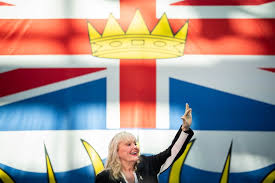
The BC Conservatives have chosen experience. The next question is whether they can turn opposition momentum into a credible path to government.
Kerry-Lynne Findlay Has Won. Now the Real Test Begins.
Leadership races are fun and easy. Governing is hard. Being in opposition is harder. Turning a protest movement into a government-in-waiting is harder still.
With Kerry-Lynne Findlay’s victory in the BC Conservative leadership race, the party has settled its internal debate. Members chose experience, discipline, and a candidate with deep roots in both provincial and federal politics.
The celebration will be noisy. The speeches will be buoyant. Social media will declare a turning point.
But by the end of this week though, the BC Conservatives will run into a reality no leadership race can fix.
The party will no longer be judged on its potential.
It will be judged on its readiness.
The End of Protest Politics
For years, the BC Conservatives prospered as the political vehicle for public anger. Anger over housing costs. Anger over health-care waits. Anger over public safety and a political class many voters believed had stopped listening.
That anger drove the party’s rise.
But voters eventually ask a different question:
not what you oppose, but what you stand for. That is now Findlay’s problem to solve.
She inherits a party with energy, volunteers, and a growing membership. She also inherits rival camps, ideological friction, and expectations large enough to keep any strategist awake.
The Conservatives have spent years building momentum. Now they must build credibility.
Why the NDP Is Watching Closely
If you are David Eby today, you are probably feeling two things at once:
relief and unease.
The relief comes from familiarity.
Findlay is a known figure, not an outsider or a newcomer. She understands campaigns, messaging, fundraising, and party organization.
The NDP knows exactly who it is facing. But there is reason for concern as well.
Findlay’s biggest asset may be her ability to impose order on the turbulence that has trailed the Conservatives through their growth.
For months, New Democrats have enjoyed watching Conservative infighting fill headlines. Leadership races reveal divisions, harden factions, and leave bruises behind.
If Findlay can unify the party and professionalize its operation, the NDP loses one of its most comfortable advantages.
The Eby government would much rather face a divided opposition than a disciplined one. That is why the next six months matter more than the next six days.
The Election Will Be About Competence
The next provincial election is unlikely to be fought over ideology.
It will be fought over competence.
British Columbians are worried about affordability.
They are worried about housing.
They are also worried about emergency room closures, shortages of family doctors, public safety, and whether their children will be able to afford a future in the province.
Those concerns cross partisan lines.
The NDP will argue it has made progress while managing economic uncertainty, population growth, and global instability.
The Conservatives will argue that progress has been too slow and that British Columbians are bearing the cost.
Who wins that argument will likely decide who forms government.
For Findlay, the challenge is simple to describe and hard to meet: turn criticism into policy.
Pointing out problems is one thing.
Anyone can diagnose what is broken. Winning requires persuading voters you can fix it.
The Voters Who Matter Most
The Conservatives already know how to energize their base.
That is not the problem.
The road to government runs through voters who do not attend rallies, do not trade memes, and do not spend their nights arguing online.
It runs through suburban families worried about mortgage payments.
It runs through seniors worried about access to health care.
It runs through working-class voters wondering why every year feels less affordable than the last.
Those voters are not looking for political theatre.
They are looking for confidence.
The next election will go to the leader who can persuade British Columbians that they understand the squeeze people are under and have a serious plan to relieve it.
That means Findlay must broaden the Conservative coalition without alienating the activists who helped build it.
Every opposition leader eventually faces that balancing act.
Few manage it well.
What Findlay Does Next
The immediate task is unity. Every leadership race creates winners and losers. Every campaign leaves disappointed supporters behind.
Her first job is to turn yesterday’s rivals into tomorrow’s allies. Her second is to build a platform that does more than denounce the government. Her third is to prepare for what could be British Columbia’s most competitive provincial election in a generation.
The NDP remains a formidable political machine with an experienced leader and a governing record to defend.
The Conservatives remain a movement with momentum, energy, and rising public support.
Put together, those forces could produce a real two-party fight. For years, British Columbia politics has been defined by realignment.
Now it may be defined by competition. Kerry-Lynne Findlay won the leadership.
That was the easy part.
Winning the leadership was the easy part. The real test starts now: persuading British Columbians she is ready to govern.
Opinion by Chad Dashly
People are tired. Not just politically tired. Financially tired. Emotionally tired. Tired of working harder every year only to watch groceries climb, housing drift further out of reach, and small businesses struggle under the weight of taxes, regulation, and uncertainty.
And while regular people tighten their belts, governments keep acting like the solution to every problem is another announcement, another consultant, another bureaucracy.
The disconnect is growing.
You can feel it when young people quietly admit they may never own a home in the communities where they grew up. You can feel it when seniors choose between prescriptions and groceries. You can feel it when small business owners—the backbone of every town in this province—wonder whether it’s still worth the risk to keep going.
British Columbians are not asking for miracles. They are asking for competence. Stability. Common sense.
That is why political movements across Canada are changing so quickly right now. People are no longer satisfied with polished talking points and carefully scripted politics. They want leaders who understand what it feels like to run payroll, balance a household budget, or worry about the future their kids are inheriting.
The rise of grassroots conservative energy in BC is not happening because people suddenly became angry overnight. It is happening because many voters feel ignored by institutions that no longer seem connected to everyday life.
And here’s the reality many political insiders still fail to understand: this isn’t just about ideology anymore. It’s about trust.
Trust that governments will spend responsibly.
Trust that public safety matters.
Trust that hard work still means something.
Trust that communities—not just political brands—come first.
At the same time, conservatives also face a choice. Winning frustration is easy. Building confidence is harder.
British Columbians do not want endless outrage. They want steady leadership. They want solutions that lower the temperature instead of raising it. They want leaders who can disagree without dividing neighbours against each other.
The next phase of politics in BC will belong to the people who understand both sides of that equation:
- the frustration people feel,
- and the hope they still want to believe in.
Because despite everything, British Columbians remain remarkably resilient. Communities still show up for each other. Volunteers still carry organizations that governments alone cannot replace. Entrepreneurs still take risks. Families still sacrifice to build something better.
That spirit is still here.
The question now is whether political leadership can catch up to the people it is supposed to serve.

The Current Newsroom Chad Dashly
The BC Conservative leadership race has now reached the point where the easy takes are falling apart.
A few weeks ago, the clean read was that Peter Milobar looked like the safe, establishment-friendly frontrunner. He had caucus experience, public profile, and the kind of resume that usually gives party insiders comfort. If you were sketching the race from a distance, he looked like the guy with the most obvious path. Then the Pallas survey landed, and suddenly the board changed.
Now the public picture says Caroline Elliott is out front, Kerry-Lynne Findlay is in striking distance, Iain Black is still lurking as a live option, and Milobar has slid badly in the visible numbers. Yuri Fulmer, at least from the public data, looks like he is running out of road. That does not mean the race is over. It means the race is finally being understood for what it is: not a headline contest, but a mechanics contest.
That matters, because this is not a normal one-ballot vote. This is a ranked ballot, riding-weighted leadership race. Those are very different animals. In this kind of race, being first is good. Being broadly acceptable is better. And being hated by fewer people than your rivals can sometimes matter more than leading the first count.
That is why Elliott’s current position is stronger than just “31 percent in a poll.” If she is leading on first preferences and if a large share of members are failing to rank all the way down the ballot, she benefits twice. She starts ahead, and ballot exhaustion can lower the bar she has to clear in the final rounds. That is a huge advantage in a ranked system. You do not need to dominate the room. You need to survive it and still be standing when the math tightens.
But there is a catch. Elliott’s lead is public, not final. The Pallas survey was commissioned by her campaign, which does not make it fake, but it does mean nobody should treat it like holy scripture. Campaign-sponsored polling is useful for spotting movement. It is not the same as neutral gospel. So the smart read is not “Elliott has won.” The smart read is “Elliott has the clearest path today.”
Findlay is the candidate who benefits most from that distinction. She does not need to lead the first count to win. She needs to become the principal landing spot for everyone who does not want Elliott. That is a real path in a five-candidate field. If Fulmer voters break her way, if Milobar voters see her as the steadier alternative, and if enough Black supporters choose her over Elliott in a final round, she can absolutely come through the middle and win the thing. Not because she was the loudest. Because she was the last consensus option standing.
Black is even more interesting. He is the kind of candidate who can look weaker in a simple poll than he really is in a ranked contest. Third place in first choices is not fatal if you are the second choice of a lot of people. The problem for him is simple: he needs too many things to go right. He has to absorb enough lower-tier support early, then jump Findlay, then beat Elliott head-to-head. That is possible. It is just a narrower bridge.
And then there is Milobar, whose problem is not just the drop in numbers. It is the narrative collapse. Leadership races are psychological as much as mathematical. Once a candidate goes from “likely winner” to “why is he fading?” that becomes its own problem. Donors get jumpy. Volunteers lose swagger. Supporters start thinking strategically instead of loyally. A campaign can survive bad numbers. It struggles more to survive the smell of decline.
What this race is really revealing, though, is something bigger than the candidates themselves. The BC Conservatives are no longer a tiny protest club where a few insiders can settle things with a few phone calls and a familiar surname. With more than 42,000 eligible members in the mix, this is now a serious political organization with mass-membership dynamics. That changes everything. It means factions matter. Geography matters. Turnout operations matter. Data matters. Message discipline matters. You can no longer bluff your way through on reputation alone.
And that may be the most important takeaway of all. This contest is testing whether the party is becoming a real governing contender or just a larger version of its old self. Real parties do not just pick leaders. They stress-test coalitions. They find out whether their members want a fighter, a manager, a consensus-builder, or a disrupter. They find out whether they are animated by anger, ambition, discipline, or identity. This race is doing all of that in real time.
So where does that leave things now?
Elliott has momentum and the clearest first-ballot advantage. Findlay has the most plausible comeback route. Black has the most interesting upset path. Milobar looks like the candidate who most needs a dramatic late correction. Fulmer looks like he needs a miracle or a hidden organizational map that the public cannot yet see.
That is the state of play.
The lazy analysis says this race is about who is ahead. The better analysis says it is about who is acceptable, who is organized, and who can unite the pieces once the counting starts. In ranked leadership races, the winner is not always the person who excites the most people first. Sometimes it is the person the fewest people can live without by the end.
And right now, that is why Elliott looks strongest.
But strongest is not the same as safe.
Maple Leafs Secure Top Pick as NHL Reveals Official 2026 Draft Order
Unfreezing the Market: Carney and Eby Unveil $3.2B Housing and Transit Package
Alberta Affordability Payments: $100 Relief Direct Deposits to Arrive Within Two Weeks
Ebola Crisis Escalates in Central Africa as Cases Surge 40% in One Week
History Made: Canada Records First-Ever World Cup Victory in Dominant 6-0 Rout of Qatar
The End of an Era: CBC to Stop Airing NHL Games as ‘Hockey Night in Canada’ Leaves Free TV

Opinion: John Rustad Has to Go

B.C. Supreme Court Grants Cowichan Tribes Title to Historic Richmond Lands and Fishing Rights

Vancouver Canucks Gear Up for a Make-or-Break 2025–26 Season

Province to Appeal Cowichan Tribes Land Decision

Kamloops Prepares Four Reverse Referendums on $188M in Major Projects

Kamloops Blazers Announce Off-Season Changes Ahead of 2025–26 Season
-
 OPINIONS2 weeks ago
Kerry-Lynne Findlay Won the Leadership. Now She Has to Win British Columbia.
-
National News2 weeks ago
Canada to Ban Social Media for Minors Under 16 as Carney Government Unveils Online Safety Bill
-
Energy & Resources1 week ago
Canada Shifts Energy Policy: Hodgson Declares End of Apologies for Oil Sands Success
-
LOCAL1 week ago
Where to Watch the 2026 FIFA World Cup in Vancouver: Top Bars, Patios, and Fan Zones
-
Canadian News1 week ago
Beyond the Brochures: The Reality of Life in Alberta’s Changing Landscapes
-
POLITICS1 week ago
B.C. Conservatives Overtake NDP in New Post-Leadership Poll
-
Hockey1 week ago
NHLPA Demands Investigation Resumes as Oilers Eye Mike Babcock for Potential Role
-
Middle East2 weeks ago
Fragile Calm Returns as Iran and Israel Halt Direct Strikes Following Trump Intervention