POLITICS
Legal Unrest in Richmond: Homeownership in Limbo After Cowichan Title Ruling


A landmark decision by the Cowichan Tribes v. Canada case has rippled across British Columbia, placing hundreds of homeowners in the City of Richmond on alert about the security of their title. The ruling by the British Columbia Supreme Court recognized Aboriginal title over a large swath of land in the Richmond area, finding that previous Crown grants of fee simple title were defective and invalid in some cases.
Homeowners Warned of Legal Uncertainty
Adding to the concern, dozens of homeowners received letters from the city this week warning that their properties fall inside the “Claim Area” as outlined by the court’s map — a notice stating that the status “could compromise the validity of your ownership.” The correspondence included a draft map showing properties under potential Aboriginal title overlay and emphasized that while private fee simple interests remain valid for now, the ruling leaves the relationship between private and Aboriginal title unresolved.
Municipal and Legal Responses
Municipal officials in Richmond are now scrambling to address the fallout, scheduling a public information session later this month for affected residents. At the same time, legal analysts warn that although outright expropriation of private property has not been ordered, the decision challenges the foundational “indefeasible title” principle of the province’s land title system.
Implications for Property and Mortgages
With questions mounting about mortgage security, land-value implications, and future development rights, homeowners are being advised to seek legal counsel and carefully review their title documents. The long-term effects of the Cowichan ruling may extend far beyond Richmond, influencing how British Columbia and Canada reconcile private property rights with recognized Aboriginal title.


BC STORIES
Will David Eby’s Early Election Call Deliver Results or Backfire?
B.C. NDP Leader David Eby defends his decision to call a snap election for Oct. 24 as critics question the strategic risk against a reunited opposition.


A High-Stakes Gamble on the Ice and in the Polls
During an October campaign stop at the Victoria Curling Club, B.C. NDP Leader David Eby joined candidate Richard Zussman to sweep stones across the sheet. The lighthearted moment comes at a tense period for the premier, who called a provincial election for Oct. 24—less than two years into his current mandate.
Eby triggered the snap vote on Sept. 22, shortly after the B.C. Conservatives appointed interim leader Lorne Doerkson following Kerry-Lynne Findlay’s resignation. Doerkson quickly brought back several MLAs who had briefly defected to CentreBC, stabilizing his party’s caucus. Despite recent polls showing the NDP behind the Conservatives, Eby defended his timing, stating his focus was on ensuring a functioning legislature and elected members who advocate for local priorities.
Reflecting on a Career Built on Risk
Eby has a long history of taking political risks. In 2011, he ran as a 33-year-old against former premier Christy Clark, narrowly losing before defeating her in a 2013 rematch. He later stepped back from a potential party leadership run when his wife, Cailey Lynch, became pregnant with their first child. The couple now has three children. Eby went on to manage prominent cabinet portfolios under late premier John Horgan before assuming the premier’s office in 2022.
Former law school friend Megan Leslie recalled Eby’s early activism, noting he co-founded the Social Activist Law Student Association at Dalhousie University, played in local bands, and joined Vancouver’s Pivot Legal Society and the B.C. Civil Liberties Association. Former colleagues described him as a driven advocate with strong leadership energy.
Critics Question Past Results and Future Outcomes
Former B.C. Liberal cabinet minister Mike de Jong warned that calling an early election while holding a one-seat majority could be viewed as tactical self-interest. He suggested that if the NDP loses, the decision could be seen as a major political mistake. Clark also offered a critical view, arguing that while Eby remains a formidable campaign opponent, he faces challenges in delivering policy results, highlighting the province’s projected $14-billion deficit.
When asked if he would remain party leader in the event of an election defeat, Eby refrained from giving a definitive answer, expressing confidence in British Columbia voters to determine the province’s path on election day.
HEALTH
BC Conservatives Promise Universal Health Care Coverage as Debate Over Doctor Shortages Intensifies
BC Conservatives commit to universal health care and keeping emergency rooms open while criticizing Premier David Eby’s health record and doctor shortages.

Conservative Party Responds to NDP Health Care Strategy
More than one million residents in British Columbia currently lack a family doctor, while emergency rooms across the province experienced nearly 2,400 closures over a two-year period. Amid these system pressures and record-long specialist wait times, the Conservative Party of BC is promising that residents will need only their health card to access care.
Party Commitments and Critique of Current Record
Lorne Doerkson made a commitment on October 5 to protect health care funding and maintain a universal, publicly funded system in British Columbia. The Conservatives stated that a future party government would keep emergency rooms open, recruit necessary doctors and nurses, and safeguard public health care.
Addressing the current administration, the Conservatives pointed out that Premier David Eby has held office for nearly four years and acknowledged 50-week wait times for surgery. The opposition criticized the NDP’s approach of taxing doctors to resolve staff shortages, adding that the Premier previously promised every resident a family doctor by the end of 2025. The party anticipated that the NDP would launch a fear-based campaign to draw attention away from its health care record.
BC STORIES
Why B.C. Party Leaders Are Reflecting on Unity and Community Traditions This Thanksgiving
B.C. NDP Leader David Eby encourages Albertans to vote for unity in the upcoming referendum, while provincial party leaders mark Thanksgiving weekend.
David Eby Urges Unity Ahead of Alberta Referendum
B.C. NDP Leader David Eby used his Thanksgiving social media message on Sunday to encourage Albertans to remain part of Canada during an upcoming referendum on Oct. 19. Eby noted that B.C. and Alberta share strong ties through family, business, and friendship, emphasizing that the provinces are “stronger together.” He stated that NDP candidates support a unified country and expressed hope that Albertans will vote to stay rather than back a second, binding vote to separate.
Meanwhile, Danielle Smith has closed the door on holding a second referendum if Alberta voters reject separation in the upcoming vote.
How B.C. Political Leaders Spent the Holiday
Alongside his political message, Eby spent Sunday visiting a pumpkin patch in Delta, B.C., with his family. A campaign spokeswoman confirmed that Eby and his family planned to continue a Thanksgiving tradition on Monday by sharing fish and chips with his children’s grandparents.
Lorne Doerkson, interim leader for the B.C. Conservatives, issued a statement noting he spent the holiday in Vancouver, “a long way” from his home in Williams Lake, B.C., where he would typically enjoy a full house of family and “too much turkey.” A campaign spokesman said Doerkson chose to spend his holiday with campaign volunteers following a visit to a food bank on Saturday.
The B.C. Greens’ schedule indicated Leader Emily Lowan was slated to spend Monday canvassing and attending a meet-and-greet session. The party did not immediately respond to inquiries regarding how she was celebrating Thanksgiving.

Public Help Needed to Identify Woman Found at Central Saanich Facility

Canucks Drop Fifth Straight Game After 3-2 Defeat Against Islanders

BC NDP Leader Defends Family Spot in $10-a-Day Childcare Program

Will David Eby’s Early Election Call Deliver Results or Backfire?

Community Grief Deepens as Death Toll Hits Three in Tsawwassen Mall Crash
How Groomers Target Youth in Care and Why Experts Say Community Support Is Vital

Opinion: John Rustad Has to Go

B.C. Supreme Court Grants Cowichan Tribes Title to Historic Richmond Lands and Fishing Rights

Vancouver Canucks Gear Up for a Make-or-Break 2025–26 Season

Province to Appeal Cowichan Tribes Land Decision

Kamloops Prepares Four Reverse Referendums on $188M in Major Projects

Kamloops Blazers Announce Off-Season Changes Ahead of 2025–26 Season
-
 BC STORIES6 days ago
B.C. Voters Face October Election as Polls Show Shift in Party Support
-
 BC STORIES6 days ago
Defense Seeks 12 to 14 Years as Judge Weighs Sentence in Naramata Manslaughter Case
-
 BC STORIES7 days ago
Former MLA Brent Chapman and Kerry-Lynne Findlay Opt Out of B.C. Election
-
LOCAL6 days ago
Your Current 3 Day Forecast — October 9, 2026
-
 LOCAL6 days ago
Who Is Running in Your Riding for the 2026 BC Election?
-

 BC STORIES6 days ago
Loss of Newborn Calf Puts Fresh Focus on Endangered Southern Resident Whales
-
 LOCAL7 days ago
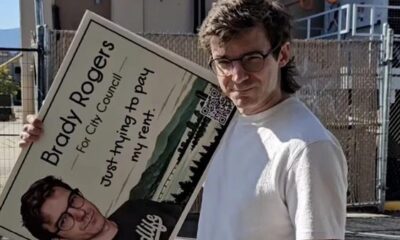
Why a Kelowna council candidate’s humorous signs are attracting international attention
-
LOCAL7 days ago
Your Current 3 Day Forecast — October 8, 2026