POLITICS
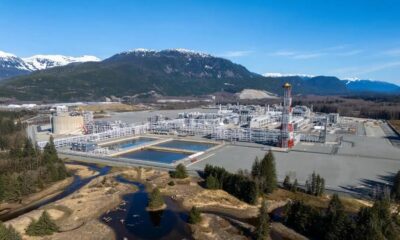
LNG Canada Pushes Ahead with Train 2 Startup Despite Setbacks


Technical Challenges and Continued Progress
Train 1, which came online earlier this year, has struggled with equipment malfunctions that forced it to operate below expected output levels. Engineers identified problems with a critical component known as the “supercore,” requiring significant repair and replacement work. Despite these hurdles, the decision to move forward with Train 2 underscores the project’s urgency to meet contractual obligations and maintain momentum toward its planned export capacity of roughly two billion cubic feet of natural gas per day.
Economic and Market Implications
The startup of Train 2 comes at a time when Asian demand for LNG is expected to remain strong, offering Canada an opportunity to diversify its energy markets beyond the United States. However, the technical setbacks highlight the challenges of scaling such a complex project in a remote location, raising questions about long-term reliability and operational efficiency.
Balancing Industry, Climate, and Partnerships
For British Columbia, LNG Canada represents not only a major industrial investment but also a test case for how energy development, Indigenous partnerships, and climate commitments can coexist in the province’s economic strategy. As commissioning continues, the project will remain closely watched by both industry analysts and environmental advocates for signs of how Canada’s LNG ambitions can be balanced with sustainability and reconciliation goals.





LOCAL
Why four years of municipal tension could bring more Kamloops voters to the polls
Former mayor Terry Lake predicts Kamloops voter turnout could approach 40 per cent after four years of city hall controversy and shifts in local media.

Controversy and Media Shifts Reshaping Local Vote
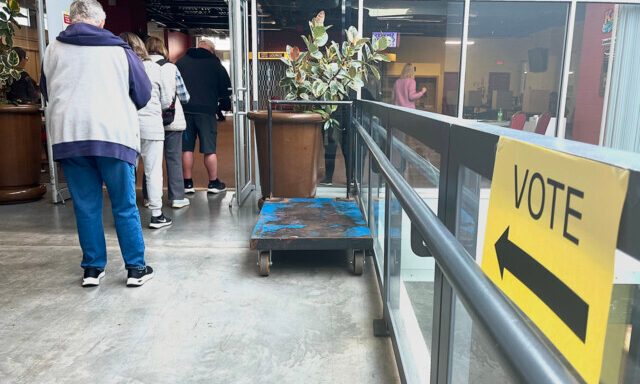
Voter engagement in Kamloops could approach the 40 per cent mark in the upcoming civic election, according to former mayor Terry Lake. Following four years of friction at city hall, Lake believes the heightened public attention may motivate more residents to participate than in recent municipal races.
Initial turnout figures for 2022 sat at 29 per cent, later updated to 30 per cent by CivicInfo BC. That matched the 30 per cent participation recorded in 2018, while 2014 saw nearly 35 per cent of voters head to the polls. Participation stood significantly higher during Lake’s election win in 2005, when 44.5 per cent of eligible voters cast ballots—a contrast to the 30-something range seen over the next five municipal cycles.
Lake noted encouraging signs during advance voting on Oct. 7 at Heritage House. “That bodes well for the likelihood of having a higher overall turnout this time around,” he said, adding that turnout in the 40 per cent neighborhood would not surprise him given the recent atmosphere surrounding city hall.
Media Landscape and Provincial Comparisons
Reflecting on broader trends, Lake pointed to changes in local news coverage as a potential factor in declining voter participation over time. Before 2010, the city was served by two newspapers alongside television and radio outlets. Today, many residents rely on curated social media feeds for local news, which Lake suggested can lead to reduced engagement.
Civic turnout in Kamloops mirrors broader B.C. municipal averages, remaining far below participation rates in provincial and federal elections. The 2024 provincial election drew between 57 and 61 per cent of the local electorate, while roughly 70 per cent voted in the 2025 federal election.
Terry Kading, a political science professor at Thompson Rivers University, attributed lower municipal turnouts partly to accessibility. Because local council holds regular public meetings and remains visible in the community, residents may feel less pressure to vote compared to federal or provincial elections, where government feels more distant. Kading also observed that online voting dramatically boosted turnout in Ontario municipalities, though Lake noted there is no single solution for driving civic participation.
LOCAL
What a Proposed ICBC Hybrid System Could Mean for B.C. Drivers
B.C. Conservative MLA Ward Stamer discusses proposed ICBC auto insurance reforms, private competition options, and local driver impacts in British Columbia.
Kamloops Candidate Supports Public Option Alongside Market Competition
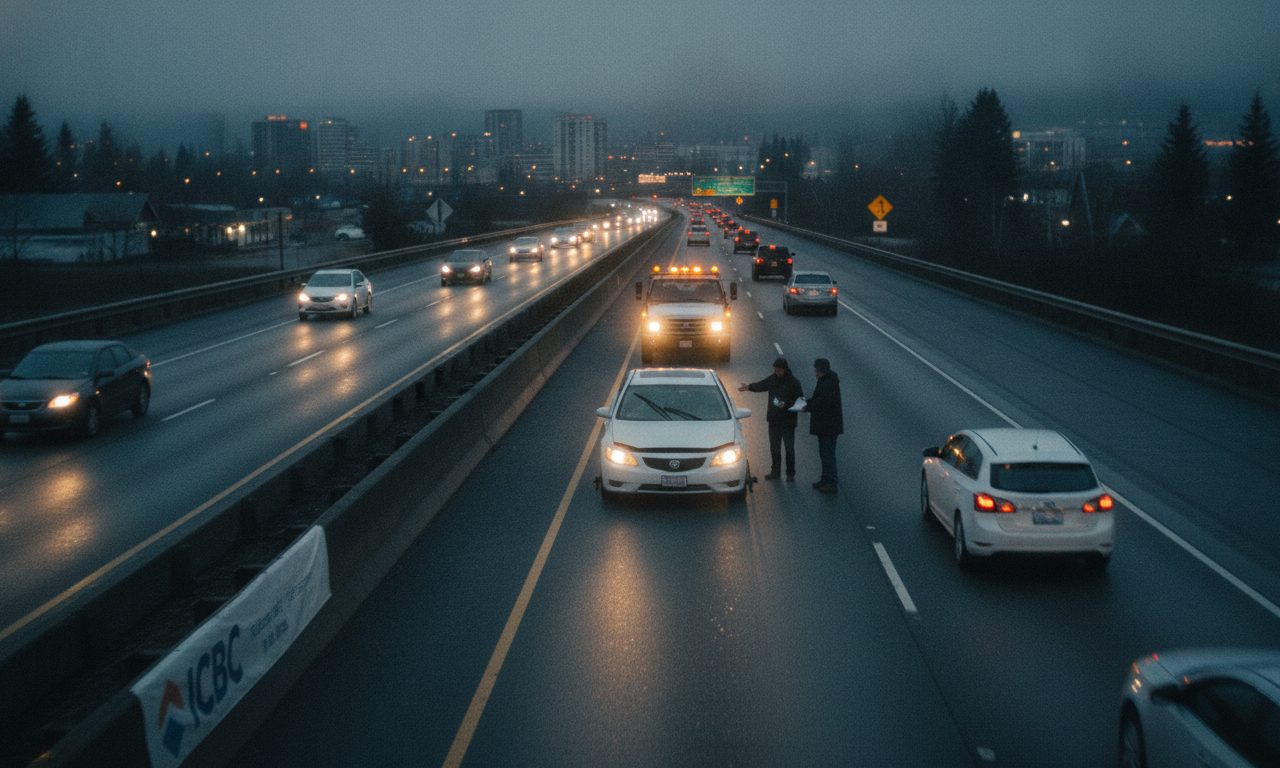
B.C. Conservative candidate Ward Stamer says he wants to keep the majority of auto insurance coverage under ICBC, even as his party outlines plans to introduce private market competition. Stamer, the incumbent MLA for Kamloops-North Thompson, noted that while he lacks full details on how private insurers would fit into the system, he hopes most coverage stays with the public provider while giving residents more choices.
The proposed hybrid model would open certain segments of the auto insurance market to private companies while maintaining ICBC as a public option. Additionally, the plan would allow individuals with serious injuries to sue for compensation through the legal system, which Conservatives say preserves most litigation-related savings while offering fuller recovery options for victims.
Debate Over Rates and System Implementation
Addressing potential risks, Stamer expressed that private insurers should not be allowed to “cherry-picking” low-risk drivers and leave remaining motorists with fewer alternatives. He acknowledged mixed outcomes in other public-private jurisdictions, noting costs increased in some places, but felt confident a better model can be designed for B.C. “I don’t know all the details, and once we’re government, we’ll be able to iron out those details, but many people are very upset with the no-fault insurance,” he said.
The proposal drew scrutiny during the campaign following a letter sent by B.C. Conservative Leader Lorne Doerkson to legal and insurance groups, mentioning that replacing no-fault coverage and opening competition were under consideration. The NDP criticized the letter as a “secret” plan that could potentially double insurance premiums. Stamer dismissed claims of a hidden agenda, stating, “When the NDP calls it a secret, it wasn’t a secret. It was put out into the public.” He added that NDP warnings about doubled insurance rates are exaggerated.
BC STORIES
Why B.C.’s Conservative Campaign Face is Drawing Scrutiny Over Past Social Media Comments
B.C. Conservative campaign director Katy Merrifield faces criticism from the NCCM and political leaders over past anti-Islam social media posts.

Controversy Surrounds Senior Campaign Official
B.C. Conservative campaign director Katy Merrifield is confronting widespread condemnation after an anti-Islam message she published on social media came to light. The June post on X, which stated “F–k Islam. Defend Western civilization,” was made in response to an inquiry into child sexual exploitation in the U.K. before being removed. Merrifield, previously the head of communications for federal Conservative Leader Pierre Poilievre, holds an administrative role with the provincial party rather than a candidate spot.
Reactions and Call for Accountability
The National Council of Canadian Muslims (NCCM) voiced deep hurt over the remark and pointed to additional posts reflecting a pattern of Islamophobic rhetoric. Calling for good-faith discussions to address Islamophobia, the group noted that Statistics Canada recorded a roughly 173 per cent surge in police-reported anti-Muslim hate crimes nationally between 2020 and 2024. B.C. NDP Leader David Eby stated Saturday that the remarks were deeply hateful toward a specific faith group and insisted there must be consequences, warning that no community is safe if political leadership permits such behavior. CentreBC Leader Elenore Sturko also criticized the party’s leadership, arguing that those who fail to stand up for all British Columbians should not seek the premier’s office.
Explanation and Party Response
Merrifield addressed the matter on Friday, explaining that her original post was fueled by her personal history as a rape survivor and her emotional reaction to accounts of sexual abuse against young girls in the U.K. She noted that she took the post down within hours because her anger was intended for the extremism used to justify those crimes rather than Muslims or their religion. While the NCCM highlighted that she offered no apology or acknowledgement of the pain caused, the B.C. Conservatives shared a statement from Surrey City Centre candidate Zeeshan Wahla. Wahla described her language as unacceptable but differentiated her situation from candidate Joachim Agou—who was recently dropped for posts targeting Palestinians and Pakistanis—by stating Agou incited violence while Merrifield was reacting to sexual trauma. CBC News reached out to B.C. Conservative Leader Lorne Doerkson but received no statement prior to publication.

Why four years of municipal tension could bring more Kamloops voters to the polls
Why Residents and Tourists on Mexico’s Pacific Coast Face Severe Threats From Hurricane Simon
Why Calgary Flames Fans Are Searching for Hope Despite a Historic 0-5 Start

Community Support Surges for Family After Fatal Highway Crash Near Chase Claims Two Lives

What a Proposed ICBC Hybrid System Could Mean for B.C. Drivers

Why B.C.’s Conservative Campaign Face is Drawing Scrutiny Over Past Social Media Comments

Opinion: John Rustad Has to Go

B.C. Supreme Court Grants Cowichan Tribes Title to Historic Richmond Lands and Fishing Rights

Vancouver Canucks Gear Up for a Make-or-Break 2025–26 Season

Province to Appeal Cowichan Tribes Land Decision

Kamloops Prepares Four Reverse Referendums on $188M in Major Projects

Kamloops Blazers Announce Off-Season Changes Ahead of 2025–26 Season
-

 COMMUNITY6 days ago
Why Okanagan Pet Owners Turned to Free BC SPCA Clinics After Wildfire Season
-

 OPINIONS6 days ago
B.C. Election Poll Puts Conservatives Ahead Five Points as Cost of Living Tops Voters’ Concerns
-
 BC STORIES6 days ago
B.C. Patients Could Soon Select Surgical Lists Based on Wait Times Under NDP Plan
-
LOCAL5 days ago
Your Current 3 Day Forecast — October 7, 2026
-

 SPORTS7 days ago
BC Lions Hold Off Toronto Argonauts Behind Sean Whyte’s Record Eight Field Goals
-
 COMMUNITY6 days ago
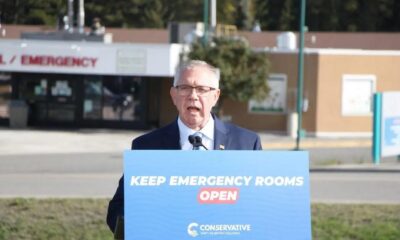
BC Conservatives Promise $50M Rural Healthcare Fund Amid ER Closures
-

 BC STORIES5 days ago
Voters face choice on family support as NDP campaign shifts focus away from U.S. tariff threats
-

 BC STORIES6 days ago
Police Request Public Help After Fatal Highway 93 Crash Kills Local Resident