POLITICS
They have proven they can win votes. Kerry-Lynne Findlay now has to prove they can govern.
Chad Dashly shares a conservative perspective on fiscal restraint, local enterprise, and why community-led solutions beat distant bureaucracy.


They have proven they can win votes. Kerry-Lynne Findlay now has to prove they can govern.
By Chad Dashly | The Current
There is an uncomfortable conversation conservatives in British Columbia need to have.
The BC Conservatives are not ready for primetime.
That doesn’t mean British Columbia doesn’t need a conservative government. Quite the opposite.
Conservatives believe in fiscal discipline, personal responsibility, free enterprise, public safety and governments that respect the taxpayers who ultimately pay the bills.
British Columbia desperately needs a credible alternative capable of advancing those principles.
But wanting a Conservative government and believing the current Conservative Party is ready to govern are two very different things.
And conservatives shouldn’t be afraid to say so.
Give Them Credit
Let’s start by acknowledging what the BC Conservatives have accomplished.
Their rise has been remarkable.
In an extraordinarily short period, they went from the political wilderness to the Official Opposition and came within striking distance of forming government in 2024.
They have also built a serious fundraising operation.
According to Elections BC, the Conservatives raised more than $1.08 million in the first quarter of 2026 and another $1.146 million in the second quarter.
Those aren’t insignificant numbers.
This is no longer a fringe political organization.
It is a major provincial political party with a large grassroots constituency and a legitimate opportunity to form the next government.
But that is exactly why the standard must now be higher.
The Findlay Era Begins
Kerry-Lynne Findlay inherited both an enormous opportunity and an enormous challenge when she won the Conservative leadership on May 30.
And it was hardly an overwhelming mandate.
Findlay defeated Caroline Elliott 51 per cent to 49 per cent on the fourth ballot.
That tells us something important.
The party remains a coalition of different conservative factions, personalities and political traditions.
Findlay’s first responsibility isn’t simply defeating David Eby.
It is demonstrating that she can turn that coalition into a disciplined political organization capable of governing British Columbia.
That means moving beyond the insurgent politics that helped build the party.
It means becoming professional.
Predictable.
Disciplined.
And boring when necessary.
Because governing is frequently boring.
The Revolving Door Has to Stop
The recent changes at the top of the party organization demonstrate just how much rebuilding remains.
In August, party president Aisha Estey and vice-president Sharon White were replaced, with Mauro Francis becoming president and Pavneet Singh taking over as vice-president.
Perhaps those changes will ultimately strengthen the organization.
But they also continue a pattern of transition that has surrounded the Conservatives since their explosive rise.
Leadership changes.
Caucus changes.
Organizational changes.
Internal disputes.
Personnel controversies.
At some point, the rebuilding has to end and the governing preparation has to begin.
British Columbians aren’t electing a political start-up.
They are choosing a potential government.
Candidate Vetting Must Improve
This is another area where conservatives should demand higher standards.
Candidate vetting isn’t glamorous.
But it may be one of the most important responsibilities of a political party.
When you nominate someone to run for the legislature, you aren’t simply finding somebody to put their name on a lawn sign.
You are potentially selecting a future MLA.
Perhaps a parliamentary secretary.
Perhaps a cabinet minister.
Perhaps someone responsible for billions of dollars in public spending.
The standard therefore has to be substantially higher than finding people who agree with the party.
A government-in-waiting needs candidates with judgment, experience, credibility and the ability to withstand serious public scrutiny.
The next BC Conservative candidate class should be vetted accordingly.
Where Is the Governing Blueprint?
This may be the biggest issue of all.
What exactly would a BC Conservative government do?
Not philosophically.
Specifically.
If spending is too high, what gets cut?
If taxes are too high, which ones are reduced first?
If regulations are preventing investment, which regulations change?
If health care is broken, what structural reforms happen in the first 100 days?
If crime and addiction policies aren’t working, what replaces them?
If British Columbia wants more mining, forestry, LNG and energy development, what approvals change and how quickly?
How does the province reconcile resource development with Indigenous rights and consultation?
How does a Conservative government accelerate housing construction?
How quickly can the budget realistically return to balance?
These questions require more than slogans.
They require numbers.
Timelines.
Legislation.
Implementation plans.
And people capable of executing them.
That work should already be underway.
Opposition Is Easy
There is another political reality conservatives should understand.
Opposition is easy compared with government.
It is relatively easy to stand in Question Period and identify something that isn’t working.
It is much harder to fix it.
“Cut waste” sounds great.
What waste?
Which department?
Which program?
How much?
How quickly?
What happens to the people currently receiving the service?
“Reduce red tape.”
Excellent.
Which regulations?
“Fix health care.”
How?
“Build more housing.”
Where?
“Develop our natural resources.”
On what timeline?
That is where political rhetoric collides with governing reality.
A serious government-in-waiting has answers to those questions before the election begins.
Build the Cabinet Before You Need One
Findlay should also be thinking about something political parties often leave far too late:
Who actually governs?
The Conservatives should already be identifying potential cabinet talent — both inside and outside their existing caucus.
Finance.
Health.
Attorney General.
Energy and Mines.
Forests.
Housing.
Transportation.
Education.
Indigenous Relations.
Economic Development.
These aren’t communications positions.
They are enormous management responsibilities.
The party should be actively recruiting accomplished British Columbians from business, law, health care, academia, local government, First Nations and the resource sector.
The objective shouldn’t simply be winning 47 seats.
It should be assembling 47 people capable of governing.
There is a difference.
Conservatives Should Demand More From Conservatives
Some Conservatives will inevitably consider this criticism disloyal.
It isn’t.
Quite the opposite.
If conservatives believe in accountability, then accountability has to begin at home.
If we expect businesses to operate professionally, our political organizations should operate professionally.
If we demand fiscal discipline from government, we should demand organizational discipline from the party seeking to replace it.
And if conservatives criticize governments for incompetence, we cannot excuse incompetence simply because the people involved happen to wear our team’s jersey.
Conservatives should expect more from Conservatives.
Findlay Has an Opportunity
There is good news in all of this.
These problems are fixable.
Findlay has political and government experience.
The Conservatives have money.
They have MLAs.
They have members.
They have volunteers.
They have an energized political base.
And most importantly, they have time.
Their fundraising numbers suggest there is substantial appetite for what they are selling.
The question is whether the organization can mature quickly enough to deliver it.
Findlay now has an opportunity to professionalize the party, strengthen candidate vetting, recruit serious talent, develop detailed policy and turn an insurgent movement into a government-in-waiting.
That should be the mission between now and the next provincial election.
The Primetime Test
The BC Conservatives have already proven they can win votes.
They have proven they can raise money.
They have proven they can build a movement.
Now comes the difficult part.
They have to prove they can govern.
British Columbians aren’t simply choosing someone to fight David Eby.
They are choosing the people who could soon be responsible for hospitals, schools, highways, courts, policing, housing, natural resources and tens of billions of dollars of public money.
That requires something more than opposition.
It requires competence.
Discipline.
Professionalism.
And a credible plan.
British Columbia needs a strong conservative alternative.
Kerry-Lynne Findlay now has an opportunity to build one.
But until the BC Conservatives demonstrate that transformation, conservatives shouldn’t be afraid to acknowledge the uncomfortable truth:
They are not ready for primetime.
Atleast. Not yet.


LOCAL
Who Is Running in Your Riding for the 2026 BC Election?
Check the full list of official candidates who have filed nomination papers for Kamloops, Fraser-Nicola, Cariboo-Chilcotin, and Salmon Arm-Shuswap ridings.

Candidates Confirmed Across Five Regional Ridings
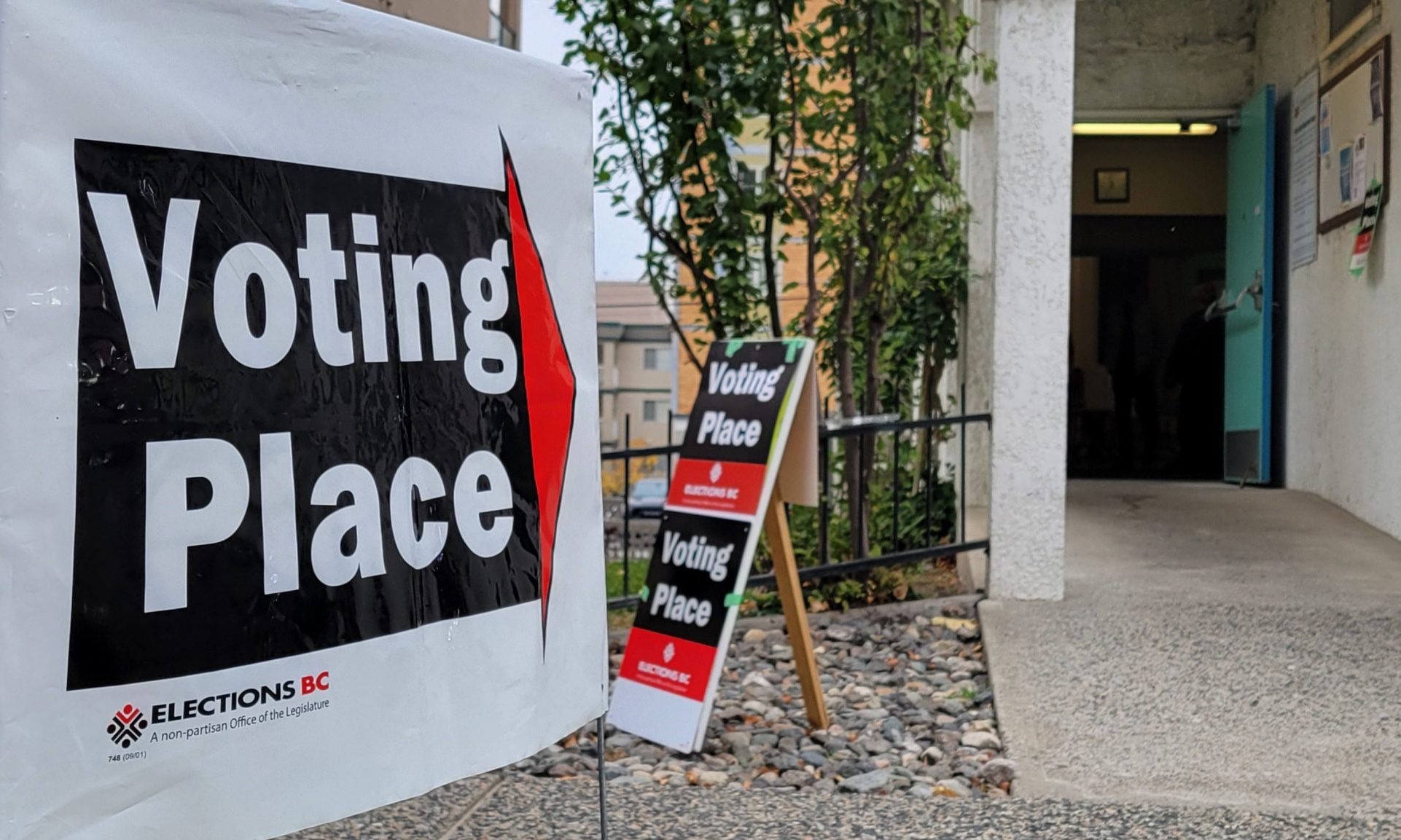
Nomination papers have been officially submitted by individuals seeking election as local Members of the Legislative Assembly in the upcoming 2026 BC election.
In Kamloops Centre, voters will see a five-candidate field consisting of incumbent Peter Milobar for the BC Conservatives, Annelise Beach representing the BC Greens, Rocky McAfee for OneBC, Thaelo Proctor running as an Independent, and Mike Wisla representing the BC NDP.
To the north, the Kamloops-North Thompson constituency features incumbent Ward Stamer of the BC Conservatives, alongside Kory Clark running for the BC NDP and Deborah Friesen for OneBC.
Contests Set for Fraser-Nicola, Cariboo-Chilcotin, and Salmon Arm-Shuswap
In the Fraser-Nicola riding, incumbent Conservative Tony Luck faces challenges from Jason Leboe of the BC NDP and Patrick Mitchell of the BC Greens.
The Cariboo-Chilcotin ballot includes incumbent Lorne Doerkson running for the BC Conservatives, Kathryn Askew representing the BC NDP, and Douglas Gook representing the BC Greens.
Meanwhile, five candidates are contesting the Salmon Arm-Shuswap riding. Incumbent David Williams represents the BC Conservatives, joined on the ballot by Gloria Morgan for the BC NDP, Barbara Presch for OneBC, Denise Reimer for CentreBC, and Jed Wiebe for the BC Greens.
BC STORIES
B.C. Voters Face October Election as Polls Show Shift in Party Support
Recent polls show the B.C. Conservatives leading the NDP ahead of the Oct. 24 election as voters focus on the cost of living and healthcare concerns.
Voters Prioritize Cost of Living Over Tariff Concerns
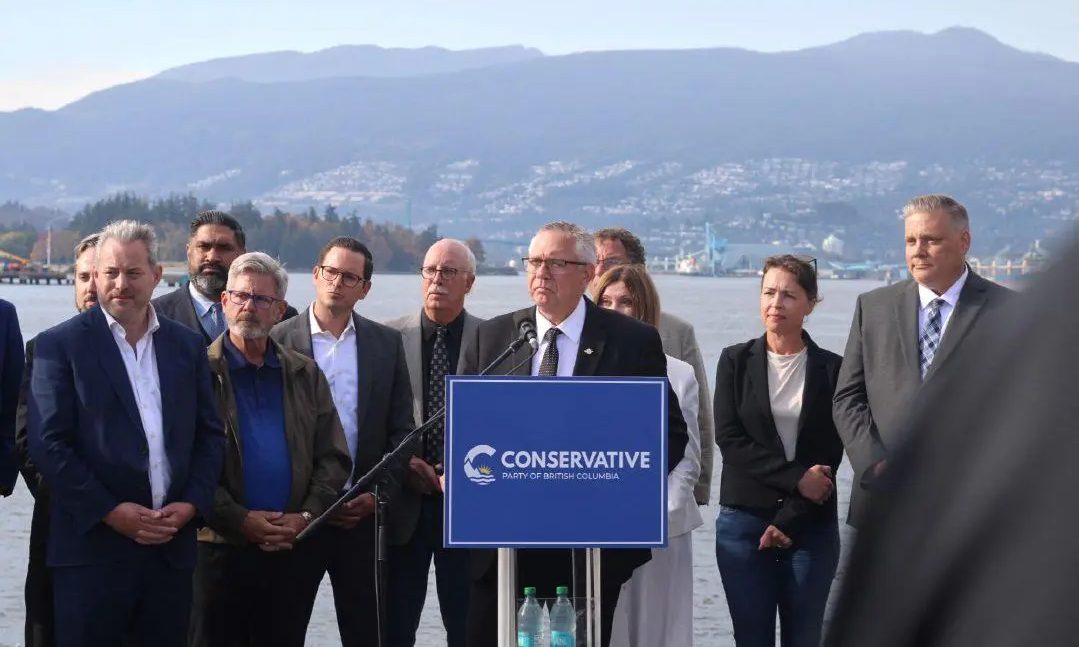
As British Columbians prepare to cast their ballots on Oct. 24, recent survey data reveals that economic pressures are dominating voter concerns. In an Angus Reid Institute poll, 57 per cent of respondents identified the cost of living as a primary issue, while 42 per cent cited healthcare. Other concerns including drug addiction and homelessness also recorded slight increases among survey participants. Conversely, concern over U.S. President Donald Trump’s tariffs has decreased, with 10 per cent of respondents naming it a top issue compared to 15 per cent previously.
Polling Numbers Show Shift in Provincial Race
The reduced focus on tariffs comes after NDP Leader David Eby initiated a snap election to secure a mandate to address U.S. trade policies, despite having two years remaining in his term. A Mainstreet Research telephone survey found that 46 per cent of residents strongly disapprove of the early election call. That survey, conducted Sept. 30 to Oct. 1 among 827 residents with a margin of error of 3.4 per cent, showed Conservative support at 45 per cent, giving them an eight-point margin over the NDP.
An online survey by Angus Reid conducted Oct. 1 to 3 with 1,000 participants indicates Conservative support at 48 per cent—an increase of five percentage points—and NDP support at 43 per cent, reflecting a margin of error of three percentage points. While the NDP gained seven points since the previous Angus Reid poll, smaller parties lost ground, with the B.C. Greens receiving seven per cent support and other parties combining for two per cent.
Regional Breakdown Highlights Divided Support
Polling data indicates significant regional differences across the province. According to Angus Reid, Conservative backing is highest in the Fraser Valley at 62 per cent compared to 28 per cent for the NDP, and reaches 57 per cent in the Interior, where they hold a 21-point advantage over the NDP. The pattern shifts along the Coast and Vancouver Island, where the NDP leads with 48 per cent support compared to 39 per cent for the Conservatives.
LOCAL
Why a Kelowna council candidate’s humorous signs are attracting international attention
Kelowna city council candidate Brady Rogers goes viral globally after American influencer shares his funny campaign sign, driving unexpected donations.
Viral exposure sparks worldwide donations
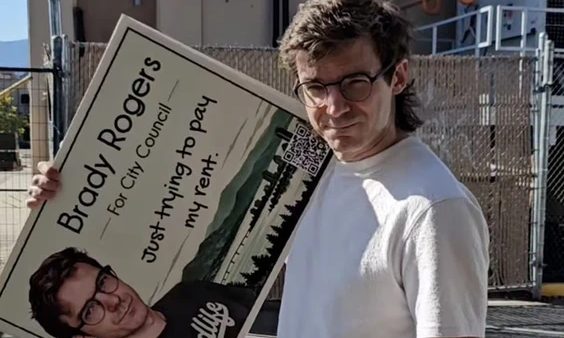
An online post by American influencer Mandi Jung highlighting a Kelowna municipal campaign sign has triggered global attention and financial contributions. Jung shared an image of one of Brady Rogers’s 35 lawn signs with her 100,000 followers on X, calling it “the most millennial thing I have seen in my entire life.” The post garnered 147,000 likes, while an associated video reel amassed roughly 1.5 million views, driving unexpected international interest toward the local race.
“This last week especially has been pretty wild,” Rogers said. “It’s been very unexpected. Locally I’ve been getting attention, but then somebody in the states I guess found me and made a reel about my campaign and it’s I think had one and a half million views or something.”
Humour as a voter engagement strategy
The 33-year-old candidate, who operates a business 3D-printing household items from recycled plastic, turned to social media to launch his campaign. “I decided I wanted some signs and had some funny ideas, so I put it out on Instagram to raise some money and set up a campaign,” Rogers said.
His physical campaign signs state, “Brady Rogers for city council. Don’t worry, I’ll fix everything. Terms and conditions apply.” Readers scanning a QR code on the signs are directed to a website where Rogers openly states that he lacks qualification, lacks political expertise, and dislikes politics, before concluding, “Fine, I’ll do it.” Rogers explained that his lighthearted approach aims to capture public focus and motivate residents to participate in voting.
Policy proposals and local platform
Beyond the viral marketing, Rogers is focusing on city governance and community challenges. “Our city has a lot of good initiatives and good work being done on it. But I’m looking at how we can better integrate some of those initiatives and perhaps provide more unified leadership on it,” he stated.
His platform addresses specific business and resident concerns, particularly regarding street-level drug use. “There’s more the city can be doing to address the immediate concerns that businesses and residents have around things like open drug use. I’ve been looking into the idea of perhaps testing a zero-tolerance policy in Kelowna around open drug use. It’s not going to stop people from doing drugs, but I think it would mean a lot to businesses if we could at least push the drug use off the streets,” Rogers said.

Where Provincial Jobless Rates Stood in September
What New Brunswick’s Latest Unemployment Figures Mean for Your Community

Who Is Running in Your Riding for the 2026 BC Election?

How Central Okanagan Residents Can Avoid Costly Household Plumbing Damage This Thanksgiving

BC Supreme Court Judge Set to Rule on Sentence Length for Former Gang Member

Loss of Newborn Calf Puts Fresh Focus on Endangered Southern Resident Whales

Opinion: John Rustad Has to Go

B.C. Supreme Court Grants Cowichan Tribes Title to Historic Richmond Lands and Fishing Rights

Vancouver Canucks Gear Up for a Make-or-Break 2025–26 Season

Province to Appeal Cowichan Tribes Land Decision

Kamloops Blazers Announce Off-Season Changes Ahead of 2025–26 Season

Kamloops Prepares Four Reverse Referendums on $188M in Major Projects
-

 LOCAL7 days ago
Have You Seen Him? Public Help Sought in Locating Missing Traveller Last Seen in Kamloops
-
 BC STORIES7 days ago
Why a Familiar Political Name is Joining the Kamloops-North Thompson Race
-
LOCAL6 days ago
Your Current 3 Day Forecast — October 4, 2026
-

 LOCAL7 days ago
Two Displaced as Investigators Eye Suspicious Four-Plex Fire in Kelowna
-

 COMMUNITY4 days ago
Why Okanagan Pet Owners Turned to Free BC SPCA Clinics After Wildfire Season
-

 OPINIONS4 days ago
B.C. Election Poll Puts Conservatives Ahead Five Points as Cost of Living Tops Voters’ Concerns
-
 BC STORIES4 days ago
B.C. Patients Could Soon Select Surgical Lists Based on Wait Times Under NDP Plan
-
LOCAL3 days ago
Your Current 3 Day Forecast — October 7, 2026