Veteran Broadcaster Lloyd Robertson Dies at Age 92
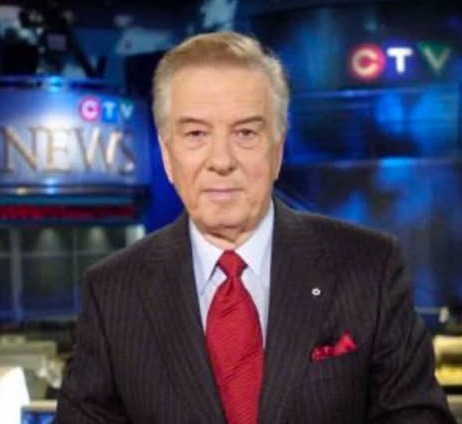
Veteran Canadian broadcaster Lloyd Robertson has died at age 92. Tributes honor the long-time CTV National News anchor and Stratford native.
A Legacy in Canadian Broadcasting
Veteran news anchor and broadcast journalist Lloyd Robertson passed away on August 4, 2026, at the age of 92. His family confirmed his death to The Canadian Press.
Born Lloyd John Robertson on January 19, 1934, in Stratford, Ontario, his career in broadcasting began in 1952 at CJCS radio in his hometown. He spent 22 years with the CBC before moving to CTV in 1976. Robertson served as the chief anchor and senior editor of CTV National News from 1984 until 2011, concluding his final news broadcast on September 1, 2011. Following his departure from the anchor desk, he co-hosted the CTV newsmagazine program W5 from 2011 to 2016. Throughout his broadcasting career, Robertson was widely recognized for his signature closing phrase, “That’s the kind of day it’s been”.
National and Local Tributes
Tributes emerged across the country following news of Robertson’s death. Prime Minister Mark Carney honored the broadcaster, calling him a “reassuring voice in moments of uncertainty” and a “calm and steady presence through the moments that shaped our nation”.
In Robertson’s hometown, the City of Stratford lowered the flag at city hall in his honor. Stratford Mayor Martin Ritsma remembered the veteran journalist as an “icon” who maintained a “token calm demeanor and professionalism”.
COMMUNITY
How You Can Watch and Question Kamloops Candidates Ahead of the October Election
Watch Kamloops mayoral and council candidates answer questions in livestreamed election forums on Sept. 23, followed by a Sept. 24 in-person event.

Full Day of Virtual Candidate Panels Scheduled
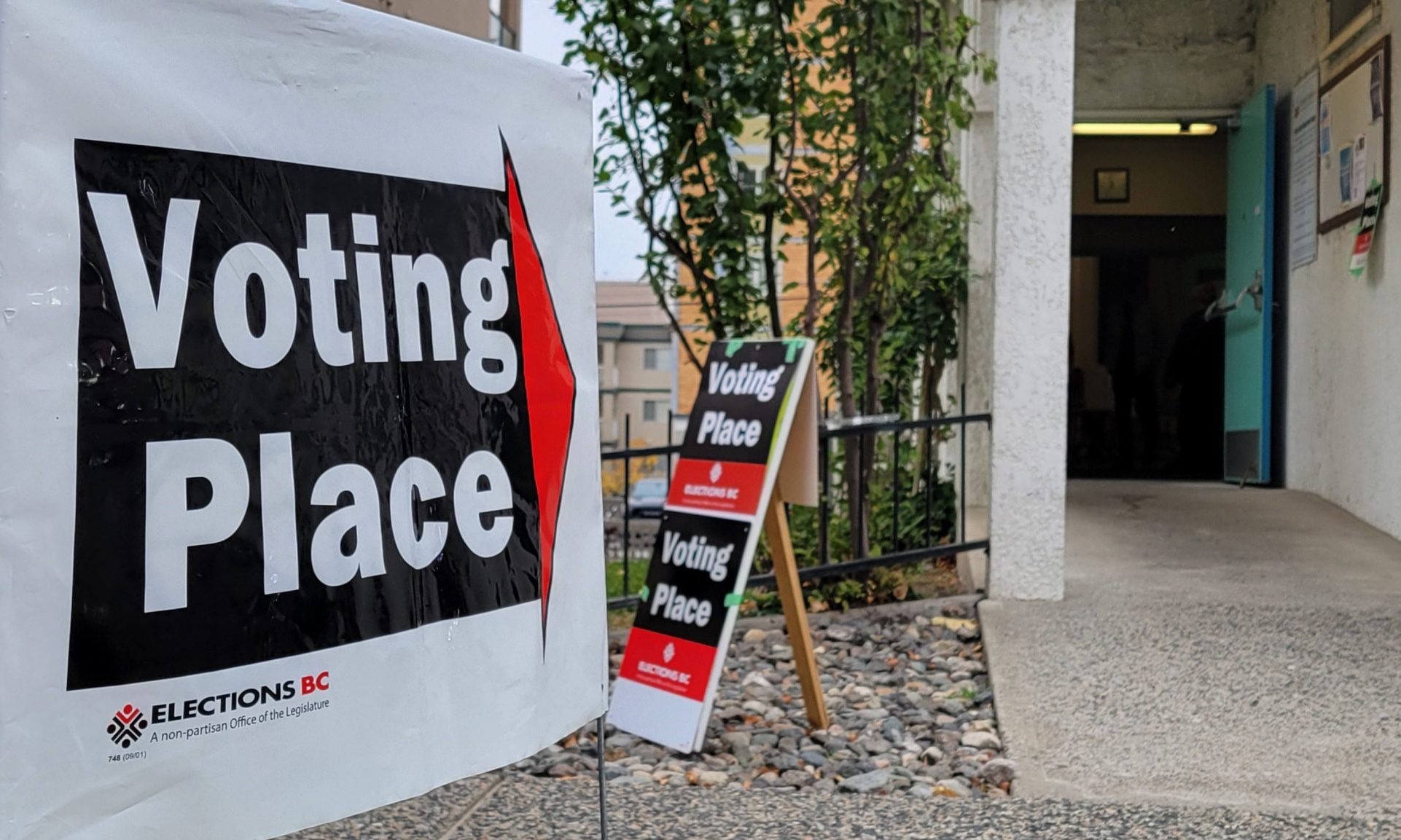
Kamloops residents will be able to evaluate local election candidates on Wednesday, Sept. 23, during an extensive lineup of virtual sessions. The upcoming event is jointly hosted by Castanet Kamloops and the Kamloops & District Chamber of Commerce.
The programming opens with three separate councillor discussions running from 9 a.m. to 11 a.m., noon to 2 p.m., and 3 p.m. to 5 p.m. Following these, the mayoral candidates will participate in a dedicated forum scheduled from 6 p.m. to 8 p.m.
Standardized Questions and Viewing Access
To ensure direct comparisons between contenders running for the same seat, each participant will respond to a uniform set of inquiries. Organizers are gathering these questions from event sponsors, community partners, the Chamber, Castanet, and local voters.
Although members of the public cannot attend in person, organizers are looking into possibilities for local public viewing parties. The sessions will be broadcast live on Castanet, with digital recordings remaining accessible online until voting day on Oct. 17.
“Local elections shape decisions that affect every business in this city, from housing to infrastructure to how we grow,” said Acacia Pangilinan, executive director of the Chamber. “These forums give candidates a real opportunity to speak to those issues, and give our members and the broader community a clear way to hear from everyone running for mayor and council before they vote.”
In-Person Senior-Focused Event Planned
A separate, free public forum will take place the following day on Thursday, Sept. 24. Hosted by incumbent councillor Nancy Bepple, this in-person event is scheduled from 3:30 p.m. to 5:30 p.m. at the Mount Paul Community Food Centre, located at 140 Laburnum St.
This second session invites attendees to pose questions directly to candidates regarding matters affecting seniors along with the wider community.
OPINIONS
Wilbur Turner Wants to Be a School Trustee. Voters Should Examine His Political Record First.
By Chad Dashly | The Current
Wilbur Turner would like voters in Lake Country and Central Okanagan East to see him as an experienced educator, parent and community advocate seeking a seat on the School District 23 board.
That is certainly part of his record.
It is not the whole record.
Turner is also a deeply political activist who has repeatedly targeted conservative MPs, MLAs, political parties, religious figures and even members of the LGBTQ community who disagree with his positions.
There is nothing improper about political activism. Canadians have every right to criticize their elected representatives, organize petitions and advocate for causes they believe in.
But when a prominent political advocate asks voters to entrust him with the education of children, his complete public record becomes relevant.
Turner is now one of three declared candidates for the Zone I school trustee position, along with Jennifer Miles and Sean Sookochoff. According to his campaign announcement, he believes “every child deserves a strong public school system” and says he wants to give families a stronger voice. His candidacy has been officially confirmed by the District of Lake Country.
Those are admirable words.
The question is whether Turner’s history demonstrates the temperament required to represent all families—including conservative, Christian and traditional families who may not share his political worldview.
The campaign to exclude Tracy Gray
One of Turner’s highest-profile political interventions came in 2021 after then-Conservative MP Tracy Gray voted against a federal bill dealing with conversion therapy.
Turner helped lead a task force that recommended Gray be told she was not welcome at Kelowna Pride events. The recommendation followed a town hall attended by approximately 350 people, according to Castanet.
Turner and others were entitled to condemn Gray’s vote. They were entitled to organize, protest and demand an explanation.
But attempting to exclude an elected representative from a major community celebration raised a different issue.
Was the goal engagement—or punishment?
Gray represented thousands of LGBTQ residents as well as thousands of religious and socially conservative constituents. A Pride organization could have invited her to attend, placed difficult questions before her and insisted she explain her position publicly.
Instead, Turner supported telling an elected MP that she was not welcome.
That is not bridge-building. It is political gatekeeping.
It also sits awkwardly beside Turner’s current message that voters deserve “real choice.” Choice cannot simply mean a choice between candidates who already agree with the activist establishment.
From criticizing an MLA to trying to remove her
Turner’s political activism escalated when he became an organizer of the campaign to recall Kelowna-Lake Country-Coldstream MLA Tara Armstrong.
Armstrong has made a series of statements and introduced legislation that attracted intense criticism. That includes bills relating to gender-transition treatments for minors and an unsuccessful proposal to repeal British Columbia’s Human Rights Code.
Those proposals deserved vigorous examination.
Turner, however, did not stop at arguing against Armstrong. He helped organize a campaign intended to remove her from office before the next general election.
The recall effort was announced within little more than a year of Armstrong’s election. Turner described her policies as “divisive and destructive,” while organizers began recruiting the considerable number of volunteers required to gather signatures from 40 per cent of eligible voters in the riding. The campaign and its timing were documented by Castanet and other regional news organizations.
Recall is a lawful democratic mechanism. Using it is not misconduct.
But voters should still consider the threshold Turner appears to apply. Is recall reserved for corruption, serious wrongdoing or a complete abandonment of public duty? Or should it be used against politicians whose ideas an activist considers unacceptable?
Armstrong’s policies were controversial, but they were hardly concealed from voters. She was elected as a socially conservative candidate in a conservative-leaning riding. Her constituents were capable of judging her record at the next election.
Turner’s campaign effectively argued that they should not have to wait.
Pressure campaigns and cancelled events
Turner was also a vocal opponent of American worship leader and political activist Sean Feucht holding events on publicly owned Canadian property.
Feucht has made provocative and offensive statements about LGBTQ people. Turner understandably argued that this rhetoric contributes to stigma and can harm vulnerable young people.
But the controversy was never limited to whether Feucht’s opinions were offensive. It became a dispute about whether public facilities should host a lawful religious gathering at all.
After venues declined or cancelled events, Turner defended the community pressure that contributed to those decisions. He has argued that opposing extremist rhetoric is a necessary form of civic participation. The Tyee reported his concern that complacency allows hateful ideas to grow.
Turner has every right to protest Feucht.
But defenders of civil liberty also had legitimate grounds to worry about governments or publicly funded facilities deciding which lawful religious or political messages may be heard.
Free expression is easiest to defend when the speaker is polite, fashionable and popular. The real test comes when the speaker is objectionable.
A future school trustee will encounter parents, students and employees with profoundly different religious, political and moral convictions. The job is not to eliminate those disagreements. It is to manage them fairly and within the law.
A columnist who regularly puts opponents in the dock
Turner’s political commentary offers further insight into how he approaches disagreement.
In his columns, Turner has attacked Dallas Brodie, Tara Armstrong, OneBC, Pierre Poilievre and other conservative politicians. He has described OneBC’s politics as a campaign of “fear and resentment” and accused the party of building resentment against immigrants, Indigenous communities, educators, and queer and transgender people.
In a 2025 Tyee column, Turner called OneBC’s approach “the classic populist playbook” and said its rhetoric represented a danger to democracy.
In another column, he declared that white supremacy had established a place in British Columbia politics. Elsewhere, he characterized federal Conservative policies as culture-war politics that would fail when confronted by the Charter, the courts or serious financial analysis.
Turner has also criticized Conservative politicians who defended Christian expression in public spaces. When Kelowna-Centre MLA Kristina Loewen objected to wording placed near the city’s nativity display, Turner called her response divisive and “far-fetched,” according to Global News.
Any one of those criticisms can be defended as political opinion.
Taken together, however, they reveal a consistent pattern: Turner does not merely disagree with political opponents. He frequently places them within a moral framework in which their words are treated as threats, their motives are suspect and their participation may be considered harmful.
That posture works well for an activist and opinion columnist. It can mobilize supporters, generate media attention and draw sharp lines between allies and adversaries.
It is far more troubling in a school trustee.
The contradiction at the centre of Turner’s candidacy
Turner says he wants to represent families and provide voters with a meaningful choice.
But which families?
Would parents who question aspects of SOGI programming receive a fair hearing, or would they be dismissed as participants in a campaign of fear and resentment?
Would religious parents who object to particular classroom materials be treated respectfully, or associated with the rhetoric of American Christian nationalism?
Would teachers with conventional political views feel comfortable disagreeing with him publicly?
Would transgender students be protected from harassment? They absolutely should be. But would female students, gay and lesbian students, religious students and politically conservative students receive the same willingness to hear their concerns?
These are not hypothetical distractions. They go directly to the role of a trustee.
School boards must oversee budgets, facilities, transportation, enrolment growth, special education, academic achievement, student safety and relationships with parents. Trustees must make decisions affecting families whose beliefs stretch across the entire political spectrum.
That requires patience, restraint and the ability to distinguish disagreement from hatred.
Turner’s advocacy record demonstrates passion. It demonstrates persistence. It demonstrates his willingness to confront people he believes are causing harm.
What it does not consistently demonstrate is an instinct for pluralism.
Advocacy is not governance
The strongest advocates are not always the best governors.
An advocate chooses a cause and advances it relentlessly. A trustee must weigh competing rights, incomplete information, limited resources and the legitimate concerns of people with whom he disagrees.
Turner should not be attacked for being gay, for defending transgender people or for advocating for vulnerable youth. Those are not controversies, and they are not disqualifications.
The legitimate concern is political conduct.
He supported excluding an elected MP from Pride events. He organized an effort to recall an MLA whose positions he opposed. He participated in campaigns intended to deny controversial speakers access to public venues. He has repeatedly used his media platform to portray conservative politicians and organizations as dangerous, extremist or morally compromised.
Now he is asking to oversee a public education system that belongs equally to the people he has spent years denouncing.
Turner may argue that his activism proves he has the courage to protect students. His opponents may argue it shows he brings too much ideology and confrontation to a position that requires balance.
That is the debate Lake Country voters should have.
This election should not be about Turner’s identity. It should not be about denying the valuable community work he has performed. Nor should it descend into the personal hostility that has already poisoned too much of Canadian politics.
It should be about judgment.
Wilbur Turner has built a public career by challenging, condemning and organizing against those with whom he disagrees. He is entitled to that record.
Voters are equally entitled to examine it before deciding whether he is the person they want governing their schools.
Chad Dashly is an opinion columnist with The Current. The views expressed are those of the author.
LOCAL
What to Know as Final Municipal Candidate Lists Take Shape Across the Region
Six mayoral candidates emerge in Kamloops as candidate lists take shape across the region ahead of the upcoming October 17 municipal elections.

Six-Way Mayoral Race Highlighted in Kamloops
Voters in Kamloops will select from six candidates for mayor in next month’s municipal election following Friday’s 4:00 p.m. application deadline. Incumbent Reid Hamer-Jackson is seeking re-election against current councillor Mike O’Reilly alongside former councillors Nelly Dever and Ray Dhaliwal. Two late additions to the ballot, design contractor Ivory Winston and social worker Kris Middleton, were revealed after the deadline passed. A total of 29 individuals are vying for council seats, including seven incumbents.
Contested Races and Acclamations Across Surrounding Municipalities
Competitions for mayor are set across several neighbouring communities. In Merritt, mayor Mike Goetz faces challenger Gordon Keyser, while all six incumbent councillors and two new contenders are seeking office. Former Cache Creek mayor John Ranta reversed a previous decision to step down and joins Annette Pittman and Wendy Coomber on the ballot. Incumbent Barbara Roden will compete against Eric Poole in Ashcroft, while Williams Lake mayor Surinderpal Rathor faces former mayor Walt Cobb. In 100 Mile House, Maureen Pinkney is challenged by David Jurek, and Lytton mayor Denise O’Connor faces councillor Jennifer Thoss.
In Clearwater, councillor Shelley Sim is challenging incumbent mayor Merlin Blackwell while simultaneously running for a seat on the Kamloops-Thompson School District Board of Education. Several communities will not hold mayoral elections due to acclamations, including Barriere with Rob Kerslake, Logan Lake with Robin Smith, and Clinton with Roland Stanke. Race car driver Jason White is the sole mayoral candidate in Sun Peaks, as incumbent Rob O’Toole is running for a council seat instead.
Regional District and School Board Elections
Voters in the Thompson-Nicola Regional District will cast ballots in just two of ten electoral areas. Area ‘E’ features incumbent Jim Smith against former director Sally Watson, and Area ‘I’ pits incumbent Tricia Thorpe against former director Steven Rice. Meanwhile, 16 candidates, including five incumbents, are competing for five Kamloops seats on the Kamloops-Thompson School District Board of Education. Rural school board races include Shelley Sim against TNRD director Lee Onslow in the Clearwater area, and incumbent Cara McKelvey against Marie McGivern in Logan Lake. Local officials may update candidate lists as packages are finalized ahead of the October 17 election.
-
LOCAL5 days ago
Why Canada’s New Counter-Tariffs May Hinder Local Businesses While Leaving Shoppers Unscathed
-
LOCAL7 days ago
Your Current 3 Day Forecast — September 6, 2026
-
NATIONAL STORIES7 days ago
Why Human Accountability and Traditional Standards Remain Essential in Quebec Courts
-
LOCAL6 days ago
Quebec Pause Campaign Trail for Cabinet Talks as U.S. Tariffs Loom
-
NATIONAL STORIES6 days ago
How a Small Newfoundland Town Turned a 9/11 Crisis Into a Global Story of Hope
-
LOCAL6 days ago
Your Current 3 Day Forecast — September 7, 2026
-
OPINIONS6 days agoHappy Labour Day! B.C. Is Politically Homeless — Can a New Party Finally Give Voters Somewhere to Go?
-
BC STORIES6 days ago
Unpacking the Ongoing Legal Feuds Involving OneBC Leader Dallas Brodie and Former Staff