BC NEWS
Zombie Party Politics: How BC United Continues to Shake Up the Provincial Landscape
BC United faces scrutiny over $150k in donations and a ‘dirty tricks’ scandal as executives eye the BC Conservative leadership race for the party’s future.

The Dormant Giant Refuses to Fade
In the wake of one of the most tumultuous shifts in British Columbia’s political history, the party formerly known as the BC Liberals continues to exert significant influence from the shadows. Despite withdrawing all candidates and effectively folding just months before the 2024 provincial election, BC United—the brand Kevin Falcon attempted to build from the ashes of the Liberals—is facing fresh scrutiny over its financial practices and a lingering ‘dirty tricks’ scandal.
Automatic Donations and Financial Ghosts
Recent filings with Elections BC reveal a startling reality: BC United collected over $150,000 in donations throughout 2025, long after the party ceased to be a viable electoral entity. Investigations suggest that much of this capital flowed from automatic monthly contributions that donors had simply forgotten to cancel. While some supporters, like construction executive David Hoff, knowingly continued their financial support to help the party settle outstanding debts and severance obligations, others were blindsided. The discovery of these ‘phantom’ donations has added another layer of frustration for former supporters who feel the party’s transition was poorly managed.
The Shadow of the Conservative Leadership Race
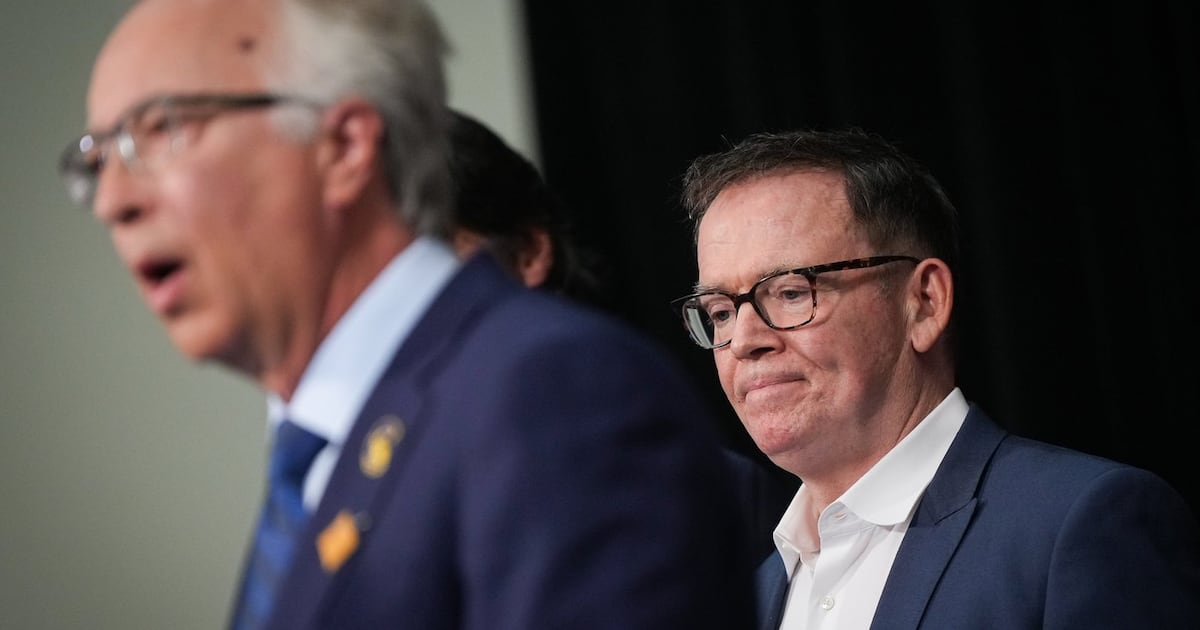
The party’s internal machinery remains intact, led by former MLA Ben Stewart. Stewart has indicated that the ultimate fate of the BC United brand—and its remaining assets—will not be decided until after the BC Conservatives conclude their upcoming leadership race. This ‘wait-and-see’ approach has sparked fears within the Conservative camp, specifically from former leader John Rustad. Rustad and his allies have expressed concern over a ‘centrist takeover,’ alleging that United stalwarts are attempting to infiltrate and steer the Conservative Party from within.
A Legacy of Scandal
The tension between the two right-leaning factions was exacerbated by a recent $4,500 fine levied by Elections BC. The independent overseer found that BC United was responsible for a campaign of ‘pre-election falsehoods’ involving a deceptive website and mailers targeting Conservative candidates. John Rustad has gone as far as to suggest these ‘Machiavellian’ tactics may have cost the Conservatives a victory in the last election. As the dust settles, the ongoing presence of BC United serves as a reminder of the deep divisions and unresolved baggage currently defining the province’s right-wing opposition.



BC NEWS
Unfreezing the Market: Carney and Eby Unveil $3.2B Housing and Transit Package
Prime Minister Mark Carney and Premier David Eby announce a $3.2B plan to cut development fees and convert vacant condos into affordable housing in BC.

A Major Subsidy to Lower Development Barriers
In a significant move to address British Columbia’s housing affordability crisis, Prime Minister Mark Carney and Premier David Eby announced a $3.2 billion joint funding initiative in Vancouver on Thursday. The center-piece of the announcement is a $1.6 billion federal commitment over the next decade—matched by the provincial government—aimed at slashing development cost charges (DCCs) by up to 50 per cent in priority communities. These subsidies, which could reach as much as $40,000 per unit, are designed to jumpstart multi-unit housing projects that have stalled due to rising costs.
The funding will be funneled through the federal government’s new Build Communities Strong Fund, redirecting general taxation revenue toward essential housing-enabling infrastructure. By covering the costs of water systems, wastewater management, and local roads, the government hopes to remove the financial burden currently placed on developers, which Carney noted has reached a level that is “pricing out people.”
Addressing the ‘Condo Overhang’
Beyond lowering development fees, Prime Minister Carney hinted at a more aggressive intervention to clear the glut of unsold real estate. With Statistics Canada reporting a surge in vacant, newly built units, the federal government plans to use specialized financing mechanisms to purchase these unoccupied condos and convert them into affordable housing. Under the Build Canada Homes and BC Housing partnership, officials aim to convert more than 2,200 vacant units into affordable dwellings, with specific models for this program expected to be released this fall.
Infrastructure and Transit Expansion
The announcement also included a massive boost for regional transportation, acknowledging that housing density must be supported by reliable transit. A $2.5 billion federal investment over 10 years was pledged for new transit projects, including the ongoing Surrey-Langley SkyTrain extension. This funding is on top of the previously announced $852 million for TransLink and BC Transit, marking a comprehensive effort to link housing growth with urban mobility.
Political and Economic Skepticism
Despite the influx of capital, the plan has met with mixed reactions from local leaders. Metro Vancouver chair and Burnaby Mayor Mike Hurley expressed caution, noting that “the devil will be in the details” and maintaining his stance that “growth should pay for growth.” Concerns remain regarding whether developers will pass these significant savings on to home buyers or if the subsidy will simply bolster corporate bottom lines. As BC’s real estate market remains one of the most expensive in North America, the success of this multibillion-dollar gamble depends on whether it can truly align housing prices with local incomes.
BC NEWS
Tragedy at Skeleton Bridge: Brazilian Authorities Investigate Fatal Rope Jump Error
A 21-year-old woman died in Brazil after rope jumping instructors allegedly failed to attach her safety cord. Investigation and murder charges are pending.

A Fatal Oversight in Limeira
The pursuit of adrenaline turned into a horrific tragedy this past Saturday at the Ponte do Esqueleto, or ‘Skeleton Bridge,’ in Limeira, São Paulo. Maria Eduarda Rodrigues de Freitas, a 21-year-old woman, fell 40 meters to her death after instructors allegedly failed to attach her safety cord before launching her into the abyss. Video footage from the scene captures the harrowing moment two staff members hoisted de Freitas airplane-style above their shoulders and threw her off the abandoned federal bridge, despite frantic screams from onlookers who realized the safety equipment was not connected.
Police Investigation and Arrests
Brazilian authorities acted swiftly following the incident, which required the deployment of a police helicopter for a rescue attempt that ultimately proved unsuccessful; de Freitas was pronounced dead at the scene. Three men employed by the adventure company responsible for the jump have been arrested. Police in Limeira have launched a formal investigation into the circumstances of the fall, with reports suggesting that the instructors could face murder charges due to the gross negligence involved in the oversight.
A Brewing Legal Battle Over Jurisdictional Responsibility
The tragedy has ignited a fierce political conflict between local and federal authorities. The City Hall of Limeira announced its intention to sue the federal government, claiming that the Skeleton Bridge falls under federal jurisdiction and has lacked necessary maintenance and access control for years. Mayor Murilo Félix stated that the municipal administration had been demanding action since early 2025, calling the federal government’s alleged omission ‘unsustainable and unacceptable.’
The Risks of Extreme Rope Jumping
Rope jumping, while often confused with bungee jumping, utilizes low-stretch climbing ropes designed to create a horizontal pendulum swing rather than a vertical bounce. The inherent risks of the sport require stringent safety protocols, which officials say were catastrophically ignored in this instance. This incident adds to a growing list of adventure sport accidents globally, highlighting a critical need for stricter regulation and enforcement of safety standards in the high-risk tourism industry.
BC NEWS
B.C. Teacher Facing 15-Year Ban Over Inappropriate Relationship with Vulnerable Former Student
B.C. teacher Jonas Alexander Douglas Huston receives a 15-year ban following an inappropriate relationship with a vulnerable former student.
Professional Misconduct Leads to Severe Disciplinary Action
A British Columbia private school teacher has been barred from the teaching profession for 15 years following an investigation into a sexual relationship with a former student. The B.C. Commissioner for Teacher Regulation released a consent resolution agreement on Tuesday, detailing the professional misconduct involving Jonas Alexander Douglas Huston, who previously served as a secondary school teacher at an independent institution.
Exploitation of Power and Trust
The investigation revealed that Huston initiated an intimate and sexual relationship with the student within five months of their graduation. According to the commissioner, Huston was fully aware that the student was in a vulnerable state at the time. The relationship was the result of a connection fostered while Huston was in a position of authority at the school, where he maintained close contact with the individual until the transition from student to former student occurred.
The school authority first notified the commissioner of the situation in January 2025. Although Huston was not working as a teacher at the time the report was filed, the commissioner determined that his actions constituted a fundamental breach of the trust inherent in the educator-student dynamic. The ruling emphasized that Huston used his position of power to exploit the student, resulting in documented harm.
Fifteen-Year Prohibition from Classroom Service
In the signed agreement, Huston admitted to professional misconduct and accepted a 15-year ban on applying for a teaching certificate. This restriction applies to both the independent school system and the kindergarten through Grade 12 public school systems across British Columbia. The length of the ban reflects the severity of the ethical violation and serves as a deterrent to others in the field.
Educational advocates often point to these cases as a reminder of the enduring nature of the power imbalance between teachers and students, even after graduation. The B.C. Commissioner for Teacher Regulation maintains that the penalty is necessary to uphold the integrity of the profession and ensure the safety and well-being of all students within the province’s educational infrastructure.
Maple Leafs Secure Top Pick as NHL Reveals Official 2026 Draft Order
Unfreezing the Market: Carney and Eby Unveil $3.2B Housing and Transit Package
Alberta Affordability Payments: $100 Relief Direct Deposits to Arrive Within Two Weeks
Ebola Crisis Escalates in Central Africa as Cases Surge 40% in One Week
History Made: Canada Records First-Ever World Cup Victory in Dominant 6-0 Rout of Qatar
The End of an Era: CBC to Stop Airing NHL Games as ‘Hockey Night in Canada’ Leaves Free TV

Opinion: John Rustad Has to Go

B.C. Supreme Court Grants Cowichan Tribes Title to Historic Richmond Lands and Fishing Rights

Vancouver Canucks Gear Up for a Make-or-Break 2025–26 Season

Province to Appeal Cowichan Tribes Land Decision

Kamloops Prepares Four Reverse Referendums on $188M in Major Projects

Kamloops Blazers Announce Off-Season Changes Ahead of 2025–26 Season
-

 OPINIONS2 weeks ago
Kerry-Lynne Findlay Won the Leadership. Now She Has to Win British Columbia.
-
National News2 weeks ago
Canada to Ban Social Media for Minors Under 16 as Carney Government Unveils Online Safety Bill
-
Energy & Resources1 week ago
Canada Shifts Energy Policy: Hodgson Declares End of Apologies for Oil Sands Success
-
LOCAL1 week ago
Where to Watch the 2026 FIFA World Cup in Vancouver: Top Bars, Patios, and Fan Zones
-
Hockey1 week ago
NHLPA Demands Investigation Resumes as Oilers Eye Mike Babcock for Potential Role
-
Canadian News1 week ago
Beyond the Brochures: The Reality of Life in Alberta’s Changing Landscapes
-
Middle East2 weeks ago
Fragile Calm Returns as Iran and Israel Halt Direct Strikes Following Trump Intervention
-
POLITICS1 week ago
B.C. Conservatives Overtake NDP in New Post-Leadership Poll