BC STORIES
Freight Train Derails Near Elko, B.C.—No Injuries Reported


A freight train operated by Canadian Pacific Kansas City (CPKC) derailed near Elko, in British Columbia’s Kootenay region close to the Alberta border, on the evening of September 2, 2025. Railway officials confirmed that twelve cars left the tracks, though all were empty at the time, and no injuries were reported. CPKC crews were dispatched quickly to the site, leading cleanup efforts and restoring the rail line to traffic within hours.
The Transportation Safety Board of Canada (TSB) has launched an investigation into the derailment, sending a team of inspectors to examine the scene and gather evidence. While the cause has not yet been determined, the TSB will conduct a detailed review aimed at identifying safety issues and recommending improvements. The agency emphasized that its role is to advance transportation safety rather than assign blame or liability.
Although the derailment did not result in injuries or major service disruptions, the incident highlights the challenges of operating freight trains in the mountainous Kootenay terrain. The restored rail line is back in service, but the TSB’s findings could lead to new safety measures designed to reduce risks in similar environments. For residents and businesses in the region, the swift reopening of the route ensured minimal disruption, while the ongoing investigation will help inform long-term infrastructure and safety planning.

BC STORIES
BC Supreme Court Judge Set to Rule on Sentence Length for Former Gang Member
Defence lawyers recommend 12 to 14 years for Ekene Anigbo for the 2021 Naramata manslaughter of Kathleen Richardson. A judge rules Nov. 2 in Kelowna.


Judicial Decision Expected in November
B.C. Supreme Court Justice Alison Beames is scheduled to deliver a sentencing ruling on Nov. 2 regarding Ekene Anigbo following a two-day hearing in Kelowna.
Defence lawyers for the 27-year-old former gang member have asked the court for a term of 12 to 14 years. Anigbo was convicted of manslaughter on Aug. 14 in connection with the June 9, 2021 death of 57-year-old Kathleen Richardson inside her Naramata residence.
Dispute Over Rehabilitation and Penalty
The recommendation from the defence directly contrasts with the prosecution’s request on Oct. 7 for life imprisonment without parole eligibility for 10 years. Defence counsel argued that the Crown was seeking to artificially inflate the sentence, pointing out that Anigbo has ended his gang ties since 2024 and completed anger management, employability skills, and Indigenous programming at Okanagan Correctional Centre.
If Justice Beames adopts the defence proposal, Anigbo would become eligible to apply for parole after completing one-third of the sentence.
Details of the Fatal Incident
Anigbo was originally tried for first-degree murder, but Justice Beames determined the Crown did not prove beyond a reasonable doubt that he fired the lethal shots. However, court proceedings established that Anigbo and co-accused Jalen Falk entered the home together armed with at least two handguns to track down Richardson’s son, Wade Cudmore, who was believed by associates to have killed two brothers and stolen cash and drugs.
When they discovered Cudmore was absent, the pair attempted to extract information from Richardson. Evidence showed she resisted, sustaining non-fatal injuries to her hands and arms, before the two men worked together to kill her and fled the scene. Her body was later discovered in her basement by an RCMP officer arriving to caution Cudmore about potential danger.
Related Legal Outcomes
The fatal event was tied to a broader sequence of violent incidents. Cudmore was taken into custody the day after his mother’s body was found and was subsequently convicted of two counts of second-degree murder involving the deaths of brothers Erick and Carlos Fryer.
Meanwhile, Falk entered a guilty plea to second-degree murder for Richardson’s death and received a life sentence in February with no chance of parole for 16 years.
BC STORIES
Loss of Newborn Calf Puts Fresh Focus on Endangered Southern Resident Whales
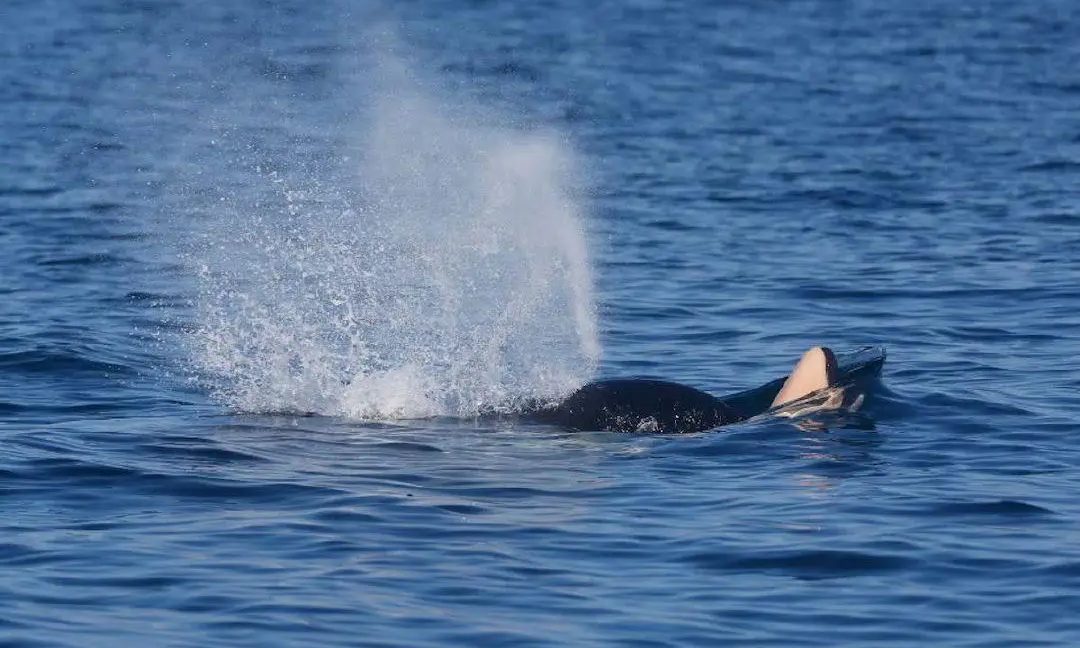
A critically endangered southern resident killer whale, J31, was seen pushing a dead newborn calf in B.C. waters, raising concerns for the population.
Tragic Sight Recorded Off Sombrio Point
Researchers with the Center for Whale Research confirmed that a female southern resident killer whale was seen pushing a dead newborn calf on her nose on Oct. 3 in the Strait of Juan de Fuca near Sombrio Point.
Mark Malleson, a researcher with the Washington-based organization, spotted the 31-year-old orca—identified as J31 or Tsuchi—travelling alongside her immediate family. According to a statement from the group, “It s unclear whether the newborn was a male or female, if it had been carried to full term prior to birth, and if it died after birth or was a stillbirth.”
Reproductive History and Population Pressures
Born in 1995, Tsuchi has a history of reproductive loss, including failed pregnancies and a deceased calf she carried in 2016. Her only surviving offspring is J56, a female named Tofino who was born in 2019.
The loss underscores the deep reproductive challenges confronting the critically endangered population. The Center for Whale Research emphasized that access to large, nutritionally rich Chinook salmon remains one of the primary factors limiting their ability to recover.
“For a population as small as the southern residents, the successful birth and survival of every calf matters,” the organization stated.
Pattern of Loss Across Pods
Tsuchi’s loss recalls similar events documented in the southern resident population, which comprises J, K and L pods. In 2018, J35 (Tahlequah) gained international attention after carrying her dead calf over 1,600 kilometres during a 17-day journey. Tahlequah was seen carrying another dead calf on her head or snout in early 2025. Later that year, 26-year-old J36 (Alki) lost a female calf—marking her fifth documented pregnancy, with only one calf surviving past infancy for under two years.
Recent census data from the Center for Whale Research recorded 74 southern residents, up by one from 73 in 2024. Although two births—K47 in December of last year and L130 in June—raised the total to 76, another calf, L129, is presumed dead after going missing from L-pod in June following observations of poor physical condition.
“The southern resident killer whales remain critically endangered, and their recovery depends not simply on increasing the number of pregnancies, but on creating the conditions in which mothers and calves can survive and thrive,” said the Center for Whale Research.
BC STORIES
Defense Seeks 12 to 14 Years as Judge Weighs Sentence in Naramata Manslaughter Case
Defense lawyers recommend 12 to 14 years for Ekene Anigbo following his manslaughter conviction in the 2021 death of Kathleen Richardson in Naramata.

Competing Sentence Recommendations Presented in B.C. Supreme Court
Defense lawyers representing former gang member Ekene Anigbo have asked a court for a prison sentence ranging from 12 to 14 years, arguing that the 27-year-old is making progress toward rehabilitation. Anigbo appeared in B.C. Supreme Court in Kelowna on Oct. 8 for the second day of his sentencing hearing following his Aug. 14 conviction for manslaughter in the death of 57-year-old Kathleen Richardson.
The defense’s proposal stands in contrast to the position of the Crown, which asked on Oct. 7 for a life sentence with no chance of parole for 10 years. Anigbo’s legal team criticized the prosecution’s request, contending that it was an attempt to “artificially inflate” the penalty. If the judge accepts the defense recommendation, Anigbo would become eligible to apply for parole after completing one-third of his term.
Details Surrounding the 2021 Naramata Homicide
The conviction stems from an incident in the early hours of June 9, 2021, when Anigbo and co-accused Jalen Falk entered Richardson’s home in Naramata searching for her son, Wade Cudmore. While Justice Alison Beames ruled that the prosecution did not prove beyond a reasonable doubt that Anigbo fired the fatal shots, the court determined the two men worked together and killed Richardson, whose body was discovered in her basement later that day.
Court proceedings revealed that the intrusion was linked to a broader conspiracy rooted in the killing of brothers Erick and Carlos Fryer. Anigbo’s associates suspected Cudmore was involved in the brothers’ deaths and had taken drugs and money. Armed with at least two firearms, Anigbo and Falk sought information on Cudmore’s whereabouts from Richardson. Evidence showed Richardson resisted, sustaining non-fatal injuries to her hands and arms before being killed.
Subsequent Legal Outcomes and Upcoming Ruling
An RCMP officer found Richardson’s body while visiting the residence to alert Cudmore that his safety might be at risk. Cudmore was taken into custody the following day for the deaths of the Fryer brothers and was subsequently convicted on two counts of second-degree murder. In February, Falk admitted guilt to second-degree murder in connection with Richardson’s death, receiving a life sentence with parole eligibility set at 16 years.
During his time held at the Okanagan Correctional Centre, Anigbo has taken courses in employability skills, anger management, and Indigenous programs, with court hearing he has maintained no gang ties since 2024. Justice Beames is scheduled to deliver the court’s sentencing decision on Nov. 2.

Where Provincial Jobless Rates Stood in September
What New Brunswick’s Latest Unemployment Figures Mean for Your Community

Who Is Running in Your Riding for the 2026 BC Election?

How Central Okanagan Residents Can Avoid Costly Household Plumbing Damage This Thanksgiving

BC Supreme Court Judge Set to Rule on Sentence Length for Former Gang Member

Loss of Newborn Calf Puts Fresh Focus on Endangered Southern Resident Whales

Opinion: John Rustad Has to Go

B.C. Supreme Court Grants Cowichan Tribes Title to Historic Richmond Lands and Fishing Rights

Vancouver Canucks Gear Up for a Make-or-Break 2025–26 Season

Province to Appeal Cowichan Tribes Land Decision

Kamloops Blazers Announce Off-Season Changes Ahead of 2025–26 Season

Kamloops Prepares Four Reverse Referendums on $188M in Major Projects
-

 LOCAL7 days ago
Have You Seen Him? Public Help Sought in Locating Missing Traveller Last Seen in Kamloops
-

 BC STORIES7 days ago
Why a Familiar Political Name is Joining the Kamloops-North Thompson Race
-
LOCAL6 days ago
Your Current 3 Day Forecast — October 4, 2026
-

 LOCAL7 days ago
Two Displaced as Investigators Eye Suspicious Four-Plex Fire in Kelowna
-

 COMMUNITY4 days ago
Why Okanagan Pet Owners Turned to Free BC SPCA Clinics After Wildfire Season
-

 OPINIONS4 days ago
B.C. Election Poll Puts Conservatives Ahead Five Points as Cost of Living Tops Voters’ Concerns
-

 BC STORIES4 days ago
B.C. Patients Could Soon Select Surgical Lists Based on Wait Times Under NDP Plan
-
LOCAL3 days ago
Your Current 3 Day Forecast — October 7, 2026