BC STORIES
Defense Seeks 12 to 14 Years as Judge Weighs Sentence in Naramata Manslaughter Case
Defense lawyers recommend 12 to 14 years for Ekene Anigbo following his manslaughter conviction in the 2021 death of Kathleen Richardson in Naramata.


Competing Sentence Recommendations Presented in B.C. Supreme Court
Defense lawyers representing former gang member Ekene Anigbo have asked a court for a prison sentence ranging from 12 to 14 years, arguing that the 27-year-old is making progress toward rehabilitation. Anigbo appeared in B.C. Supreme Court in Kelowna on Oct. 8 for the second day of his sentencing hearing following his Aug. 14 conviction for manslaughter in the death of 57-year-old Kathleen Richardson.
The defense’s proposal stands in contrast to the position of the Crown, which asked on Oct. 7 for a life sentence with no chance of parole for 10 years. Anigbo’s legal team criticized the prosecution’s request, contending that it was an attempt to “artificially inflate” the penalty. If the judge accepts the defense recommendation, Anigbo would become eligible to apply for parole after completing one-third of his term.
Details Surrounding the 2021 Naramata Homicide
The conviction stems from an incident in the early hours of June 9, 2021, when Anigbo and co-accused Jalen Falk entered Richardson’s home in Naramata searching for her son, Wade Cudmore. While Justice Alison Beames ruled that the prosecution did not prove beyond a reasonable doubt that Anigbo fired the fatal shots, the court determined the two men worked together and killed Richardson, whose body was discovered in her basement later that day.
Court proceedings revealed that the intrusion was linked to a broader conspiracy rooted in the killing of brothers Erick and Carlos Fryer. Anigbo’s associates suspected Cudmore was involved in the brothers’ deaths and had taken drugs and money. Armed with at least two firearms, Anigbo and Falk sought information on Cudmore’s whereabouts from Richardson. Evidence showed Richardson resisted, sustaining non-fatal injuries to her hands and arms before being killed.
Subsequent Legal Outcomes and Upcoming Ruling
An RCMP officer found Richardson’s body while visiting the residence to alert Cudmore that his safety might be at risk. Cudmore was taken into custody the following day for the deaths of the Fryer brothers and was subsequently convicted on two counts of second-degree murder. In February, Falk admitted guilt to second-degree murder in connection with Richardson’s death, receiving a life sentence with parole eligibility set at 16 years.
During his time held at the Okanagan Correctional Centre, Anigbo has taken courses in employability skills, anger management, and Indigenous programs, with court hearing he has maintained no gang ties since 2024. Justice Beames is scheduled to deliver the court’s sentencing decision on Nov. 2.






BC STORIES
What to Know as Severe Rainfall Warnings and Flooding Hit Vancouver Island Communities
Rainfall warnings across Vancouver Island bring flooding, road closures, and emergency alerts to communities including Zeballos, Sayward, and Port Alberni.
Widespread Rain Warnings Prompt Road Closures and Evacuation Orders
Communities across Vancouver Island are dealing with localized flooding, highway washouts, and emergency measures as heavy rain continues to impact the region. In Zeballos, evacuation orders and alerts first issued on Nov. 6 remain active due to ongoing flood risks and potential landslides. The Strathcona Regional District indicates these emergency precautions will likely stay in effect until at least Friday.
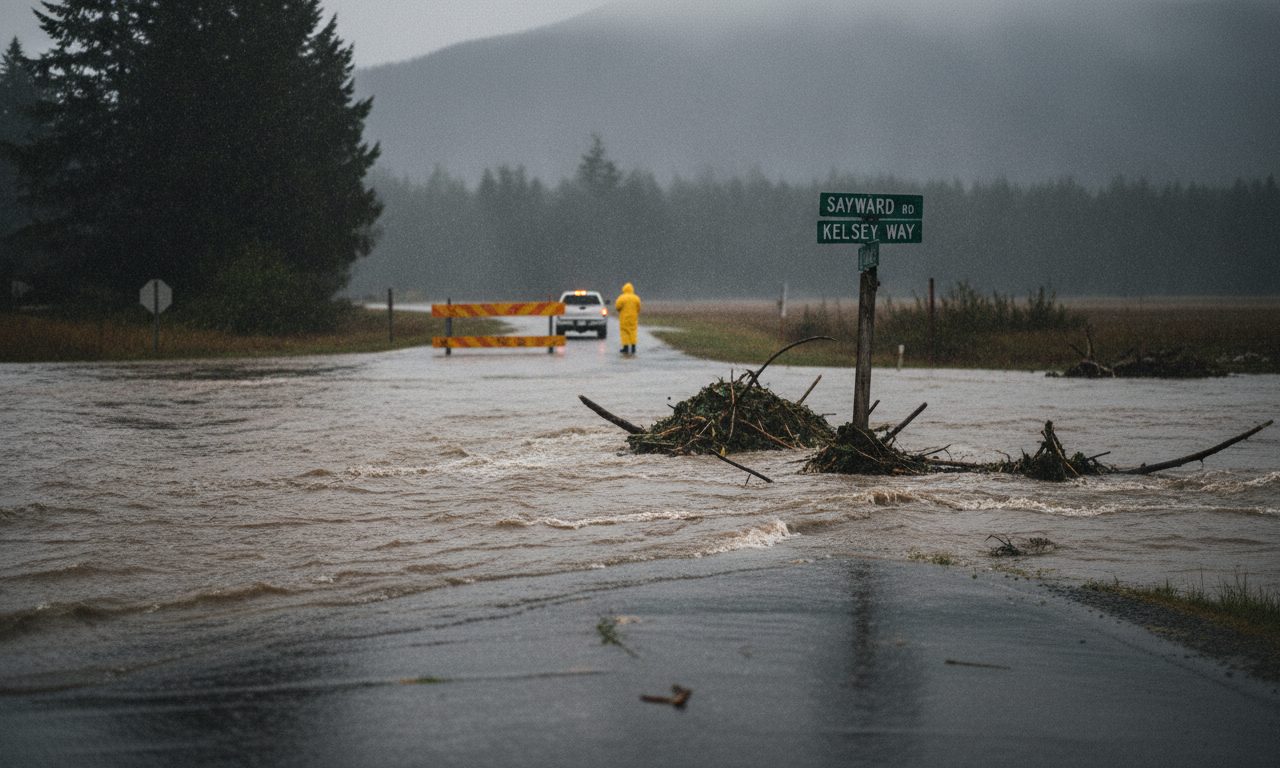
Infrastructure is also affected in the Village of Sayward, where flooding forced a road closure at the intersection of Sayward Road and Kelsey Way on Wednesday. High water flows in Newcastle Creek carried heavy sediment into Sayward’s water treatment plant, forcing it offline and prompting the regional district to issue a water conservation notice for the area.
Severe Downpours Recorded Across Island Regions
Environment Canada has maintained an orange-level rainfall warning for West and Inland Vancouver Island, forecasting an additional 150 to 250 millimetres of rain through Thursday morning before conditions ease. The weather service cautioned that “localized flooding is likely” and noted that “some roads may become impassable,” while warning of sudden visibility drops and possible landslides in steep or deforested areas.
A yellow-level alert covers East Vancouver Island from Nanoose Bay to Fanny Bay, where 50 to 100 millimetres of rain was expected Thursday morning. Recent rainfall totals include 123 millimetres recorded on Wednesday at the Port Alberni Airport weather station. To put the current precipitation in context, Environment Canada meteorologist Steve Boily previously noted that November averages total 220 millimetres in Campbell River and about 190 millimetres in Comox for the entire month.
Local Preparations and Travel Warnings Continue
Residents in the Port Alberni area spent time preparing sandbags to protect property against rising waters. Meanwhile, the Huu-ay-aht First Nation cautioned drivers on Wednesday regarding road flooding along Bamfield Main Road. Forecasters expect the heavy downpours to taper off during the day on Thursday, though a weaker weather system is projected to arrive Thursday night and continue into Friday.
BC STORIES
Narrow Escape from Fatal Train Crash Highlights Veteran Leroy George’s Korean War Story
Korean War veteran Leroy George shared his survival of the 1950 Canoe River train crash and combat experiences during a ceremony in Courtenay.

Narrow Survival Before Reaching the Front Lines
A seat swap during a train journey in November 1950 saved the life of Canadian military veteran Leroy George, who spent 40 years in the armed forces before retiring. Traveling from Shilo, Manitoba, to Fort Lewis, Washington, for training, George stepped away from a card game to give his seat to Pvt. Basil Patrick McKeown. Moments later, the train collided with another locomotive in what became known as the Canoe River train crash in Valemount.
The disaster claimed 21 lives, including 17 soldiers and crew members from both trains. Among those killed were McKeown and George’s cousin, Austin Emery George. Following the accident, official miscommunication led George’s young wife, Ruthie—whom he had married on Aug. 7, 1950, just days before enlisting—to receive a telegram stating he had died. The mistake was rectified days later after a roll call in Wainwright, Alberta.
Honouring Indigenous Veterans in Courtenay
George detailed his wartime experiences on Friday, Nov. 6, during a ceremony honoring Indigenous veterans held at the K’ómoks First Nation Gym in Courtenay. Monuments honoring the Canoe River crash victims stand in Valemount, Starratt Wildlife Sanctuary, Jasper, and at CFB Shilo Memorial Park in Manitoba. Reflecting on the gathering, George noted he had attended many events, but rarely ones focusing specifically on the Korean War.
combat and Survival in Korea
Raised in Shelburne, Nova Scotia, George joined the local Reserve Army artillery unit after participating in cadets. He later hitchhiked 153 miles to Halifax with a friend to enlist. His transport ship encountered a typhoon en route to Korea, marking his introduction to severe danger.
On his first day of combat action, George survived an explosion when the truck he was riding in hit a landmine, destroying its wheels and killing several soldiers, including the driver. Later in his 11-month deployment, he served on a crew tasked with identifying the remains of two fallen comrades after an artillery shell exploded in a gun breach. George’s service in Korea concluded after an above-ground shell blast injured his right eye.
BC STORIES
What to Expect as Strong Pacific Storm System Brings Damaging Winds to the B.C. Interior This Remembrance Day
Environment Canada has issued wind warnings for parts of the B.C. interior on Remembrance Day, with gusts up to 90 km/h expected alongside coastal rain.
Severe Wind Warnings Issued Across B.C. Interior
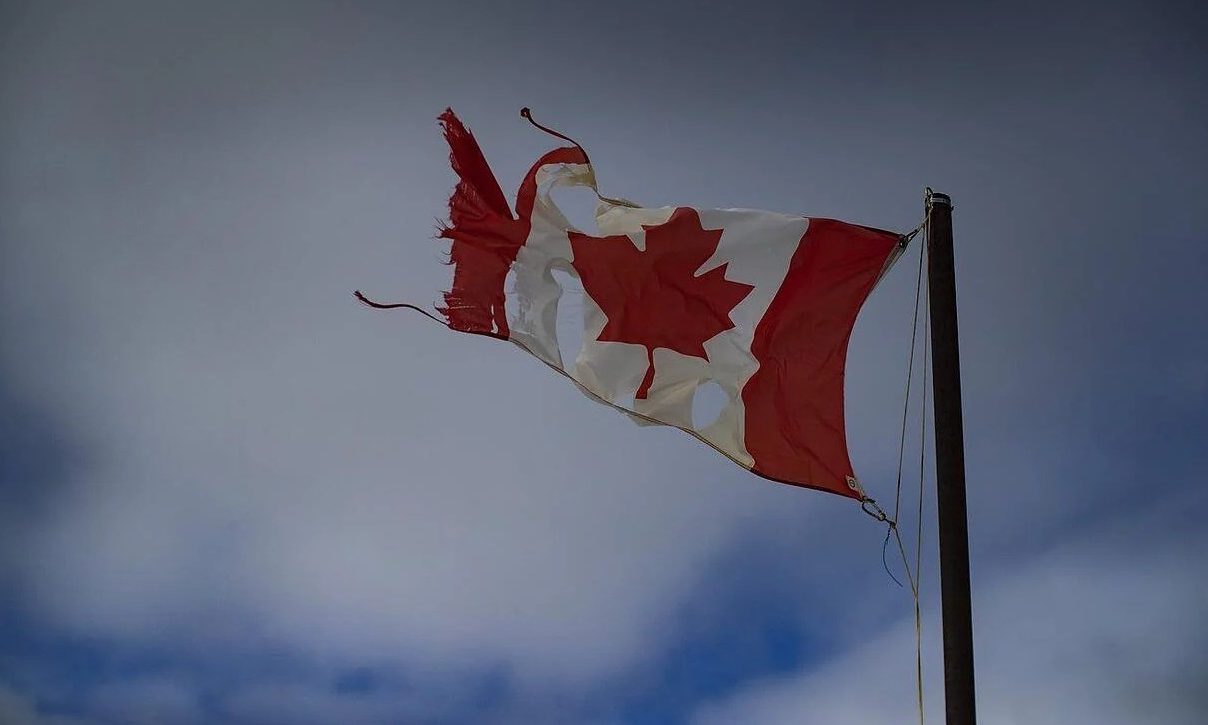
Environment Canada has placed several areas of the B.C. interior under a yellow level wind warning as a powerful and slow-moving Pacific frontal system approaches central B.C. The worst of the weather is forecasted for Wednesday, Nov. 11, with wind conditions potentially fluttering flags during Remembrance Day observations.
According to the weather agency, southerly winds reaching 50 km/h and gusting up to 80 or 90 km/h will start Wednesday morning before subsiding to light conditions by the evening. The warning covers the South Thompson and Fraser Canyon regions, with the heaviest impacts anticipated between Spences Bridge and Cache Creek, including Ashcroft, as well as the Thompson Highlands around Logan Lake and southern sections of the Fraser Canyon.
Cariboo Region and Highway Corridors Facing High Gusts
Yellow level alerts are also active across 100 Mile, the Cariboo area, and near Highway 97’s Begbie Summit. Forecasts for the Cariboo indicate southeasterly winds reaching 30 km/h with 50 km/h gusts near noon, strengthening further Wednesday morning to 70 km/h gusts. Speeds will peak Wednesday afternoon at 50 km/h with gusts up to 90 km/h before tapering off in the evening.
Officials caution that damaging winds pose a significant risk, threatening power outages in communities that recently experienced storm-related interruptions over the weekend. Drivers of high-sided vehicles are advised that their transport could be pushed around by strong gusts. Environment Canada urges residents to secure loose objects and stay clear of downed power lines, while BC Hydro instructs anyone seeing fallen lines to report them by calling 911.
Heavy Rain and Flood Watch for Coastal Areas
Beyond the interior wind alerts, coastal B.C. and Vancouver Island face rainfall warnings driven by the robust frontal system. Total rainfall between 50mm and 250mm could accumulate by Thursday morning. Drivers should anticipate hazards including sudden drops in visibility and water pooling on roadways or low-lying areas. Environment Canada also warned of potential landslides in vulnerable locations, such as steep slopes, recent burn scars, or deforested zones, alongside washouts near culverts, rivers, and creeks.
The River Forecast Centre has responded to rapidly rising waterways by issuing high streamflow advisories and flood watches. Travelers and residents can monitor real-time road updates through DriveBC and check current weather alerts online directly from Environment Canada.
Your Current 3 Day Forecast — November 15, 2026
Your Current 3 Day Forecast — November 14, 2026

What to Know as Severe Rainfall Warnings and Flooding Hit Vancouver Island Communities
Your Current 3 Day Forecast — November 13, 2026
Your Current 3 Day Forecast — November 12, 2026
McDavid Reaches Point Milestone as Oilers Edged Flyers in Overtime Thriller

Opinion: John Rustad Has to Go

B.C. Supreme Court Grants Cowichan Tribes Title to Historic Richmond Lands and Fishing Rights

Vancouver Canucks Gear Up for a Make-or-Break 2025–26 Season

Province to Appeal Cowichan Tribes Land Decision

Kamloops Blazers Announce Off-Season Changes Ahead of 2025–26 Season

Kamloops Prepares Four Reverse Referendums on $188M in Major Projects
-
 LOCAL6 days ago
How Federal Billions to Combat Homelessness Could Impact Housing Projects in Kelowna
-
LOCAL4 days ago
Your Current 3 Day Forecast — November 11, 2026
-
 BC STORIES6 days ago
Okanagan Falls begins a new chapter with the historic swearing-in of its first mayor and council
-
 LOCAL5 days ago
Why Kamloops is weighing the quiet payoff of job-scarce data centres
-
 BC STORIES6 days ago
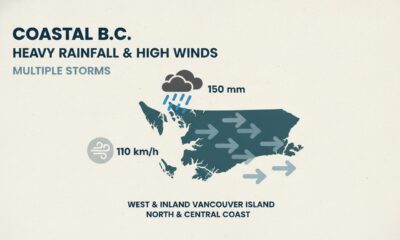
Coastal B.C. Faces Heavy Rainfall and High Winds in First of Multiple Storms
-
 BC STORIES6 days ago
What to Know as Powerful Winds Cut Power to Thousands Across B.C.
-

 BC STORIES5 days ago
BC Election Update: Conservatives Take Burnaby Seat as Final Vote Count Wraps Up
-
 BC STORIES4 days ago
Why You Don’t Need to Worry About Tsunami Risks After Tuesday’s Island Earthquake