BC STORIES
BC Conservatives Win Majority as Provincial Election Sees Record Low Voter Turnout
BC election turnout dropped to a record low 48.1 per cent on Oct. 24 as the BC Conservatives secured a majority, preliminary ElectionsBC results show.

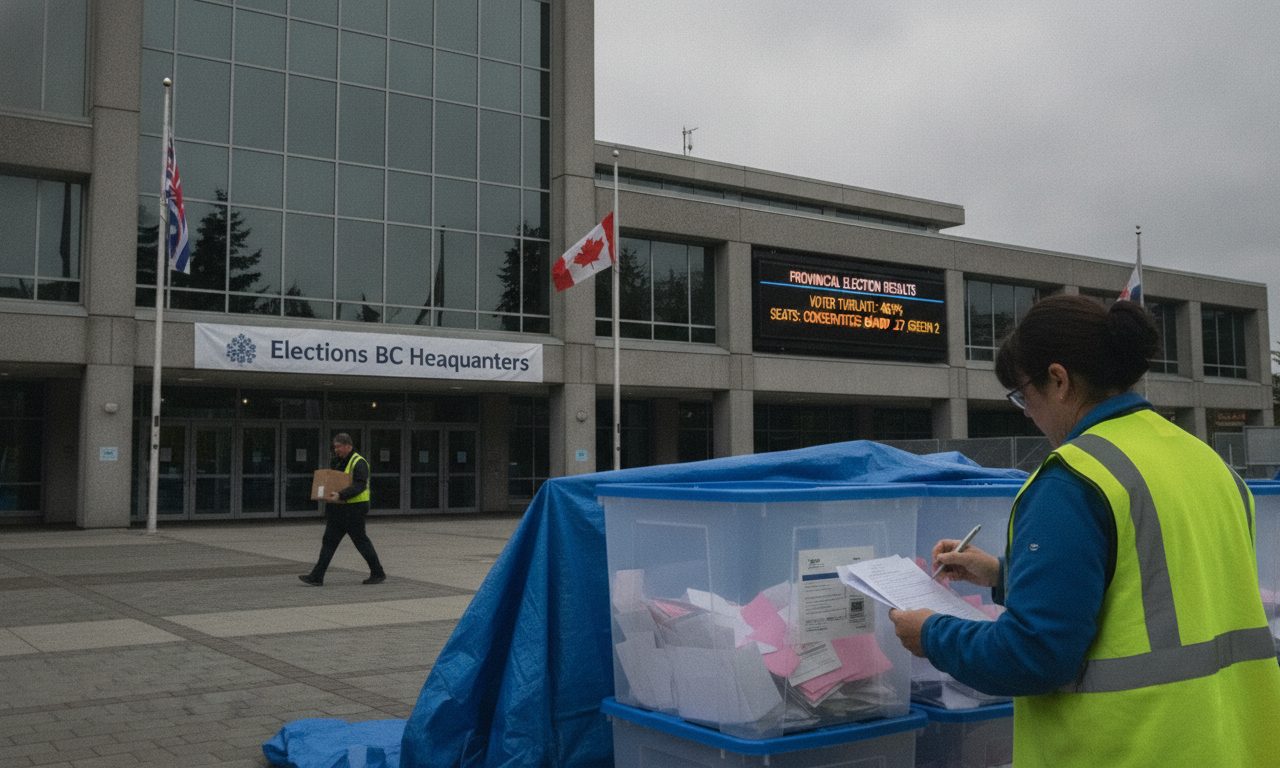
Historic Low Participation Recorded
Preliminary figures show that only 48.1 per cent of registered voters participated in the Oct. 24 provincial election, marking the lowest voter turnout in British Columbia’s history. With 99.75 per cent of ballot boxes reporting, ElectionsBC accounted for 1,798,103 ballots cast out of 3,738,182 eligible voters as of the afternoon of Oct. 25. This represents the lowest overall vote count for the province since 2009. The figure reflects an over 10 per cent drop from the 2024 election and falls nearly six per cent below the previous record low set during the 2020 COVID-19 pandemic.
Conservatives Secure Majority Victory
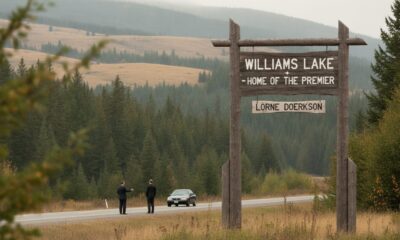
The BC Conservatives secured a projected 64 out of 93 seats in the legislature, marking the party’s first election victory since 1928 and the largest majority in B.C. since 2001. Former premier David Eby had initiated the snap election two years ahead of schedule for the BC NDP, approximately one week after former BC Conservative leader Kerry-Lynne Findlay stepped down. Lorne Doerkson, the MLA for Cariboo-Chilcotin who took over leadership on a technical interim basis, managed the successful campaign. Doerkson stated on Oct. 25 that he considers the interim designation an “administrative detail” and anticipates serving as Premier.
Ballot Counting and Rule Changes
ElectionsBC continues to process remaining mail-in, absentee, telephone, and special opportunity ballots. Addressing reporters, Doerkson noted that the vote occurred just one week after municipal elections, which had experienced an increase in turnout compared to 2022. He announced plans to immediately pursue adjustments to election regulations to prevent provincial and local votes from overlapping in the future.


BC STORIES
Why David Eby resigned as B.C. NDP leader following election defeat
David Eby resigns as B.C. NDP leader after conceding the 2026 election to the Conservatives, led by interim leader Lorne Doerkson.
B.C. NDP Leader Steps Down Following Conservative Victory
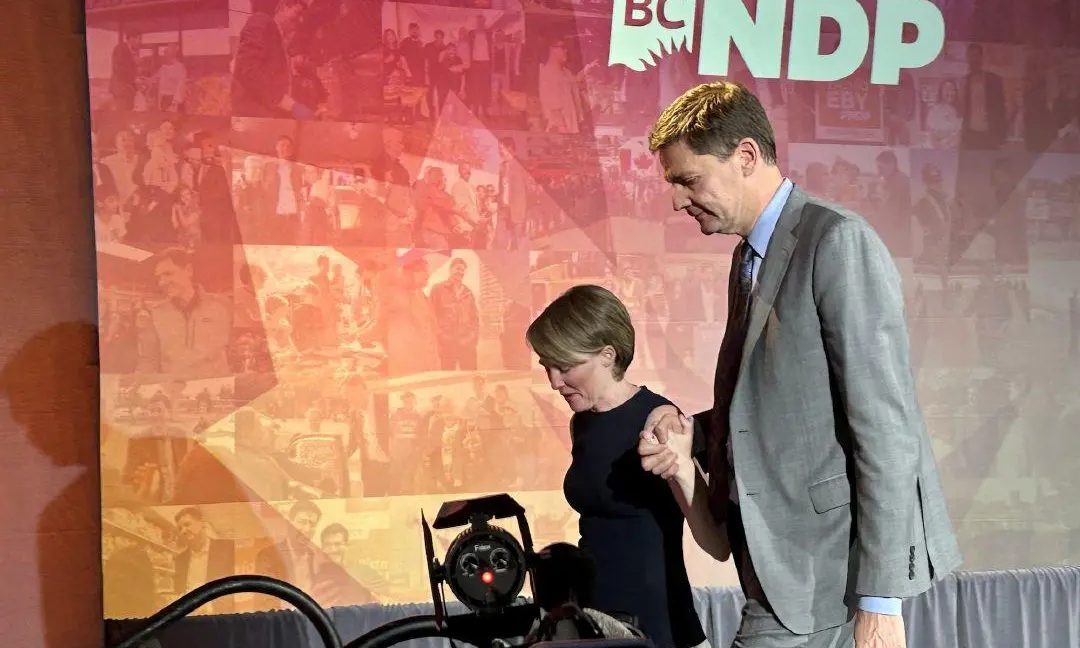
David Eby has officially conceded the 2026 British Columbia provincial election and resigned as leader of the B.C. NDP. Addressing a crowd of supporters in downtown Vancouver on Saturday night, Eby acknowledged the need for change within the party. “This is obviously something I do with a heavy heart,” he said. “But it is time for new leadership within our party.”
The election outcome follows a snap election call by Eby on Sept. 22. At that time, the opposition Conservative Party faced internal division following the resignation of former leader Kerry-Lynne Findlay two days earlier due to a caucus uprising. However, under interim leader Lorne Doerkson, the Conservatives unified and are now projected to form government after a sweeping victory, flipping nearly 20 seats. Doerkson is now projected to become premier-designate.
Reflections on the Snap Election Call
Although Eby is projected to retain his seat in Vancouver-Point Grey, party members have reflected on the decision to hold an early vote two years before the end of his mandate. On Friday in Surrey, Eby acknowledged voter frustration regarding the timing, stating, “I should have done a better job of letting them know how stalled out the legislature was.” He noted that managing a one-vote majority made passing legislation difficult.
Outgoing energy minister and Vancouver-Renfrew candidate Adrian Dix called the decision to hold the early election a blunder, noting that Eby accepted responsibility for the outcome. Describing the result as a “significant defeat” for the NDP after its extended time in government, Dix emphasized that the party would take time for internal reflection before determining its future opposition leadership.
Bowinn Ma, the NDP candidate for North Vancouver-Lonsdale, expressed support for Eby’s decision to call the election, citing the physical toll a slim majority placed on party members. She noted that delivering for British Columbians required complete cooperation across diverse views within the caucus.
BC STORIES
What B.C.’s New Conservative Premier Promises for Healthcare, Finances, and Resources
B.C. Premier-designate Lorne Doerkson outlines key priorities following the Conservative election win, including ER closures, finances, and LNG plans.
100-Day Commission Targeted for Rural Healthcare
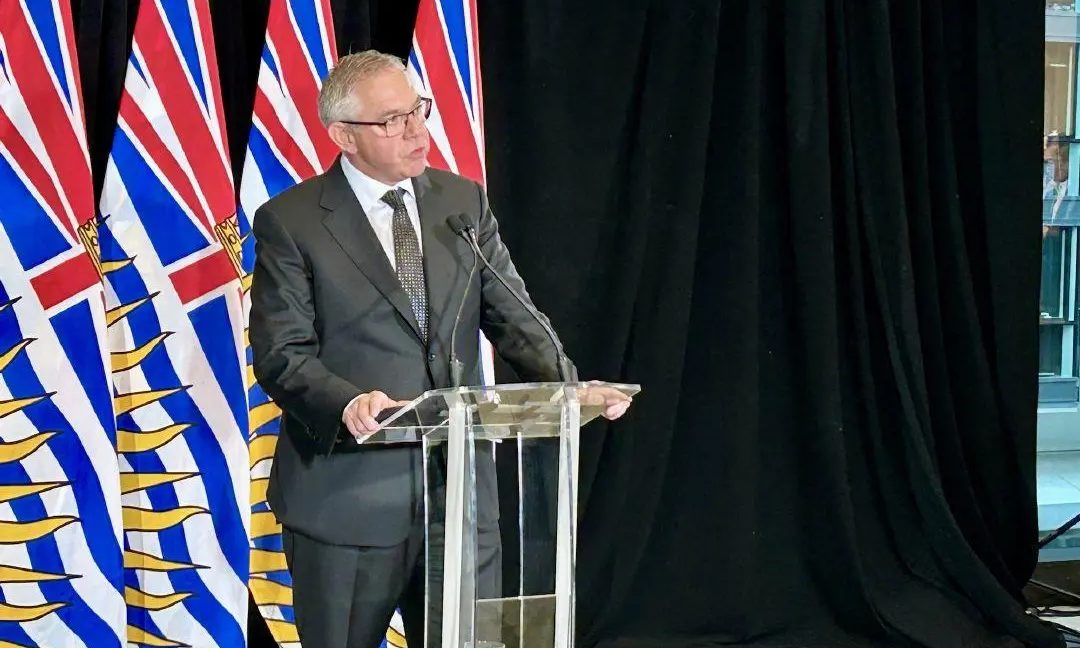
Following a sweeping election victory on Oct. 24, B.C. Conservative Leader Lorne Doerkson announced plans for immediate government action. Appearing 12 hours after the polls closed, the premier-designate pledged to establish a healthcare commission within his first 100 days in office. The initiative aims to reduce wait times and prevent local emergency room shutdowns, such as the more than 37 temporary ER closures experienced this year in 100 Mile House. Doerkson was re-elected for a third term as the MLA for Cariboo-Chilcotin.
Fiscal Audit and Election Rule Overhauls Planned
Addressing public finances, Doerkson announced an upcoming independent financial review prior to tabling a provincial budget. British Columbia currently faces a deficit approaching $14 billion alongside credit rating downgrades. He also intends to amend provincial election laws so that future campaign dates do not overlap with municipal elections, following the 2026 snap election called by outgoing premier David Eby that placed voting days one week apart.
Resource Pledges, Federal Relations, and Transition Team
The premier-designate reaffirmed commitments to expand liquefied natural gas and stated he will contact Prime Minister Mark Carney and Alberta Premier Danielle Smith to discuss a new oil pipeline. Additionally, Doerkson intends to introduce legislation to repeal the Declaration on the Rights of Indigenous Peoples Act, likely in the spring, while maintaining plans to work with First Nations through alternative avenues. Regarding recent social media comments from U.S. President Donald Trump, Doerkson stated he considers himself an ally of British Columbia amid ongoing trade friction. Former deputy minister Kim Henderson will head the government transition team to prepare the administration for its swearing-in.
Electoral Context and Leadership Status
The Conservatives currently lead in 64 ridings, compared to 27 for the NDP and two for the Green Party, with voter turnout recorded at 48.06 per cent. Although named interim party leader two days before the Sept. 22 election call, Doerkson dismissed suggestions of a subsequent leadership race, confirming he will remain leader while serving as premier. He urged unity across the province, promising to govern for all residents regardless of how they voted.
BC STORIES
B.C. Conservative Victory Triggers Need for Constitutional Rule Change
B.C. Conservatives win a majority government, but need a two-thirds party vote to change constitutional rules and keep interim leader Lorne Doerkson.
Majority Victory Creates Leadership Governance Hurdle
British Columbia voters delivered a two-thirds majority government to the B.C. Conservatives on Saturday, but the party must now amend its own internal constitution so premier-designate Lorne Doerkson can permanently remain leader.
Under existing party regulations, an interim leader is barred from running for the permanent position in a subsequent ballot. Overturning that restriction requires a two-thirds vote among party members.
Party Leadership Addresses Transition Details
Doerkson stepped into the interim leadership role days prior to the Sept. 22 snap election call by outgoing NDP Premier David Eby, ending nearly 10 years of NDP governance. On Sunday, Doerkson addressed the constitutional requirement directly, dismissing concerns that it would prevent him from serving as premier.
“I am leader and that’s an administrative detail that there’ll be more information on that imminently,” Doerkson said, adding that he will stay on as party leader and describing the election results as “decisive.”
The party’s board posted on social media Sept. 23 that a premier selected by voters deserves certainty, stating that an amendment will be pursued to secure his leadership.
Party Support and Ideological Shift
Support for Doerkson remains strong internally. Party candidate Caroline Elliott, who won the West Vancouver-Capilano riding on Saturday, endorsed him fully, noting he earned the trust of the province and united the party following the sudden resignation of former leader Kerry-Lynne Findlay shortly before the election.
Former B.C. premier Gordon Campbell also voiced support during election night, describing Doerkson as a straightforward leader capable of guiding the province forward.
The B.C. Conservatives have seen a rapid political transformation. After capturing under two per cent of the vote in 2020, the collapse of B.C. United opened the path for their rise. Political scientist Hamish Telford noted that while a portion of the party base previously sought to distance itself from former B.C. Liberals, Doerkson—who represented the Cariboo-Chilcotin riding as a B.C. Liberal in 2020 before joining the Conservatives—now leads a mainstream, business-oriented government.

BC Conservatives Win Majority as Provincial Election Sees Record Low Voter Turnout

Why David Eby resigned as B.C. NDP leader following election defeat

What B.C.’s New Conservative Premier Promises for Healthcare, Finances, and Resources

B.C. Conservative Victory Triggers Need for Constitutional Rule Change

Depth Issues Exposed as Edmonton Falls Big to Toronto in Saturday Matchup
Former Captain Quinn Hughes Prepares for Emotional Vancouver Return

Opinion: John Rustad Has to Go

B.C. Supreme Court Grants Cowichan Tribes Title to Historic Richmond Lands and Fishing Rights

Vancouver Canucks Gear Up for a Make-or-Break 2025–26 Season

Province to Appeal Cowichan Tribes Land Decision

Kamloops Prepares Four Reverse Referendums on $188M in Major Projects

Kamloops Blazers Announce Off-Season Changes Ahead of 2025–26 Season
-
LOCAL6 days ago
Your Current 3 Day Forecast — October 20, 2026
-
 BC STORIES4 days ago
BC Conservatives Promise Forestry Overhaul to Revive Jobs as NDP Points to Millions in Existing Investment
-
LOCAL3 days ago
Your Current 3 Day Forecast — October 23, 2026
-
HEALTH6 days ago
Outgoing Kamloops Mayor Reid Hamer-Jackson Hospitalized Following Heart Attack
-
 OPINIONS4 days ago
How Minor Parties and Strategic Balloting Could Shift the Upcoming B.C. Election
-

 COMMUNITY4 days ago
Vancouver Canucks Honour Beloved Broadcaster John ‘Cheech’ Garrett During Home Game
-
 SPORTS4 days ago
Why B.C. Lions Starters Are Resting as the Regular Season Concludes Against Winnipeg
-
BC STORIES7 days ago
How B.C.’s Political Parties Plan to Handle the Rise of AI Data Centres