POLITICS
Carney Sets Ambitious Agenda for Fall Parliamentary Session


Prime Minister Mark Carney has set out a sweeping plan for the fall session of Parliament, unveiling seven key priorities that aim to balance economic renewal, foreign policy leadership, and domestic reforms. His agenda underscores a vision for strengthening Canada’s position both at home and abroad while addressing pressing social and economic challenges.
Boosting the Economy Through Internal Trade and Infrastructure
At the heart of the government’s agenda is a push to remove barriers to interprovincial trade, a move Carney says could unlock significant economic potential by making it easier for goods and services to flow freely across Canada. Alongside trade reforms, the government will fast-track major infrastructure and nation-building projects, placing strong emphasis on environmental sustainability and consultation with Indigenous communities to ensure inclusive growth.
Foreign Policy: Balancing Peace, Security, and Climate
On the international stage, Carney will spotlight Canada’s role at the upcoming United Nations General Assembly. His foreign policy focus includes:
- Recognition of Palestine, contingent on Palestinian reforms such as elections excluding Hamas and commitments to demilitarization.
- Ongoing support for Ukraine in its conflict with Russia, reinforcing Canada’s commitment to international security.
- Climate diplomacy, positioning Canada as a leader in the clean energy transition.
- Strengthening Canada’s role in global supply chains for critical minerals and clean energy.
Carney argued that aligning Canada’s strengths with global climate and security goals is central to ensuring long-term prosperity.
Immigration and Housing Pressures
Domestically, the Prime Minister pledged to review and reform immigration policy, particularly around the balance of permanent and temporary residents. The government wants to address pressures on housing, infrastructure, and social services by ensuring population growth is matched with capacity for sustainable integration.
Tax Reforms to Support Families and Growth
Carney also outlined plans for targeted tax changes, including reducing the bottom marginal rate to provide relief to lower-income Canadians and introducing incentives for first-time homebuyers. These measures are framed as part of a broader effort to support affordability and strengthen the middle class.
Strengthening Transparency and Accountability
In a bid to bolster public trust, the government plans to enhance oversight by expanding the role of the Parliamentary Budget Officer and ensuring that government spending aligns with stated commitments. Carney emphasized that accountability and fiscal responsibility will be guiding principles throughout the session.
A Bold Legislative Path Ahead
As Parliament resumes, Carney’s ambitious agenda sets the stage for what could be a pivotal session. With debates expected across trade, immigration, foreign policy, and fiscal reform, the government will face both support and scrutiny from across the political spectrum. How effectively it balances economic, social, and global priorities will determine whether Carney’s fall session produces lasting change.

BC NEWS
Unfreezing the Market: Carney and Eby Unveil $3.2B Housing and Transit Package
Prime Minister Mark Carney and Premier David Eby announce a $3.2B plan to cut development fees and convert vacant condos into affordable housing in BC.


A Major Subsidy to Lower Development Barriers
In a significant move to address British Columbia’s housing affordability crisis, Prime Minister Mark Carney and Premier David Eby announced a $3.2 billion joint funding initiative in Vancouver on Thursday. The center-piece of the announcement is a $1.6 billion federal commitment over the next decade—matched by the provincial government—aimed at slashing development cost charges (DCCs) by up to 50 per cent in priority communities. These subsidies, which could reach as much as $40,000 per unit, are designed to jumpstart multi-unit housing projects that have stalled due to rising costs.
The funding will be funneled through the federal government’s new Build Communities Strong Fund, redirecting general taxation revenue toward essential housing-enabling infrastructure. By covering the costs of water systems, wastewater management, and local roads, the government hopes to remove the financial burden currently placed on developers, which Carney noted has reached a level that is “pricing out people.”
Addressing the ‘Condo Overhang’
Beyond lowering development fees, Prime Minister Carney hinted at a more aggressive intervention to clear the glut of unsold real estate. With Statistics Canada reporting a surge in vacant, newly built units, the federal government plans to use specialized financing mechanisms to purchase these unoccupied condos and convert them into affordable housing. Under the Build Canada Homes and BC Housing partnership, officials aim to convert more than 2,200 vacant units into affordable dwellings, with specific models for this program expected to be released this fall.
Infrastructure and Transit Expansion
The announcement also included a massive boost for regional transportation, acknowledging that housing density must be supported by reliable transit. A $2.5 billion federal investment over 10 years was pledged for new transit projects, including the ongoing Surrey-Langley SkyTrain extension. This funding is on top of the previously announced $852 million for TransLink and BC Transit, marking a comprehensive effort to link housing growth with urban mobility.
Political and Economic Skepticism
Despite the influx of capital, the plan has met with mixed reactions from local leaders. Metro Vancouver chair and Burnaby Mayor Mike Hurley expressed caution, noting that “the devil will be in the details” and maintaining his stance that “growth should pay for growth.” Concerns remain regarding whether developers will pass these significant savings on to home buyers or if the subsidy will simply bolster corporate bottom lines. As BC’s real estate market remains one of the most expensive in North America, the success of this multibillion-dollar gamble depends on whether it can truly align housing prices with local incomes.
POLITICS
Alberta Affordability Payments: $100 Relief Direct Deposits to Arrive Within Two Weeks
Alberta’s $100 affordability payments will arrive within two weeks of application. Learn about eligibility, the July 1 launch, and why the province chose payouts.

Rapid Relief for Millions of Albertans
The Alberta government has confirmed that eligible residents can expect to see $100 affordability payments deposited into their bank accounts within 14 days of applying. As the province grapples with rising living costs, Finance Minister Jason Nixon’s office clarified that the two-week window allows the government sufficient time to verify application details and process electronic transfers securely.
Direct Support vs. Fuel Tax Cuts
The decision to issue direct payments marks a strategic pivot for Premier Danielle Smith’s administration. While some critics have called for a reduction in provincial gasoline taxes, Premier Smith maintains that direct-to-consumer payouts are a more reliable method of providing relief. She argued that gas tax cuts are not always fully passed on to consumers at the pump by retailers, whereas direct payments ensure that the intended financial support reaches household budgets without interference.
Eligibility and Economic Drivers
The funding for this relief program stems from a surge in energy royalties, triggered by global fuel price volatility linked to the ongoing U.S.-Iran military conflict. Under the province’s quarterly relief framework, these windfall profits are being redirected to approximately 3.4 million Albertans. Eligibility is broad, covering households with a maximum annual income of $225,000 or less.
How to Apply
The online application portal is scheduled to open on July 1. Applicants are encouraged to ensure their banking information is up to date within the provincial system to avoid delays. By automating much of the verification process, the Finance Ministry aims to maintain a steady flow of payments throughout the summer months, providing a critical buffer against inflation and the high cost of essential goods.
Economics
Mark Carney Hails U.S.-Iran Framework as ‘Game Changer’ for Global Stability
Prime Minister Mark Carney calls the U.S.-Iran framework a ‘game changer’ at the G7 summit, detailing its impact on nuclear security and global oil supplies.

A Potential Turning Point at the G7 Summit
In a high-stakes reveal during the G7 summit in France, Prime Minister Mark Carney described a preliminary framework agreement between the United States and Iran as a significant “game changer” for Middle Eastern stability. Speaking with CNN’s Kaitlan Collins, Carney confirmed he has reviewed the unpublished document, stating the deal has “exceeded expectations” in its scope to end a 100-day conflict that has paralyzed global energy markets.
The Core of the Agreement
While the full terms remain confidential, the framework reportedly establishes a 60-day window for intensive negotiations regarding Iran’s nuclear program. Carney emphasized that the deal “sets the groundwork to ensure Iran doesn’t have a nuclear weapon,” suggesting that a critical metaphorical “Rubicon” has been crossed. Key components of the agreement include the reopening of the Strait of Hormuz—a vital corridor for approximately 20 million barrels of oil daily—and the lifting of a blockade that has sent global fuel prices skyrocketing.
Canada’s Expanding Role
Beyond endorsing the peace process, Carney signaled that Canada is prepared to play a logistical and financial role in the deal’s implementation. This includes potential assistance with demining efforts in the Strait of Hormuz and navigating the complex process of unfreezing Iranian assets. Carney noted that Canada could help mitigate global reliance on economic choke points by leveraging its own resources in oil, gas, and critical minerals. “One of the big lessons here is don’t be held hostage to one choke point in the global economy,” Carney remarked.
Regional Concerns and the War in Ukraine
Despite the optimism, the deal faces scrutiny for excluding key regional players like Israel and Hezbollah from the preliminary talks. Carney remained vague on how the agreement impacts Israel’s military presence in Lebanon, though he noted it provides a foundation for a future solution. Shifting focus to Europe, Carney also characterized G7 discussions on Ukraine as “constructive,” announcing new sanctions against 162 Russian entities and asserting that the tide of the war has turned against President Vladimir Putin.
Maple Leafs Secure Top Pick as NHL Reveals Official 2026 Draft Order
Unfreezing the Market: Carney and Eby Unveil $3.2B Housing and Transit Package
Alberta Affordability Payments: $100 Relief Direct Deposits to Arrive Within Two Weeks
Ebola Crisis Escalates in Central Africa as Cases Surge 40% in One Week
History Made: Canada Records First-Ever World Cup Victory in Dominant 6-0 Rout of Qatar
The End of an Era: CBC to Stop Airing NHL Games as ‘Hockey Night in Canada’ Leaves Free TV

Opinion: John Rustad Has to Go

B.C. Supreme Court Grants Cowichan Tribes Title to Historic Richmond Lands and Fishing Rights

Vancouver Canucks Gear Up for a Make-or-Break 2025–26 Season

Province to Appeal Cowichan Tribes Land Decision

Kamloops Prepares Four Reverse Referendums on $188M in Major Projects

Kamloops Blazers Announce Off-Season Changes Ahead of 2025–26 Season
-
 OPINIONS2 weeks ago
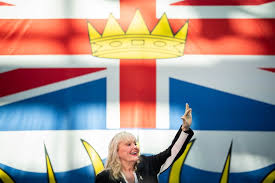
Kerry-Lynne Findlay Won the Leadership. Now She Has to Win British Columbia.
-
National News2 weeks ago
Canada to Ban Social Media for Minors Under 16 as Carney Government Unveils Online Safety Bill
-
Energy & Resources1 week ago
Canada Shifts Energy Policy: Hodgson Declares End of Apologies for Oil Sands Success
-
LOCAL1 week ago
Where to Watch the 2026 FIFA World Cup in Vancouver: Top Bars, Patios, and Fan Zones
-
Canadian News1 week ago
Beyond the Brochures: The Reality of Life in Alberta’s Changing Landscapes
-
POLITICS1 week ago
B.C. Conservatives Overtake NDP in New Post-Leadership Poll
-
Hockey1 week ago
NHLPA Demands Investigation Resumes as Oilers Eye Mike Babcock for Potential Role
-
Middle East2 weeks ago
Fragile Calm Returns as Iran and Israel Halt Direct Strikes Following Trump Intervention