POLITICS
Canada Unveils Massive $2B National AI Strategy to Secure Digital Sovereignty
Prime Minister Mark Carney announces a $2B National AI Strategy for Canada, focusing on digital sovereignty, 250k new jobs, and a 60% business adoption rate.


A New Chapter for Canadian Innovation
Prime Minister Mark Carney officially launched Canada’s comprehensive national artificial intelligence strategy in Toronto on Thursday, signaling a massive $2 billion federal commitment to secure the nation’s place in the global technology race. Emphasizing a shift from global reliance to sovereign resilience, Carney framed the strategy as a necessary safeguard to ensure that the transformative power of AI benefits the public interest rather than a select few tech giants.
Ambitious Growth and Economic Integration
The centerpiece of the plan involves a radical acceleration of AI adoption within the private sector. Currently, only 12 per cent of Canadian businesses utilize AI tools; the federal government aims to spike that figure to 60 per cent by 2034. To support this transition, Ottawa will inject $500 million into the Regional Artificial Intelligence Initiative and an additional $700 million into the AI Compute Access Fund. These investments are designed to provide small and medium-sized enterprises (SMEs) with the high-performance computing power and financing necessary to scale up and compete internationally.
Building a Workforce for the Future
Addressing the growing anxiety over automation, the strategy projects the creation of up to 250,000 new jobs by 2031. A cornerstone of the labor plan is a National Literacy Initiative, which seeks to provide entry-level AI training to one million post-secondary students and thousands of educators. However, the plan has met with some resistance. The Canadian Union of Public Employees (CUPE) has criticized the government for what it describes as ‘soft-pedalling’ worker protections, arguing that the strategy prioritizes corporate profit over job security.
Safety, Privacy, and Sovereign Infrastructure
The strategy also addresses the darker side of AI, including deepfakes, disinformation, and privacy erosion. A key feature is the allocation of $50 million to the Canadian AI Safety Institute to evaluate AI models and track emerging risks. Furthermore, Canada plans to build a world-leading, sovereign supercomputer by 2031. This infrastructure is intended to grant Canada the autonomy to develop critical AI capabilities without being beholden to foreign infrastructure, effectively securing Canada’s digital borders for the next decade.

POLITICS
Ezra Levant Pledges Strict Compliance as Tamara Lich Seeks International Travel Rights
Rebel News founder Ezra Levant testifies in court, promising to ensure Tamara Lich complies with bail if allowed to travel internationally for work assignments.

Court Considers Bail Amendments for Freedom Convoy Organizer
Rebel News founder Ezra Levant appeared before an Ottawa judge on Wednesday, testifying that his organization would make it a \”top priority\” to ensure Tamara Lich adheres to her bail conditions if she is granted permission to travel internationally. Lich, a primary figure in the 2022 Freedom Convoy protests, is currently seeking a variation of her house arrest terms to allow her to work abroad as an employee for the right-wing media outlet.
A Request for International Assignments
Lich, who currently resides under house arrest in Medicine Hat, Alberta, is requesting court approval to leave Canada for various Rebel News assignments. These proposed trips reportedly include a Caribbean cruise and a visit to the White House. During the hearing, Levant emphasized his respect for judicial orders despite his public criticisms of the legal process. \”I disagree with court cases every day, but I abide by them,\” Levant stated, attempting to reassure the court that he would act as a responsible supervisor for Lich while she is on assignment.
Prosecution Raises Concerns Over Oversight
Crown prosecutors have expressed strong opposition to the request, questioning whether Levant is a suitable guarantor of Lich’s conduct. During cross-examination, the prosecution highlighted the Rebel News website, which actively sells merchandise featuring Lich’s likeness and promotes her book, published by the outlet in 2023. They argued that the commercial relationship between Levant and Lich, coupled with Levant’s vocal support of her cause, undermines his credibility as an enforcer of court-ordered conditions.
Furthermore, prosecutors raised jurisdictional concerns, questioning how Canadian bail conditions could be effectively monitored or enforced once Lich leaves the country. They maintained that Lich’s circumstances have not changed significantly enough since her April 2025 conviction for mischief and other offences to warrant a relaxation of her travel restrictions.
Ongoing Legal Battles
The current application follows previously granted permissions that allowed Lich to travel within Canada, where she reported on various independence events and attended a high-profile Independence Day celebration at the U.S. Embassy in Ottawa. The court is scheduled to hear further arguments regarding the international travel request on August 14, as the judiciary weighs the balance between Lich’s right to employment and the necessity of maintaining public order and legal oversight.
POLITICS
Section 338 Shockwave: U.S. Hits Canada With 50% Tariffs on 400 Products
The U.S. invokes Section 338 to slap 50% tariffs on 400 Canadian products, targeting dairy and alcohol in a major trade escalation amid USMCA renegotiations.
A Historic Trade Escalation
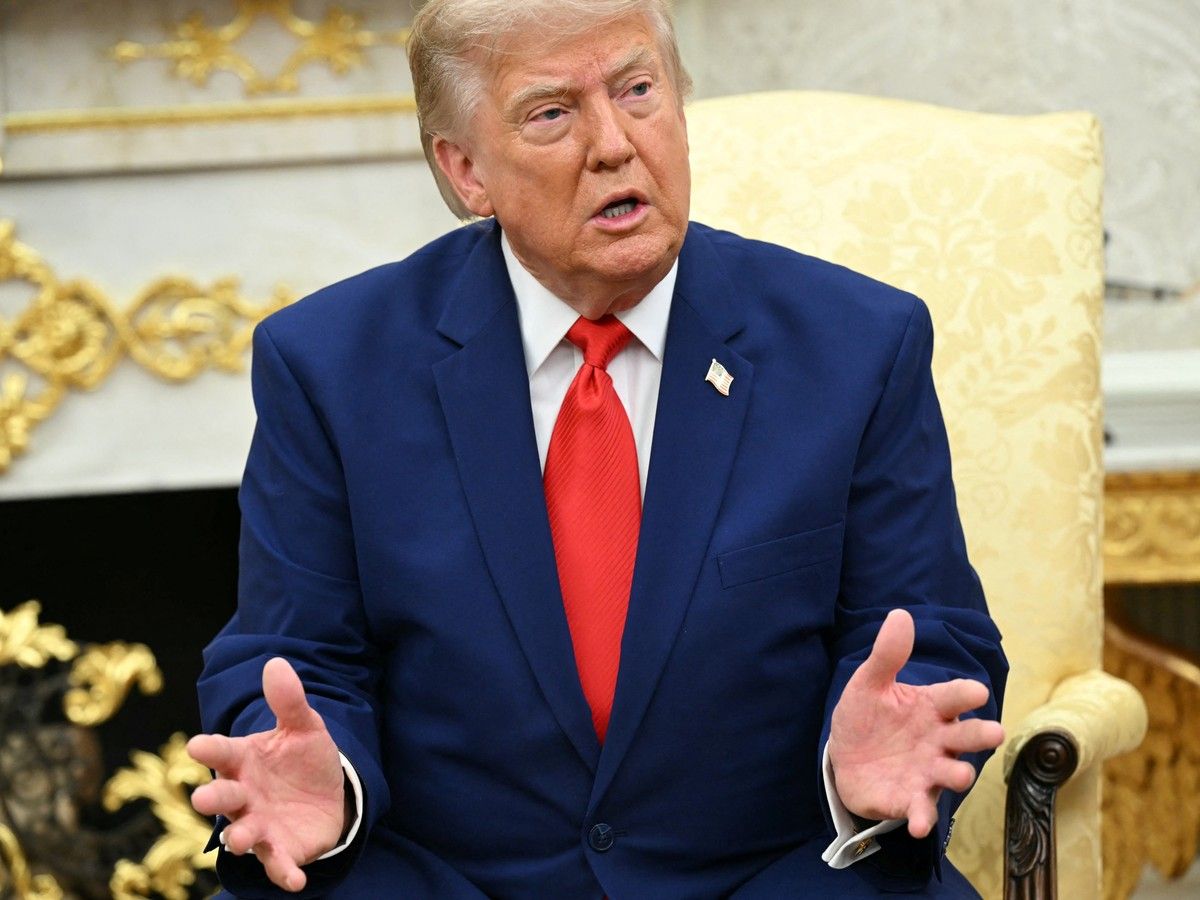
The White House has sent shockwaves through the Canadian trade landscape by invoking Section 338 of the Tariff Act of 1930—a never-before-used provision—to impose massive 50 per cent tariffs on over 400 Canadian products. Set to take effect on August 19, the move marks a significant escalation in cross-border tensions, targeting specific industries such as dairy, alcohol, and automotive components.
The Catalyst for Conflict
U.S. Trade Representative Jamieson Greer defended the aggressive measure, accusing Canada of maintaining discriminatory trade practices. The administration specifically cited Canada’s tariffs on U.S. automobiles, provincial liquor board boycotts of American alcohol, and long-standing dairy import barriers as the primary drivers for the retaliation. Unlike other allies, Greer argued, Canada has continued to resist efforts to rebalance trade in sectors sensitive to U.S. national security.
Leverage in the USMCA Era
Trade analysts suggest these tariffs are less about long-term policy and more about raw negotiating leverage. Following the U.S. decision not to renew the Canada-U.S.-Mexico Agreement (USMCA) on July 1, the deal has entered a phase of mandatory annual reviews for the next decade. Experts like Carrillo Obregon note that by targeting politically sensitive sectors—accounting for roughly five per cent of Canadian exports—the U.S. is applying surgical pressure to force concessions during these upcoming renegotiations.
Legal and Economic Uncertainty
While the administration views the move as a necessary tool for “fair and reciprocal trade,” critics question the legality of the maneuver. Andrew Hale of Advancing American Freedom suggested that regardless of the intended leverage, the invocation of Section 338 may lack a solid legal foundation. As both nations brace for the August deadline, the Canadian government finds itself on the defensive, navigating a precarious new chapter in North American trade relations.
Health
Canadian Premiers Demand Return to 50/50 Federal Health-Care Funding Split
Canadian premiers in Charlottetown demand Ottawa return to a 50/50 health-care funding split, citing aging populations and economic competitiveness.
Provincial Leaders Push for Historic Funding Model
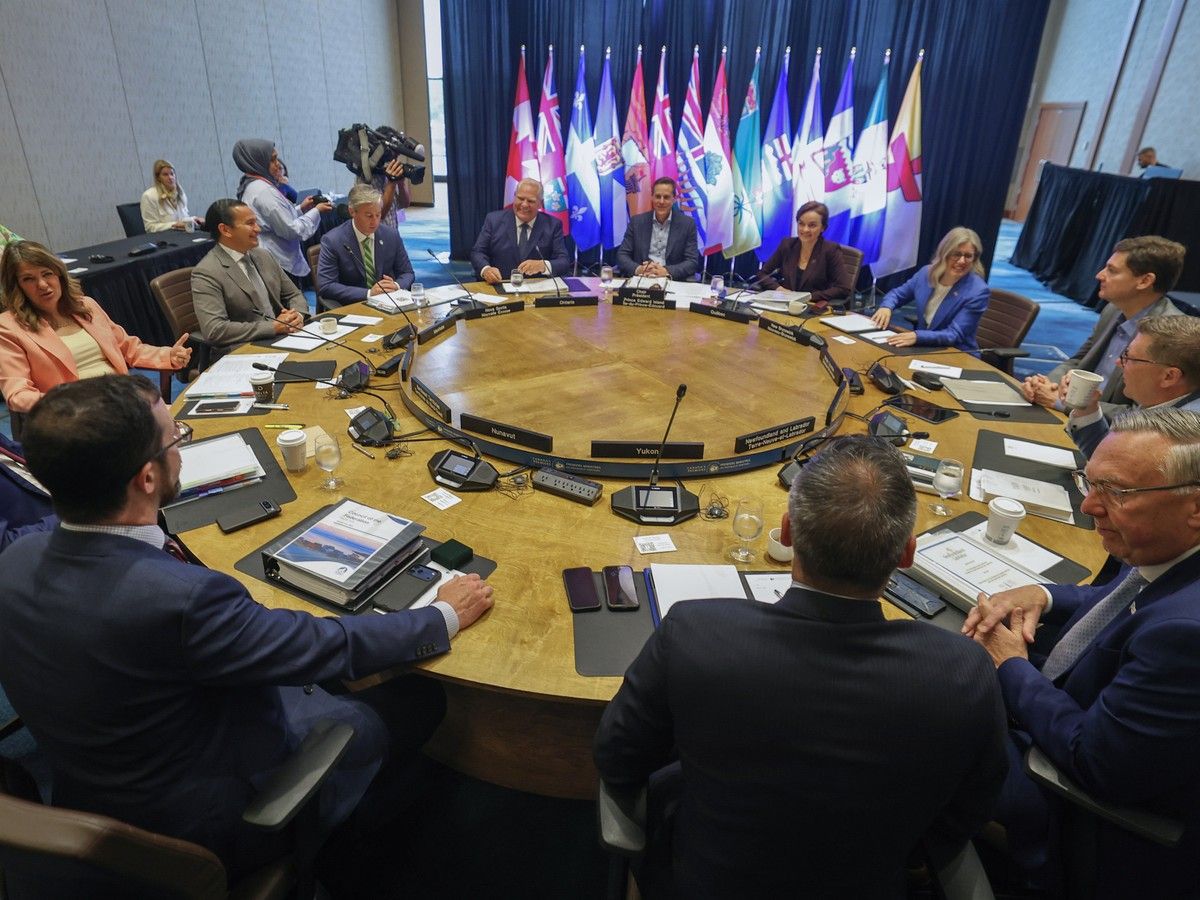
At a high-stakes summit in Charlottetown, Canada’s provincial leaders have reignited a long-standing battle with the federal government, demanding a return to a 50/50 cost-sharing model for health care. The premiers of Prince Edward Island, New Brunswick, and Manitoba are leading the charge, arguing that the current federal contribution is insufficient to sustain a modernizing and aging health-care system.
Historically, the federal government split health expenses equally with provinces until the 1970s, when the formula was adjusted in favor of tax points and block funding. Today, the Canada Health Transfer (CHT) accounts for roughly 22 per cent of provincial health expenditures. This disparity has become a critical point of friction, as health care now consumes between 30 and 40 per cent of total provincial budgets.
Economic Competitiveness and a National Vision
Manitoba Premier Wab Kinew framed the debate as a matter of national identity and economic strategy. Comparing the Canadian system to that of the United States, Kinew noted that public health care makes Canada a more attractive destination for business investment. “This is one of the reasons why businesses should realize that their investment in Canada is more competitive than putting those dollars to work in the States,” Kinew stated, emphasizing that employers in Canada face lower health-care overheads for their workforce.
P.E.I. Premier Rob Lantz echoed these sentiments, describing the health-care system as a “nation-building project.” For smaller provinces like P.E.I., the focus remains on workforce retention, recruitment, and improving access to primary care, all of which require a more robust and predictable influx of federal cash.
Addressing Chronic Needs and Aging Populations
New Brunswick Premier Susan Holt highlighted the demographic challenges facing her province, which deals with an older population and higher rates of chronic disease than the national average. Holt argued that the CHT must be adapted to recognize these specific needs. “We cannot grow our economy and invest in our defence sector… without that healthy workforce,” Holt said, calling for federal contributions to match those of the provinces.
While Ottawa has signed various 10-year bilateral health-care deals with provinces recently—such as Ontario’s $3.1-billion agreement—the premiers maintain that these localized fixes are no substitute for a fundamental restructuring of the core funding partnership.
Ezra Levant Pledges Strict Compliance as Tamara Lich Seeks International Travel Rights
Red Deer Ranks Third Highest for Crime in Canadian Metros Amid National Decline
Gordie Howe Bridge: Deciphering the High-Stakes Toll Revenue Deal Between Canada and the U.S.
Section 338 Shockwave: U.S. Hits Canada With 50% Tariffs on 400 Products
Canadian Premiers Demand Return to 50/50 Federal Health-Care Funding Split
BC Lions Scramble for QB Depth: Tyrie Adams Signed Following Nathan Rourke Injury

Opinion: John Rustad Has to Go

B.C. Supreme Court Grants Cowichan Tribes Title to Historic Richmond Lands and Fishing Rights

Vancouver Canucks Gear Up for a Make-or-Break 2025–26 Season

Province to Appeal Cowichan Tribes Land Decision

Kamloops Prepares Four Reverse Referendums on $188M in Major Projects

Kamloops Blazers Announce Off-Season Changes Ahead of 2025–26 Season
-
Local News2 weeks ago
Early Morning Shooting at Toronto Waterfront Leaves Three Injured, Five in Custody
-
business2 weeks ago
Mark Carney Defends Gordie Howe Bridge Revenue Split Amid ‘Capitulation’ Accusations
-
National News2 weeks ago
Senator Lindsey Graham Dies at 71: A Look at the Life of Trump’s Fiercest Ally and Foreign Policy Architect
-
Finance1 week ago
Bank of Canada Holds Rates Steady at 2.25% Amid Geopolitical Oil Volatility
-
WORLD2 weeks ago
Millions Across North America Face Historic Heatwave as Record Temperatures Shift East
-
Economy1 week ago
Global Energy Markets Brace as Iran Threatens Trade Routes Amid US Military Strikes
-
Economics2 weeks ago
Trump Reverses Hormuz Shipping Fee as US Reinstates Iran Port Blockade
-
Government Accountability2 weeks ago
Ontario Minister Stan Cho to Repay Over $16,000 in Disputed Toronto Hotel Expenses