BC STORIES
Kelowna General Hospital Launches $2.5M Emergency Care Revitalization Project
Kelowna General Hospital Foundation launches a $2.5M campaign to redesign its ER, reduce wait times, and enhance patient safety at the busy BC facility.


Enhancing Capacity at the Interior’s Busiest Hospital
Kelowna General Hospital (KGH), the second-busiest medical facility in British Columbia, is set for a significant transformation of its emergency department. The KGH Foundation has announced the launch of a $2.5 million fundraising campaign, titled “Give Where It Matters Most,” aimed at modernizing the hospital’s emergency room (ER) infrastructure and streamlining patient care. This initiative marks the final phase of the broader $40 million “Closer To Home” campaign, a multi-year effort to upgrade local healthcare services.
Targeting Triage and Patient Safety
The primary focus of the upgrades involves a complete redesign of the patient registration and triage areas. Currently, medical staff identify the triage phase as a critical period where patients are most vulnerable. By expanding triage capacity, the hospital aims to drastically reduce wait times and improve the speed of clinical assessments. Dr. Jared Baylis, an ER physician and the department’s medical director, noted that the redesign will also improve sightlines, allowing staff to monitor those in the waiting room more effectively and respond faster to deteriorating conditions.
Streamlining the Diagnostic Journey
Efficiency is a cornerstone of the new project. Beyond physical renovations, the funds will procure advanced diagnostic equipment, including two mobile ultrasound units and a dedicated ER laboratory area for electrocardiograms (ECGs). These additions are expected to eliminate the logistical confusion often experienced by patients as they navigate through triage, testing, and physician consultations. By centralizing these services within the emergency department, the hospital expects to create a more sequential and predictable care journey.
Meeting the Demands of a Growing Region
Last year alone, the KGH ER recorded over 101,000 patient visits. As the Okanagan region continues its rapid population growth, the strain on medical resources and staffing remains a persistent challenge. Lindsay Taberner, KGH executive director of clinical operations, emphasized that the site has identified these improvements as a priority for years. While recruitment efforts are ongoing to address staffing shortages, the physical upgrades are viewed as an essential step in supporting existing personnel and managing increasing demand. Construction on the revitalization project is slated to begin later this year, with a projected completion date in the fall of 2027.

BC STORIES
Public Help Needed to Identify Woman Found at Central Saanich Facility
Police seek public help to identify a woman found dead at a Central Saanich waste disposal facility on Oct. 13. Call VIIMCU at 250-380-6211 with information.


Investigation Underway After Body Discovered in Central Saanich
Major crime investigators are requesting assistance from the public to determine the identity of a woman whose body was located at a Central Saanich waste disposal site on the morning of Tuesday, Oct. 13.
After local officers initially responded to the scene, the Vancouver Island Integrated Major Crime Unit assumed leadership of the ongoing probe with support from Central Saanich police.
Physical Description Released by Authorities
The deceased individual is described as a woman in her 30s, standing approximately 5 feet 9 inches tall with a heavy build. She has brown hair featuring blonde highlights, as well as a distinct horizontal scar located on the inner side of her right forearm. Authorities noted that her race remains undetermined.
Anyone possessing information regarding the woman’s identity or who recognizes the provided description is asked to contact the VIIMCU information line at 250-380-6211.
BC STORIES
BC NDP Leader Defends Family Spot in $10-a-Day Childcare Program
BC NDP Leader David Eby defends his family’s $10-a-day childcare spot, outlining $3,200 in donations to offset costs amidst ongoing provincial program freezes.

Eby Explains Childcare Enrollment and Equivalent Donations
BC NDP Leader David Eby has confirmed his family benefited from British Columbia’s $10-a-day childcare initiative while the government paused expansions to new providers. Eby stated his child was already enrolled at the facility prior to its designation under the low-cost program.
To offset the government subsidy, Eby explained his family chose to donate the cost difference back to the provider so other local families could benefit. The BC NDP confirmed the family donated $3,200 between mid-2024 and early autumn, representing $400 monthly over eight months, with plans to contribute an additional $4,800 by the end of the year. Eby noted he did not feel his family required the benefit.
Program Caps and Political Opposition Reactions
The program was originally launched under former premier John Horgan in partnership with the federal government, targeting full universal $10-a-day childcare by 2028. However, Eby’s administration placed a three-year pause on expanding the initiative to new facilities this past spring. Currently, about 10 per cent of provincial childcare spaces carry the $10-a-day rate, while many parents across B.C. pay daily rates ranging from $40 to $100.
The Conservative Party of BC characterized Eby’s access to a scarce spot as shocking given the current waitlists, though candidate Margareta Dovgal noted no one begrudges the family’s success. Meanwhile, the BC Greens have pledged to end the freeze on new spaces and implement free universal child care by 2031.
BC STORIES
Will David Eby’s Early Election Call Deliver Results or Backfire?
B.C. NDP Leader David Eby defends his decision to call a snap election for Oct. 24 as critics question the strategic risk against a reunited opposition.

A High-Stakes Gamble on the Ice and in the Polls
During an October campaign stop at the Victoria Curling Club, B.C. NDP Leader David Eby joined candidate Richard Zussman to sweep stones across the sheet. The lighthearted moment comes at a tense period for the premier, who called a provincial election for Oct. 24—less than two years into his current mandate.
Eby triggered the snap vote on Sept. 22, shortly after the B.C. Conservatives appointed interim leader Lorne Doerkson following Kerry-Lynne Findlay’s resignation. Doerkson quickly brought back several MLAs who had briefly defected to CentreBC, stabilizing his party’s caucus. Despite recent polls showing the NDP behind the Conservatives, Eby defended his timing, stating his focus was on ensuring a functioning legislature and elected members who advocate for local priorities.
Reflecting on a Career Built on Risk
Eby has a long history of taking political risks. In 2011, he ran as a 33-year-old against former premier Christy Clark, narrowly losing before defeating her in a 2013 rematch. He later stepped back from a potential party leadership run when his wife, Cailey Lynch, became pregnant with their first child. The couple now has three children. Eby went on to manage prominent cabinet portfolios under late premier John Horgan before assuming the premier’s office in 2022.
Former law school friend Megan Leslie recalled Eby’s early activism, noting he co-founded the Social Activist Law Student Association at Dalhousie University, played in local bands, and joined Vancouver’s Pivot Legal Society and the B.C. Civil Liberties Association. Former colleagues described him as a driven advocate with strong leadership energy.
Critics Question Past Results and Future Outcomes
Former B.C. Liberal cabinet minister Mike de Jong warned that calling an early election while holding a one-seat majority could be viewed as tactical self-interest. He suggested that if the NDP loses, the decision could be seen as a major political mistake. Clark also offered a critical view, arguing that while Eby remains a formidable campaign opponent, he faces challenges in delivering policy results, highlighting the province’s projected $14-billion deficit.
When asked if he would remain party leader in the event of an election defeat, Eby refrained from giving a definitive answer, expressing confidence in British Columbia voters to determine the province’s path on election day.

Public Help Needed to Identify Woman Found at Central Saanich Facility

Canucks Drop Fifth Straight Game After 3-2 Defeat Against Islanders

BC NDP Leader Defends Family Spot in $10-a-Day Childcare Program

Will David Eby’s Early Election Call Deliver Results or Backfire?

Community Grief Deepens as Death Toll Hits Three in Tsawwassen Mall Crash
How Groomers Target Youth in Care and Why Experts Say Community Support Is Vital

Opinion: John Rustad Has to Go

B.C. Supreme Court Grants Cowichan Tribes Title to Historic Richmond Lands and Fishing Rights

Vancouver Canucks Gear Up for a Make-or-Break 2025–26 Season

Province to Appeal Cowichan Tribes Land Decision

Kamloops Prepares Four Reverse Referendums on $188M in Major Projects

Kamloops Blazers Announce Off-Season Changes Ahead of 2025–26 Season
-

 BC STORIES6 days ago
B.C. Voters Face October Election as Polls Show Shift in Party Support
-

 BC STORIES6 days ago
Defense Seeks 12 to 14 Years as Judge Weighs Sentence in Naramata Manslaughter Case
-

 BC STORIES7 days ago
Former MLA Brent Chapman and Kerry-Lynne Findlay Opt Out of B.C. Election
-
LOCAL6 days ago
Your Current 3 Day Forecast — October 9, 2026
-
 LOCAL6 days ago
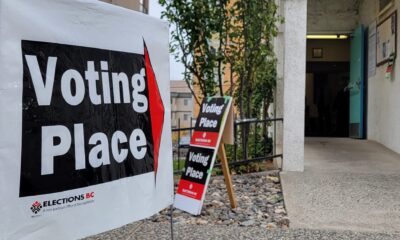
Who Is Running in Your Riding for the 2026 BC Election?
-

 BC STORIES6 days ago
Loss of Newborn Calf Puts Fresh Focus on Endangered Southern Resident Whales
-

 LOCAL7 days ago
Why a Kelowna council candidate’s humorous signs are attracting international attention
-
LOCAL7 days ago
Your Current 3 Day Forecast — October 8, 2026