POLITICS
Marc Miller Named New Culture Minister in Carney Cabinet Shuffle


Marc Miller Sworn In as New Culture Minister in Carney’s Cabinet Shuffle
Prime Minister Mark Carney appointed Montreal MP Marc Miller as Canada’s new minister of Canadian identity and culture on Monday, filling a key vacancy created by the sudden resignation of former minister Steven Guilbeault. The move comes amid heightened federal-provincial tensions following Ottawa’s new energy pact with Alberta and the announcement of a new oil pipeline to the British Columbia coast.
Guilbeault Resigns After Energy Pact Announcement
Guilbeault, who served prominently in the Trudeau and Carney governments, stepped down late last week but will remain a Liberal MP. His resignation followed fierce internal debate over the federal government’s decision to support the Alberta-Ottawa energy framework, a policy shift seen by critics as a departure from the party’s long-standing climate-first messaging.
During his time in cabinet, Guilbeault carried significant files including the Online Streaming Act and the Online News Act—two hallmark pieces of digital-platform legislation now facing growing pressure from the United States to be repealed.
Miller Returns to Cabinet With Expanded Responsibilities
Though Miller previously served in cabinet under former prime minister Justin Trudeau from 2019 to 2025, he had not been part of Carney’s initial team. His return now places him at the centre of a portfolio with renewed political stakes. In addition to culture and identity, Miller will also oversee official languages, a file with significant influence in Quebec and minority-language communities.
The appointment comes as the government continues to redefine the ministry’s mandate. With Carney creating a stand-alone artificial intelligence ministry, responsibilities surrounding digital regulation, copyright, and online harms are now split across multiple departments—raising questions about inter-ministerial cooperation.
Other Changes in the Cabinet Shuffle
- Joël Lightbound becomes Carney’s new Quebec lieutenant, replacing Guilbeault.
- Julie Dabrusin, Minister of Environment and Climate Change, will now oversee the nature portfolio.
- Ministers declined to take questions following the swearing-in ceremony at Rideau Hall.
A Government Facing Cross-Border Pressures
Miller inherits the role amid intensifying U.S. demands that Canada revise or abandon the two major online-platform laws introduced under Trudeau. The Carney government has yet to signal whether it will defend, amend, or dismantle the legislation—placing the new minister at the forefront of one of Ottawa’s most politically charged debates.


General
Canada Rescues Ailing Sport System with Historic $750 Million Federal Investment
The Canadian government pledges $750M to sport organizations to fix a funding crisis, improve safety, and boost youth participation across the country.


A Generational Shift in Canadian Sport Funding
In a move described as the most significant investment in two decades, the federal government has pledged more than $750 million to revitalize Canada’s struggling sports landscape. Announced by Finance Minister Fran”ois-Philippe Champagne during the spring economic update, the package aims to address a “widespread funding crisis” that has left national sport organizations (NSOs) stagnant and athletes vulnerable for over twenty years.
The centerpiece of the announcement is a $660 million commitment over five years, with $110 million in ongoing annual support. This funding is primarily targeted at NSOs to bolster participation among children and youth, specifically within underrepresented communities. For the Canadian Olympic Committee (COC) and Canadian Paralympic Committee (CPC), the news represents a hard-fought victory after years of warning that the system was on the brink of collapse.
Addressing the Safe Sport Crisis
The massive cash injection follows the harrowing final report from the Future of Sport in Canada Commission. The two-year study was launched after a wave of reports concerning abuse, maltreatment, and toxic environments within high-performance athletics. The commission concluded that underfunding was a direct contributor to unsafe environments, as organizations lacked the resources to implement proper governance and safeguarding measures.
To combat this, $45 million has been earmarked specifically for athlete welfare, including mental health support and enhanced safe sport protocols. Minister Champagne emphasized that the goal is to create a “Canada for all,” where participation is accessible and, most importantly, safe for every participant regardless of their level of competition.
Modernizing the Competitive Landscape
Beyond grassroots participation and safety, the government is allocating $50 million to attract world-class sporting events to Canadian soil. These funds are tied to “legacy-building” infrastructure projects, ensuring that major international competitions leave behind facilities that serve local communities for years.
However, the new funding comes with strings attached. The federal government has signaled that NSOs must modernize their business models, seeking private-sector partnerships and exploring amalgamations to share resources. COC CEO David Shoemaker noted that this investment “levels the playing field” as Canadian athletes prepare for the LA28 Summer Olympics, allowing them to focus on training rather than the threat of rising personal debt.
Economics
Cracks in the Kremlin’s Armor: Rising Dissent and Economic Strains Challenge Putin’s Status Quo
Russian influencers and loyalists voice rare public dissent as economic stagnation and internet restrictions drive Putin’s approval ratings to multi-year lows.
The Rise of Influencer Criticism
In a surprising shift within Russia’s tightly controlled media landscape, popular influencers are increasingly using their platforms to voice public grievances directly to President Vladimir Putin. A 19-minute video by blogger Victoria Bonya, which garnered over 31 million views on Instagram, highlighted local government failures, agricultural crises, and the suffocating impact of internet restrictions. While Bonya maintained her support for the President, her message was clear: Putin is being kept in the dark by fearful officials while ordinary citizens are being ‘robbed’ of their livelihoods.
Economic Reality and Declining Approval
The Kremlin is facing a double-edged sword of economic stagnation and public fatigue. Following a period of artificial growth driven by military spending, Russia’s GDP shrank by 1.8% in early 2024. High interest rates and depleted reserves have forced the central bank into a defensive posture, directly impacting small businesses and household income. This economic downturn is reflected in recent polling data; state-controlled VTsIOM reported Putin’s approval ratings at 65.6%, a significant drop from the 77.8% recorded in late 2025. Analysts suggest that while these numbers are still high, they represent the lowest baseline since the invasion of Ukraine began.
Digital Iron Curtain and the ‘Max’ Migration
Public frustration has also been fueled by aggressive internet censorship and frequent cellular shutdowns, which the Kremlin justifies as anti-terror measures against Ukrainian drone strikes. The government is currently pushing a state-backed messaging app called ‘Max,’ which critics view as a surveillance tool designed to replace popular platforms like WhatsApp and Telegram. Despite multiple attempts to organize protests and file class-action lawsuits against these digital restrictions, the Kremlin appears resolute, with Putin insisting the measures are necessary for national security.
The Stalled Peace Process
Adding to the domestic pressure is the realization that the war in Ukraine, now in its fifth year, has no clear end in sight. Hopes for a swift resolution following the 2025 U.S. election have largely evaporated as peace negotiations stalled. According to experts from King’s College London, this dashed expectation has become ‘priced into’ public opinion, leading to a weary and increasingly vocal populace. While the Kremlin remains in firm control, the effort required to maintain the status quo is growing exponentially, testing the limits of Putin’s long-term stability.
POLITICS
Security Under Fire After Failed Assassination Attempt at White House Correspondents’ Dinner
Security questions arise after Cole Tomas Allen’s assassination attempt on Trump at the White House Correspondents’ dinner. Read the full details of the breach.
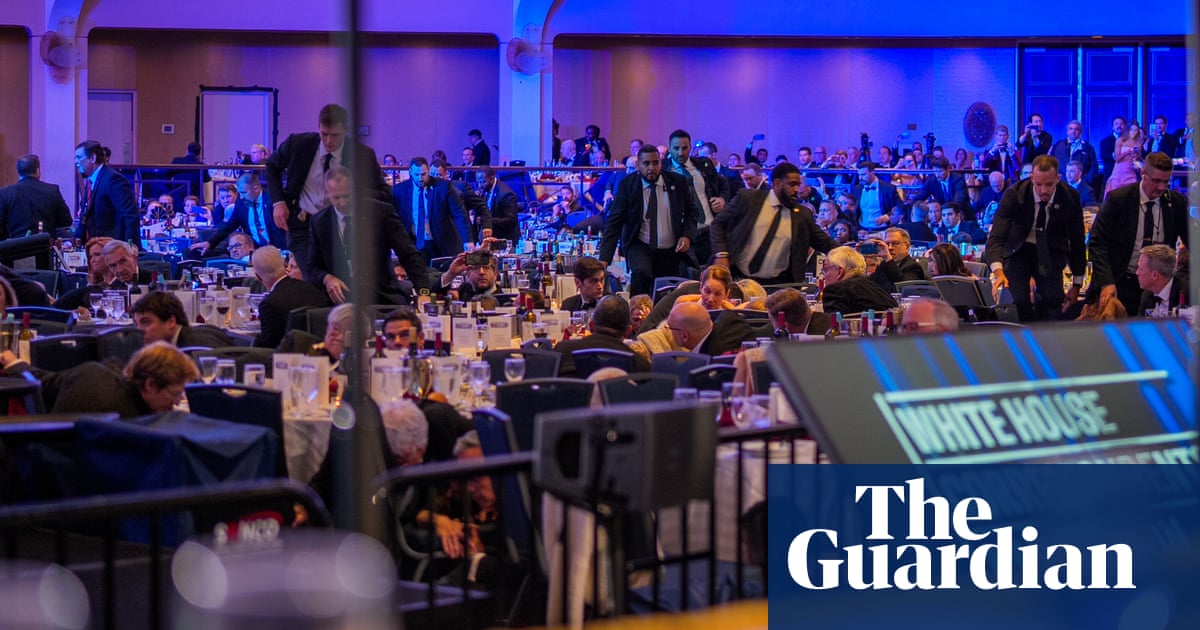
A Major Security Breach at the Washington Hilton
The annual White House Correspondents’ Association dinner, typically a night of levity and political socialite gathering, was thrown into chaos following an assassination attempt on President Donald Trump. While law enforcement successfully neutralized the threat, the incident has sparked a firestorm of criticism regarding the security protocols at the Washington Hilton. The suspect, identified as 31-year-old Caltech graduate Cole Tomas Allen, allegedly entered the venue with multiple weapons, exposing vulnerabilities in what was supposed to be a high-security perimeter.
The Shooter’s Manifesto and Security Failures
In a manifesto sent to his family just ten minutes before the assault, Allen reportedly mocked the “insane” lack of security at the event. He claimed to have entered the building with multiple firearms without being challenged, writing, “Not a single person there considers the possibility that I could be a threat.” Acting Attorney General Todd Blanche confirmed that investigators believe Allen was specifically targeting administration officials, including the President. Despite the hotel being closed to the public six hours prior to the event and the use of airport-style metal detectors, Allen’s ability to remain within the building as a guest prior to the lockdown appears to have been the fatal flaw in the Secret Service’s plan.
Lawmakers Demand Accountability
The incident has prompted immediate calls for a congressional investigation. Republican lawmakers, including Representative Mike Lawler, are pushing for a dedicated House committee to probe the Secret Service’s performance. Lawler noted that the suspect could have caused “mass casualties” at any of the pre-dinner receptions. While Secret Service Director Sean Curran defended the agency’s “multi-layered protection,” noting that the only injury sustained was by an officer protected by a bullet-proof vest, the fact that a gunman came within range of the nation’s top leaders has left many unconvinced.
Political Fallout and the White House Ballroom
President Trump has already utilized the security breach to advocate for the construction of a new 1,000-seat ballroom within the White House perimeter. He criticized the Hilton as an insecure venue, arguing that a dedicated, bullet-proof facility is essential for national security. Meanwhile, the shooting has reignited debates over FISA surveillance renewals and government funding for the Secret Service. As the investigation continues, the focus remains on how a single individual could exploit the “public accommodation” status of a private hotel to bypass the most elite security detail in the world.
Canada Rescues Ailing Sport System with Historic $750 Million Federal Investment
From Alberta to Orbit: Canadian Astronaut Joshua Kutryk Prepares for Landmark ISS Mission
Edmonton Stays Alive: Oilers Blitz Dostal with Three-Goal First Period Outburst
Hockey World Mourns the Loss of Legendary Canucks Broadcaster John ‘Cheech’ Garrett
The AI Addiction Crisis: New Research Links Chatbot Design to Behavioral Dependency
Oilers on the Brink: McDavid and Dickinson Uncertain for Must-Win Game 5

Opinion: John Rustad Has to Go

B.C. Supreme Court Grants Cowichan Tribes Title to Historic Richmond Lands and Fishing Rights

Vancouver Canucks Gear Up for a Make-or-Break 2025–26 Season

Kamloops Prepares Four Reverse Referendums on $188M in Major Projects

Province to Appeal Cowichan Tribes Land Decision

Kamloops Blazers Announce Off-Season Changes Ahead of 2025–26 Season
-
Economy2 weeks ago
Canada Launches One-Time Grocery Benefit: Here is How Much You Could Receive on June 5
-
Celebrity News2 weeks ago
Zach Galifianakis Swaps Hollywood for the Quiet Life on a Remote British Columbia Island
-
General2 weeks ago
Ontario Government Sparks Outrage with $28.9 Million Private Jet Purchase for Premier Doug Ford
-
business2 weeks ago
Prime Minister Carney Unveils $1 Trillion Investment Summit to Combat Decadelong Capital Flight
-
British Columbia2 weeks ago
Okanagan Residents Face Frigid Weekend as Major Gas Outage Disconnects Thousands
-
Celebrity News1 week ago
Katy Perry and Justin Trudeau Plan Lavish Paris Wedding Amidst Relationship Whirlwind
-

 OPINIONS2 weeks ago
BC Conservative Leadership Race: 24 Hours to Go
-
Aviation2 weeks ago
Aviation Crisis Looms: Europe Down to Final Six Weeks of Jet Fuel Reserves