International Relations
Middle East Conflict Escalates: Iranian Medicine Plants Hit as Israel Prepares for Extended Campaign
US-Israeli strikes hit Iranian pharmaceutical plants and religious sites as Israel prepares for weeks of more fighting. Tensions rise across the Gulf region.


A New Phase of Regional Conflict
The conflict in the Middle East reached a critical inflection point on Tuesday as a series of coordinated US and Israeli airstrikes targeted essential infrastructure across Iran. Among the most significant developments is the reported strike on a major pharmaceutical facility owned by the Social Security Investment Company. The Iranian government confirmed that the plant, which is a primary producer of anesthesia and specialized cancer medications, suffered extensive damage to its production lines. Tehran has labeled the incident an attack on civilian centers, signaling a potential shift in the humanitarian landscape of the war.
Military Readiness and Strategic Strikes
In Tel Aviv, military officials signaled that the campaign against Iran is far from over. Lieutenant Colonel Nadav Shoshani informed reporters that the Israel Defense Forces are prepared for several more weeks of sustained operations. This announcement follows Prime Minister Benjamin Netanyahu’s assessment that the war has passed its halfway point. According to Shoshani, the military possesses the necessary munitions, manpower, and target lists to maintain pressure, pending further political directives. Beyond industrial targets, state media in Iran reported damage to the Grand Husseiniya in Zanjan, a prominent Shia religious site, adding to a growing list of damaged cultural and UNESCO-listed heritage sites.
Collateral Damage in the Gulf
The ripples of the conflict are being felt acutely by neighboring nations. In Dubai, Emirati officials reported that four Asian nationals sustained minor injuries after debris from a successful drone interception fell on residential houses. Similarly, Saudi Arabia’s Kharj province saw injuries and property damage from falling shrapnel. These incidents highlight the persistent risk to non-combatant states as regional air defenses work to neutralize incoming threats.
Diplomatic Shifts and Maritime Corridors
Amid the violence, China appears to be navigating a complex diplomatic path. Beijing expressed gratitude after three Chinese vessels successfully transited the Strait of Hormuz—a waterway currently restricted by Iranian naval activity. While China and Pakistan prepare for bilateral talks to facilitate a potential diplomatic end to the war, Indonesia has issued a scathing condemnation of recent Israeli operations in southern Lebanon. The statement followed the deaths of Indonesian UN peacekeepers, which Jakarta described as an ‘unacceptable’ consequence of a rapidly deteriorating security environment.

business
Mark Carney Defends Gordie Howe Bridge Revenue Split Amid ‘Capitulation’ Accusations
Prime Minister Mark Carney defends the new Gordie Howe Bridge revenue deal with the U.S. amid criticism of capitulation to the Trump administration.
A Contentious Opening for Canada’s Newest Border Link
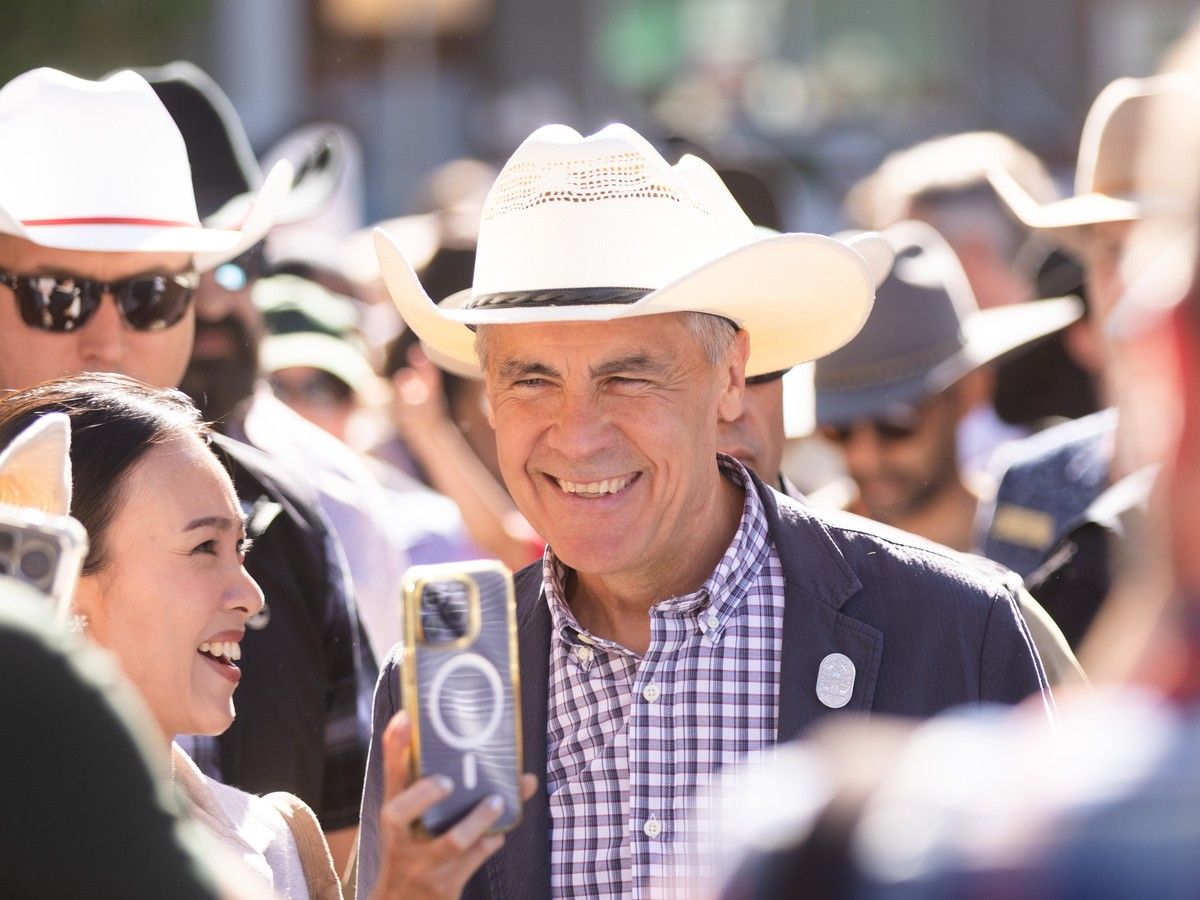
Prime Minister Mark Carney is pushing back against growing criticism over a revised revenue-sharing agreement for the Gordie Howe International Bridge. Speaking from the Calgary Stampede on Sunday, Carney defended the deal as a necessary step for economic expansion, despite accusations from political opponents that the government caved to pressure from the Trump administration.
The $6.4-billion bridge, which connects Windsor, Ontario, with Detroit, Michigan, is officially scheduled to open on July 27. The project was entirely funded by Canada, and under the original 2012 agreement, Canada was slated to collect all toll revenues until its construction costs were fully recouped. However, the new terms include a profit-sharing mechanism with the United States that has sparked a domestic political firestorm.
The ‘Net’ Revenue Defense
Addressing the revised financial structure, Carney emphasized that Canada will still prioritize debt recovery. “The word ‘net’ does a lot of work in this,” Carney told CTV. “We get the revenues. Then the servicing of the costs of the bridge and paying the debt of the bridge, and then what’s left over, there’s a split of that for 15 years.”
Carney argued that the funds allocated to an economic development fund on the U.S. side would ultimately benefit Canada by driving more traffic to the crossing. He dismissed the idea that Canada was losing out, asserting that after costs are covered, there would likely be very little “net” profit left to split, making it a “good deal for Canada” in the long term.
Political Backlash and Trump’s Influence
The deal has been met with sharp condemnation from Conservative MPs. Andrew Lawton labeled the agreement a “capitulation,” while Calgary Heritage MP Shuv Majumdar called it a “terrible deal,” demanding the full release of the agreement’s text before the bridge opens. Critics point to the timing of the renegotiation, which followed public threats from Donald Trump to block the bridge’s opening unless the U.S. was “fully compensated.”
While Trump took to Truth Social to claim credit for securing a “MUCH BETTER DEAL” for America, the Carney government maintains that the priority was ensuring the vital trade artery opened without further delay. The bridge serves as a critical link for the North American supply chain, and officials argue that the economic cost of a blocked border would far outweigh the concessions made in the revenue split.
International Relations
Trump Holds High-Stakes Calls With Putin and Zelenskyy as NATO Summit Looms
President Trump holds extensive talks with Putin and Zelenskyy to broker a Ukraine peace deal ahead of the NATO summit, despite conflicting battlefield reports.

A Diplomatic Push on Independence Day
In a significant escalation of diplomatic activity, U.S. President Donald Trump engaged in extensive telephone discussions with both Russian President Vladimir Putin and Ukrainian President Volodymyr Zelenskyy on Saturday. The 90-minute call with Putin, which took place on the U.S. Independence Day holiday, centered on a potential resolution to the ongoing conflict in Ukraine. Kremlin aide Yuri Ushakov described the exchange as “business-like and quite constructive,” noting that Trump offered his assistance in brokering a deal ahead of next week’s pivotal NATO summit in Turkey.
Conflicting Narratives on the Battlefield
While diplomatic channels remain open, the situation on the ground remains a point of intense contention. During the call, Putin reportedly characterized the Russian military as “confidently advancing” and claimed the capture of the strategically vital city of Kostiantynivka in the Donetsk region. However, President Zelenskyy and the Ukrainian General Staff have flatly dismissed these assertions, maintaining that Kyiv’s forces continue to hold the city. This discrepancy highlights the immense difficulty in establishing a common factual ground for negotiations, as Russia continues to demand full control over the Donbas region—a condition Ukraine has repeatedly rejected.
The Role of U.S. Envoys and Global Context
Despite the current U.S. diplomatic focus on the conflict with Iran, Trump reportedly signaled that his special envoys, Steve Witkoff and Jared Kushner, are prepared to continue their mediation efforts, including potential return visits to Moscow. Zelenskyy expressed optimism following his own conversation with Trump, describing the prospect of ending the war as “real” and emphasizing that American resolve would be the deciding factor in the coming months. Both leaders are expected to continue these high-level discussions in person at the upcoming NATO gathering.
Accusations and Escalation Risks
The path to peace is further complicated by harsh rhetoric from the Kremlin. Ushakov recently accused Kyiv and its European backers of seeking to escalate the conflict, pointing specifically to Ukraine’s long-range strikes on Russian oil infrastructure which have caused regional fuel shortages. As Russia maintains its “political-diplomatic” stance based on its own territorial claims, the international community remains watchful of whether Trump’s intervention can bridge the deep-seated divide between the two warring nations.
Defense
Carney Heads to Ankara for High-Stakes NATO Summit Focused on ‘Managing’ Trump
Prime Minister Mark Carney travels to Turkey for a scaled-back NATO summit aimed at managing relations with Donald Trump and deepening Middle East trade ties.

A Strategic Sojourn to the Middle East
Prime Minister Mark Carney is set to arrive in Ankara this Monday, marking the first visit by a Canadian leader to Turkey since 2015. The visit serves as the opening leg of a week-long diplomatic mission to the Middle East, which will later see the Prime Minister travel to Saudi Arabia to bolster trade and investment ties. However, the immediate focus remains on the July 7-8 NATO summit—a gathering that experts describe as a carefully curated effort to maintain alliance stability amid unpredictable geopolitical shifts.
The ‘Short and Sweet’ Strategy
This year’s summit has been notably scaled back, reduced from the traditional multi-day affair to a single dinner and a concentrated working session. Former Canadian ambassador to NATO, Kerry Buck, suggests the abbreviated format is a deliberate attempt to avoid the “drama” often associated with U.S. President Donald Trump. “This year’s meeting is primarily about managing the U.S. and keeping President Trump committed to the alliance,” Buck noted. Paradoxically, hosting the event in Turkey may provide a stabilizing effect, as the U.S. President has historically shown more affinity for strongman-style leaders like Recep Tayyip Erdogan than for traditional Western allies.
Defense Spending and Industrial Cooperation
A central theme of the summit will be the “credible” defense spending plans demanded by NATO Secretary-General Mark Rutte. Allies are under pressure to reach a five per cent of national GDP target by 2035. Canadian officials indicated that Carney will use the summit to highlight Canada’s progress in defense financing. Beyond the alliance-wide talks, the bilateral relationship between Ottawa and Ankara is under the spotlight. Despite a history of friction over the Armenian genocide recognition and past arms embargoes, there are signs of a thaw. Turkey has expressed significant interest in Canadian nuclear technology to reduce its reliance on Russian energy, while Canada views Turkey as an emerging market for agriculture, mining, and infrastructure.
Navigating a Flawed Democracy
The warming ties come despite Turkey’s domestic challenges, including high inflation and crackdowns on journalists and LGBTQ+ activists. Former military attaché Chris Kilford notes that while Canada continues to grant asylum to Turkish dissidents—a point of contention for Ankara—Turkey remains a vital regional actor. Its unique ability to maintain relative stability amid conflicts in Ukraine, Syria, and Iran makes it an indispensable, if complicated, partner for the Carney government’s four-pillar strategy of energy, trade, security, and people-to-people ties.

Where Provincial Jobless Rates Stood in September
What New Brunswick’s Latest Unemployment Figures Mean for Your Community

Who Is Running in Your Riding for the 2026 BC Election?

How Central Okanagan Residents Can Avoid Costly Household Plumbing Damage This Thanksgiving

BC Supreme Court Judge Set to Rule on Sentence Length for Former Gang Member

Loss of Newborn Calf Puts Fresh Focus on Endangered Southern Resident Whales

Opinion: John Rustad Has to Go

B.C. Supreme Court Grants Cowichan Tribes Title to Historic Richmond Lands and Fishing Rights

Vancouver Canucks Gear Up for a Make-or-Break 2025–26 Season

Province to Appeal Cowichan Tribes Land Decision

Kamloops Prepares Four Reverse Referendums on $188M in Major Projects

Kamloops Blazers Announce Off-Season Changes Ahead of 2025–26 Season
-

 LOCAL7 days ago
Have You Seen Him? Public Help Sought in Locating Missing Traveller Last Seen in Kamloops
-

 BC STORIES7 days ago
Why a Familiar Political Name is Joining the Kamloops-North Thompson Race
-
LOCAL6 days ago
Your Current 3 Day Forecast — October 4, 2026
-
 LOCAL6 days ago
Two Displaced as Investigators Eye Suspicious Four-Plex Fire in Kelowna
-

 COMMUNITY4 days ago
Why Okanagan Pet Owners Turned to Free BC SPCA Clinics After Wildfire Season
-

 OPINIONS3 days ago
B.C. Election Poll Puts Conservatives Ahead Five Points as Cost of Living Tops Voters’ Concerns
-
 BC STORIES3 days ago
B.C. Patients Could Soon Select Surgical Lists Based on Wait Times Under NDP Plan
-
LOCAL3 days ago
Your Current 3 Day Forecast — October 7, 2026