Science
NASA Greenlights Artemis II: Moonbound Astronauts Set for Historic April Launch
NASA targets April 1 for the Artemis II mission, sending four astronauts around the moon. Learn about the launch window, crew, and technical updates.

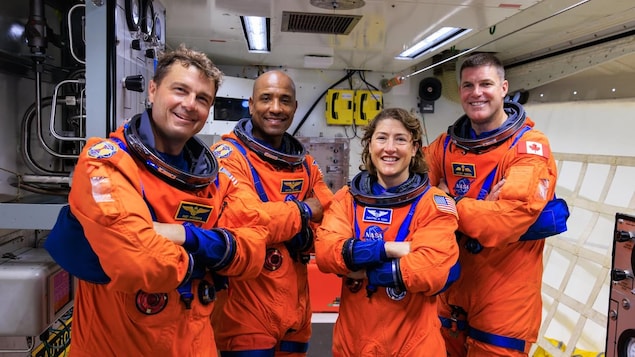
Final Preparations Underway for Crewed Lunar Return
NASA has officially confirmed that the highly anticipated Artemis II mission is on track to launch as early as April 1. Following a comprehensive Flight Readiness Review (FRR), mission leaders announced that all teams have polled as a “go” for launch, marking a critical milestone in humanity’s return to the lunar vicinity. This mission will be the first time in over 50 years that humans have traveled to the moon, serving as a vital test of the Space Launch System (SLS) and the Orion spacecraft’s life-support capabilities.
Addressing Technical Hurdles and Hardware Readiness
The journey to the launch pad has not been without its challenges. Initial timelines were shifted following technical setbacks during wet dress rehearsals, where engineers identified hydrogen leaks and helium flow issues within the upper-stage engines. After rolling the massive SLS rocket back to the Vehicle Assembly Building (VAB) in late February, NASA teams successfully addressed these anomalies, installed fresh batteries, and retested the flight termination systems. Lori Glaze, acting associate administrator, emphasized the inherent risks of the flight, noting that as a test mission, safety remains the paramount priority despite the hardware’s current readiness.
The Crew and the Path Ahead
The four-person crew—NASA astronauts Reid Wiseman, Victor Glover, and Christina Koch, alongside Canadian Space Agency astronaut Jeremy Hansen—is preparing for the final phase of pre-launch protocols. The team will enter medical quarantine on March 18 to ensure their health before traveling to the Kennedy Space Center on March 27. With a launch window now extending from April 1 through April 6, the mission represents a collaborative international effort to establish a sustainable presence in deep space.
Strategic Shifts in the Artemis Program
As NASA refines its approach to lunar exploration, Administrator Jared Isaacman recently clarified a shift in the program’s roadmap. While Artemis II focuses on a crewed flyby, Artemis III will now serve as a docking test mission with lunar landers developed by SpaceX and Blue Origin, rather than a surface landing. This strategic pivot ensures that all docking and orbital maneuvers are perfected before the agency commits to the first human lunar landing of the 21st century.

Environment
The Rising Tide of Ticks: Why Canada Faces a Growing Threat of Lyme Disease and Beyond
Explore why tick populations are surging in Canada due to climate change and urban growth, and learn about the rising threat of Lyme disease and red meat allergies.
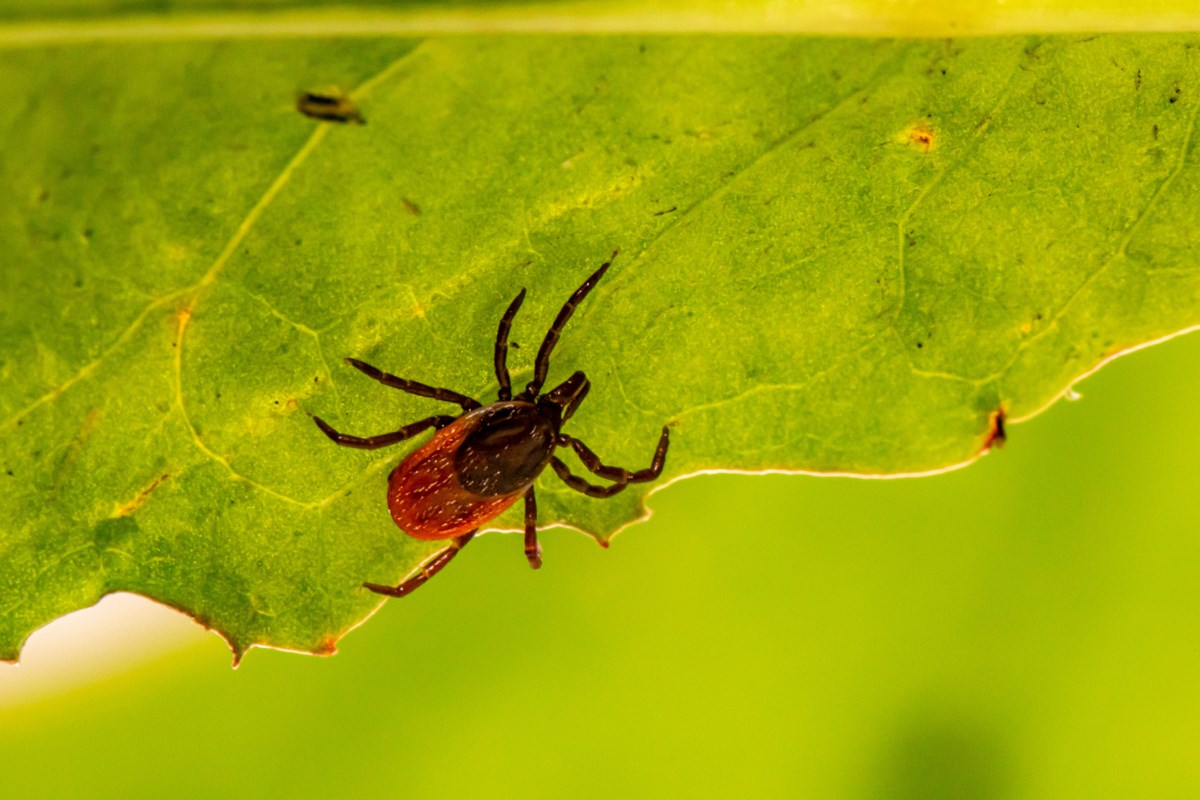
A Personal Battle Becomes a Scientific Mission
Fifteen years ago, Vett Lloyd, a professor of biology at Mount Allison University, was told by public health officials that ticks simply did not exist in her home province of New Brunswick. Her own diagnosis with Lyme disease proved those claims false, sparking a career dedicated to understanding how these parasites are spreading across the Canadian landscape. Today, Lloyd’s research highlights a grim reality: tick populations and the diseases they carry are skyrocketing across the country.
The Role of Climate Change and Urban Development
The surge in tick activity is largely driven by shifting environmental factors. Traditionally, Canada’s long, harsh winters acted as a natural check on tick populations, starving them out as snow cover prevented them from finding hosts. However, global warming has led to more variable weather and less consistent snow cover. Ticks are opportunistic; they do not hibernate and will emerge to feed whenever temperatures rise, leading to much earlier and more intense seasons. Furthermore, the expansion of green, moist suburban areas has created the perfect habitat for rodents and other wildlife that carry ticks, bringing the threat directly into Canadian backyards.
The Hidden Scale of the Crisis
While official data from the Public Health Agency of Canada shows cases of Lyme disease rising from 143 in 2010 to over 7,000 by 2025, experts believe these numbers are a vast underestimation. Many cases go unreported due to a lack of diagnostic access or the difficulty of spotting a tick bite. Scientists estimate there has been a tenfold increase in infections over the last decade, with a significant portion of patients developing chronic illnesses that result in long-term fatigue, aches, and cognitive impairment.
New Threats on the Horizon
It isn’t just Lyme disease that Canadians need to worry about. Warmer regions like Southern Ontario are seeing the emergence of Lone Star and Gulf Coast ticks, which were previously unable to survive Canadian winters. These species can trigger ‘Alpha-gal syndrome,’ a severe red meat allergy caused by a reaction to tick saliva. As the climate continues to shift, researchers at Mount Allison University are working on rapid home-testing kits to help Canadians detect pathogens early and mitigate the growing economic and personal impact of these tick-borne illnesses.
Astronomy
Celestial Fireworks: Venus Disappears Behind the Moon in Rare June Lunar Occultation
Discover June’s top astronomical events, including a rare Venus lunar occultation, the summer solstice, and a spectacular planetary conjunction in the night sky.

A Rare Celestial Disappearance
Stargazers are in for a rare treat this June as Venus, the brightest planet in our night sky, is set to perform a dramatic vanishing act. On June 17, observers in specific regions of North and South America will witness a lunar occultation, a phenomenon where the Moon passes directly in front of Venus. This event effectively hides the planet from view before it re-emerges on the opposite side of the lunar disk, providing a unique opportunity to witness the celestial mechanics of our solar system in real-time.
The Planetary Parade
The occultation is only one part of a busy month for astronomical events. The first half of June features a stunning planetary conjunction between Venus and Jupiter. By June 9, these two ‘evening stars’ will appear remarkably close in the western sky. While they remain millions of miles apart in reality, their alignment along the ecliptic path makes them appear as a brilliant pair from our terrestrial vantage point. Between June 11 and 15, the elusive Mercury will join the duo, creating a triple-planet lineup low on the horizon just after sunset.
Welcoming the Summer Solstice
June also marks a pivotal point in Earth’s orbit: the summer solstice. Occurring on June 21 at 1:24 a.m. PT, the solstice signals the official start of astronomical summer in the Northern Hemisphere. This day provides the maximum amount of daylight for the year. Interestingly, while it is the longest day, it does not always align with the earliest sunrise or latest sunset due to the tilt and elliptical orbit of the Earth, a quirk of orbital mechanics that varies by latitude.
Deep-Sky Treasures Emerge
As the month progresses and the ‘Summer Triangle’—comprised of the stars Vega, Altair, and Deneb—rises into view, deep-sky observers can turn their attention to more distant wonders. This region of the Milky Way is home to iconic targets like the Dumbbell Nebula and the Ring Nebula. The Dumbbell Nebula, or Messier 27, was the first planetary nebula ever discovered and represents the glowing remains of a dying star. Whether you are watching a planet vanish behind the Moon or peering into the depths of a nebula, June offers a wealth of reasons to look up.
Environment
Invasive Mosquitoes Carrying Brain-Swelling Virus Detected in B.C. Sea-to-Sky Region
B.C. health officials detect invasive mosquitoes and the California serogroup virus in the Sea-to-Sky region following a cluster of childhood encephalitis cases.

Investigation Sparked by Pediatric Cases
Health officials in British Columbia have confirmed the presence of invasive mosquitoes and a concerning virus capable of causing brain swelling in the Sea-to-Sky corridor north of Vancouver. The investigation was launched by the B.C. Centre for Disease Control (BCCDC) following a cluster of three pediatric encephalitis infections reported in the region in August 2024. Researchers concentrated their efforts between Squamish and Pemberton to identify the source of the rare infections.
California Serogroup Virus Identified
Anya F. Smith, a senior scientist with the BCCDC, stated that researchers discovered two mosquito species testing positive for the California serogroup virus. This group of pathogens is known to cause serious neurological conditions in humans, including encephalitis and meningitis. Among the carriers identified was the northern house mosquito, a species native to Africa, Asia, and Europe that has successfully established itself as an invasive species in British Columbia.
Impact of Climate Change on Disease Transmission
While the detected virus levels were low—preventing the team from confirming a specific strain—the findings are seen as a critical baseline for public health preparedness. Stefan Iwasawa of the BCCDC emphasized that rising temperatures due to climate change are expected to increase human exposure to various mosquito species. Understanding which species are present and what viruses they carry is essential for developing effective prevention and response strategies in a changing environment.
Assessing the Public Risk
Despite the detection, health authorities including Vancouver Coastal Health and the University of B.C. maintain that the current risk of serious illness remains low. Historical data shows only 15 known cases of California serogroup virus in B.C. between 2009 and 2024, with no new cases reported in the Sea-to-Sky corridor so far in 2025. Officials continue to monitor the situation while advising the public to take standard precautions against mosquito bites during the warmer months.
The End of an Era: CBC to Stop Airing NHL Games as ‘Hockey Night in Canada’ Leaves Free TV
Mark Carney Hails U.S.-Iran Framework as ‘Game Changer’ for Global Stability
Rory McIlroy Warns Against ‘Track 2’ Demotion for Historic Canadian Open
FBI Thwarts Explosive Drone Plot Targeting UFC Event at White House
New Era for Indigenous Rights? Liberals Unveil Revamped Clean Water Legislation
Tragedy at Skeleton Bridge: Brazilian Authorities Investigate Fatal Rope Jump Error

Opinion: John Rustad Has to Go

B.C. Supreme Court Grants Cowichan Tribes Title to Historic Richmond Lands and Fishing Rights

Vancouver Canucks Gear Up for a Make-or-Break 2025–26 Season

Province to Appeal Cowichan Tribes Land Decision

Kamloops Prepares Four Reverse Referendums on $188M in Major Projects

Kamloops Blazers Announce Off-Season Changes Ahead of 2025–26 Season
-
POLITICS2 weeks ago
New Global Trade War: Trump Administration Targets Canada and EU with Fresh Tariffs Over Forced Labor Claims
-
POLITICS2 weeks ago
Canada Unveils Massive $2B National AI Strategy to Secure Digital Sovereignty
-
Music News2 weeks ago
Céline Dion and Music Icons Mourn the Loss of Ballad Legend Peabo Bryson at 75
-
British Columbia2 weeks ago
Community Mourns as Recovery Operations Conclude for Paddleboarders in B.C. Lake
-
Crime2 weeks ago
Victim Identified in Fatal Surrey Shooting: IHIT Probes Potential Links to Organized Crime
-
Astronomy2 weeks ago
Celestial Fireworks: Venus Disappears Behind the Moon in Rare June Lunar Occultation
-

 OPINIONS2 weeks ago
Kerry-Lynne Findlay Won the Leadership. Now She Has to Win British Columbia.
-
media2 weeks ago
CBS News Ousts Scott Pelley After Explosive Confrontation with New Executive Producer