Science
A Giant Leap for Canada: Jeremy Hansen Reflects on Historic Artemis II Lunar Mission
Astronaut Jeremy Hansen reflects on the Artemis II mission, urging Canada to set big goals after becoming the first non-American to orbit the moon.


Beyond the Stars: A Landmark Moment for Canadian Space Exploration
Canadian astronaut Jeremy Hansen is home from the moon, bringing with him a message of national ambition and collective capability. Following his historic participation in NASA’s Artemis II mission, Hansen spoke from the Johnson Space Center in Houston, emphasizing that his journey as the first non-American to travel in lunar orbit is a testament to Canada’s potential on the global stage. The 10-day mission, which concluded with a successful splashdown in the Pacific Ocean on April 10, marks the first time humans have traveled to the moon’s vicinity in over five decades.
The Power of Collective Vision
Reflecting on the mission’s success, Hansen was quick to shift the spotlight away from himself, attributing the achievement to decades of work by Canadian visionaries. “What this should do is shine a spotlight on what we’re capable of as a country,” Hansen remarked. He challenged the notion that Canada should “keep itself small,” noting that the Artemis II flight was not an overnight success but the culmination of long-term strategic goals. The crew, including commander Reid Wiseman, pilot Victor Glover, and specialist Christina Koch, traveled further from Earth than any humans in history, capturing unprecedented images of the lunar surface.
A Transformed Perspective on Humanity
The mission provided more than just scientific data; it offered a profound shift in perspective. Hansen described the awe of seeing Earth as an “oasis” in the vastness of space. He recounted milestones ranging from the initial rocket ride and the weightlessness of orbit to the unique sight of a solar eclipse behind the moon. Despite feeling “insignificant” against the backdrop of deep space, Hansen noted that the mission made him feel powerful because of the “collective unity” required to send four humans into the cosmos.
Inspiring the Next Generation of Achievers
Now back with his family and undergoing rigorous post-mission science collection, Hansen is looking toward the future. He hopes the Artemis II success serves as a rallying cry for Canada to set even more ambitious goals. “We should be like, ‘What’s next? What are we going to do next?'” he urged. By proving that extraordinary feats are possible through teamwork and persistence, Hansen believes the mission has laid the groundwork for a new era of Canadian leadership in both space and global innovation.

History
Lake Turkana Discovery: Ancient Footprints Challenge Understanding of Extinct Human Relatives
A 1.4-million-year-old footprint discovery in Kenya reveals that Paranthropus boisei was larger than previously thought and traveled in complex social groups.

A Snapshot of Ancient Life at Lake Turkana
Researchers working along the shores of Kenya’s Lake Turkana have unveiled a remarkable set of fossilized footprints that are reshaping our understanding of the extinct hominin Paranthropus boisei. The study, published in the Proceedings of the National Academy of Sciences, details a 1.4-million-year-old trackway that offers a rare glimpse into the body size and social dynamics of a species long considered a distant branch on the human family tree.
The site, known as GaJi10, contains 21 footprints left by eight individuals moving across an ancient mudflat during the early Pleistocene. While the tracks were first spotted by Smithsonian curator Kay Behrensmeyer in 1978, it took decades of careful preservation and subsequent excavations in 2016 and 2023 to reveal the full scope of the discovery. The site also preserves the tracks of hippos and antelope, painting a vivid picture of a bustling prehistoric ecosystem.
Rewriting the Physical Profile of Paranthropus
One of the most startling revelations from the analysis is the sheer size of the individuals who left the tracks. Previously, Paranthropus boisei was thought to be significantly smaller than its contemporary, Homo erectus. However, the footprint data suggests these individuals stood up to 6 feet tall and weighed approximately 165 pounds.
“The sizes of the footprints indicate human-like body sizes,” says Kevin Hatala, an associate professor at Chatham University and the study’s lead author. This suggests that two different, large-bodied hominin species—the stocky P. boisei and the more human-like H. erectus—shared the same habitats for hundreds of thousands of years, potentially competing for similar resources.
Evidence of Complex Social Structures
The tracks also provide clues about how these ancient relatives behaved. The group at GaJi10 appears to have consisted primarily of adult males traveling together without females or juveniles. This suggests a level of social complexity previously unconfirmed for the species.
According to co-author Neil Roach of Harvard University, this male-heavy grouping might indicate a social structure where males tolerated one another for protection against predators in a dangerous environment, even if they competed for mates. As researchers prepare to return to Kenya later this year, the Lake Turkana region continues to prove itself as one of the world’s most vital archives of human evolution.
Environment
The Orbital Trash Crisis: Solving the 13,000-Tonne Space Junk Dilemma
With 13,000 tonnes of space junk threatening critical infrastructure, experts are racing to develop harpoons, nets, and new policies to clean up Earth orbit.
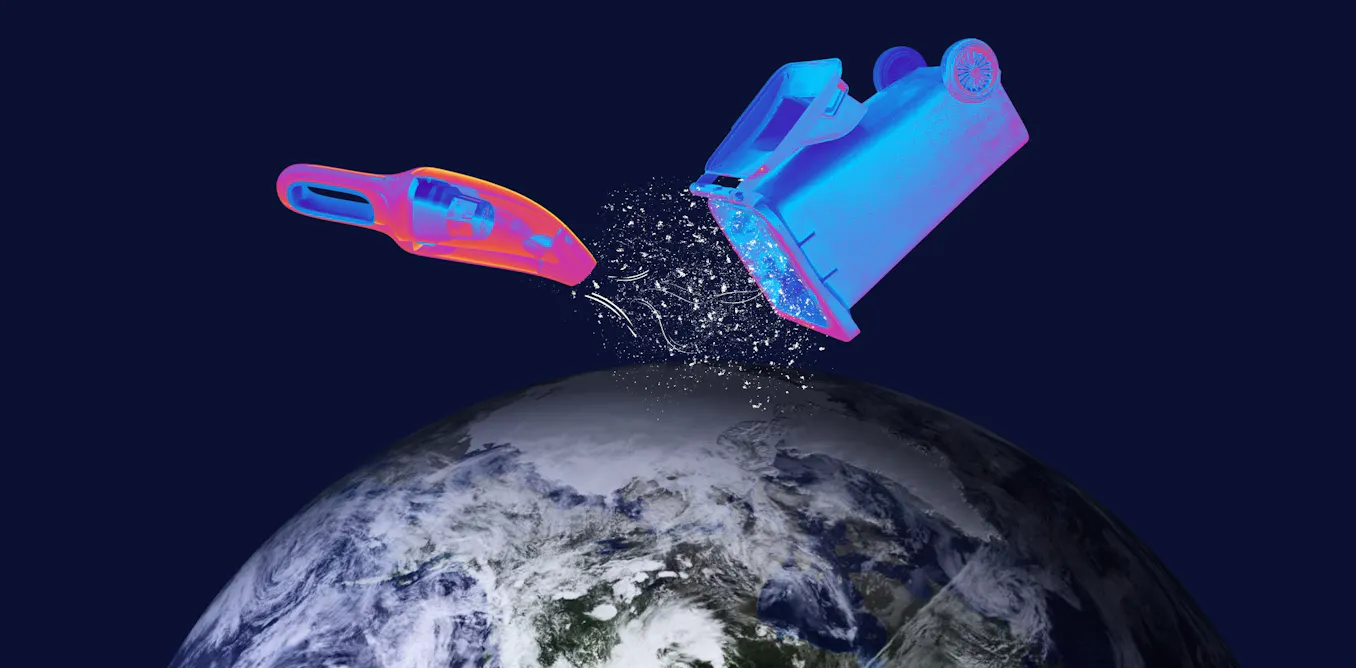
The Growing Gridlock Above Earth
Seventy years ago, the Moon was Earth’s only companion in the night sky. Today, our orbit is crowded with over 15,000 satellites, a number dominated by Elon Musk’s SpaceX. As tech giants plan to launch megaconstellations numbering in the millions, a critical byproduct is reaching a breaking point: space junk. Currently, there are roughly 13,486 tonnes of debris—equivalent to 13 million cane toads—cluttering the orbital environment.
The Threat of Kessler Syndrome
Space junk isn’t just floating; it orbits at speeds of seven kilometres per second. At these velocities, even a fragment the size of a marble can strike with the force of a grenade. Experts warn of the ‘Kessler syndrome,’ a catastrophic chain reaction where collisions create more debris, leading to more collisions. This could eventually render low Earth orbit (LEO) unusable, threatening GPS, weather tracking, and global communications, or even cutting humanity off from space exploration entirely.
Innovations in Orbital Cleanup
Addressing the debris crisis requires a multi-pronged technological approach. Engineers are testing ‘active debris removal’ systems involving harpoons, nets, magnets, and even slingshots to drag defunct satellites into the atmosphere or push them into ‘graveyard orbits.’ Furthermore, satellite design is evolving; researchers in Japan are even testing wooden spacecraft to ensure cleaner atmospheric reentry, while others focus on refueling missions to extend the lifespan of existing hardware.
Policy and the ‘Techbro’ Mentality
Technological fixes alone are insufficient without global policy reform. Current standards are shifting, requiring satellites to de-orbit within five years of mission completion rather than twenty-five. However, critics argue that the ‘techbro’ culture driving the space race often views orbit as a resource to be exploited rather than an environment to be protected. For a sustainable future, experts suggest we must stop viewing space and Earth as separate domains, instead managing our orbit as a fragile, interconnected ecosystem that requires international ‘rules of the road’ to prevent an avoidable environmental collapse.
Astronomy
Celestial Spectacle: Rare ‘Blaze Star’ Explosion Predicted to Appear in the Night Sky
T Coronae Borealis is set for a rare nova explosion. Learn how to spot this ‘Blaze Star’ as it brightens to rival the North Star in a once-in-a-lifetime event.
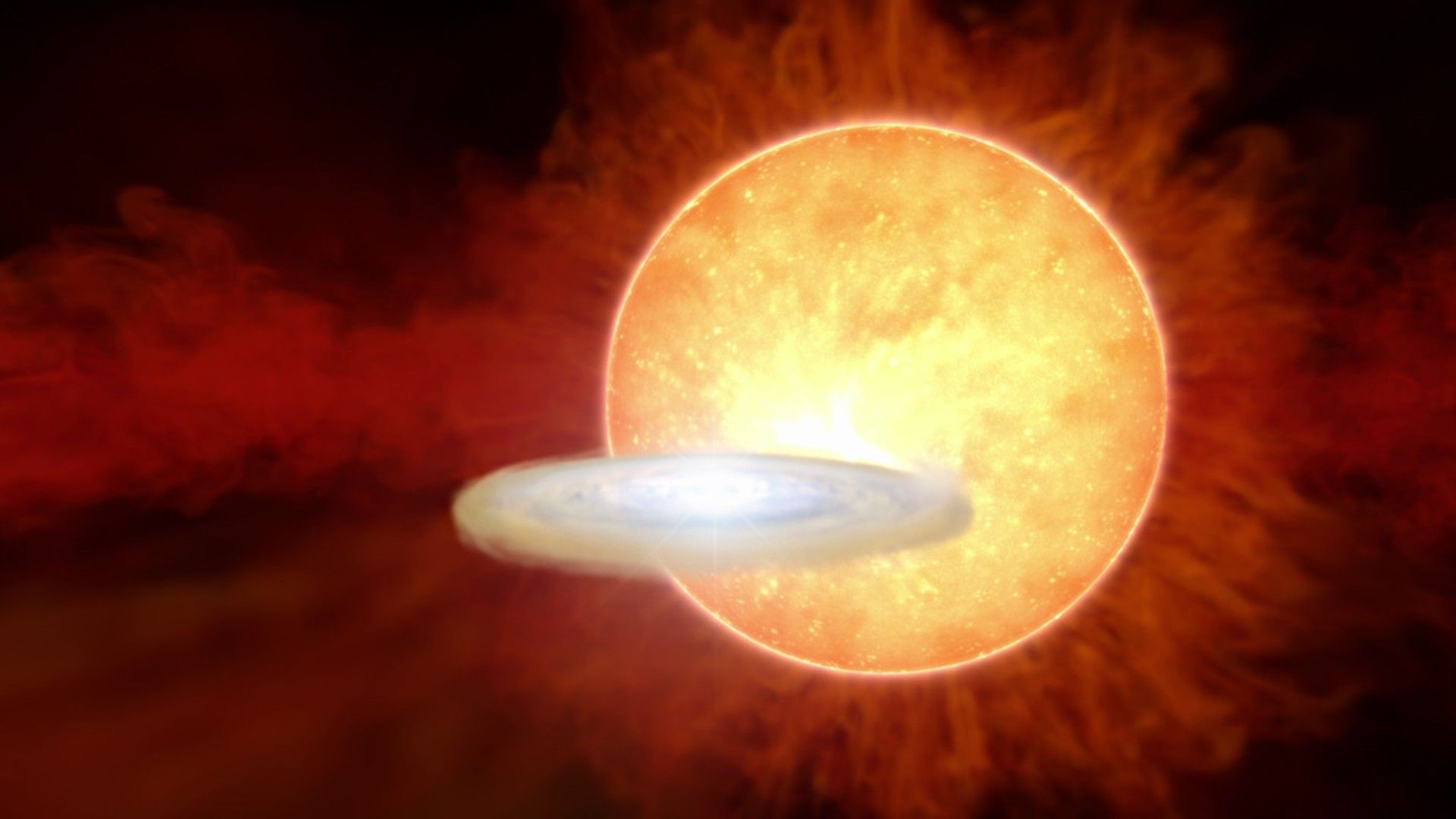
A Once-in-a-Lifetime Cosmic Event
Astronomers and stargazers alike are on high alert for a rare celestial phenomenon: the sudden appearance of a ‘new’ star in the night sky. The star system T Coronae Borealis, commonly known as the ‘Blaze Star,’ is expected to undergo a cataclysmic thermonuclear eruption at any moment. This event, known as a recurring nova, occurs approximately once every 80 years, making it a once-in-a-lifetime viewing opportunity for most people on Earth.
The Science Behind the Blast
T Coronae Borealis (T CrB) is a binary system located 3,000 light-years away, consisting of a white dwarf and a red giant. In a ‘vampiric’ relationship, the white dwarf continuously strips hydrogen-rich material from its larger companion. Once this material reaches a critical mass on the white dwarf’s surface, it triggers a massive thermonuclear explosion. Unlike a supernova, which marks the death of a star, this nova leaves the white dwarf intact to begin the cycle of feeding and erupting all over again.
When and How to Watch
While the exact timing remains elusive, NASA scientists and astrophysicists believe the eruption is imminent. Historically, the system follows an 80-year cycle, with the last major event occurring in 1946. When the nova finally ignites, T CrB will jump from its usual invisible magnitude of +10 to a magnitude of +2. This surge will make it as bright as Polaris, the North Star, and easily visible to the naked eye even in areas with moderate light pollution.
Finding the Northern Crown
To witness this fleeting event, observers should look toward the constellation Corona Borealis, or the ‘Northern Crown.’ This small, semicircular cluster of stars sits between the constellations Hercules and Bootes. Once the eruption begins, the ‘Blaze Star’ will remain visible to the naked eye for less than a week before fading back into obscurity for another eight decades. Astronomers recommend using binoculars or a small telescope now to familiarize yourself with the region of the sky just one degree to the lower right of the star Epsilon Coronae Borealis.

Where Provincial Jobless Rates Stood in September
What New Brunswick’s Latest Unemployment Figures Mean for Your Community

Who Is Running in Your Riding for the 2026 BC Election?

How Central Okanagan Residents Can Avoid Costly Household Plumbing Damage This Thanksgiving

BC Supreme Court Judge Set to Rule on Sentence Length for Former Gang Member

Loss of Newborn Calf Puts Fresh Focus on Endangered Southern Resident Whales

Opinion: John Rustad Has to Go

B.C. Supreme Court Grants Cowichan Tribes Title to Historic Richmond Lands and Fishing Rights

Vancouver Canucks Gear Up for a Make-or-Break 2025–26 Season

Province to Appeal Cowichan Tribes Land Decision

Kamloops Blazers Announce Off-Season Changes Ahead of 2025–26 Season

Kamloops Prepares Four Reverse Referendums on $188M in Major Projects
-

 LOCAL7 days ago
Have You Seen Him? Public Help Sought in Locating Missing Traveller Last Seen in Kamloops
-

 BC STORIES7 days ago
Why a Familiar Political Name is Joining the Kamloops-North Thompson Race
-
LOCAL6 days ago
Your Current 3 Day Forecast — October 4, 2026
-
 LOCAL7 days ago
Two Displaced as Investigators Eye Suspicious Four-Plex Fire in Kelowna
-

 COMMUNITY4 days ago
Why Okanagan Pet Owners Turned to Free BC SPCA Clinics After Wildfire Season
-

 OPINIONS4 days ago
B.C. Election Poll Puts Conservatives Ahead Five Points as Cost of Living Tops Voters’ Concerns
-

 BC STORIES4 days ago
B.C. Patients Could Soon Select Surgical Lists Based on Wait Times Under NDP Plan
-
LOCAL3 days ago
Your Current 3 Day Forecast — October 7, 2026