LOCAL
Poilievre Unveils ‘Free Nations’ Trade Doctrine in Landmark London Speech
Conservative Leader Pierre Poilievre pitches a ‘free trade between free nations’ doctrine in London, proposing closer ties with the UK, Australia, and New Zealand.


A Shift Toward Strategic Alliances
In a significant pivot to the international stage, Conservative Leader Pierre Poilievre delivered a high-stakes address at the Centre for Policy Studies in London on Tuesday. Speaking as part of the prestigious Margaret Thatcher lecture series, Poilievre articulated a vision of "economic realism" that seeks to redefine Canada’s place in a volatile global market. The speech, marking his first major foreign trip as Leader of the Opposition, signaled a strategic shift toward deepening alliances with "like-minded" democratic nations as a bulwark against rising global protectionism and the influence of authoritarian regimes.
"Canada must become stronger at home so that we have unbreakable leverage abroad. Opening trade with like-minded, free nations will do that," Poilievre told the audience. Drawing on the intellectual traditions of Adam Smith and Winston Churchill, and even invoking the folkloric justice of Robin Hood, Poilievre argued that the current global order requires a return to foundational principles: free trade among nations that share a commitment to the rule of law and democratic governance.
The CANZUK Proposal: A New Economic Bloc
The centerpiece of Poilievre’s address was a bold pitch for a strengthened trading and security relationship between Canada, the United Kingdom, Australia, and New Zealand—a concept often referred to by proponents as CANZUK. Poilievre’s vision goes beyond traditional tariff reductions, proposing a deep integration of labor markets and regulatory frameworks. He suggested the removal of professional barriers to allow highly skilled workers, such as doctors and nurses, to have their credentials recognized across all four nations instantaneously.
Furthermore, the Conservative leader called for a "mutual recognition" model for consumer goods and pharmaceuticals. Under this plan, any product approved as safe for consumption in one of the four partner countries would be automatically cleared for sale in the others. This radical simplification of trade logic aims to reduce the bureaucratic friction that currently hampers mid-sized economies in the face of global giants.
Navigating the ‘Fragmentation’ of Global Trade
While Poilievre’s domestic rhetoric often focuses on "axing the tax" and balancing the budget, his London speech addressed the looming shadow of U.S. protectionism. Though he avoided naming U.S. President Donald Trump directly—a departure from a speech he gave just last week at the Economic Club of Canada—the subtext was clear. Poilievre warned that the "fragmentation" of existing trade treaties is creating a power vacuum that hostile actors are eager to fill.
"Supply chains right now that we took for granted are being interrupted, and when democratic alliances fragment, others fill the vacuum," Poilievre cautioned. "If trusted allies do not tighten their economic and security ties, less trusted powers will shape the rules, control the supply chains and set the terms." By advocating for a "doubling down" on ties with historic allies, Poilievre is positioning himself as a leader who can navigate a post-globalization world where trade is increasingly used as a tool of geopolitical statecraft.
A Tale of Two Diplomatic Missions
Poilievre’s European tour coincides with a high-profile diplomatic push by the current Liberal government. Prime Minister Mark Carney is currently in Australia, following a trade mission to India and a scheduled stop in Japan. The parallel trips highlight a deepening divide in Canadian foreign policy: the government’s focus on the "Indo-Pacific Strategy" versus Poilievre’s emphasis on a "Free Nations" bloc rooted in shared heritage and institutional similarity.
While Carney’s mission is designed to "breathe new life" into broad Pacific relationships and diversify away from China, Poilievre’s approach is more exclusionary, focusing on a tight-knit circle of democratic peers. The Conservative leader’s emphasis on critical mineral extraction and energy cooperation among the four Commonwealth nations suggests a desire to build a self-sustaining supply chain that bypasses more volatile global markets.
Looking Ahead to Germany
The London speech is only the first leg of Poilievre’s international debut. On Wednesday, the Conservative leader departs for Germany, where he is scheduled to meet with business leaders and industrial titans. In Berlin, Poilievre is expected to continue his focus on energy security, likely pitching Canada as a reliable alternative to Russian gas for European allies. As the Canadian federal election looms on the horizon, these international maneuvers serve as a clear signal that the Opposition leader is beginning to draft his own "Canada First" foreign policy—one built on the pillars of democratic solidarity and strategic economic independence.

LOCAL
Where Provincial Jobless Rates Stood in September
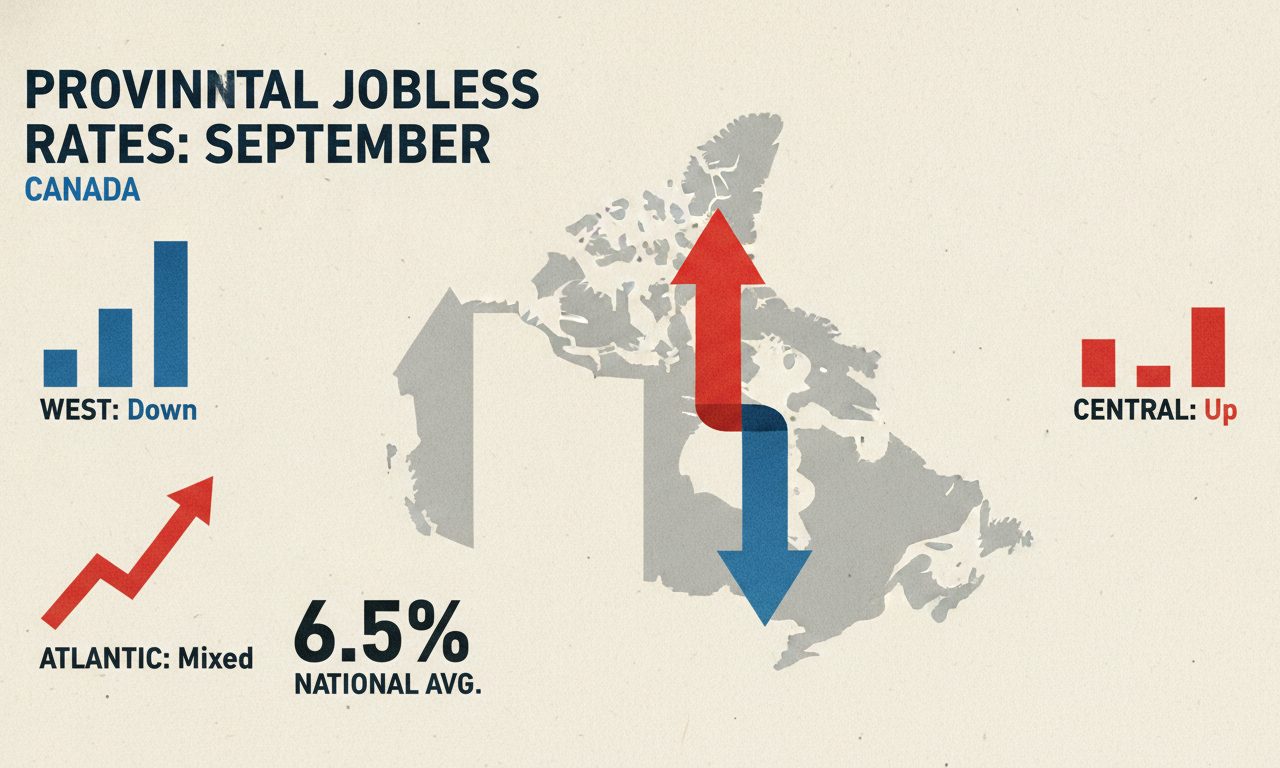
Canada’s national unemployment rate reached 6.5 per cent in September. Explore the full provincial breakdown and regional employment figures from Statistics Canada.

National and Provincial Jobless Figures
Canada recorded a national unemployment rate of 6.5 per cent in September, according to data released by Statistics Canada on Oct. 9, 2026.
Across Western Canada, British Columbia’s jobless rate shifted to 6.4 per cent from 6.5 per cent in August. Alberta recorded a rate of 6.4 per cent, down from 6.8 per cent the previous month, while Saskatchewan dropped to 5.4 per cent from 6.0 per cent. Manitoba’s unemployment rate remained unchanged at 5.0 per cent.
In Central Canada, Ontario’s unemployment rate rose slightly to 7.0 per cent from 6.9 per cent in August, while Quebec’s rate reached 6.0 per cent, up from 5.6 per cent.
Atlantic Canada and Regional City Data
In Atlantic Canada, Newfoundland and Labrador reported the highest provincial figure at 9.1 per cent, up from 8.6 per cent in August. New Brunswick saw a minor increase to 7.4 per cent from 7.3 per cent, and Nova Scotia rose to 6.3 per cent from 6.1 per cent. Prince Edward Island experienced a decline, moving to 7.3 per cent from 7.9 per cent.
Statistics Canada also tracked seasonally adjusted, three-month moving average rates for major urban areas. However, the agency cautioned that these municipal figures are subject to wide fluctuations due to smaller statistical sample sizes.
LOCAL
Who Is Running in Your Riding for the 2026 BC Election?
Check the full list of official candidates who have filed nomination papers for Kamloops, Fraser-Nicola, Cariboo-Chilcotin, and Salmon Arm-Shuswap ridings.
Candidates Confirmed Across Five Regional Ridings
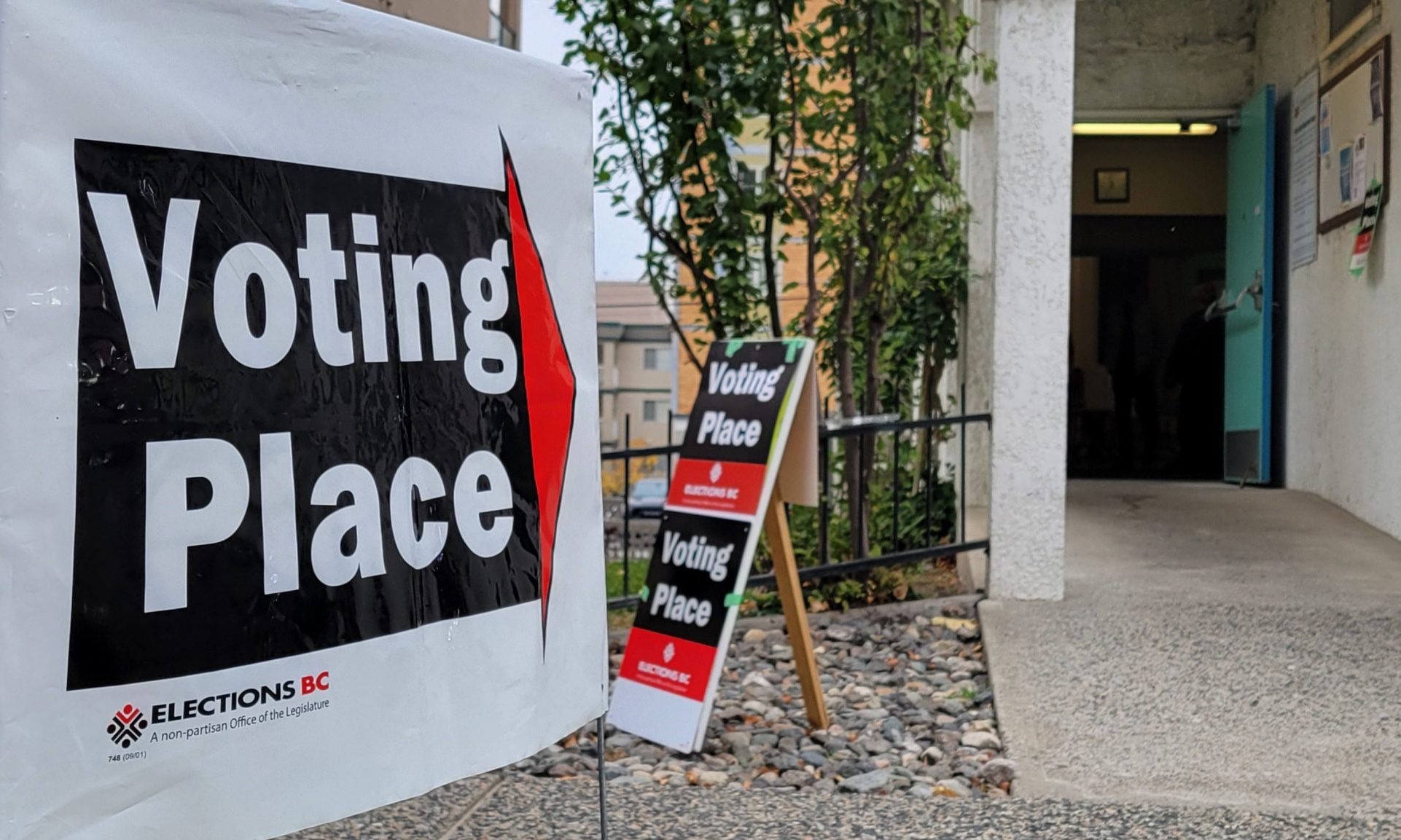
Nomination papers have been officially submitted by individuals seeking election as local Members of the Legislative Assembly in the upcoming 2026 BC election.
In Kamloops Centre, voters will see a five-candidate field consisting of incumbent Peter Milobar for the BC Conservatives, Annelise Beach representing the BC Greens, Rocky McAfee for OneBC, Thaelo Proctor running as an Independent, and Mike Wisla representing the BC NDP.
To the north, the Kamloops-North Thompson constituency features incumbent Ward Stamer of the BC Conservatives, alongside Kory Clark running for the BC NDP and Deborah Friesen for OneBC.
Contests Set for Fraser-Nicola, Cariboo-Chilcotin, and Salmon Arm-Shuswap
In the Fraser-Nicola riding, incumbent Conservative Tony Luck faces challenges from Jason Leboe of the BC NDP and Patrick Mitchell of the BC Greens.
The Cariboo-Chilcotin ballot includes incumbent Lorne Doerkson running for the BC Conservatives, Kathryn Askew representing the BC NDP, and Douglas Gook representing the BC Greens.
Meanwhile, five candidates are contesting the Salmon Arm-Shuswap riding. Incumbent David Williams represents the BC Conservatives, joined on the ballot by Gloria Morgan for the BC NDP, Barbara Presch for OneBC, Denise Reimer for CentreBC, and Jed Wiebe for the BC Greens.
COMMUNITY
How Central Okanagan Residents Can Avoid Costly Household Plumbing Damage This Thanksgiving
RDCO warns Central Okanagan residents to dispose of Thanksgiving cooking fats in the garbage to avoid costly sewer blockages and plumbing damage.

Preventing Sewer Overflows During Holiday Gatherings
As Central Okanagan families come together for Thanksgiving between Oct. 10 and Oct. 12, regional officials are offering guidance to keep home plumbing systems safe. Disposing of fats, oils and cooking grease improperly remains the primary reason sewer lines block and overflow throughout the community.
Kit Caufield, Manager of Engineering Services for the Regional District of Central Okanagan (RDCO), explained that grease accumulation inside pipe infrastructure restricts wastewater flow over time. Caufield noted that “Over time, grease builds up inside pipes, restricting wastewater flow and creating problems not only for homeowners, but across the entire sewer system. These blockages can damage household plumbing, result in costly repairs and interfere with critical wastewater infrastructure, including sewer lift stations,”
Proper Waste Disposal Guidelines
To prevent damage to both private plumbing and public infrastructure like sewer lift stations, the RDCO recommends catching leftover food particles using a drain basket or strainer. Residents should pour warm cooking fats into a covered tin container, which can be lined with a cooking bag if intended for reuse. After the grease cools and hardens, the container should be sealed and discarded in the trash.
Additionally, fatty foods such as salad dressings, mayonnaise, and other sauces must be thrown into the garbage rather than rinsed down sinks. For larger quantities of used cooking oil, individuals can take up to two 20-litre pails to the Glenmore Landfill for recycling, though commercial amounts are prohibited. Further details can be found on the RDCO website.

Where Provincial Jobless Rates Stood in September
What New Brunswick’s Latest Unemployment Figures Mean for Your Community

Who Is Running in Your Riding for the 2026 BC Election?

How Central Okanagan Residents Can Avoid Costly Household Plumbing Damage This Thanksgiving

BC Supreme Court Judge Set to Rule on Sentence Length for Former Gang Member

Loss of Newborn Calf Puts Fresh Focus on Endangered Southern Resident Whales

Opinion: John Rustad Has to Go

B.C. Supreme Court Grants Cowichan Tribes Title to Historic Richmond Lands and Fishing Rights

Vancouver Canucks Gear Up for a Make-or-Break 2025–26 Season

Province to Appeal Cowichan Tribes Land Decision

Kamloops Blazers Announce Off-Season Changes Ahead of 2025–26 Season

Kamloops Prepares Four Reverse Referendums on $188M in Major Projects
-

 LOCAL7 days ago
Have You Seen Him? Public Help Sought in Locating Missing Traveller Last Seen in Kamloops
-

 BC STORIES7 days ago
Why a Familiar Political Name is Joining the Kamloops-North Thompson Race
-
LOCAL6 days ago
Your Current 3 Day Forecast — October 4, 2026
-

 LOCAL7 days ago
Two Displaced as Investigators Eye Suspicious Four-Plex Fire in Kelowna
-

 COMMUNITY4 days ago
Why Okanagan Pet Owners Turned to Free BC SPCA Clinics After Wildfire Season
-
 OPINIONS4 days ago
B.C. Election Poll Puts Conservatives Ahead Five Points as Cost of Living Tops Voters’ Concerns
-
 BC STORIES4 days ago
B.C. Patients Could Soon Select Surgical Lists Based on Wait Times Under NDP Plan
-
LOCAL3 days ago
Your Current 3 Day Forecast — October 7, 2026