BC STORIES
Canada’s Time Crisis: Why British Columbia is Ending the Clock Change While Others Wait for a Domino Effect
British Columbia is ending seasonal time changes permanently, but the rest of Canada remains locked in a collective action dilemma over daylight saving time.


The Last ‘Spring Forward’ for British Columbia
As Canadians across the country prepare to nudge their clocks forward one hour this Sunday, residents of British Columbia are doing so with a unique sense of finality. Premier David Eby confirmed this week that the province is moving forward with a long-awaited plan to adopt permanent, year-round daylight saving time. The move marks the end of a decades-long debate in the Pacific province, effectively terminating the biannual ritual of ‘springing forward’ and ‘falling back’ that has governed Canadian life for generations.
The decision is rooted in both public health and overwhelming popular demand. Premier Eby highlighted the practical disruptions caused by the shift, noting that children and pets do not recognize the arbitrary change in time, leading to lost sleep for parents and increased stress for families. “When we change our clocks twice a year, it creates all kinds of problems,” Eby stated during the announcement. Beyond mere inconvenience, the Premier pointed to a spike in car accidents and a general decline in public well-being as primary drivers for the policy shift.
A History of Public Mandate and Political Stalling
British Columbia’s road to permanent daylight time has been long. In 2019, the province conducted one of the most successful public consultations in its history, with a staggering 93 per cent of the 223,000 respondents indicating they wanted to scrap the time change. While former premier John Horgan attempted to implement the change several times, the province initially hesitated, hoping to maintain alignment with southern neighbors in Washington, Oregon, and California.
However, B.C. has now decided to lead the charge. This bold move highlights a growing frustration with what political scientists call a ‘collective action problem.’ Peter Graefe, a political scientist at McMaster University, suggests that many jurisdictions are waiting for a leader to prove that the transition can be seamless. “Maybe it does take one place to move and it will have some impact in having other places saying, ‘Look, the sky didn’t fall, maybe we’ll try it as well,’” Graefe noted.
The Eastern Gridlock: Ontario and Quebec
In Central Canada, the situation is more complex. The Ontario legislature passed a bill in November 2020 that would end the time change, but with a significant caveat: the law only triggers if Quebec and New York State follow suit. This interdependence is driven by the need for economic and logistical synchronization, particularly regarding the stock markets and cross-border trade. Premier Doug Ford has expressed an openness to ending the practice, stating that Ontario will “eventually” stick with daylight saving time to stay in step with the rest of North America, but for now, the province remains in a holding pattern.
Quebec has similarly signaled that while they recognize the public desire to end the time change, no immediate legislative action is planned. Government officials in Nova Scotia, New Brunswick, and Manitoba have also confirmed they are not currently pursuing a change, citing the need for regional alignment to avoid creating a patchwork of time zones that could disrupt travel and commerce.
The Prairie Divide
The debate remains particularly contentious in Alberta. In a 2021 municipal referendum, Albertans narrowly voted to keep the biannual change, with the ‘stay’ side winning by fewer than 3,000 votes. Despite this, the government led by Danielle Smith is re-examining the issue. Finance Minister Nate Horner recently suggested that the conversation is “probably coming towards us” again, as the government weighs the impact on airline schedules and professional sports against the potential health benefits.
Calgary Mayor Jyoti Gondek, however, has expressed skepticism about reopening the debate, suggesting that the narrow victory in 2021 should stand as a settled matter so that the government can focus on more pressing economic priorities.
The Biological Cost of Shifting Time
While the political debate focuses on trade and convenience, health experts are sounding the alarm on the biological toll of the time change. Rebecca Robillard, co-chair of the Canadian Sleep Research Consortium, argues that the issue is far more significant than losing a single hour of sleep. “It actually disrupts the alignment between the biological clock and the natural cycle of the sun,” she explained. This misalignment affects hormone release, insulin regulation, and metabolism.
Robillard points to a chilling list of ramifications associated with the time shift, including increased rates of stroke, heart attacks, mood swings, and even pregnancy complications. From a clinical perspective, the sudden shift forces the body into a state of ‘social jetlag’ that can take weeks to resolve.
The Counter-Argument: The Need for Morning Light
Despite the momentum for permanent daylight saving time, some experts warn of the downsides of year-round DST—specifically the loss of morning light in the winter. Patricia Lakin-Thomas, a professor at York University, notes that our circadian clocks are reset by morning light. Under permanent daylight saving time, some parts of Canada would not see the sun rise until nearly 10:00 a.m. in the middle of winter.
“Everybody loves the idea when you first announce it… but in the winter, we just hate it,” Lakin-Thomas warned. She argues that standard time is actually better for human health because it aligns more closely with the solar cycle, providing the morning light necessary to speed up our internal clocks and keep us in sync with the 24-hour day. As British Columbia embarks on this legislative experiment, the rest of the country—and the scientific community—will be watching closely to see if the benefits truly outweigh the costs.

BC STORIES
Unprovoked Grocery Store Incident Leads to Arrest of Three, Including Repeat Offender
Three people, including a BC repeat offender, were arrested by Prince George RCMP following an unprovoked assault at a College Heights Save-On-Foods.

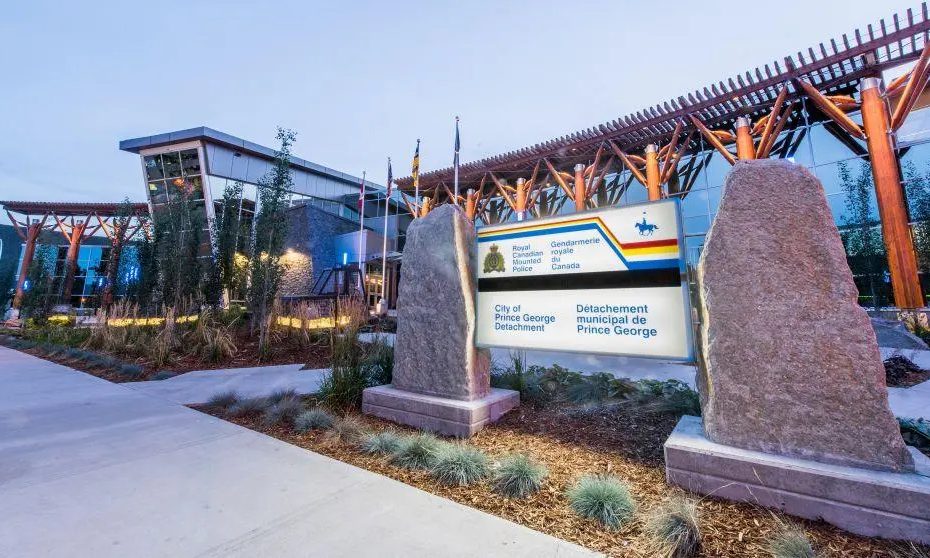
Three Suspects In Custody After College Heights Incident
Three individuals were apprehended by Prince George RCMP on the evening of Saturday, Nov. 14, following reports of an unprovoked attack inside a local Save-On-Foods store.
Emergency calls alerted Mounties to an ongoing assault in the College Heights neighborhood just prior to 7 p.m. Although the trio—consisting of an adult male, an adult female, and a minor—left the scene on foot before police arrived, officers from the General Duty and Problem Oriented Policing units located and detained all three following a search of the surrounding area. They were held in custody overnight ahead of court appearances.
Court Dates and Charges Laid
Formal charges of assault under Section 266 of the Criminal Code of Canada have been filed against each suspect. Among those charged is 24-year-old Dustin Wilson of Prince George, scheduled for a court appearance on Nov. 25. Police noted that Wilson was previously identified as a repeat violent offender under British Columbia’s Repeat Violent Offending Intervention Initiative (ReVOII).
Also charged is 23-year-old Cydney Cardinal, who is set to appear in provincial court on Dec. 3. A 17-year-old female youth from Prince George faces the same charge; her identity remains protected under the Youth Criminal Justice Act.
Police Focus on Workplace Safety
The provincial ReVOII framework tracks individuals with histories of violent crime to assist prosecutors in making decisions that prioritize public safety during judicial proceedings, with program participants historically facing higher rates of pre-trial detention.
Speaking on behalf of the detachment, Sgt. Craig Douglass emphasized police commitment to local safety. Douglass noted that the Problem Oriented Policing Team collaborates directly with Save-On-Foods and nearby businesses to curtail retail crime and prevent related violence, stating that everyone deserves to feel safe in their workplace.
BC STORIES
Police Seek Public’s Help to Map Final Hours of Surrey Man Found in Langley Vehicle Fire
Homicide investigators have identified 25-year-old Tushar Sharma as the victim found in a burned car near Fort Langley in a suspected targeted incident.
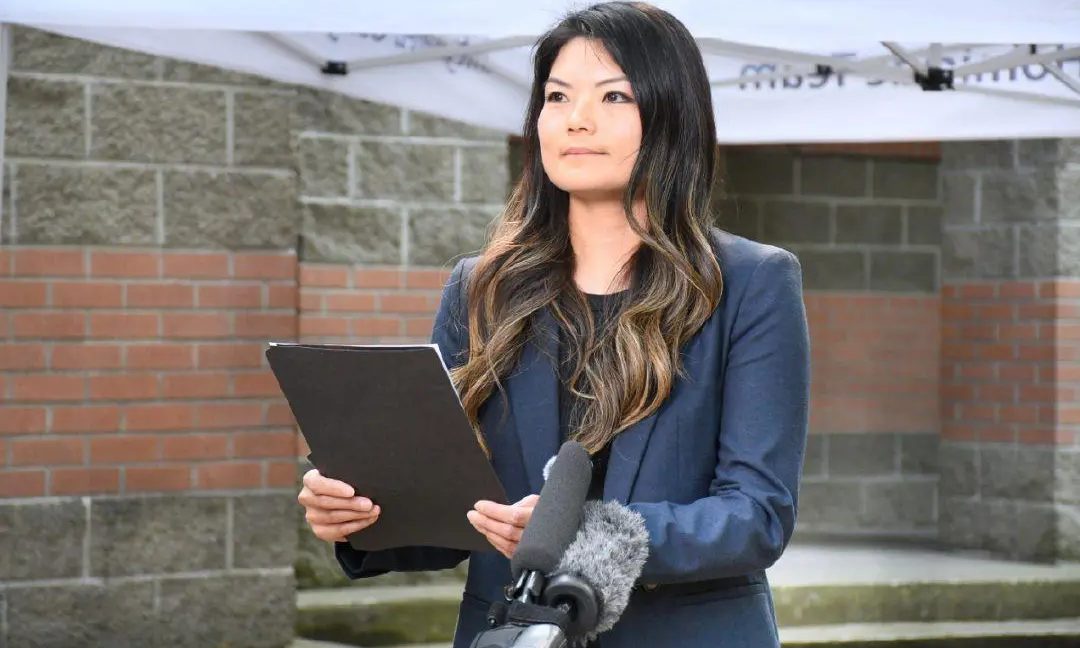
Investigation Underway After Body Discovered South of Fort Langley
Homicide detectives are working to reconstruct the final movements of 25-year-old Tushar Sharma after human remains were found inside a burning automobile in rural Langley late last month.
Emergency crews, including local firefighters and RCMP officers, originally arrived at the 23300-block of Rawlison Crescent on Oct. 29 following reports of a vehicle ablaze. The location sits just south of the village of Fort Langley. Upon extinguishing the flames, responders discovered the body, prompting the Integrated Homicide Investigation Team (IHIT) to assume control of the case.
Police Point to Targeted Incident
Authorities confirmed that Sharma, a resident of Surrey, had no criminal record and maintained limited known personal connections within Canada. Investigators are collaborating with the Langley RCMP, the Integrated Forensic Identification Services unit, and the BC Coroners Service to analyze physical evidence and establish a clear chronology leading up to the death.
“IHIT investigators continue to work with Mr. Sharma’s family and friends in Canada and overseas to gain a better understanding of his lifestyle and activities leading up to his death,” said Sgt. Freda Fong of IHIT. “While the motive remains under investigation, evidence to date suggests this was a targeted incident.”
Members of the public who may have information regarding Sharma or the incident are urged to contact IHIT directly at 1-877-551-IHIT (4448) or submit details by email at ihitinfo@rcmp-grc.gc.ca.
BC STORIES
Shrinking Fraser River Sockeye Numbers Threaten B.C. Economy, First Nations Culture, and Local Tourism
Fraser River sockeye salmon returns dropped to 3 million in a dominant year, raising concerns for B.C.’s economy, First Nations culture, and Adams River runs.

Drastic Drop in Peak-Cycle Sockeye Numbers
This fall’s Fraser River sockeye salmon migration yielded historically low returns for what was expected to be a dominant four-year run. Approximately 3 million sockeye returned to spawn overall, with an estimated 200,000 to 300,000 reaching spawning grounds in the Adams River region. Experts are raising concerns over the low figures, comparing them to 2010 when the same four-year cycle saw nearly 28 million fish return to the Fraser River watershed.
Hwang noted that the sharp drop severely limited access to a resource vital to British Columbia’s economy, First Nations food security and culture, and recreational angling opportunities. While causal factors remain complex, researchers point to changing ocean conditions driven by climate change, along with drought, forest fires, and human activities. In the Thompson-Shuswap region, an action plan by the Thompson-Shuswap Salmon Collaborative indicates that 12 out of 18 salmon populations face at-risk designations from the Committee on the Status of Endangered Wildlife in Canada.
Calls to Revisit National Inquiry Findings
To address the ongoing drop in returns, Hwang suggested reviewing the 75 recommendations made by Justice Bruce Cohen during the late 2000s national commission of inquiry into Fraser River sockeye declines. Many of those costly recommendations have not been fully implemented despite similar low returns in 2009. Hwang likened salmon survival to drawing cards in a card game, where habitat conditions, ocean survival, and migration hurdles combine to dictate yearly success.
Last year saw an unexpected return of around 9 million sockeye compared to the 3 million predicted, bringing social, ecological, and economic benefits. However, Hwang emphasized that humans must work to improve spawning habitat conditions, such as directing river flows into crucial pools and side channels, so fish can recover during favorable years.
Local Observations and Management Challenges
Conservative MP Mel Arnold, who serves as associate shadow minister for fisheries and represents the Adams River area, expressed concern over the downward trend. Recalling the Adams River watershed’s legacy as the “richest 300 acres in the world,” Arnold voiced worry regarding federal cuts to monitoring programs, stressing that effective fisheries management requires tracking habitat, harvest impacts, and the potential role of hatcheries, though he stated he hopes the Adams River run never has to rely on hatcheries.
The local landscape also continues to recover from environmental disturbances, including the 2023 Bush Creek East wildfire that affected Tsútswecw Provincial Park and surrounding watershed areas. While repair efforts persist, visitors currently view spawning fish alongside charred trees. Arnold acknowledged that while some salmon runs across the region are performing better, the Adams River and broader Fraser River sockeye returns remain a mystery.
Tyler Boucher Scores Game-Winner in NHL Debut as Senators Defeat Jets 2-1
Why Cody Fajardo is Staying with the Elks After Bringing the Grey Cup Home to Edmonton

Unprovoked Grocery Store Incident Leads to Arrest of Three, Including Repeat Offender

Police Seek Public’s Help to Map Final Hours of Surrey Man Found in Langley Vehicle Fire
Your Current 3 Day Forecast — November 18, 2026

Shrinking Fraser River Sockeye Numbers Threaten B.C. Economy, First Nations Culture, and Local Tourism

Opinion: John Rustad Has to Go

B.C. Supreme Court Grants Cowichan Tribes Title to Historic Richmond Lands and Fishing Rights

Vancouver Canucks Gear Up for a Make-or-Break 2025–26 Season

Province to Appeal Cowichan Tribes Land Decision

Kamloops Blazers Announce Off-Season Changes Ahead of 2025–26 Season

Kamloops Prepares Four Reverse Referendums on $188M in Major Projects
-
LOCAL6 days ago
Your Current 3 Day Forecast — November 13, 2026
-
LOCAL5 days ago
Your Current 3 Day Forecast — November 14, 2026
-

 COMMUNITY3 days ago
Why Cannonball-Shaped Volcanic Rocks Cover the Cliffs of Summerland
-
 NATIONAL STORIES3 days ago
How a Fake Invoice Cost a Shuswap Business Over $24,000
-
 BC STORIES5 days ago
What to Know as Severe Rainfall Warnings and Flooding Hit Vancouver Island Communities
-

 NATIONAL STORIES2 days ago
House Unanimously Approves Bill Giving Young Offenders Access to Addiction Treatment
-
LOCAL4 days ago
Your Current 3 Day Forecast — November 15, 2026
-
LOCAL7 days ago
Your Current 3 Day Forecast — November 12, 2026