BC STORIES
BC Conservatives Narrow Leadership Field to Nine — The Real Contest: Discipline


Opinion News Room Chad Dashly
BC Conservatives narrow the leadership field to nine — and the real contest is about discipline
Opinion
VANCOUVER — The Conservative Party of B.C.’s Leadership Election Organizing Committee (LEOC) has closed its application window and approved nine contestants to move to the next phase of the leadership race: Bruce Banman, Harman Bhangu, Iain Black, Caroline Elliott, Kerry-Lynne Findlay, Yuri Fulmer, Warren Hamm, Darrell Jones, and Peter Milobar.
On paper, it’s just a list. In practice, it’s a stress test for a party that grew quickly, became the Official Opposition, then watched its leader resign after internal turmoil — and now has to prove it can behave like a government-in-waiting, not a protest movement with a bigger microphone.
A nine-person field usually signals energy. Here, it also signals a problem to solve.
Leadership races are supposed to be about ideas and direction. This one is also about whether the B.C. Conservatives can enforce basic internal standards without triggering another civil war.
The application requirements reported publicly — including a $5,000 entry fee and at least 250 member signatures from across the province — were designed to separate serious contenders from momentary internet fame. That’s not glamorous. It is, however, what grown-up parties do when they’ve learned that “anyone can run” eventually turns into “everyone can embarrass us.”
Two previously declared MLA candidates — Sheldon Clare and Steve Kooner — withdrew in the days leading up to the LEOC announcement, underscoring how much procedural gatekeeping and campaign organization now matter in a party that is trying to professionalize at speed.
Three lanes are emerging — and each comes with a risk
The approved slate naturally breaks into three broad lanes.
- The caucus lane: Banman, Bhangu, and Milobar bring elected credibility and day-to-day experience as the Official Opposition. The upside is obvious: they can plausibly argue they know what it takes to hold government to account and present as a premier-in-waiting. The downside is equally obvious: caucus politics can look like inside baseball to members who joined because they wanted something that didn’t feel like Victoria-as-usual.
- The established political lane: Iain Black and Kerry-Lynne Findlay bring recognizable résumés from past political eras. That can reassure donors and institutional conservatives who want competence over chaos. But it also invites the party’s internal critique that it could become “a rebrand” of an older coalition — the very charge some activists have levelled at conservative projects in B.C. for decades.
- The outsider lane: Elliott, Fulmer, Hamm, and Jones (from the public descriptions available so far) will likely frame themselves as builders, not lifers — and as the antidote to a political class that many voters distrust. Outsiders can win leadership races. They can also struggle to pivot from slogans to systems when they inherit a caucus, a budget, and a news cycle that punishes improvisation.
None of these lanes is “wrong.” The larger question is whether the party’s membership wants movement energy or governing readiness — and whether it can find a leader who credibly offers both.
The John Rustad hangover is real — and it will shape every ballot
It’s impossible to read this candidate list without the recent history hovering over it. Former leader John Rustad resigned on Dec. 4, 2025, after divisions over policy and personnel roiled the party, according to reporting at the time.
That matters because leadership elections aren’t held in a vacuum. They are a referendum on what members think went wrong — and a pre-emptive argument about what must never happen again.
If the membership believes Rustad’s departure was driven by a lack of internal discipline and process, they will lean toward candidates promising tighter message control, better candidate vetting, and fewer self-inflicted crises. If they believe the party’s internal fights were about “true conservatism” versus “electability,” the race becomes an ideological sorting exercise — one that could reward sharper rhetoric over steadier management.
May 30 is not the finish line — it’s the credibility deadline
The party says it will announce its new leader on May 30, 2026, at a leadership convention. Between now and then, the campaign will revolve around membership rules, voter eligibility, and organizational capacity — the unsexy mechanics that decide races long before convention day.
There’s also a strategic reality: as the Official Opposition, the B.C. Conservatives don’t have the luxury of treating this like an internal club election. The leader-in-waiting has to perform in public, under daily scrutiny, with a caucus that needs coherence and a province that expects seriousness.
Voters who don’t follow party mechanics will judge the outcome in simpler terms: does the new leader look like someone who could run a cabinet, manage a crisis, and keep a team together?
What should British Columbians watch for next?
Here are three tells that will matter more than bumper-sticker ideology:
- Who can unify without erasing differences: A leader who “wins” by humiliating other factions may inherit a party that never stops relitigating the race.
- Who can talk about B.C. problems with B.C. answers: Housing, cost of living, health care access, and public safety are where elections are won or lost — not on imported culture-war scripts.
- Who can pass the competence test: Policy depth, staffing judgment, and a willingness to say “no” to bad ideas are not optional for an opposition trying to look ready to govern.
The LEOC has done its part: close the application process, publish a clear slate, move the party forward. Now comes the harder work — proving that a fast-growing political operation can mature quickly enough to hold together, and credible enough to convince British Columbians it deserves the keys to government.





BC STORIES
Why B.C.’s Conservative Campaign Face is Drawing Scrutiny Over Past Social Media Comments
B.C. Conservative campaign director Katy Merrifield faces criticism from the NCCM and political leaders over past anti-Islam social media posts.


Controversy Surrounds Senior Campaign Official
B.C. Conservative campaign director Katy Merrifield is confronting widespread condemnation after an anti-Islam message she published on social media came to light. The June post on X, which stated “F–k Islam. Defend Western civilization,” was made in response to an inquiry into child sexual exploitation in the U.K. before being removed. Merrifield, previously the head of communications for federal Conservative Leader Pierre Poilievre, holds an administrative role with the provincial party rather than a candidate spot.
Reactions and Call for Accountability
The National Council of Canadian Muslims (NCCM) voiced deep hurt over the remark and pointed to additional posts reflecting a pattern of Islamophobic rhetoric. Calling for good-faith discussions to address Islamophobia, the group noted that Statistics Canada recorded a roughly 173 per cent surge in police-reported anti-Muslim hate crimes nationally between 2020 and 2024. B.C. NDP Leader David Eby stated Saturday that the remarks were deeply hateful toward a specific faith group and insisted there must be consequences, warning that no community is safe if political leadership permits such behavior. CentreBC Leader Elenore Sturko also criticized the party’s leadership, arguing that those who fail to stand up for all British Columbians should not seek the premier’s office.
Explanation and Party Response
Merrifield addressed the matter on Friday, explaining that her original post was fueled by her personal history as a rape survivor and her emotional reaction to accounts of sexual abuse against young girls in the U.K. She noted that she took the post down within hours because her anger was intended for the extremism used to justify those crimes rather than Muslims or their religion. While the NCCM highlighted that she offered no apology or acknowledgement of the pain caused, the B.C. Conservatives shared a statement from Surrey City Centre candidate Zeeshan Wahla. Wahla described her language as unacceptable but differentiated her situation from candidate Joachim Agou—who was recently dropped for posts targeting Palestinians and Pakistanis—by stating Agou incited violence while Merrifield was reacting to sexual trauma. CBC News reached out to B.C. Conservative Leader Lorne Doerkson but received no statement prior to publication.
BC STORIES
BC Supreme Court Judge Set to Rule on Sentence Length for Former Gang Member
Defence lawyers recommend 12 to 14 years for Ekene Anigbo for the 2021 Naramata manslaughter of Kathleen Richardson. A judge rules Nov. 2 in Kelowna.
Judicial Decision Expected in November
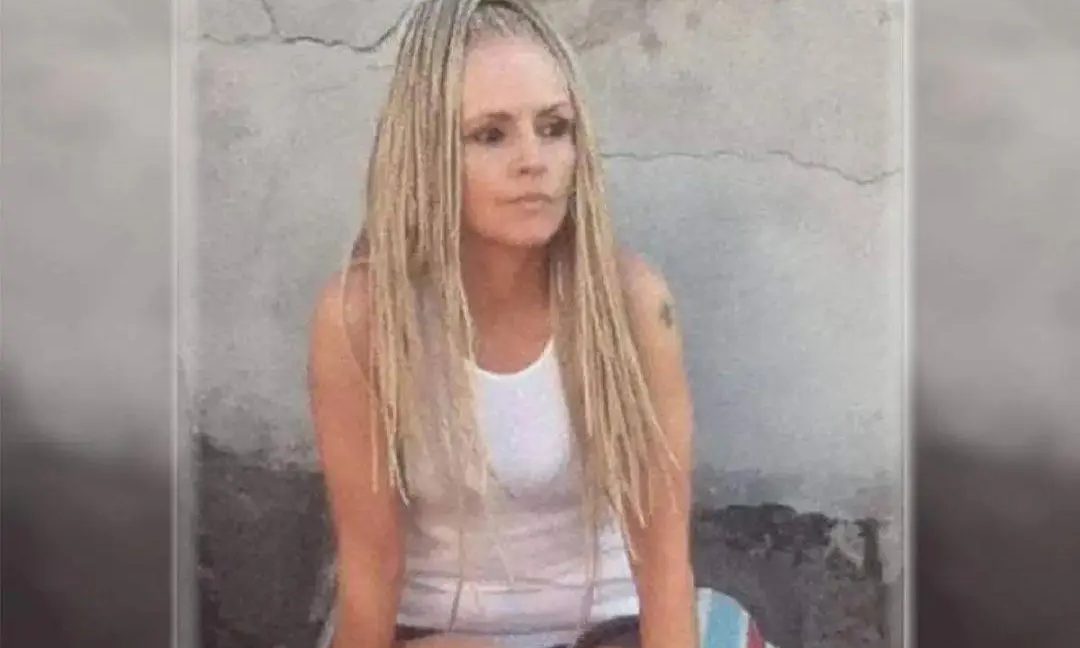
B.C. Supreme Court Justice Alison Beames is scheduled to deliver a sentencing ruling on Nov. 2 regarding Ekene Anigbo following a two-day hearing in Kelowna.
Defence lawyers for the 27-year-old former gang member have asked the court for a term of 12 to 14 years. Anigbo was convicted of manslaughter on Aug. 14 in connection with the June 9, 2021 death of 57-year-old Kathleen Richardson inside her Naramata residence.
Dispute Over Rehabilitation and Penalty
The recommendation from the defence directly contrasts with the prosecution’s request on Oct. 7 for life imprisonment without parole eligibility for 10 years. Defence counsel argued that the Crown was seeking to artificially inflate the sentence, pointing out that Anigbo has ended his gang ties since 2024 and completed anger management, employability skills, and Indigenous programming at Okanagan Correctional Centre.
If Justice Beames adopts the defence proposal, Anigbo would become eligible to apply for parole after completing one-third of the sentence.
Details of the Fatal Incident
Anigbo was originally tried for first-degree murder, but Justice Beames determined the Crown did not prove beyond a reasonable doubt that he fired the lethal shots. However, court proceedings established that Anigbo and co-accused Jalen Falk entered the home together armed with at least two handguns to track down Richardson’s son, Wade Cudmore, who was believed by associates to have killed two brothers and stolen cash and drugs.
When they discovered Cudmore was absent, the pair attempted to extract information from Richardson. Evidence showed she resisted, sustaining non-fatal injuries to her hands and arms, before the two men worked together to kill her and fled the scene. Her body was later discovered in her basement by an RCMP officer arriving to caution Cudmore about potential danger.
Related Legal Outcomes
The fatal event was tied to a broader sequence of violent incidents. Cudmore was taken into custody the day after his mother’s body was found and was subsequently convicted of two counts of second-degree murder involving the deaths of brothers Erick and Carlos Fryer.
Meanwhile, Falk entered a guilty plea to second-degree murder for Richardson’s death and received a life sentence in February with no chance of parole for 16 years.
BC STORIES
Loss of Newborn Calf Puts Fresh Focus on Endangered Southern Resident Whales
A critically endangered southern resident killer whale, J31, was seen pushing a dead newborn calf in B.C. waters, raising concerns for the population.
Tragic Sight Recorded Off Sombrio Point
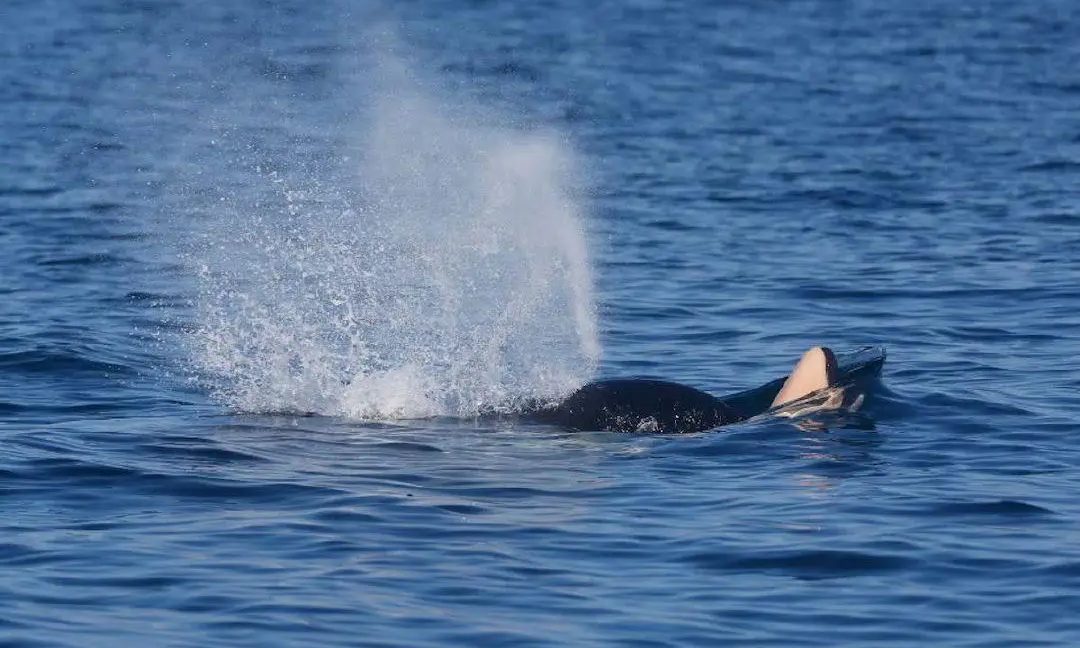
Researchers with the Center for Whale Research confirmed that a female southern resident killer whale was seen pushing a dead newborn calf on her nose on Oct. 3 in the Strait of Juan de Fuca near Sombrio Point.
Mark Malleson, a researcher with the Washington-based organization, spotted the 31-year-old orca—identified as J31 or Tsuchi—travelling alongside her immediate family. According to a statement from the group, “It s unclear whether the newborn was a male or female, if it had been carried to full term prior to birth, and if it died after birth or was a stillbirth.”
Reproductive History and Population Pressures
Born in 1995, Tsuchi has a history of reproductive loss, including failed pregnancies and a deceased calf she carried in 2016. Her only surviving offspring is J56, a female named Tofino who was born in 2019.
The loss underscores the deep reproductive challenges confronting the critically endangered population. The Center for Whale Research emphasized that access to large, nutritionally rich Chinook salmon remains one of the primary factors limiting their ability to recover.
“For a population as small as the southern residents, the successful birth and survival of every calf matters,” the organization stated.
Pattern of Loss Across Pods
Tsuchi’s loss recalls similar events documented in the southern resident population, which comprises J, K and L pods. In 2018, J35 (Tahlequah) gained international attention after carrying her dead calf over 1,600 kilometres during a 17-day journey. Tahlequah was seen carrying another dead calf on her head or snout in early 2025. Later that year, 26-year-old J36 (Alki) lost a female calf—marking her fifth documented pregnancy, with only one calf surviving past infancy for under two years.
Recent census data from the Center for Whale Research recorded 74 southern residents, up by one from 73 in 2024. Although two births—K47 in December of last year and L130 in June—raised the total to 76, another calf, L129, is presumed dead after going missing from L-pod in June following observations of poor physical condition.
“The southern resident killer whales remain critically endangered, and their recovery depends not simply on increasing the number of pregnancies, but on creating the conditions in which mothers and calves can survive and thrive,” said the Center for Whale Research.

Why B.C.’s Conservative Campaign Face is Drawing Scrutiny Over Past Social Media Comments

Where Provincial Jobless Rates Stood in September
What New Brunswick’s Latest Unemployment Figures Mean for Your Community

Who Is Running in Your Riding for the 2026 BC Election?

How Central Okanagan Residents Can Avoid Costly Household Plumbing Damage This Thanksgiving

BC Supreme Court Judge Set to Rule on Sentence Length for Former Gang Member

Opinion: John Rustad Has to Go

B.C. Supreme Court Grants Cowichan Tribes Title to Historic Richmond Lands and Fishing Rights

Vancouver Canucks Gear Up for a Make-or-Break 2025–26 Season

Province to Appeal Cowichan Tribes Land Decision

Kamloops Prepares Four Reverse Referendums on $188M in Major Projects

Kamloops Blazers Announce Off-Season Changes Ahead of 2025–26 Season
-

 COMMUNITY5 days ago
Why Okanagan Pet Owners Turned to Free BC SPCA Clinics After Wildfire Season
-

 OPINIONS5 days ago
B.C. Election Poll Puts Conservatives Ahead Five Points as Cost of Living Tops Voters’ Concerns
-

 BC STORIES5 days ago
B.C. Patients Could Soon Select Surgical Lists Based on Wait Times Under NDP Plan
-
LOCAL4 days ago
Your Current 3 Day Forecast — October 7, 2026
-

 SPORTS6 days ago
BC Lions Hold Off Toronto Argonauts Behind Sean Whyte’s Record Eight Field Goals
-
LOCAL6 days ago
Your Current 3 Day Forecast — October 5, 2026
-

 BC STORIES4 days ago
Voters face choice on family support as NDP campaign shifts focus away from U.S. tariff threats
-

 BC STORIES5 days ago
Police Request Public Help After Fatal Highway 93 Crash Kills Local Resident