POLITICS
Canadians Reflect on Truth and Reconciliation Day


Commemorations Across Canada
Events are taking place nationwide, from memorial walks and ceremonies to cultural performances and educational workshops. Many participants are wearing orange shirts, a tradition rooted in the story of residential school survivor Phyllis Webstad. Her experience has become a powerful symbol of remembrance and commitment to reconciliation.
Calls for Action Beyond Symbolism
While the day is recognized as a statutory holiday for federal workers and in some provinces, Indigenous leaders stress that remembrance must be matched with concrete action. This includes implementing the Calls to Action from the Truth and Reconciliation Commission, advancing Indigenous self-determination, and addressing systemic inequalities. For many Canadians, the day is both a moment of reflection and a challenge to build a more just and respectful future.

Economics
Mark Carney Hails U.S.-Iran Framework as ‘Game Changer’ for Global Stability
Prime Minister Mark Carney calls the U.S.-Iran framework a ‘game changer’ at the G7 summit, detailing its impact on nuclear security and global oil supplies.


A Potential Turning Point at the G7 Summit
In a high-stakes reveal during the G7 summit in France, Prime Minister Mark Carney described a preliminary framework agreement between the United States and Iran as a significant “game changer” for Middle Eastern stability. Speaking with CNN’s Kaitlan Collins, Carney confirmed he has reviewed the unpublished document, stating the deal has “exceeded expectations” in its scope to end a 100-day conflict that has paralyzed global energy markets.
The Core of the Agreement
While the full terms remain confidential, the framework reportedly establishes a 60-day window for intensive negotiations regarding Iran’s nuclear program. Carney emphasized that the deal “sets the groundwork to ensure Iran doesn’t have a nuclear weapon,” suggesting that a critical metaphorical “Rubicon” has been crossed. Key components of the agreement include the reopening of the Strait of Hormuz—a vital corridor for approximately 20 million barrels of oil daily—and the lifting of a blockade that has sent global fuel prices skyrocketing.
Canada’s Expanding Role
Beyond endorsing the peace process, Carney signaled that Canada is prepared to play a logistical and financial role in the deal’s implementation. This includes potential assistance with demining efforts in the Strait of Hormuz and navigating the complex process of unfreezing Iranian assets. Carney noted that Canada could help mitigate global reliance on economic choke points by leveraging its own resources in oil, gas, and critical minerals. “One of the big lessons here is don’t be held hostage to one choke point in the global economy,” Carney remarked.
Regional Concerns and the War in Ukraine
Despite the optimism, the deal faces scrutiny for excluding key regional players like Israel and Hezbollah from the preliminary talks. Carney remained vague on how the agreement impacts Israel’s military presence in Lebanon, though he noted it provides a foundation for a future solution. Shifting focus to Europe, Carney also characterized G7 discussions on Ukraine as “constructive,” announcing new sanctions against 162 Russian entities and asserting that the tide of the war has turned against President Vladimir Putin.
National Security
FBI Thwarts Explosive Drone Plot Targeting UFC Event at White House
The FBI has foiled a domestic terror plot involving explosive drones and mass shooting plans targeting a UFC event on the White House South Lawn.

Unsealed Documents Reveal Complex Attack Plan
Federal law enforcement officials have disrupted a sophisticated domestic terrorism plot aimed at a high-profile mixed martial arts event held on the White House South Lawn this past weekend. According to court documents unsealed Tuesday, a group of individuals planned to use explosives-laden drones and firearms to target the UFC show attended by high-ranking officials and President Donald Trump.
The Nature of the Threat
The FBI discovered the plot after gaining access to encrypted communications between approximately 20 participants. The group, which reportedly communicated via TikTok and the SimpleX chat app, allegedly planned to fly drones into the event to create a diversionary explosion. The suspects then intended to open fire on the panicked crowd as they attempted to flee the area. FBI Director Kash Patel confirmed that a multi-state operation led to several arrests, effectively stopping the planned attacks "cold."
Motivations and Arrests
The group, identifying themselves through online circles such as "Vanguard of the Old," expressed deep dissatisfaction with the current state of the U.S. government. Affidavits suggest the suspects believed the country needed to be "torn down so that it could be rebuilt." Among those in custody is Tycen Proper, a 19-year-old from Ohio, whose own mother alerted authorities after becoming concerned by his firearm purchases and interactions with individuals claiming to be ex-military.
Broader Political Targets
In addition to the UFC event, investigators found that members of the group had discussed targeting specific members of Congress, particularly those with ties to the American Israel Public Affairs Committee (AIPAC). Despite the intended scale of the violence, President Trump, who was attending the G7 summit in France at the time the details were made public, stated he had not yet been briefed on the specifics of the thwarted operation. The investigation remains ongoing as authorities work to determine the full scope of the network.
Indigenous Affairs
New Era for Indigenous Rights? Liberals Unveil Revamped Clean Water Legislation
The Liberal government introduces Bill C-37 to secure clean drinking water for First Nations, aiming to codify water access as a fundamental human right.

A Renewed Push for First Nations Water Security
The Liberal government has officially introduced Bill C-37, a landmark piece of legislation aimed at securing safe drinking water for First Nations communities across Canada. Indigenous Services Minister Mandy Gull-Masty introduced the bill in the House of Commons on Tuesday, framing it as a critical step in addressing the systemic failures that have led to decades of long-term drinking water advisories on reserve lands.
The legislation explicitly commits the federal government to the “progressive realization” of the human right to safe drinking water, a standard aligned with the International Covenant on Economic, Social and Cultural Rights. According to Minister Gull-Masty, the bill has been designed to “stand the test of time,” ensuring that future governments remain legally bound to uphold these standards regardless of political shifts.
The Legacy of Bill C-61
This new legislative push follows the path of its predecessor, Bill C-61, which was introduced by the Trudeau administration in 2023. That bill was a direct response to a 2021 class-action lawsuit settlement, but it ultimately died on the order paper when Parliament was prorogued. While the previous bill saw intense opposition from provinces like Alberta and Ontario—who argued it could impede resource development—it was praised by many Indigenous advocates for its co-drafted nature.
Under the leadership of Prime Minister Mark Carney, the current Liberal government is seeking to finish the work started during the Trudeau era. However, the path forward remains complex. While the bill aims to codify rights, some First Nations leaders have expressed concerns regarding a lack of recent consultation, suggesting that the rush to table the bill before the summer break may have come at the expense of deeper engagement.
What Happens Next?
The timing of the introduction is strategic yet fraught with delays. With the House of Commons expected to rise for summer break by the end of the week, Bill C-37 is unlikely to see substantive debate or a vote until the fall session. This leaves a several-month window for First Nations groups, provincial governments, and industry stakeholders to scrutinize the text and prepare for what is expected to be a rigorous committee phase. For the thousands of residents currently living under water advisories, the legislative process remains a slow but vital avenue for permanent change.
The End of an Era: CBC to Stop Airing NHL Games as ‘Hockey Night in Canada’ Leaves Free TV
Mark Carney Hails U.S.-Iran Framework as ‘Game Changer’ for Global Stability
Rory McIlroy Warns Against ‘Track 2’ Demotion for Historic Canadian Open
FBI Thwarts Explosive Drone Plot Targeting UFC Event at White House
New Era for Indigenous Rights? Liberals Unveil Revamped Clean Water Legislation
Tragedy at Skeleton Bridge: Brazilian Authorities Investigate Fatal Rope Jump Error

Opinion: John Rustad Has to Go

B.C. Supreme Court Grants Cowichan Tribes Title to Historic Richmond Lands and Fishing Rights

Vancouver Canucks Gear Up for a Make-or-Break 2025–26 Season

Province to Appeal Cowichan Tribes Land Decision

Kamloops Prepares Four Reverse Referendums on $188M in Major Projects

Kamloops Blazers Announce Off-Season Changes Ahead of 2025–26 Season
-
POLITICS2 weeks ago
New Global Trade War: Trump Administration Targets Canada and EU with Fresh Tariffs Over Forced Labor Claims
-
POLITICS2 weeks ago
Canada Unveils Massive $2B National AI Strategy to Secure Digital Sovereignty
-
Music News2 weeks ago
Céline Dion and Music Icons Mourn the Loss of Ballad Legend Peabo Bryson at 75
-
British Columbia2 weeks ago
Community Mourns as Recovery Operations Conclude for Paddleboarders in B.C. Lake
-
Crime2 weeks ago
Victim Identified in Fatal Surrey Shooting: IHIT Probes Potential Links to Organized Crime
-
Astronomy2 weeks ago
Celestial Fireworks: Venus Disappears Behind the Moon in Rare June Lunar Occultation
-
 OPINIONS2 weeks ago
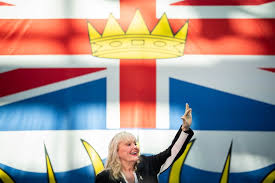
Kerry-Lynne Findlay Won the Leadership. Now She Has to Win British Columbia.
-
media2 weeks ago
CBS News Ousts Scott Pelley After Explosive Confrontation with New Executive Producer