General
Diplomatic Breakthrough Looms as Iran Positively Reviews Ceasefire Proposal
Iran is reportedly ‘positively reviewing’ a two-week ceasefire proposal, sparking market gains and hope for a diplomatic resolution to regional conflict.


A Shift in Rhetoric Amid Regional Tensions
In a potential turning point for Middle Eastern stability, reports have emerged indicating that Iran is “positively reviewing” a newly proposed ceasefire agreement. This development, first reported via Reuters citing a senior Iranian official, has introduced a rare glimmer of diplomatic optimism into a conflict characterized by escalating military strikes and retaliatory maneuvers.
The Two-Week Proposal and Washington’s Response
The core of the current diplomatic push centers on a two-week cessation of hostilities. While details remain fluid, White House Press Secretary Karoline Leavitt confirmed to Axios that President Trump has been briefed on the proposal. The administration is currently evaluating the terms, with a formal response expected shortly. This follows recent comments from Vice President JD Vance, who suggested that military objectives in the region were largely complete and hinted that a diplomatic resolution might be on the horizon.
Market Volatility and Real-World Friction
Financial markets reacted swiftly to the news, with the S&P 500 climbing from 6585 to 6606 immediately following the headlines. Investors appear eager to shift their focus from geopolitical risk to economic fundamentals. However, the phrase “positively reviewing” remains ambiguous, leaving analysts to debate whether it signals an imminent acceptance or merely a willingness to stay at the negotiating table.
A Dangerous Inflection Point
Despite the positive diplomatic signals, the situation on the ground remains volatile. Reports of aerial strikes on critical infrastructure, including bridges within Iran, continue to surface alongside accounts of Iranian counter-strikes. This duality of progress in words and destruction in deeds underscores the fragility of the current moment. For now, the international community remains in a state of cautious anticipation, hoping that the “positive review” translates into a lasting de-escalation of a conflict that has been defined by misinformation and rapid military escalation.

Environment
B.C. Wildfire Service Braces for ‘Significant Weather Day’ as Heatwave Peaks
BC Wildfire Service prepares for a critical weather peak as heat warnings expand. New evacuations ordered near Boston Bar amid ‘out of control’ fire growth.

Rising Temperatures and Low Water Levels Challenge Firefighters
As a punishing heatwave spreads across British Columbia, incident commanders are sounding the alarm over a projected peak in temperatures that could trigger new wildfire starts. Hugh Murdoch, incident commander for the Bootleg Complex near Kimberley, confirmed that while fire growth has been minimal over recent days thanks to favorable conditions, crews are now bracing for a “significant weather day” this Thursday. The complex currently consists of seven active fires, including two classified as wildfires of note that have forced evacuation alerts for city residents.
Strategic Shifts Amidst Extreme Conditions
To combat the intensifying heat and drying forest fuels, the BC Wildfire Service is pivoting its strategy. Firefighters are currently developing an expansive water delivery system utilizing helicopters to ferry supplies to the front lines. This logistical shift is necessitated by historically low streamflows in the region, which have made traditional ground-based water sourcing increasingly difficult. This ridge of high pressure, as identified by Environment Canada, is not only driving up temperatures but also contributing to stagnant air and worsening visibility across the province.
Evacuations and Air Quality Warnings
The urgency of the situation was underscored on Tuesday south of Boston Bar, where a fast-moving blaze prompted immediate evacuation orders. Although many residents in the community—located approximately 200 kilometers northeast of Vancouver—had already been advised to leave due to nearby fires, the new blaze was described as out of control and spreading with such velocity that those remaining were placed in immediate danger. The Fraser Valley Regional District has since mandated that all residents exit the area without delay.
Provincial Outlook and Safety Risks
The BC Wildfire Service’s latest situational report warns that the combination of limited precipitation and high heat is rapidly reducing fuel moisture levels. This trend is expected to persist throughout the week, particularly in the northeastern and central regions where smoke density is projected to increase. Air quality advisories currently blanket much of B.C. as more than 80 wildfires continue to burn, prompting officials to urge the public to remain vigilant and prepared for rapid changes in fire behavior as the heat ridge moves across the province.
Finance
Bank of Canada Holds Rates Steady at 2.25% Amid Geopolitical Oil Volatility
The Bank of Canada holds its key interest rate at 2.25%, balancing economic recovery confidence against inflation risks from global energy market volatility.

Central Bank Maintains Status Quo Amid Economic Recovery
The Bank of Canada announced on Wednesday that it will maintain its benchmark interest rate at 2.25 per cent for the sixth consecutive time. The decision, which aligns with broad economist expectations, reflects a growing confidence within the central bank that the domestic economy is successfully navigating a series of recent headwinds, including a surprising contraction at the beginning of the year.
Navigating the Impact of Global Conflict
Bank of Canada Governor Tiff Macklem addressed the ongoing uncertainty stemming from the conflict in Iran, which has sent global energy prices soaring. While inflation reached 3.2 per cent in May primarily due to gasoline costs, the bank remains optimistic that these spikes have not yet broadly permeated the consumer basket. However, Macklem warned that the governing council remains vigilant. Should supply chain bottlenecks in the Strait of Hormuz persist or energy prices remain elevated, the bank is prepared to implement further rate hikes to prevent inflation from becoming entrenched.
Forecast for Growth and Resilience
Despite a sluggish start to 2026 marked by slowing population growth and trade tariffs, the bank’s updated monetary policy report projects a second-quarter growth rebound of 2.5 per cent. This recovery is expected to be driven by a stabilization in the housing market, consumer resilience, and a notable momentum in exports to the United States. Macklem noted that Canadian businesses are proving adaptable, reconfiguring supply chains to maintain operations despite global instability.
The Long Road to Two Per Cent Inflation
The central bank anticipates that the knock-on effects of Middle Eastern hostilities will continue to influence grocery and fuel prices through early 2027. While a weak Canadian dollar may drive up the cost of imported goods, economists from CIBC suggest that there is still significant slack in the economy. This output gap supports the current projection that rates will likely remain on hold for the remainder of 2026 as the bank strikes a delicate balance between supporting recovery and curbing persistent price pressures.
Astronomy
Celestial Spectacle: Rare ‘Blaze Star’ Explosion Predicted to Appear in the Night Sky
T Coronae Borealis is set for a rare nova explosion. Learn how to spot this ‘Blaze Star’ as it brightens to rival the North Star in a once-in-a-lifetime event.
A Once-in-a-Lifetime Cosmic Event
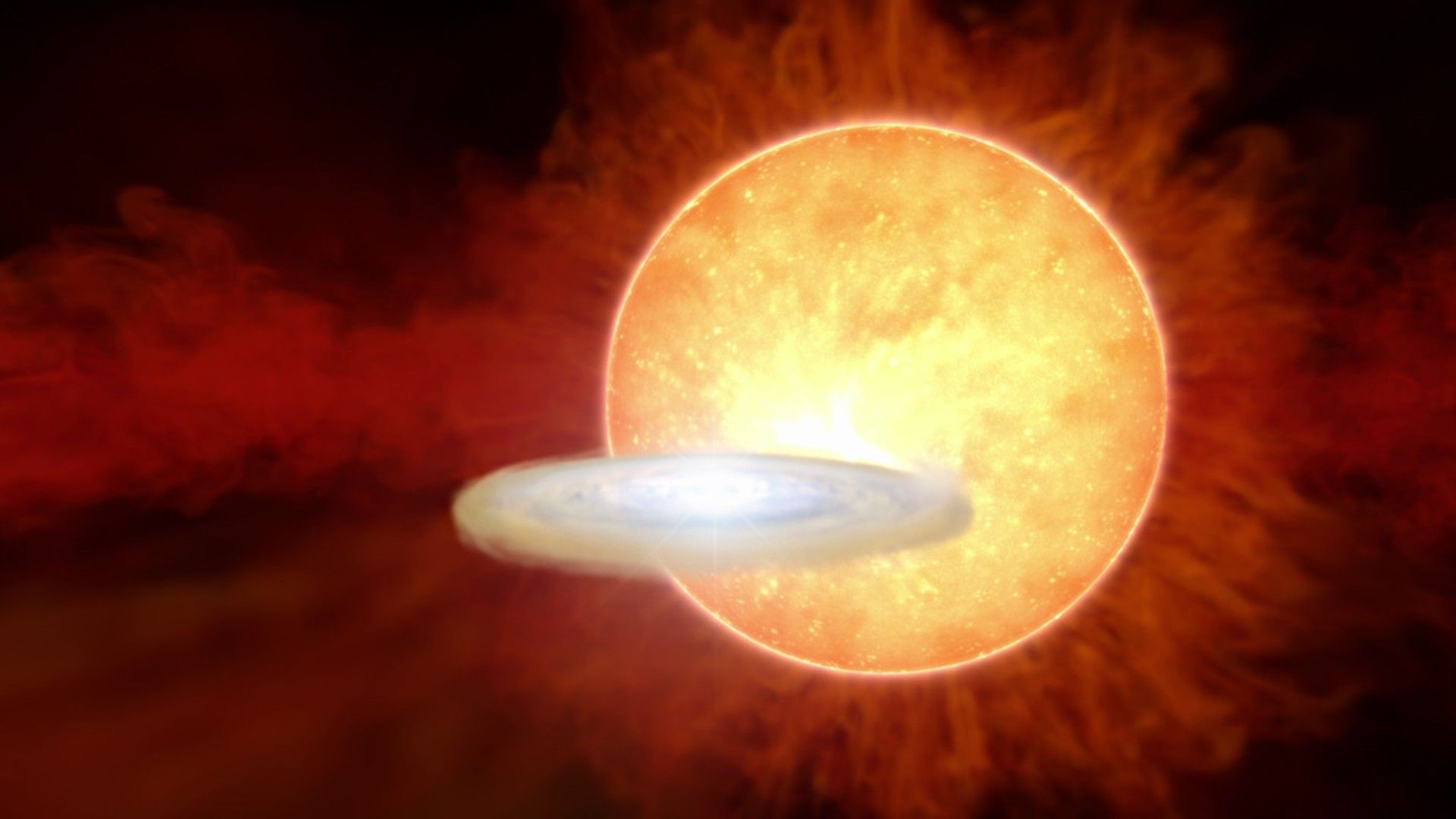
Astronomers and stargazers alike are on high alert for a rare celestial phenomenon: the sudden appearance of a ‘new’ star in the night sky. The star system T Coronae Borealis, commonly known as the ‘Blaze Star,’ is expected to undergo a cataclysmic thermonuclear eruption at any moment. This event, known as a recurring nova, occurs approximately once every 80 years, making it a once-in-a-lifetime viewing opportunity for most people on Earth.
The Science Behind the Blast
T Coronae Borealis (T CrB) is a binary system located 3,000 light-years away, consisting of a white dwarf and a red giant. In a ‘vampiric’ relationship, the white dwarf continuously strips hydrogen-rich material from its larger companion. Once this material reaches a critical mass on the white dwarf’s surface, it triggers a massive thermonuclear explosion. Unlike a supernova, which marks the death of a star, this nova leaves the white dwarf intact to begin the cycle of feeding and erupting all over again.
When and How to Watch
While the exact timing remains elusive, NASA scientists and astrophysicists believe the eruption is imminent. Historically, the system follows an 80-year cycle, with the last major event occurring in 1946. When the nova finally ignites, T CrB will jump from its usual invisible magnitude of +10 to a magnitude of +2. This surge will make it as bright as Polaris, the North Star, and easily visible to the naked eye even in areas with moderate light pollution.
Finding the Northern Crown
To witness this fleeting event, observers should look toward the constellation Corona Borealis, or the ‘Northern Crown.’ This small, semicircular cluster of stars sits between the constellations Hercules and Bootes. Once the eruption begins, the ‘Blaze Star’ will remain visible to the naked eye for less than a week before fading back into obscurity for another eight decades. Astronomers recommend using binoculars or a small telescope now to familiarize yourself with the region of the sky just one degree to the lower right of the star Epsilon Coronae Borealis.

Where Provincial Jobless Rates Stood in September
What New Brunswick’s Latest Unemployment Figures Mean for Your Community

Who Is Running in Your Riding for the 2026 BC Election?

How Central Okanagan Residents Can Avoid Costly Household Plumbing Damage This Thanksgiving

BC Supreme Court Judge Set to Rule on Sentence Length for Former Gang Member

Loss of Newborn Calf Puts Fresh Focus on Endangered Southern Resident Whales

Opinion: John Rustad Has to Go

B.C. Supreme Court Grants Cowichan Tribes Title to Historic Richmond Lands and Fishing Rights

Vancouver Canucks Gear Up for a Make-or-Break 2025–26 Season

Province to Appeal Cowichan Tribes Land Decision

Kamloops Prepares Four Reverse Referendums on $188M in Major Projects

Kamloops Blazers Announce Off-Season Changes Ahead of 2025–26 Season
-

 LOCAL6 days ago
Have You Seen Him? Public Help Sought in Locating Missing Traveller Last Seen in Kamloops
-

 BC STORIES6 days ago
Why a Familiar Political Name is Joining the Kamloops-North Thompson Race
-
LOCAL6 days ago
Your Current 3 Day Forecast — October 4, 2026
-

 LOCAL6 days ago
Two Displaced as Investigators Eye Suspicious Four-Plex Fire in Kelowna
-

 OPINIONS3 days ago
B.C. Election Poll Puts Conservatives Ahead Five Points as Cost of Living Tops Voters’ Concerns
-

 COMMUNITY4 days ago
Why Okanagan Pet Owners Turned to Free BC SPCA Clinics After Wildfire Season
-

 BC STORIES3 days ago
B.C. Patients Could Soon Select Surgical Lists Based on Wait Times Under NDP Plan
-
LOCAL5 days ago
Your Current 3 Day Forecast — October 5, 2026