Infrastructure
Poilievre Slams High-Speed Rail Plan as a ‘$90-Billion Liberal Boondoggle’
Pierre Poilievre calls the $90-billion Toronto-Quebec City high-speed rail a ‘boondoggle,’ sparking a fierce debate over spending and land expropriation.


Conservative Leader Demands Cancellation of Toronto-Quebec City Rail
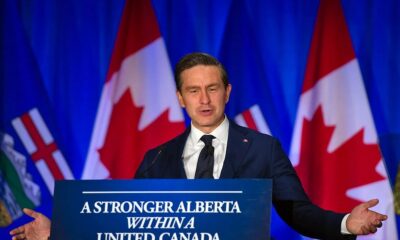
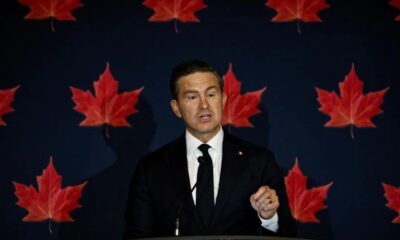
Conservative Leader Pierre Poilievre has called on the Liberal government to immediately scrap its ambitious high-speed rail project linking Toronto and Quebec City. Speaking at a news conference near Peterborough, Ontario, Poilievre described the multi-billion-dollar infrastructure plan as a “ridiculous pie-in-the-sky Liberal spending initiative” and a significant waste of taxpayer funds.
The project, currently estimated to cost between $60 billion and $90 billion, aims to connect major urban centers including Toronto, Ottawa, Montreal, and Quebec City. If completed, the rail network would slash travel times between Montreal and Toronto to just three hours—roughly half the current driving time. Despite these promises of efficiency, Poilievre remains unconvinced, labeling the initiative a “$90-billion Liberal boondoggle” that lacks financial viability.
Concerns Over Land Expropriation and Costs
A central point of contention in the debate is the potential for land expropriation. Alto, the Crown corporation managing the project, recently announced plans to contact property owners between Ottawa and Montreal for land assessments. While Alto CEO Martin Imbleau has stated a preference for fair settlements, he acknowledged that expropriation remains a possibility to ensure the project’s completion. Poilievre seized on this issue, characterizing the move as a “Liberal land grab” and criticizing the government’s recent legislative changes intended to expedite land acquisition.
Prime Minister Mark Carney has suggested the rail line could be designated a project of “national interest,” a move that would streamline federal powers to acquire necessary corridors. This has fueled anxiety among rural residents and farmers whose land sits along the proposed—but yet to be finalized—route.
Diverging Political Visions for Transit
The opposition from the Conservative leader highlights a growing divide over Canada’s infrastructure future. While Poilievre advocates for fiscal restraint and the protection of property rights, other leaders have expressed qualified support. Ontario Premier Doug Ford has signaled interest in the project, though he has specifically suggested the Toronto-to-Ottawa segment should follow the existing Highway 401 corridor to minimize disruption.
As Alto prepares to finalize the exact route by the end of this year, the project remains a lightning rod for political debate. Construction is currently slated to begin on the Ottawa-Montreal leg toward the end of the decade, but its future may ultimately depend on the outcome of the next federal election.





business
Gordie Howe Bridge Set for July 27 Launch Following Major U.S.-Canada Revenue Renegotiation
The Gordie Howe International Bridge will open July 27 following a new revenue-sharing deal between Canada and the U.S. affecting toll profits and governance.
A New Era for North American Trade
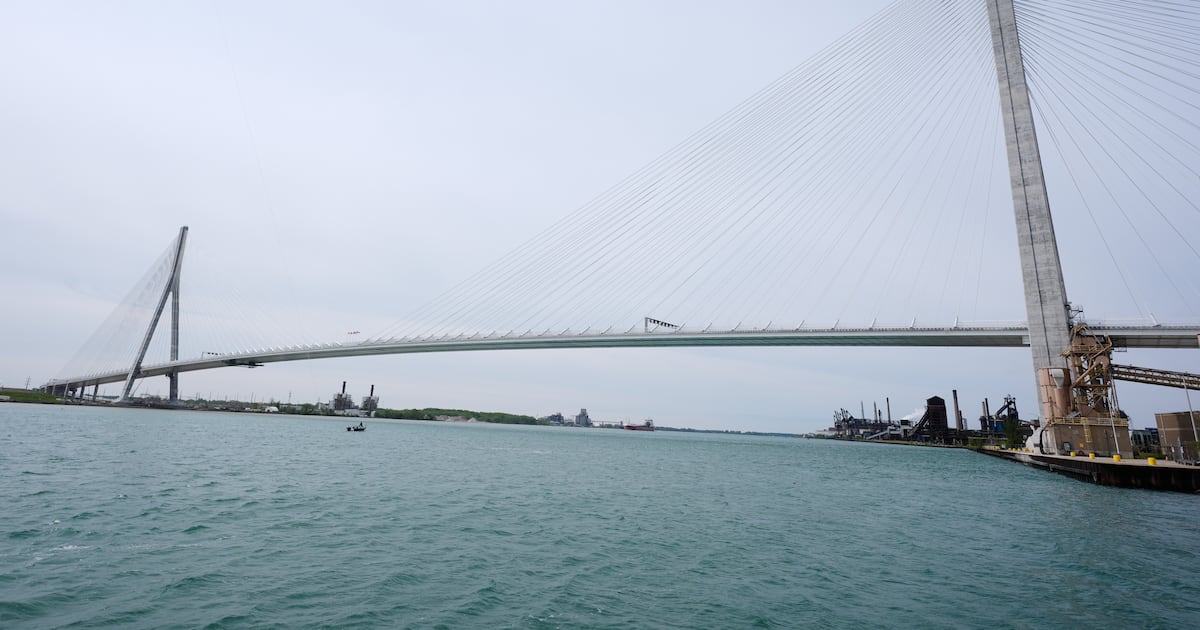
After months of anticipation and high-stakes diplomatic maneuvering, the Gordie Howe International Bridge is officially scheduled to open to traffic on July 27. Housing, Communities and Infrastructure Canada confirmed the late-July launch on Friday, marking a pivotal moment for the busiest trade corridor in North America. The new cable-stayed bridge, which connects Windsor, Ontario, to Detroit, Michigan, is expected to provide critical relief to the aging Ambassador Bridge and streamline logistics for the thousands of businesses that rely on the crossing daily.
The Cost of Diplomacy: Revenue Sharing Shifts
While the opening date provides certainty for the region, it comes at a significant financial cost to Canada. Under the original 2012 Canada-Michigan Crossing Agreement, Canada agreed to front the entire $6.4 billion construction cost. In exchange, Canada was slated to collect 100 per cent of all toll profits until the investment was fully recouped—a process estimated to take approximately 50 years. However, the new terms announced Friday reveal a major concession: Canada will now receive only 50 per cent of toll profits for the first 15 years.
The remaining 50 per cent of revenue will be diverted into a newly established economic development fund. Furthermore, the Canadian government has agreed to a oversight mechanism where the United States must approve any toll changes that exceed 10 per cent or fall below regional averages. These adjustments follow intense public pressure from U.S. political figures, including Donald Trump, who recently characterized the original deal as unfair to American interests.
A Catalyst for Economic Growth
Despite the revenue concessions, officials on both sides of the border emphasize the long-term benefits of the project. The bridge features six lanes—three in each direction—and will rank among the five longest bridges on the continent. Beyond easing commuter congestion, the infrastructure is designed to bolster the automotive supply chain and support the rapid movement of goods between the two nations. As the ribbon-cutting ceremony nears, the Gordie Howe International Bridge stands as both a feat of modern engineering and a symbol of the complex, evolving economic partnership between Canada and the United States.
Economy
Transparency Concerns Mount Over Mark Carney’s Multi-Billion Dollar Summer Spending Blitz
Economists criticize Prime Minister Mark Carney’s recent multi-billion dollar infrastructure announcements for a lack of fiscal transparency and detail.

A Flurry of Announcements with Few Details
Prime Minister Mark Carney’s recent tour through Western Canada has sparked a heated debate among economists regarding fiscal transparency. During stops in British Columbia and Alberta, the Prime Minister unveiled a series of massive infrastructure commitments, including a proposed southern route for a new oil pipeline and significant port upgrades. While the rhetoric focused on “catalytic” investments meant to attract $200 billion in private capital, the lack of granular data concerning the source and structure of these funds has left experts unsettled.
The Pipeline Paradox
Central to the spending spree is a new West Coast oil pipeline project led by the federally owned Trans Mountain Corp. While the federal government remained tight-lipped on the price tag, Alberta provincial documents estimate the project could cost between $35.2 billion and $43.7 billion. This proposed pipeline is expected to be larger and higher-capacity than the recently completed Trans Mountain Expansion (TMX). However, officials provided no breakdown on whether these costs would be managed through direct spending, government-backed loans, or federal loan guarantees.
Economists Raise the Alarm
The lack of clarity has drawn sharp criticism from veteran policy experts. Don Drummond, a professor at Queen’s University and a former senior finance official, noted that he has not seen such a lack of transparency in federal budgeting since 1977. Drummond and his colleagues at the C.D. Howe Institute, who track the federal deficit through “shadow budgets,” expressed frustration that they cannot determine if these announcements represent capital purchases, amortization, or off-book liabilities.
Looking Toward the Fall Budget
Supporters of the government, including former fiscal advisors, argue that it is premature to release specific figures while financing structures are still being negotiated. They point to the eventually profitable nature of the original TMX as a precedent for long-term dividends. Nevertheless, with roughly $20 billion earmarked for B.C. infrastructure alone—including port expansions and transmission lines—market analysts like Jimmy Jean of Desjardins Group suggest that without knowing what has been pre-committed from existing funds like the Canada Infrastructure Bank, the true state of Canada’s balance sheet remains a mystery until the fall budget.
Canada Stories
Ottawa Unveils $10 Billion Infrastructure Windfall for Quebec Transit and Health Care
Prime Minister Mark Carney announces a $10 billion infrastructure deal for Quebec, funding transit, hospitals, and housing over the next decade.

A Decadal Investment in Quebec’s Future
In a significant move to modernize regional infrastructure, Prime Minister Mark Carney and Quebec Premier Christine Frchette announced a massive $10 billion federal funding package on Tuesday. Spanning the next decade, the investment targets critical sectors including public transit, health care, and housing, effectively resolving long-standing negotiations between the federal government and the province.
Transforming Transit and Electrification
The centerpiece of the agreement is a $5.7 billion allocation from the Canada Transit Fund. These funds are earmarked for high-priority projects such as the Quebec City tramway, the revitalization of Montreal’s mtro stations, and the expansion of bus networks. Additionally, $400 million has been designated for the Zero Emission Public Transit Fund, which will facilitate 11 electrification projects aimed at reducing the province’s carbon footprint.
Modernizing Aging Healthcare and Housing
Beyond transportation, $3.6 billion is allocated under the Build Communities Strong Fund. This capital is intended to address the aging state of Quebec’s public assets, many of which date back to the 1960s. Specifically, the deal outlines modernization efforts for 17 hospitals, including the Maisonneuve-Rosemont and Charles-Le Moyne facilities. The funds will also support the construction of new university campuses and community centers, bridging the gap in housing and higher education infrastructure.
Political Implications Ahead of October Election
The timing of the announcement has drawn scrutiny from the Parti Qubcois, with leader Paul St-Pierre Plamondon suggesting the deal is an attempt by Ottawa to influence the upcoming October general election. While Premier Frchette celebrated the deal as a victory for provincial jurisdiction and fair-share funding, Prime Minister Carney dismissed claims of political maneuvering, asserting that the agreement is a result of aligned priorities between levels of government to serve the public interest.

Where Provincial Jobless Rates Stood in September
What New Brunswick’s Latest Unemployment Figures Mean for Your Community

Who Is Running in Your Riding for the 2026 BC Election?

How Central Okanagan Residents Can Avoid Costly Household Plumbing Damage This Thanksgiving

BC Supreme Court Judge Set to Rule on Sentence Length for Former Gang Member

Loss of Newborn Calf Puts Fresh Focus on Endangered Southern Resident Whales

Opinion: John Rustad Has to Go

B.C. Supreme Court Grants Cowichan Tribes Title to Historic Richmond Lands and Fishing Rights

Vancouver Canucks Gear Up for a Make-or-Break 2025–26 Season

Province to Appeal Cowichan Tribes Land Decision

Kamloops Blazers Announce Off-Season Changes Ahead of 2025–26 Season

Kamloops Prepares Four Reverse Referendums on $188M in Major Projects
-

 LOCAL7 days ago
Have You Seen Him? Public Help Sought in Locating Missing Traveller Last Seen in Kamloops
-

 BC STORIES7 days ago
Why a Familiar Political Name is Joining the Kamloops-North Thompson Race
-
LOCAL6 days ago
Your Current 3 Day Forecast — October 4, 2026
-

 LOCAL7 days ago
Two Displaced as Investigators Eye Suspicious Four-Plex Fire in Kelowna
-

 COMMUNITY4 days ago
Why Okanagan Pet Owners Turned to Free BC SPCA Clinics After Wildfire Season
-

 OPINIONS4 days ago
B.C. Election Poll Puts Conservatives Ahead Five Points as Cost of Living Tops Voters’ Concerns
-
 BC STORIES4 days ago
B.C. Patients Could Soon Select Surgical Lists Based on Wait Times Under NDP Plan
-
LOCAL3 days ago
Your Current 3 Day Forecast — October 7, 2026