NATIONAL STORIES
A ‘Torpedo’ into the CPC: Peter MacKay Warns of Vulnerability After Recent Floor-Crossings
Former Conservative minister Peter MacKay warns that recent floor-crossings are a ‘torpedo’ to Pierre Poilievre’s leadership and a blow to the party.


The Political Impact of Defections
Peter MacKay, a central figure in the creation of the modern Conservative Party of Canada, is sounding the alarm over recent floor-crossings that have seen four members defect to the Liberal camp. MacKay, who served as a senior cabinet minister under Stephen Harper, described the trend as a “body blow” to the official opposition and a “torpedo” aimed at the leadership of Pierre Poilievre.
Speaking on the moral implications of party-switching, MacKay did not hold back, labeling the act as “morally repulsive.” However, his criticism also carried a pragmatic warning for the current leadership. MacKay suggested that Poilievre must “double his efforts” to secure the caucus as the party finds itself increasingly exposed to Liberal poaching attempts.
A History of High-Stakes Betrayals
MacKay is no stranger to the volatile nature of parliamentary loyalty. His political career was deeply shaped by high-profile defections, most notably in 2003 when Scott Brison joined the Liberals, and in 2005 when Belinda Stronach famously crossed the floor. The latter move helped sustain Paul Martin’s minority Liberal government and became one of the most talked-about moments in Canadian political history.
Reflecting on these experiences, MacKay noted that while he has seen these tactics before, it does not make the current situation any less dangerous for the Conservatives. “Pierre Poilievre is more vulnerable now than ever,” MacKay remarked, highlighting the potential for internal instability to overshadow the party’s message.
Caucus Unity Under Pressure
The warnings come amid reports of ongoing Liberal efforts to recruit Conservative MPs. Recently, Edmonton MP Billy Morin confirmed that Liberals had attempted to “poach” him, though he laughed off the interaction and reaffirmed his commitment to the Conservative caucus. Morin characterized the recruitment attempts as a “shameless Liberal power grab” and insisted that the opposition remains united.
Despite these public displays of loyalty, the psychological impact of four successful defections remains a concern for Conservative strategists. As the political landscape in Ottawa becomes increasingly polarized, the ability of Poilievre to keep his caucus together will be a defining test of his leadership ahead of the next federal election.





LOCAL
Where Provincial Jobless Rates Stood in September
Canada’s national unemployment rate reached 6.5 per cent in September. Explore the full provincial breakdown and regional employment figures from Statistics Canada.

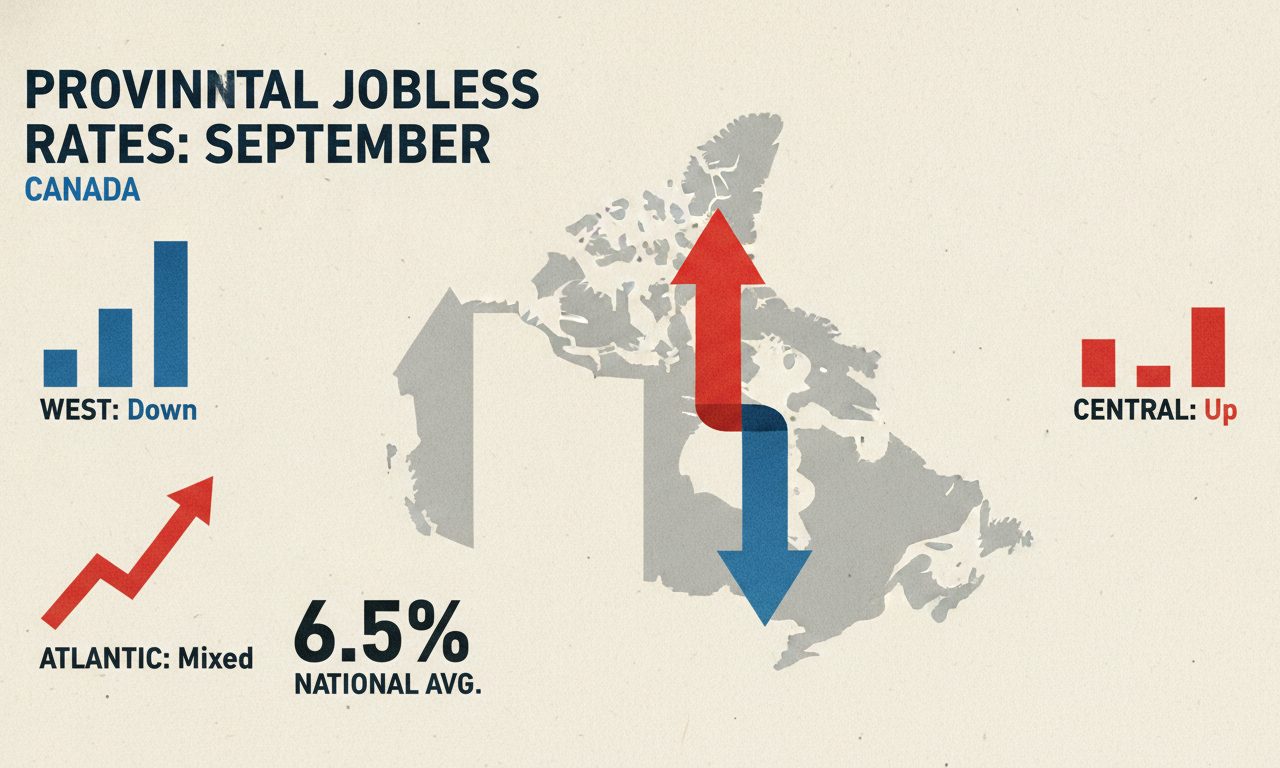
National and Provincial Jobless Figures
Canada recorded a national unemployment rate of 6.5 per cent in September, according to data released by Statistics Canada on Oct. 9, 2026.
Across Western Canada, British Columbia’s jobless rate shifted to 6.4 per cent from 6.5 per cent in August. Alberta recorded a rate of 6.4 per cent, down from 6.8 per cent the previous month, while Saskatchewan dropped to 5.4 per cent from 6.0 per cent. Manitoba’s unemployment rate remained unchanged at 5.0 per cent.
In Central Canada, Ontario’s unemployment rate rose slightly to 7.0 per cent from 6.9 per cent in August, while Quebec’s rate reached 6.0 per cent, up from 5.6 per cent.
Atlantic Canada and Regional City Data
In Atlantic Canada, Newfoundland and Labrador reported the highest provincial figure at 9.1 per cent, up from 8.6 per cent in August. New Brunswick saw a minor increase to 7.4 per cent from 7.3 per cent, and Nova Scotia rose to 6.3 per cent from 6.1 per cent. Prince Edward Island experienced a decline, moving to 7.3 per cent from 7.9 per cent.
Statistics Canada also tracked seasonally adjusted, three-month moving average rates for major urban areas. However, the agency cautioned that these municipal figures are subject to wide fluctuations due to smaller statistical sample sizes.
NATIONAL STORIES
What New Brunswick’s Latest Unemployment Figures Mean for Your Community
Statistics Canada reports New Brunswick’s unemployment rate reached 7.4% in September, as Canada lost 68,000 jobs nationally, raising the national rate to 6.5%.
Provincial Labor Market Holds Steady Overall
New Brunswick’s unemployment rate stood at 7.4 per cent in September, up slightly from 7.3 per cent in August, according to the latest figures from Statistics Canada. The provincial labor pool decreased by 200 people during the month, while overall employment dropped by 700 positions, including a loss of 400 full-time jobs. These monthly shifts remain within the agency’s margin of error.
On a year-over-year basis, the province’s economy continues to tread water. Although the current unemployment rate is lower than the 7.9 per cent reported last September, the total labor force remains virtually unchanged. Year-over-year employment shows a modest gain of 2,100 jobs, driven by an addition of 3,900 positions that was partially offset by a decline of 1,800 part-time roles.
National Employment Drops for Second Straight Month
Across Canada, the national economy shed 68,000 jobs in September, pushing the countrywide unemployment rate up to 6.5 per cent from 6.4 per cent in August. The contraction included declines of 35,000 full-time positions and 33,000 part-time jobs. September marked the second consecutive month of national employment losses, following a decrease of 42,000 jobs in August. These downturns come after a stretch of net growth from April to July, which had added 181,000 positions. Over the past year, national employment remains up by 95,000 jobs.
Regional Trends and Sector Shifts
Job losses across the country were led by Quebec, which lost 49,000 jobs, alongside British Columbia, down 20,000, and Manitoba, down 4,400. Conversely, gains were recorded in Alberta, up 23,000, Newfoundland and Labrador, up 1,800, and Prince Edward Island, up 1,000 positions.
Nationally, job declines were concentrated in educational services, manufacturing, as well as health care and social assistance. Growth was observed in repair and maintenance alongside personal or household services. Across the provinces, September unemployment rates ranged from a low of 5.0 per cent in Manitoba to a high of 9.1 per cent in Newfoundland and Labrador.
NATIONAL STORIES
Search Continues After Ontario-Based Medical Flight Vanishes Near Massachusetts Coast
U.S. Coast Guard crews are searching near Nantucket for a missing Latitude Air Ambulance jet carrying four Canadians and two passengers from Bermuda.

Emergency Search Underway Off Nantucket
Air and ground search teams are scanning waters approximately 150 kilometres southeast of Boston after a medical transport aircraft vanished early Saturday morning. Contact with the Gulfstream G100 jet was lost around 1:30 a.m. as it made its approach toward Boston from Bermuda, prompting a response from the U.S. Coast Guard following notification by the Federal Aviation Administration.
Flight Carrying Crew and Patients
The aircraft is operated by Hamilton-based Latitude Air Ambulance. According to Clarence Togeretz, operations manager for the company, six individuals were aboard the flight. The crew consists of two Canadian pilots and two Canadian medical staff members. They were transporting two Bermuda nationals, identified as a patient and a family member.
Response and Ongoing Inquiries
Togeretz confirmed that the company contacted American authorities after the plane failed to land on the tarmac as scheduled. He noted that this marks the first instance where the operator has lost contact with one of its aircraft, adding that the team is holding onto optimism while praying for a safe resolution. Latitude Air Ambulance has reached out to Transport Canada regarding the incident. Meanwhile, provincial air ambulance provider Ornge expressed support via social media, stating it hopes the aircraft and everyone on board are located safely and quickly.

Where Provincial Jobless Rates Stood in September
What New Brunswick’s Latest Unemployment Figures Mean for Your Community

Who Is Running in Your Riding for the 2026 BC Election?

How Central Okanagan Residents Can Avoid Costly Household Plumbing Damage This Thanksgiving

BC Supreme Court Judge Set to Rule on Sentence Length for Former Gang Member

Loss of Newborn Calf Puts Fresh Focus on Endangered Southern Resident Whales

Opinion: John Rustad Has to Go

B.C. Supreme Court Grants Cowichan Tribes Title to Historic Richmond Lands and Fishing Rights

Vancouver Canucks Gear Up for a Make-or-Break 2025–26 Season

Province to Appeal Cowichan Tribes Land Decision

Kamloops Blazers Announce Off-Season Changes Ahead of 2025–26 Season

Kamloops Prepares Four Reverse Referendums on $188M in Major Projects
-

 LOCAL7 days ago
Have You Seen Him? Public Help Sought in Locating Missing Traveller Last Seen in Kamloops
-

 BC STORIES7 days ago
Why a Familiar Political Name is Joining the Kamloops-North Thompson Race
-
LOCAL6 days ago
Your Current 3 Day Forecast — October 4, 2026
-

 LOCAL7 days ago
Two Displaced as Investigators Eye Suspicious Four-Plex Fire in Kelowna
-

 COMMUNITY4 days ago
Why Okanagan Pet Owners Turned to Free BC SPCA Clinics After Wildfire Season
-

 OPINIONS4 days ago
B.C. Election Poll Puts Conservatives Ahead Five Points as Cost of Living Tops Voters’ Concerns
-

 BC STORIES4 days ago
B.C. Patients Could Soon Select Surgical Lists Based on Wait Times Under NDP Plan
-
LOCAL3 days ago
Your Current 3 Day Forecast — October 7, 2026