Geopolitics
Global Markets Braced as Iran Blockade Sparks Trump Warning and Oil Volatility
Dow Jones futures react as President Trump warns Iran over a blockade in the Strait of Hormuz, sparking concerns over global oil supply and market stability.


Rising Tensions in the Strait of Hormuz
International markets are entering a period of heightened uncertainty following reports of a maritime blockade in the Strait of Hormuz. The strategic waterway, responsible for the passage of roughly one-fifth of the world’s oil consumption, has become the center of a geopolitical standoff. Investors are closely monitoring the situation as any prolonged disruption to crude supply could lead to a significant spike in energy prices and broader inflationary pressure.
President Trump Issues Stern Warning
In response to the escalating situation, President Trump has issued a series of warnings to Tehran, cautioning against further provocative actions that could destabilize global trade. The administration has signaled that it is prepared to take necessary steps to ensure the freedom of navigation in international waters. This rhetoric has added a layer of complexity to the Dow Jones futures, which saw immediate fluctuations as traders weighed the possibility of military escalation against the potential for a diplomatic resolution.
Market Implications and Investor Sentiment
The immediate reaction in the futures market highlights the sensitivity of global equities to Middle Eastern stability. Energy stocks are seeing increased activity, while broader indices face pressure from the looming threat of supply chain interruptions. Financial analysts suggest that if the blockade persists, we may see a flight to safe-haven assets, including gold and treasury bonds. For now, the investment community remains in a ‘wait and see’ mode, awaiting further developments from both the White House and international maritime monitors.
Strategic Importance of the Region
The Strait of Hormuz remains the world’s most important oil transit chokepoint. With limited alternative routes for oil exports from the Persian Gulf, even a partial blockade can have immediate consequences for global refinery operations. As the situation evolves, the focus will remain on whether international coalitions will intervene to escort commercial vessels, a move that could either de-escalate the supply threat or further inflame regional tensions.

Finance
Global Markets Rally as Historic U.S.-Iran Deal Set to Reopen Strait of Hormuz
Oil prices plunge as the U.S. and Iran reach a historic deal to reopen the Strait of Hormuz, ending a 100-day closure and signaling a shift in global energy.

A Watershed Moment for Global Energy Security
In a move that has sent shockwaves through global energy markets, oil prices plummeted in early Monday trading following the announcement of a landmark diplomatic breakthrough between the United States and Iran. The agreement aims to reopen the Strait of Hormuz, a critical maritime chokepoint that has remained closed for over 100 days, stifling global supply chains and driving volatility across the energy sector.
Crude Prices React to Geopolitical De-escalation
Following the news, Brent crude fell by 3.95% to $83.88 per barrel, while West Texas Intermediate (WTI) dropped 4.62% to sit at $80.96. The price correction comes after weeks of downward trending on the back of rumors regarding a potential deal, despite several military escalations in the region. Analysts suggest that the reopening of the Strait could restore a sense of normalcy to the market that has been absent since the conflict began three months ago.
The Details of the Swiss Accord
President Trump confirmed via social media that a deal had been reached, stating that “oil will flow” once the memorandum of understanding is formally signed in Switzerland this coming Friday. The deal, mediated by Pakistan and Qatar, reportedly includes a 60-day ceasefire, the suspension of specific sanctions on Iranian oil, and the release of $24 billion in frozen Iranian assets. Crucially, the agreement mandates that Iran will refrain from nuclear weapons production and allows for the immediate resumption of crude exports during the ceasefire period.
Fragile Peace Faces Immediate Hurdles
Despite the optimism, the diplomatic path remains treacherous. A recent Israeli air strike on southern Beirut nearly derailed the negotiations, prompting an immediate call for restraint from the White House. Furthermore, while the agreement signals a significant step toward peace, traders remain cautious. The physical reopening of the Strait requires the clearing of naval mines and the formal restoration of shipping insurance protocols. Until the first tankers pass safely through the waterway, the market will likely maintain a posture of guarded optimism.
Finance
Oil Prices Pivot as U.S. Strikes in Iran Dampen Hopes for Diplomatic Breakthrough
U.S. strikes on Iranian targets send oil prices surging, complicating diplomatic deal hopes and raising fears of a global recession via the Strait of Hormuz.

Volatility Returns to Energy Markets
Oil prices surged during early Tuesday trading in Asia, effectively erasing a significant portion of Monday’s 5% slump. The sudden price reversal follows reports of fresh U.S. military strikes targeting missile sites and naval vessels in southern Iran. While markets had previously rallied on optimism that a framework agreement between Washington and Tehran was within reach, the latest kinetic action has introduced a new layer of uncertainty into the nearly three-month-long regional crisis.
The Multi-Front Conflict in the Persian Gulf
The U.S. Central Command (CENTCOM) defended the operations as a matter of ‘self-defense.’ Capt. Tim Hawkins, a spokesperson for Central Command, emphasized that the U.S. military continues to protect its assets while attempting to maintain restraint under the conditions of an ongoing, albeit fragile, ceasefire. However, the strikes have complicated the security landscape in the Persian Gulf and around the critical Strait of Hormuz. Despite President Donald Trump’s recent public assurances that the Strait would soon reopen for free navigation, vessel traffic remains inconsistent, with only a marginal uptick in energy cargoes reaching international buyers.
The Disconnect Between Diplomacy and Fundamentals
For several weeks, the noise surrounding potential diplomatic deals has largely overshadowed market fundamentals. Traders have been quick to price in the possibility of a resolution, often ignoring the reality of a global energy crunch caused by Middle Eastern supply being trapped behind the blockade. This optimistic bias has led to sharp price swings, but experts warn that the underlying supply deficit cannot be ignored forever. The current situation suggests that geopolitical ‘noise’ may be blinding investors to the actual risks of a prolonged shutdown.
Economic Warning Signs and the Threat of Recession
The stakes for the global economy are high. Fereidun Fesharaki, Chairman Emeritus of energy consultancy FGE NexantECA, recently told CNBC that the market must prepare for a significant price spike in July. Fesharaki warned that a four-month closure of the Strait of Hormuz is a ‘recipe for disaster’ that could trigger a global recession. While market participants are currently clinging to every piece of positive diplomatic news, the reality of military escalation suggests that the ‘worst-case scenario’ may be closer than many are willing to admit.
Conflict Analysis
Escalation or Desperation? Understanding Russia’s New Wave of Threats Against Kyiv
Russia intensifies threats against Kyiv as the war enters its fifth year. Analysts examine if the new rhetoric signals military escalation or desperation.
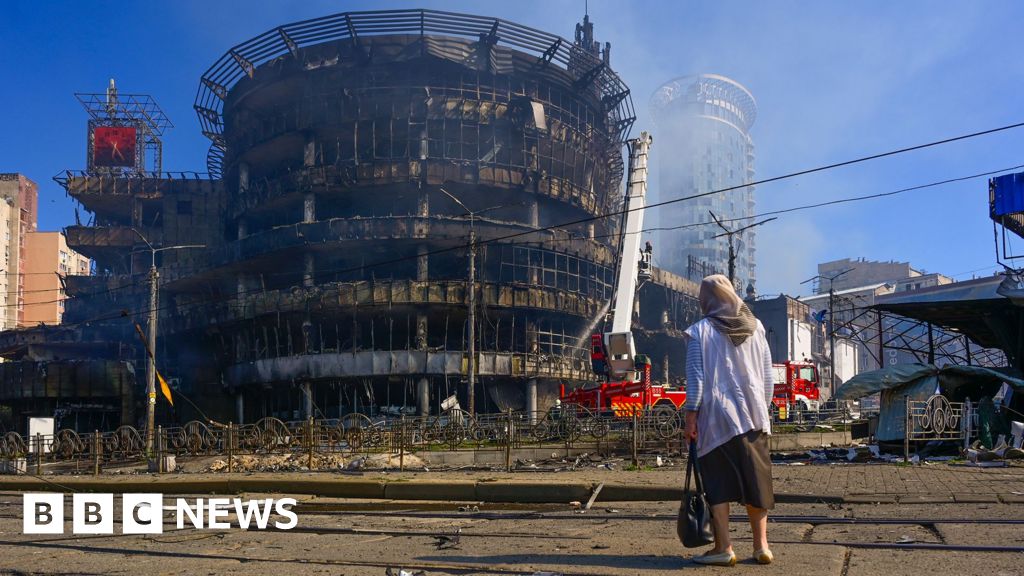
The Kremlin’s Tactical Shift in Rhetoric
In recent days, Moscow has significantly intensified its verbal assaults on Ukraine, warning of “consistent, systematic strikes” specifically targeting Kyiv’s military-industrial complex. Perhaps more alarming is the Kremlin’s directive for foreign citizens and diplomatic personnel to evacuate the capital immediately. While Russia has targeted Ukrainian urban centers for years, the specific language currently being employed suggests a strategic pivot in how the Kremlin justifies its ongoing offensive.
The Luhansk Pretext and Domestic Pressure
The latest escalation is ostensibly tied to an incident in Starobilsk, Luhansk province, where Moscow claims a Ukrainian strike killed 21 students. Although Kyiv maintains the target was a legitimate military facility, Russia is leveraging the event as a moral justification for retaliation. Analysts suggest this narrative is less about the incident itself and more about managing domestic unrest. Military analyst Ivan Stupak notes that as the Russian economy faces strain, the Kremlin feels mounting pressure to deliver “revenge” to a frustrated public.
Psychological Warfare and Battlefield Stagnation
Andrii Kovalenko of Ukraine’s National Security and Defence Council argues that these threats are a form of psychological operations intended to compensate for a lack of strategic progress on the front lines. By ordering diplomats to leave, Moscow hopes to fracture European support and create a sense of panic among Ukraine’s allies. Furthermore, the rhetoric serves to distract from Ukraine’s successful long-range strikes inside Russian territory, which have exposed vulnerabilities in Moscow’s own air defense systems.
Resource Constraints and the ‘Oreshnik’ Factor
The war, now entering its fifth year, presents a grim outlook for Russian manpower. The Institute for the Study of War reports that Russian casualties have outpaced recruitment for five consecutive months. To maintain momentum, the Kremlin may soon face the politically risky decision of forced economic mobilization. In the meantime, Russia has resorted to high-profile displays of force, such as the use of the Oreshnik hypersonic missile. While these weapons are currently being used largely for propaganda and remain in short supply, their deployment signals a dangerous new phase of the conflict where the line between conventional warfare and total escalation continues to blur.
Maple Leafs Secure Top Pick as NHL Reveals Official 2026 Draft Order
Unfreezing the Market: Carney and Eby Unveil $3.2B Housing and Transit Package
Alberta Affordability Payments: $100 Relief Direct Deposits to Arrive Within Two Weeks
Ebola Crisis Escalates in Central Africa as Cases Surge 40% in One Week
History Made: Canada Records First-Ever World Cup Victory in Dominant 6-0 Rout of Qatar
The End of an Era: CBC to Stop Airing NHL Games as ‘Hockey Night in Canada’ Leaves Free TV

Opinion: John Rustad Has to Go

B.C. Supreme Court Grants Cowichan Tribes Title to Historic Richmond Lands and Fishing Rights

Vancouver Canucks Gear Up for a Make-or-Break 2025–26 Season

Province to Appeal Cowichan Tribes Land Decision

Kamloops Prepares Four Reverse Referendums on $188M in Major Projects

Kamloops Blazers Announce Off-Season Changes Ahead of 2025–26 Season
-

 OPINIONS2 weeks ago
Kerry-Lynne Findlay Won the Leadership. Now She Has to Win British Columbia.
-
National News2 weeks ago
Canada to Ban Social Media for Minors Under 16 as Carney Government Unveils Online Safety Bill
-
Energy & Resources1 week ago
Canada Shifts Energy Policy: Hodgson Declares End of Apologies for Oil Sands Success
-
LOCAL1 week ago
Where to Watch the 2026 FIFA World Cup in Vancouver: Top Bars, Patios, and Fan Zones
-
Canadian News1 week ago
Beyond the Brochures: The Reality of Life in Alberta’s Changing Landscapes
-
POLITICS1 week ago
B.C. Conservatives Overtake NDP in New Post-Leadership Poll
-
Hockey1 week ago
NHLPA Demands Investigation Resumes as Oilers Eye Mike Babcock for Potential Role
-
Middle East2 weeks ago
Fragile Calm Returns as Iran and Israel Halt Direct Strikes Following Trump Intervention