POLITICS
Meloni Fires Back at Trump After ‘Begging’ Claim Sparks Diplomatic Row
Italian PM Giorgia Meloni slams Donald Trump after he claimed she ‘begged’ for a photo, causing a diplomatic rift and the cancellation of a key US visit.

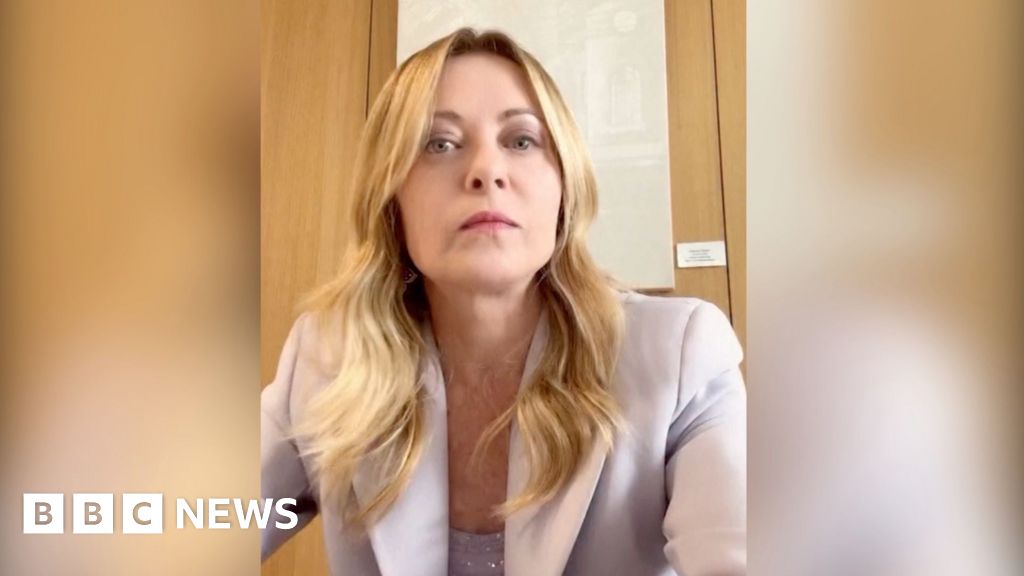
A Public Rift Erupts at the G7
Diplomatic relations between Washington and Rome have hit a new low following a highly public exchange between Italian Prime Minister Giorgia Meloni and U.S. President Donald Trump. The controversy ignited after Trump claimed in a televised interview that Meloni had "begged" him for a photograph during the recent G7 summit in vian-les-Bains, France. The assertion has triggered a sharp rebuke from the Italian leader and led to the immediate cancellation of a high-level diplomatic visit to the United States by Italy’s Foreign Minister, Antonio Tajani.
Meloni Responds: ‘Italy Never Begs’
Reacting with visible disbelief via a video address to her seven million Instagram followers, Prime Minister Meloni expressed her shock at the President’s characterization of their interaction. "I can only say it is regrettable he does not show the same determination towards the enemies of the West," Meloni stated, pointedly referencing Trump’s more accommodating stance toward adversarial leaders. She concluded her response with a firm defense of national pride: "There is one thing he needs to remember: neither I nor Italy ever beg."
From Allies to Adversaries
The fallout marks a significant deterioration in a relationship that was once seen as a strategic bridge between the European Union and the Trump administration. Meloni, who attended Trump’s 2025 inauguration, has increasingly clashed with the White House over the U.S. military intervention in Iran. The tension surfaced earlier this year when Trump told the Italian press he was "wrong" about Meloni’s courage, signaling a shift from their initial political alignment.
United Front in Rome
In a rare display of domestic unity, political figures across the Italian spectrum have rallied behind the Prime Minister. President Sergio Mattarella reportedly phoned Meloni to offer personal support, while opposition leaders from the Democratic Party and the Five Star Movement condemned Trump’s "arrogant tone" and "humiliating" rhetoric. Supporters of Meloni’s Brothers of Italy party suggest that Trump’s outbursts are a reaction to Italy’s willingness to say "no" to Washington on key foreign policy issues, rather than a reflection of the actual events at the G7.

General
Alberta Premier’s Top Aide Sparks Firestorm Over First Nations Criticism
Alberta Premier Danielle Smith’s top aide faces backlash after telling First Nations chiefs to fix their own communities instead of accusing Smith of treason.

Escalating Tensions in Alberta’s Separation Debate
The political landscape in Alberta has reached a fever pitch as Bruce McAllister, the executive director of Premier Danielle Smith’s office, issued a scathing social media post targeting First Nations leadership. McAllister’s comments come in response to an Assembly of Treaty Chiefs vote requesting an RCMP investigation into whether the province’s upcoming October 19 separation referendum constitutes criminal treason.
McAllister dismissed the chiefs’ legal concerns as “childish nonsense” and suggested that indigenous leaders should focus on internal community issues rather than criticizing the provincial government. He specifically cited high rates of poverty, drug addiction, and domestic violence within First Nations communities, questioning why these “heartbreaking” failures have not been prioritized over political opposition to the referendum.
The Treason Accusation and Legal Context
The friction stems from a motion by the Assembly of Treaty Chiefs, who argue that organizing a vote on Alberta’s place in Confederation is an intentional violation of treaty rights and a risk to Canadian sovereignty. Premier Danielle Smith previously echoed her aide’s sentiment, telling the chiefs to “check themselves” regarding the inflammatory nature of the treason accusation. Under the Canadian Criminal Code, treason is a narrowly defined offense typically involving the sharing of sensitive information with foreign states or the use of force to overthrow the government.
This is not the first time the term has surfaced in the separatist debate. Earlier this year, British Columbia Premier David Eby accused Alberta separatist groups of treasonous behavior after they sought support from United States officials. The current dispute highlights the deepening rift between the United Conservative Party (UCP) government and indigenous groups, who recently won a court case to quash a separatist petition on the grounds that the province failed its duty to consult them.
A High-Stakes Referendum
The October 19 vote will ask Albertans whether they wish to remain in Canada or trigger a secondary referendum on secession. While Premier Smith has officially campaigned for the pro-Canada side, critics argue the referendum is a strategic move to appease hardline separatists within her party while maintaining broader public support. As the vote nears, the exchange between the Premier’s office and First Nations leaders underscores the significant social and constitutional stakes involved in Alberta’s potential path toward sovereignty.
BC NEWS
Unfreezing the Market: Carney and Eby Unveil $3.2B Housing and Transit Package
Prime Minister Mark Carney and Premier David Eby announce a $3.2B plan to cut development fees and convert vacant condos into affordable housing in BC.

A Major Subsidy to Lower Development Barriers
In a significant move to address British Columbia’s housing affordability crisis, Prime Minister Mark Carney and Premier David Eby announced a $3.2 billion joint funding initiative in Vancouver on Thursday. The center-piece of the announcement is a $1.6 billion federal commitment over the next decade—matched by the provincial government—aimed at slashing development cost charges (DCCs) by up to 50 per cent in priority communities. These subsidies, which could reach as much as $40,000 per unit, are designed to jumpstart multi-unit housing projects that have stalled due to rising costs.
The funding will be funneled through the federal government’s new Build Communities Strong Fund, redirecting general taxation revenue toward essential housing-enabling infrastructure. By covering the costs of water systems, wastewater management, and local roads, the government hopes to remove the financial burden currently placed on developers, which Carney noted has reached a level that is “pricing out people.”
Addressing the ‘Condo Overhang’
Beyond lowering development fees, Prime Minister Carney hinted at a more aggressive intervention to clear the glut of unsold real estate. With Statistics Canada reporting a surge in vacant, newly built units, the federal government plans to use specialized financing mechanisms to purchase these unoccupied condos and convert them into affordable housing. Under the Build Canada Homes and BC Housing partnership, officials aim to convert more than 2,200 vacant units into affordable dwellings, with specific models for this program expected to be released this fall.
Infrastructure and Transit Expansion
The announcement also included a massive boost for regional transportation, acknowledging that housing density must be supported by reliable transit. A $2.5 billion federal investment over 10 years was pledged for new transit projects, including the ongoing Surrey-Langley SkyTrain extension. This funding is on top of the previously announced $852 million for TransLink and BC Transit, marking a comprehensive effort to link housing growth with urban mobility.
Political and Economic Skepticism
Despite the influx of capital, the plan has met with mixed reactions from local leaders. Metro Vancouver chair and Burnaby Mayor Mike Hurley expressed caution, noting that “the devil will be in the details” and maintaining his stance that “growth should pay for growth.” Concerns remain regarding whether developers will pass these significant savings on to home buyers or if the subsidy will simply bolster corporate bottom lines. As BC’s real estate market remains one of the most expensive in North America, the success of this multibillion-dollar gamble depends on whether it can truly align housing prices with local incomes.
POLITICS
Alberta Affordability Payments: $100 Relief Direct Deposits to Arrive Within Two Weeks
Alberta’s $100 affordability payments will arrive within two weeks of application. Learn about eligibility, the July 1 launch, and why the province chose payouts.

Rapid Relief for Millions of Albertans
The Alberta government has confirmed that eligible residents can expect to see $100 affordability payments deposited into their bank accounts within 14 days of applying. As the province grapples with rising living costs, Finance Minister Jason Nixon’s office clarified that the two-week window allows the government sufficient time to verify application details and process electronic transfers securely.
Direct Support vs. Fuel Tax Cuts
The decision to issue direct payments marks a strategic pivot for Premier Danielle Smith’s administration. While some critics have called for a reduction in provincial gasoline taxes, Premier Smith maintains that direct-to-consumer payouts are a more reliable method of providing relief. She argued that gas tax cuts are not always fully passed on to consumers at the pump by retailers, whereas direct payments ensure that the intended financial support reaches household budgets without interference.
Eligibility and Economic Drivers
The funding for this relief program stems from a surge in energy royalties, triggered by global fuel price volatility linked to the ongoing U.S.-Iran military conflict. Under the province’s quarterly relief framework, these windfall profits are being redirected to approximately 3.4 million Albertans. Eligibility is broad, covering households with a maximum annual income of $225,000 or less.
How to Apply
The online application portal is scheduled to open on July 1. Applicants are encouraged to ensure their banking information is up to date within the provincial system to avoid delays. By automating much of the verification process, the Finance Ministry aims to maintain a steady flow of payments throughout the summer months, providing a critical buffer against inflation and the high cost of essential goods.
Meloni Fires Back at Trump After ‘Begging’ Claim Sparks Diplomatic Row
Alberta Premier’s Top Aide Sparks Firestorm Over First Nations Criticism
Jelly Roll and Bunnie XO Address Divorce Rumors as Country Star Declares ‘The Internet is a Liar’
Canada’s Historic World Cup Win Bitterly Marred by Ismael Koné’s Gruesome Leg Injury
Middle East Peace at a Crossroads: U.S.-Iran Nuclear Talks Collapsing Over Lebanon Escalation
Italy’s Meloni says Trump ‘made up’ story that she ‘begged’ him for photo at G7

Opinion: John Rustad Has to Go

B.C. Supreme Court Grants Cowichan Tribes Title to Historic Richmond Lands and Fishing Rights

Vancouver Canucks Gear Up for a Make-or-Break 2025–26 Season

Province to Appeal Cowichan Tribes Land Decision

Kamloops Prepares Four Reverse Referendums on $188M in Major Projects

Kamloops Blazers Announce Off-Season Changes Ahead of 2025–26 Season
-
 OPINIONS2 weeks ago
Kerry-Lynne Findlay Won the Leadership. Now She Has to Win British Columbia.
-
National News2 weeks ago
Canada to Ban Social Media for Minors Under 16 as Carney Government Unveils Online Safety Bill
-
Energy & Resources1 week ago
Canada Shifts Energy Policy: Hodgson Declares End of Apologies for Oil Sands Success
-
Hockey1 week ago
NHLPA Demands Investigation Resumes as Oilers Eye Mike Babcock for Potential Role
-
LOCAL1 week ago
Where to Watch the 2026 FIFA World Cup in Vancouver: Top Bars, Patios, and Fan Zones
-
POLITICS1 week ago
B.C. Conservatives Overtake NDP in New Post-Leadership Poll
-
Middle East2 weeks ago
Fragile Calm Returns as Iran and Israel Halt Direct Strikes Following Trump Intervention
-
Canadian News1 week ago
Beyond the Brochures: The Reality of Life in Alberta’s Changing Landscapes